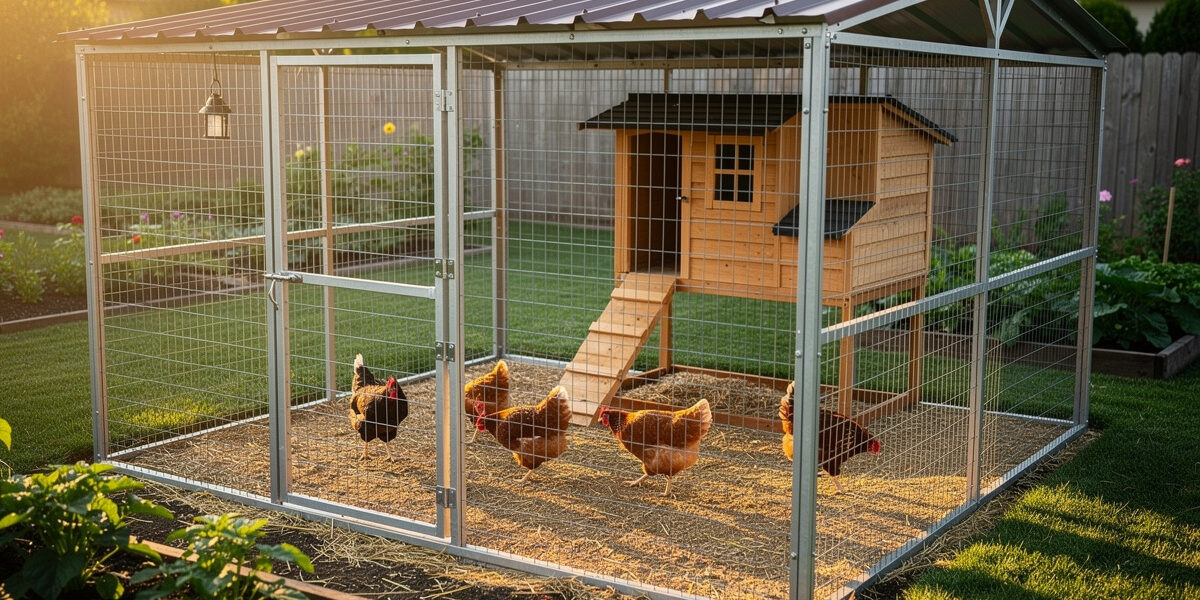
A proper chicken run gives backyard birds 8–10 sq ft of secure outdoor space each, built from 1/4″ or 1/2″ hardware cloth on a treated frame, with a buried predator apron extending 12 inches outward. Skimping on materials or sizing is where most run failures trace back to — predation is consistently the top challenge backyard keepers report, ahead of feed cost or zoning hassles (a 2014 Poultry Science survey of U.S. flock owners found minimizing predation the single most-cited concern). This guide covers sizing, materials, build options, top commercial picks, and the safety details that determine whether a run protects your flock or just looks like it does. My own run is a welded frame clad in 19-gauge half-inch hardware cloth over a buried apron — built that way because a fox got under the first one, and predators always test the corners first.
Whether you are pairing a run with our complete smart chicken coop guide or building a separate enclosure, the math and material choices below apply equally. For square-footage math by flock count, our chicken coop size guide covers the broader sizing context. For prebuilt coop options, see our best chicken coops 2026 buyers guide.
As an Amazon Associate I earn from qualifying purchases.
What Counts as a Chicken Run
A “run” in standard backyard terminology is the outdoor enclosure attached to or adjacent to a coop, where chickens spend most daylight hours. It serves three jobs at once:
- Predator protection during free-range hours. A run lets birds graze, dust-bathe, and forage without total free-range exposure to hawks, dogs, and ground predators.
- Containment. Most chickens will wander 50–200 feet from a coop if given the chance. Runs keep them in your yard and out of neighbor gardens.
- Behavioral health. Chickens cooped up in just the coop space (no run) develop pecking, feather-loss, and laying problems within weeks.
A few terms get confused. A “pen” usually refers to a smaller temporary or daytime enclosure. An “enclosure” is the broadest term covering both runs and pens. A “tractor” is a movable coop+run combo on wheels or skids — covered separately in our portable chicken coops guide and our chicken tractor guide.
Sizing Your Chicken Run by Flock
The standard guideline is 8–10 sq ft of run per bird. That is the floor — going larger is always better for behavior and health.
| Flock Size | Minimum Run | Comfortable Run | Typical Footprint |
|---|---|---|---|
| 3–4 birds | 32–40 sq ft | 50–60 sq ft | 4×10 or 5×12 |
| 5–6 birds | 50–60 sq ft | 72–96 sq ft | 6×12 or 8×12 |
| 7–8 birds | 64–80 sq ft | 96–120 sq ft | 8×12 or 8×16 |
| 9–12 birds | 96–120 sq ft | 144–180 sq ft | 10×16 or 12×16 |
| 13–20 birds | 140–200 sq ft | 200–300 sq ft | 12×20 or 16×20 |
| 20+ birds | 250+ sq ft | 400+ sq ft | Custom or paddock-style rotation |
Two adjustments matter. First, if your chickens free-range part of the day, you can use the lower minimums; if confined 100% of the time, target the comfortable column or larger. Second, vertical space counts — a run with a 6 ft ceiling and roosting branches feels and functions much larger than a flat 4 ft run with the same square footage. Our large chicken coop guide covers structures and runs sized for 25+ bird flocks.
Run sizing also depends on the coop you pair it with. A coop with 4 sq ft per bird inside can support a smaller run because birds sleep, lay, and shelter inside. A coop at the 3 sq ft minimum needs a more generous run since birds spend more daylight hours outside. Match run sizing to coop sizing using our 6-chicken coop layout guide, 8-chicken coop guide, or 10-chicken coop guide as the matched pair.
Run Materials: What Actually Works
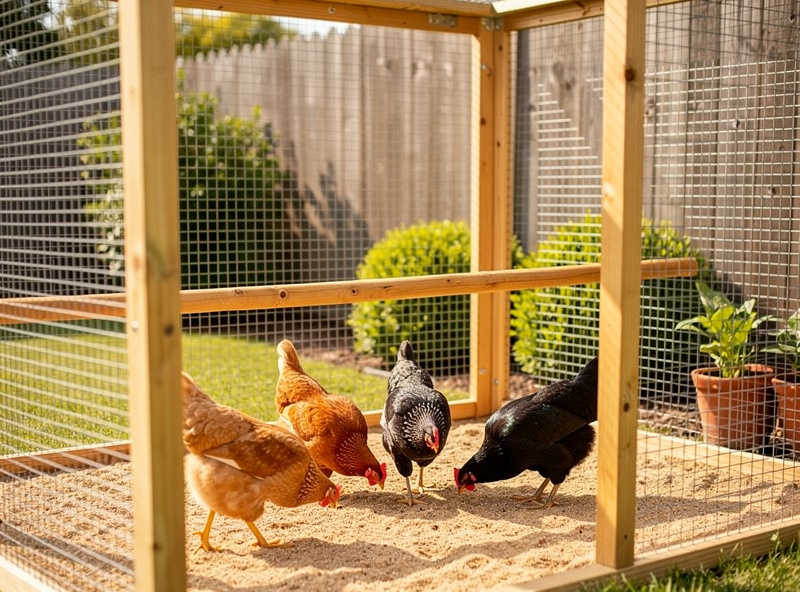
Materials choice drives cost, build time, and most importantly, whether the run survives predator attempts. Three categories cover most builds:
Wood Frame + Hardware Cloth (Standard DIY)
2×4 pressure-treated framing, 1/4″ or 1/2″ hardware cloth on all sides and top. The DIY default. Costs $250–$500 for an 8×12 run depending on lumber pricing. Lasts 8–15 years with periodic stain refresh. Easy to repair. The most common approach for backyard keepers who want flexibility and lifetime value.
Steel Frame + Welded Wire (Mid-Tier Commercial)
Galvanized steel tube frames pre-bent to size, with welded-wire panels that bolt together. Common in commercial prefab runs from brands like Yardistry, OverEZ, and Producer’s Pride. Costs $400–$900 for an 8×12 size. Lasts 12–20+ years. Quick to assemble (3–6 hours). Less aesthetic flexibility than wood. Strong choice when you want a metal run for maximum durability.
PVC + Hardware Cloth (Budget DIY)
Schedule 40 PVC pipes connected with fittings, hardware cloth zip-tied or tensioned across panels. Costs $120–$250 for an 8×12. Lasts 4–8 years (UV degradation on exposed PVC). Very lightweight; predators can sometimes lift sections. Acceptable for smaller flocks in lower-pressure environments. Often paired with our budget DIY automation under $200 guide for a complete low-cost smart setup.
Run Materials Comparison Table
| Material | 8×12 Cost | Build Time | Lifespan | Predator Strength | Best For |
|---|---|---|---|---|---|
| Wood + 1/4″ hardware cloth | $280–$420 | 6–10 hrs | 10–15 yrs | Excellent | Most backyard keepers |
| Wood + 1/2″ hardware cloth | $220–$340 | 6–10 hrs | 10–15 yrs | Very good (chick-safe with apron) | Adult-only flocks, tighter budgets |
| Steel frame + welded wire panels | $450–$900 | 3–6 hrs | 12–20+ yrs | Excellent | Prefab buyers, durability priority |
| PVC + hardware cloth | $120–$250 | 4–7 hrs | 4–8 yrs | Moderate (lift risk) | Tight budgets, mild predator zones |
| Cattle panel + hardware cloth (hoop) | $200–$340 | 4–6 hrs | 12–18 yrs | Very good | Hoop-style runs, easy curved roof |
| Chain link (galv. or coated) | $300–$500 | 5–8 hrs | 15–20 yrs | Poor for small predators (needs hardware cloth lining) | Dog-pen conversions, large outdoor runs |
One persistent mistake: chicken wire (1″ hex mesh) for the run perimeter. Chicken wire keeps chickens IN but does not keep predators OUT — raccoons, foxes, and weasels defeat it in seconds. Every run perimeter needs hardware cloth (or welded wire), not chicken wire. Period.
Predator-Proofing the Run
The hardware cloth alone is not enough. Five details turn a “looks secure” run into a truly predator-tight one:
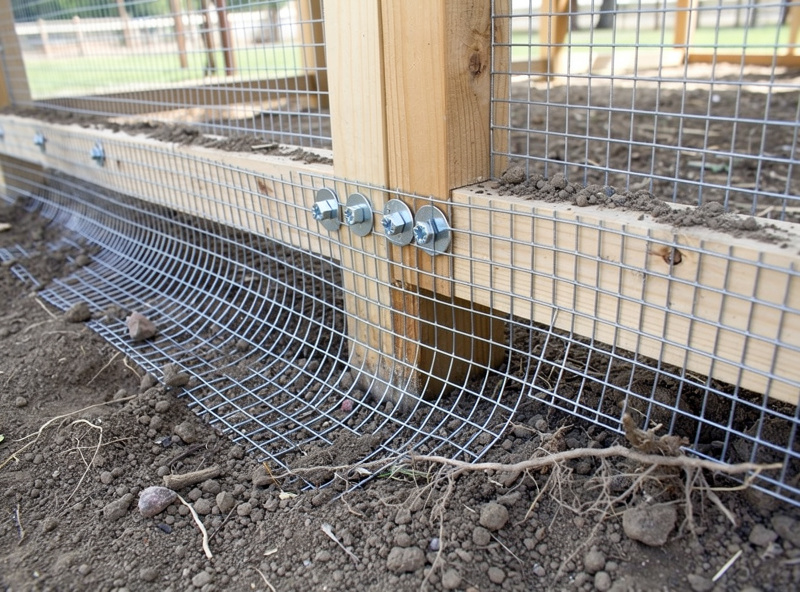
- Buried apron (12+ inches outward). Lay hardware cloth flat on the ground extending 12–18 inches out from every wall, then bury 4–6 inches deep or pin with landscape staples. Stops digging predators (foxes, dogs, skunks).
- Hardware cloth on the run roof. Hawks and owls take chickens through open-top runs in seconds. Covering the top — solid roofing, hardware cloth, or tensioned aerial netting — is consistently rated the single most effective hawk deterrent for a run (this hawk-netting breakdown covers install details), though no covering is ever airtight — sagging netting or a gap at the edge still gets tested.
- Tight gates with double latches. Raccoons can operate single hooks and slide bolts. Use a carabiner-secured slide bolt or padlocked gate. Latch placement at chicken eye level for easy daily use; predator-defeating latches at the top.
- 1/4″ hardware cloth over windows or vents. Mice, snakes, and weasels go through anything bigger than 1/2″. 1/4″ mesh is mandatory at any opening smaller than 6 inches.
- Sealed gaps where the run meets the coop. Many predator losses happen at the joint between run and coop where framing leaves a 1–2 inch gap. Trim and seal.
Open vs Covered Runs
Whether to roof the run is a regional decision. Three factors drive it:
| Factor | Open Run | Covered Run |
|---|---|---|
| Aerial predator pressure (hawks, owls) | High loss risk | Eliminates aerial threat |
| Climate | Birds get full sun + rain | Shade in summer, dry ground in winter |
| Snow load | No snow management | Roof must shed snow (steep pitch or strong frame) |
| Build complexity | Simple | Requires roof framing |
| Cost (8×12) | Baseline | +$80–$200 for roofing |
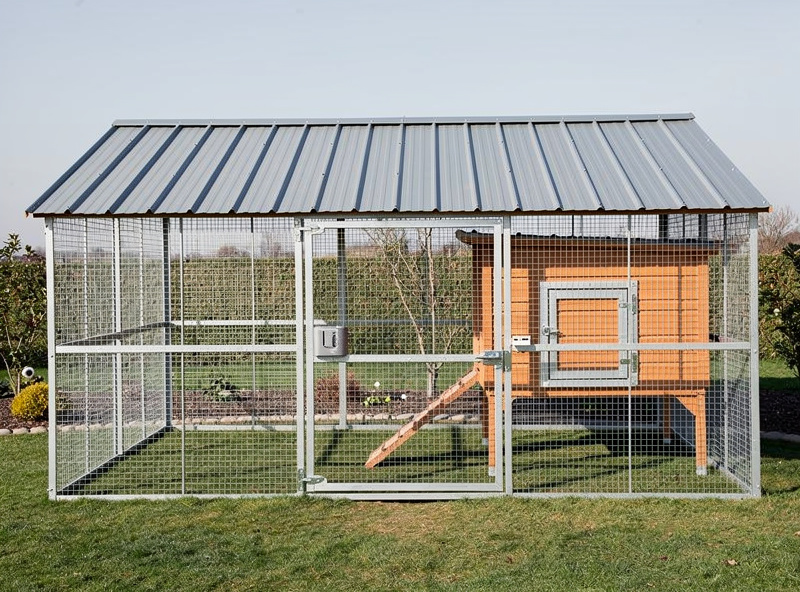
For most US backyards with any tree cover or hawk activity, a covered run pays for itself within 12–18 months in avoided losses. In hot or rainy climates, the shade and dry-ground benefits push the math even further. Roofing materials range from cheap shade cloth ($30–$80 for an 8×12) to corrugated metal panels ($120–$240) to clear polycarbonate panels for natural light ($180–$360). Pick based on climate and how much sunlight the birds need.
Roof pitch matters in snow regions. A flat or low-pitch roof under 3:12 collects snow and can collapse under heavy load. Northern keepers should target 6:12 or steeper, with metal roofing that sheds quickly. Southern keepers with no snow concerns can use flat or barely-pitched roofs without issue.
Top Commercial Run Picks (2026)
If DIY is not the path, these prefab runs deliver acceptable security at reasonable prices:
| Brand / Model | Size | Frame | Wire | Price (2026) |
|---|---|---|---|---|
| OverEZ Chicken Run | 10×10 to 10×20 | Steel tube | Welded wire 1×1″ | $650–$1,200 |
| Producer’s Pride Run Extension | 6×10 | Steel tube | Welded wire | $340–$480 |
| Yardistry Walk-In Run | 10×10 | Cedar wood | 1/2″ hardware cloth (lined) | $1,100–$1,650 |
| Pawhut Walk-In Cage | 10×6 to 12×10 | Steel tube | 1″ wire (relines recommended) | $280–$520 |
| Tractor Supply Steel Run | 8×10 | Steel tube | 1/2″ welded wire | $450–$680 |
| Omlet Walk-In Chicken Run | 3m × 3m (9.8×9.8 ft) | Steel | Steel mesh | $700–$1,100 |
Verify wire size on every product. Many brands ship with 1″ mesh, which is borderline — if your area has weasels or rats, plan to reline with 1/4″ hardware cloth on the lower 24 inches before deploying. Several of these brands appear in our best chicken coop brands roundup, our Over EZ review, and our Omlet Eglu review — useful if you want to evaluate the brand’s coop products alongside their run options.
Coop and Run Combos vs Separate Runs
Two primary architecture choices:
- Combo (coop + run sold or built together) — predator-tight transition between coop and run, single footprint, simpler permitting, less material flexibility. Cost $1,200–$2,500 prefab.
- Separate coop + separate run — independently sized, easier to upgrade either piece, can use existing coop. Cost depends on what you start with.
Combos typically beat separates for first-time keepers building from scratch. Separates win when you have an existing coop or want very different sizing for each piece. For combo product comparisons (the topic gets its own dedicated guide in this cluster), you can also work directly from the broader coop selection in our best chicken coops buyers guide and prefab chicken coop guide.
Run Flooring Options
The ground under the run drives drainage, sanitation, and parasite load. Five common options:
| Surface | Cost (8×12) | Pros | Cons |
|---|---|---|---|
| Bare dirt (default) | $0 | Free, natural foraging | Mud after rain, parasites build up over years |
| Sand (4–6″ deep) | $80–$160 | Drains fast, easy to clean, dust-bath friendly | Initial cost, periodic top-ups |
| Pea gravel (3–4″ deep) | $140–$220 | Excellent drainage, predator-deterring | Hard on bare feet, no foraging |
| Wood chips (6–8″ deep) | $60–$140 | Composts nicely, deep-litter compatible | Needs replacement annually, retains moisture |
| Concrete pad | $300–$700 | Permanent, easiest to disinfect, predator-proof base | Hard on feet, no foraging, expensive |
For most backyard runs, sand on top of well-graded dirt with a buried hardware-cloth apron is the right combination. It drains, cleans easily, and lets chickens dust-bathe naturally.
Run flooring also interacts with bedding strategy. Some keepers run a deep-litter system inside the coop (covered in our chicken coop bedding guide) and a sand or gravel layer in the run, treating each space’s substrate independently. Others use the same wood-chip deep-litter approach in both spaces, which simplifies maintenance but requires more material rotation.
Run Cost Tiers
| Tier | Setup | Total Cost (8×12) |
|---|---|---|
| Budget DIY | PVC + 1/2″ hardware cloth + dirt floor | $140–$240 |
| Standard DIY | Wood frame + 1/2″ hardware cloth + buried apron + sand | $340–$520 |
| Premium DIY | Wood frame + 1/4″ hardware cloth + covered roof + sand floor + double-latched gate | $540–$780 |
| Mid-tier prefab | Steel-frame commercial run (Producer’s Pride, Pawhut) | $340–$680 |
| Premium prefab | OverEZ, Yardistry, or Omlet walk-in | $700–$1,650 |
The standard DIY tier is the realistic starting point for most readers. It delivers proper predator security, good drainage, and 10+ years of life for $400–$500 in materials. For a deeper cost analysis comparing manual and smart setups, see our smart chicken coop cost guide.
One cost trap worth flagging: keepers who go budget on the run and premium on the coop usually end up spending more in total. A $1,500 smart coop paired with a $140 PVC run that a fox tears open in year two costs more — in dollars and in birds — than spending an extra $200 upfront on a proper hardware-cloth-and-apron build. Match the run’s build quality to the coop’s, not to whatever’s left in the budget after the automation gear is bought.
Common Run Mistakes
- Using chicken wire instead of hardware cloth. Already covered above. The single most flock-ending mistake.
- No buried apron. Most runs look fine until a fox digs under the wall in week 6.
- Open top in hawk country. If you have ever seen a hawk in your yard, you need a covered run.
- Single-latch gate. Raccoons defeat single hooks and basic slide bolts. Use double latching.
- Sizing for current flock only. Most keepers expand their flocks. Build the run for 50% larger than your starting count.
- Mud problems. Bare dirt that does not drain becomes a parasite breeding ground. Add sand or gravel from day one.
- Connecting to coop with a soft junction. The coop-run joint is where predators find gaps. Use solid hardware-cloth-to-coop attachment with no gaps over 1/2″.
- Skipping the corners. Predators test corners first. Reinforce with extra cloth and double the burial depth there.
Smart Coop Integration
For automation-equipped coops, runs add four considerations:
- Outdoor camera on the run. Catches motion and predator probing earlier than coop-only cameras.
- Power and cable runs to the run perimeter. Plan during construction; retrofit is harder than coop wiring.
- Motion-sensor lighting. Deters most nocturnal predators when paired with the buried apron.
- Run-state sensor. A door-state sensor on the run-to-coop pop door confirms birds went in at dusk.
Each of these is optional but cheap to add during initial build. For the broader integration plan, see our best smart chicken coop devices guide, our monitoring guide, and our smart coop safety guide for detail on each component.
Run Maintenance Schedule
| Frequency | Task |
|---|---|
| Daily | Visual inspection during egg collection — gates secured, no obvious damage |
| Weekly | Rake droppings, refresh sand or wood chips as needed |
| Monthly | Check perimeter for digging attempts, gate latch tightness, hardware cloth tension |
| Quarterly | Test for sagging or stretched cloth, inspect frame for rot/rust |
| Annually | Replace deep-litter material, inspect buried apron for shifts, restain wood frames |
Good runs require relatively little ongoing work — most failures are predictable from neglected quarterly inspections. Building right cuts ongoing maintenance to a few hours per year. For the smart-coop component side of this maintenance schedule, see our smart chicken coop maintenance guide.
Predator-Specific Run Adaptations
A run built to a generic spec stops most threats, but the predator actually working your fence line changes what matters most. I keep a running mental profile of what’s tested my own run over the years — fox, hawk, mustelid, the neighborhood dog, and the rodents that show up for spilled feed — and each one exploits a different weak point.
| Predator | Primary Attack Method | Run Adaptation That Matters Most |
|---|---|---|
| Fox | Digs under walls, tests gates and low gaps | Buried apron non-negotiable; low gaps sealed to 1/2″ or less |
| Hawk / raptor | Strikes from above into open-top runs | Full or partial roof, tensioned overhead netting |
| Mustelid (weasel, mink) | Squeezes through gaps as small as 1 inch | 1/4″ hardware cloth on every vent and small opening, not just 1/2″ |
| Raccoon | Manipulates latches, reaches through wire with dexterous paws | Double-latched gates; hardware cloth (not welded wire alone) at reach height |
| Neighborhood dog | Digs, jumps, or pushes through weak fencing | Taller perimeter fence outside the run itself; reinforced gate hardware |
| Rodents | Attracted by spilled feed, burrow near the run edge | Treadle or rodent-resistant feeders; tight feed storage away from the run |
The mistake I see most often is building to stop the predator a keeper is scared of (usually foxes or hawks) while leaving the mustelid gap wide open. A weasel that gets into a run at night can kill an entire flock in one visit — far worse than a single fox loss — and it needs an opening barely bigger than its own skull.
Electric Poultry Netting for Rotational Runs
For keepers with the space to rotate the flock across pasture rather than confining them to one fixed run, electric poultry netting is the tool that makes rotation predator-safe. It is also part of my own setup on the section of the property where the birds get seasonal range beyond the fixed run.
- Energizer sizing. Use a low-impedance energizer rated for at least 0.25 joules of output per net section — undersized energizers are the most common reason electric netting fails to deter predators (Kencove’s poultry netting installation guide covers energizer and grounding specifics in detail).
- Grounding matters as much as the energizer. A poorly grounded system can read fine on a fence tester and still fail to deliver a real shock in dry soil. Positive/negative net configurations solve this in dry or sandy ground.
- Netting height and tension. Standard poultry netting runs 42–48 inches tall — tall enough to stop ground predators and discourage most dogs, though it does nothing against hawks overhead.
- Rotation schedule. Move the netted paddock every 1–2 weeks on actively grazed pasture. Longer than that and the ground inside gets stripped bare, defeating the point of rotation.
Electric netting is not a replacement for a hardware-cloth run — it is a seasonal extension of range for daytime use, with the flock locked back into the predator-tight run or coop at night. Treating netting as the only barrier overnight is how keepers lose birds to a power outage or a energizer battery that died unnoticed.
Ventilation and Moisture in Covered Runs
Covering a run solves the aerial-predator problem but creates a new one if it’s done without airflow in mind: a fully enclosed roof over a run traps humidity, especially after rain or snowmelt, and damp ground under a covered run breeds parasites and mud faster than an open one. The fix isn’t skipping the roof — it’s designing the roof with the same moisture logic that applies inside the coop.
- Leave the sides open or screened, not solid. A roofed-but-open-sided run gets the aerial protection without trapping ground moisture. Solid walls on a covered run are usually a mistake unless you’re also handling active ventilation.
- Pitch the roof to actually shed water away from the run, not into it. A roof that drains onto the hardware cloth wall soaks the ground right where birds walk.
- Combine with well-draining floor material. Sand or pea gravel under a covered roof handles the moisture that does get in far better than bare dirt.
This is the same principle that governs coop ventilation — moisture, not cold, is what causes the real damage, whether that’s frostbite on a comb or a parasite bloom in the run. A covered run built without airflow just moves the moisture problem outdoors instead of solving it.
Permits and Setbacks for Runs
Run permitting is usually downstream of coop permitting. Most jurisdictions treat the run as part of the same accessory structure for setback purposes. A coop and run together typically need to sit:
- 10–25 feet from any property line (varies by zoning)
- 20–50 feet from any neighbor’s dwelling (some jurisdictions only)
- 5–15 feet from your own dwelling (sometimes specified)
HOAs occasionally restrict runs more strictly than coops because they are often more visible. Confirm both city zoning and HOA covenants before siting. Detailed permit guidance for the full smart coop project lives in our smart chicken coop permits guide.
Frequently Asked Questions
How big should a chicken run be?
The minimum is 8–10 sq ft per bird, with 12–15 sq ft per bird being more comfortable for behavior and laying. For 6 birds, plan a 6×12 (72 sq ft) minimum or 8×12 (96 sq ft) for comfortable space. Larger runs always reduce pecking, parasite issues, and stress.
What materials should I use for a chicken run?
Wood-frame with 1/2 inch hardware cloth (or 1/4 inch in chick areas) is the DIY standard. Steel-frame welded-wire panels deliver longer lifespan with faster assembly. Avoid chicken wire entirely — it does not stop predators. Cost runs $250–$900 for an 8×12 depending on materials.
Do I need a covered chicken run?
In any area with hawks, owls, or significant tree cover that hides aerial predators, yes. A covered roof or tensioned netting is the most effective aerial deterrent available for less than $200 in additional materials on a typical run, though no covering is ever fully guaranteed. Hot and rainy climates benefit further from shade and dry ground.
How do I predator-proof a chicken run?
Five mandatory steps: 1/4 to 1/2 inch hardware cloth on every surface, a 12-inch buried apron extending outward from all walls, a covered roof or top, double-latching gates, and 1/4 inch mesh on any opening smaller than 6 inches. Skipping any one of these creates predator vulnerability.
Can I use chicken wire for the run?
No. Chicken wire (1 inch hex mesh) is designed to keep chickens contained, not to keep predators out. Raccoons reach through it, weasels squeeze through it, and foxes tear it open easily. Use 1/4 inch or 1/2 inch hardware cloth or welded wire on every surface that bounds the run.
What should the floor of a chicken run be?
Sand on top of well-graded dirt with a buried hardware-cloth apron is the most common best practice — drains fast, easy to clean, supports dust-bathing. Pea gravel is a stronger predator deterrent but harder on bare feet. Bare dirt works in the short term but builds parasite load over years.
How much does a chicken run cost?
DIY ranges from $140 (PVC budget build) to $780 (premium covered wood-and-hardware-cloth run). Mid-tier prefab steel runs cost $340–$680 for an 8×10. Premium walk-in prefabs from OverEZ, Yardistry, and Omlet run $700–$1,650 depending on size and finish.
How do I protect a chicken run from weasels and mink?
Mustelids squeeze through gaps as small as one inch, so the standard 1/2 inch hardware cloth on the main walls is not enough on its own. Line every vent, gap, and opening smaller than 6 inches with 1/4 inch hardware cloth, and pay special attention to the coop-run junction where framing often leaves a small gap. A single weasel getting into a run overnight can kill the entire flock in one visit.
Do I still need a solid run if I use electric poultry netting?
Yes. Electric netting is a seasonal daytime extension for pasture rotation, not a replacement for a predator-tight run or coop at night. A dead energizer battery or a power outage leaves netting with no deterrent at all, so the flock should always be locked into the hardware-cloth run or coop after dark.
Chicken Run Cluster: 6 Topic Guides
Each major chicken run topic above has its own dedicated guide. Use these to go deeper on any decision point as you plan, build, or buy your run.
Sizing & Materials
- Large Chicken Run: Sizing for 12+ Birds — walk-in heights, structural requirements, and paddock rotation for bigger flocks
- Metal Chicken Runs: Pros, Cons & Top Brands — galvanized steel options, finishes, and where metal beats wood
Build vs Buy
- Chicken Coop and Run Combos: Best 2026 Picks — top 6 prefab combos compared on predator-proofing and value
- Chicken Coop With Run: When the Combo Beats Separates — decision math for combo vs separate builds
Where to Buy & Enclosure Types
- Chicken Runs For Sale: Best Online Sources 2026 — manufacturer direct, Tractor Supply, Amazon, Wayfair, used; 8 checks before buying
- Chicken Enclosure Types: Open vs Covered Runs — four enclosure types compared with predator outcomes by region
Related Articles
Related Guides
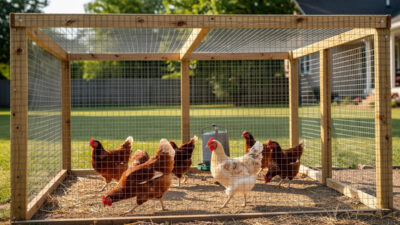
Chicken Enclosure Types: Open vs Covered Runs
A backyard chicken enclosure falls into one of four basic types — fully covered run, partially covered run, open-top run,…
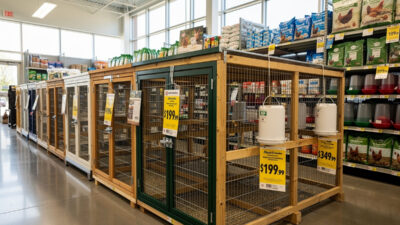
Chicken Runs For Sale: Best Online Sources 2026
The best places to find quality chicken runs for sale in 2026 are direct from manufacturers (OverEZ, Omlet, YardCraft), big-box…
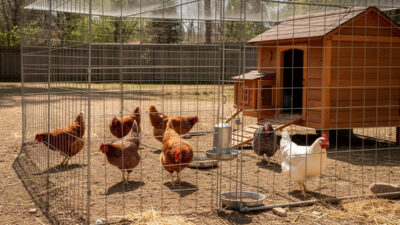
Large Chicken Run: Sizing for 12+ Birds
A large chicken run for 12+ birds needs at least 120 sq ft of secure outdoor space, walk-in height (6+…