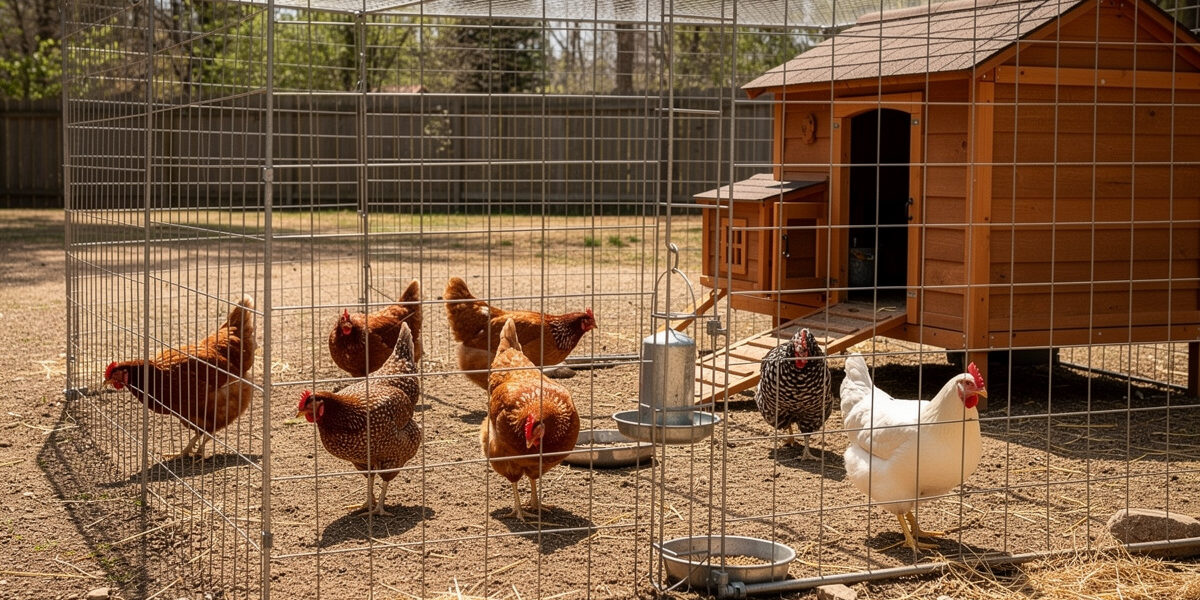
A large chicken run for 12+ birds needs at least 120 sq ft of secure outdoor space, walk-in height (6+ ft), and a structural design that handles the weight, pecking pressure, and parasite load that smaller runs do not face. Most off-the-shelf prefab runs top out around 8×12 (96 sq ft) — for 12+ birds you need either a custom DIY build, modular metal extensions, or paddock-style rotation. Cost ranges from $500 DIY for a 12×16 wood-frame run to $1,500–$2,400 for a premium walk-in commercial setup.
This guide covers sizing math by larger flock counts, structural requirements that change at scale, and the rotation strategies that prevent parasite buildup. My own flock stays in the 6–10 bird range — the classic “chicken math” outcome of a coop built for 6 — but I’ve helped several neighbors here plan runs for bigger flocks, and the engineering problems that show up past 12 birds are consistent regardless of whose yard they’re in. For overall run material decisions, see our chicken run guide.
Sizing for 12+ Birds
| Flock Size | Minimum Run | Comfortable Run | Walk-In Height |
|---|---|---|---|
| 12 birds | 120 sq ft (10×12) | 180 sq ft (12×15) | Strongly recommended |
| 15 birds | 150 sq ft (10×15) | 225 sq ft (15×15) | Required |
| 18 birds | 180 sq ft (12×15) | 270 sq ft (12×22) | Required |
| 20 birds | 200 sq ft (12×16) | 300 sq ft (15×20) | Required |
| 25 birds | 250 sq ft (15×16) | 400 sq ft (20×20) | Required |
| 30+ birds | 300+ sq ft | 450+ sq ft | Required + paddock rotation |
The minimum column meets the 8–10 sq ft per bird floor. The comfortable column (15 sq ft per bird) is what produces the lowest pecking, parasite, and stress problems. For larger flocks the comfortable target becomes practical because square footage gets cheap relative to flock value.
Match these run sizes to coops sized for the same flock counts using our 12-chicken coop guide, 20-chicken coop guide, and large chicken coop guide.
Why Larger Runs Need Different Engineering
A run that works fine for 6 birds at 8×12 fails in three predictable ways at 15+ bird capacity:
- Structural sag. Unsupported spans of hardware cloth or welded wire over 8 feet sag under their own weight. 12+ ft runs need internal posts, mid-rails, or trusses.
- Parasite load buildup. More birds concentrated on the same static ground means more droppings, more soil contamination, and faster reinfection cycles for worms and coccidia. Without rotation, internal parasite loads climb noticeably within a season.
- Pecking-order distance failure. Smaller runs let dominant birds chase subordinates into corners with nowhere to retreat. Larger flocks need enough open floor space and multiple feeding/watering stations so subordinate birds have somewhere to go that isn’t a dead end.
These problems compound. A poorly-engineered large run that solves none of them produces sick, stressed flocks within a year of build.
Walk-In Height Becomes Mandatory
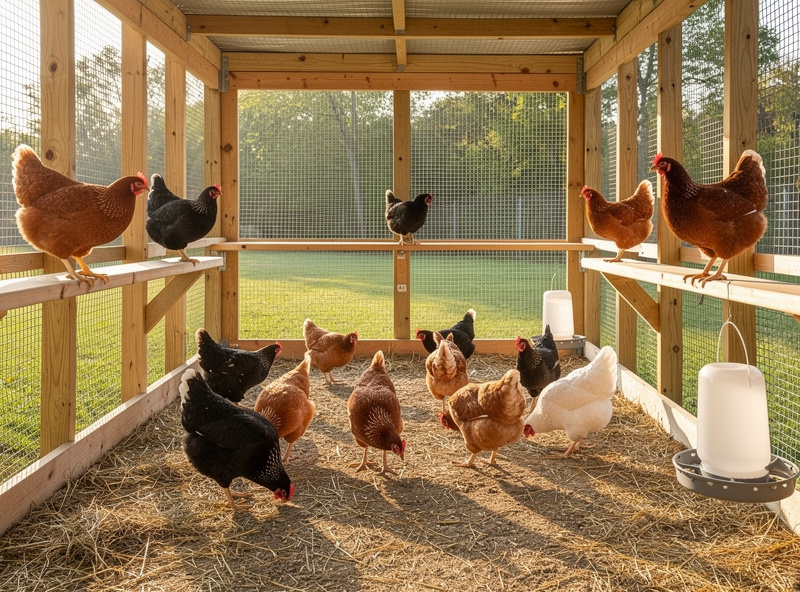
For runs over 100 sq ft and flocks of 12+, walk-in height (6.5–7 ft minimum) stops being optional:
- Daily egg collection scales up. A 12-bird flock produces 8–12 eggs daily. Crawling through a 4-ft run twice a day to collect them gets old fast.
- Cleaning becomes physical labor. A 150 sq ft run requires 5–10 minutes of weekly raking. Walk-in height makes this 2-minute work; crawl-in height stretches it to 20 minutes.
- Catching individual birds. Health checks, vet care, and integrating new birds all require catching specific chickens. Impossible in a 4-ft run; trivial in a walk-in.
Walk-in heights add 10–25% to material costs but pay back in maintenance time within the first year of ownership.
Build Approaches for Large Runs
1. Wood-Frame DIY (Most Common)
4×4 pressure-treated corner posts, 2×4 framing for rails and rafters, 1/2″ hardware cloth on walls and roof. The standard approach for 100–250 sq ft runs.
Cost (12×16): $580–$880
Build time: 18–28 hours
Lifespan: 12–18 years with periodic stain refresh
2. Modular Metal (Bolt-On Sections)
As an Amazon Associate I earn from qualifying purchases.
OverEZ, Producer’s Pride, and Pawhut all sell extension panels that bolt onto existing runs. Build a 10×10 base, add 5×10 extensions until you reach target size.
Cost (10×20 modular): $1,100–$1,800
Build time: 6–10 hours per added section
Lifespan: 20+ years (galvanized steel)
3. Hoop-Style with Cattle Panels
16-ft cattle panels arched between treated 4×4 posts, lined with hardware cloth. Common for very large runs (200+ sq ft) where the curved roof sheds rain and snow naturally.
Cost (12×16 hoop): $440–$680
Build time: 12–18 hours
Lifespan: 15–20 years
4. Repurposed Greenhouse or Shed Frame
For very large runs, repurposing an existing greenhouse frame or pole-barn structure can deliver 200–400 sq ft of run space at lower per-square-foot cost than purpose-built.
Cost varies widely: $400–$2,000+ depending on what you start with
Comparison Table: Large Run Build Options
| Approach | Best Size Range | Cost (12×16) | Build Time | Lifespan |
|---|---|---|---|---|
| Wood-frame DIY | 120–300 sq ft | $580–$880 | 18–28 hrs | 12–18 yrs |
| Modular metal extension | 100–200 sq ft | $1,100–$1,800 | 10–18 hrs | 20+ yrs |
| Hoop-style cattle panel | 120–500 sq ft | $440–$680 | 12–18 hrs | 15–20 yrs |
| Greenhouse frame conversion | 200+ sq ft | $400–$2,000+ | 15–30 hrs | 10–20 yrs (varies) |
| Premium prefab (YardCraft Walk-In Run, OverEZ Walk-In Run) | 100–200 sq ft | $1,400–$2,400 | 6–12 hrs | 15–25 yrs |
For most readers building large runs, wood-frame DIY hits the right balance of cost, customization, and lifespan. The modular metal path wins when you want fast assembly and 20+ year lifespan; hoop-style wins for very large runs in snow regions where the curved roof matters. (Note on the premium row above: Yardistry — a real outdoor-structures brand — doesn’t actually sell chicken runs; the comparable premium walk-in product in that price range is the Amish-built YardCraft line.)
Rotation Strategies (Paddock System)
For flocks over 15 birds, even a properly-sized static run accumulates parasite load over 12–24 months. Rotation prevents this — Alabama Extension’s backyard worm-control guidance and the poultry extension network’s internal-parasites guide both point to pasture/paddock rotation as the core non-medicated control strategy, since breaking the parasite’s ground-to-bird lifecycle is what actually interrupts reinfection:
2-Run Paddock
Build two equally-sized runs adjacent to the coop, each accessible by its own pop door. Rotate flock between them every 2–4 weeks. Empty run rests, vegetation regrows, parasite cycle breaks.
3-Run Paddock
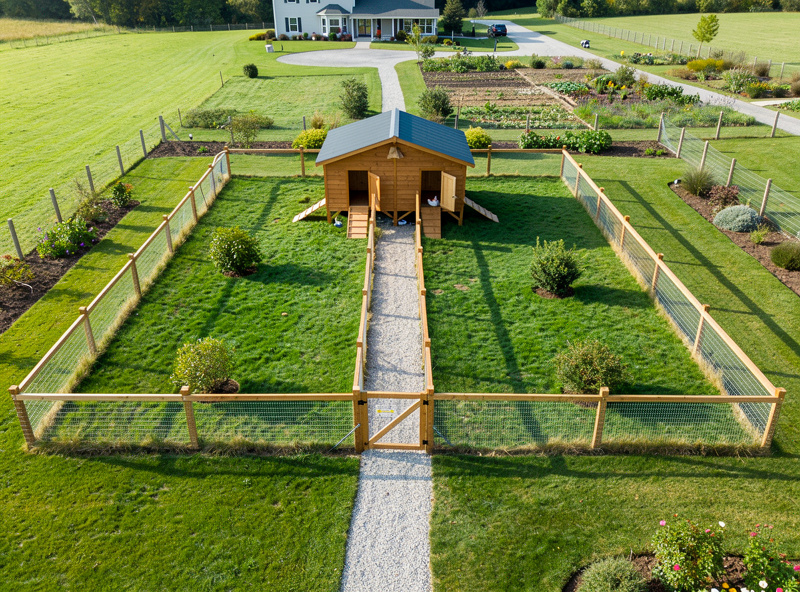
Three runs in a clover pattern around the coop. Each run rests for 4–6 weeks before reuse. Stronger parasite suppression than 2-run, but 50% more material cost.
Continuous Pasture Rotation
For very large flocks (25+) on 1+ acres, a movable run on wheels (chicken tractor) rotated weekly across pasture eliminates parasite buildup entirely. See our portable chicken coops guide and chicken tractor guide for tractor-style rotation setups.
Predator-Proofing at Scale
Larger runs mean more perimeter to defend, but the predator-proofing rules do not change:
- Hardware cloth on every wall and roof, not chicken wire. Same as smaller runs.
- Buried apron extending 12–18 inches outward. For a 12×16 run, that is 56 ft of perimeter — about $80–$140 in apron material. This is the one item I’ve never seen a keeper regret doing and plenty regret skipping — on my own smaller run it’s the single upgrade that actually stopped nighttime digging attempts.
- Internal posts and corner reinforcement. Larger runs have larger spans that predators can stress-test. Reinforce corners with extra cloth.
- Multiple gates with double-latches. Big runs often need access from two sides for cleaning convenience. Each gate needs its own predator-defeating latch.
- Outdoor camera coverage. Single cameras cover up to about 100 sq ft well. Larger runs need 2 cameras for full coverage.
Smart-Coop Integration for Large Runs
Larger flocks make smart automation more valuable. The economics: 1 hour of daily chicken chores on a 15-bird flock = 365 hours/year. Saving even half of that with automation is meaningful.
Specific smart additions that scale well:
- Two outdoor cameras minimum. Cover both the run and the coop entry. Plan separate cable runs. On my own coop, running two PoE cameras into one Home Assistant NVR made after-the-fact predator forensics — figuring out what actually got at the run overnight — dramatically easier than a single wide-angle camera ever did.
- Multi-zone temperature sensors. Large runs have shaded and sunny zones that differ by 10–15°F. Multi-sensor alerts prevent heat-stroke surprises.
- Door-state sensor on every pop door. Multi-paddock setups have multiple pop doors — each needs sensor confirmation at dusk.
- Motion-sensor perimeter lighting. Larger perimeters mean more attack surface. Solar motion lights at corners deter most nocturnal predators.
For full smart-coop wiring details, see our smart chicken coop wiring guide. For component selection, see our best smart chicken coop devices guide.
Run Flooring at Scale
Flooring strategy matters more for large runs because mud and parasites scale faster:
| Surface | Cost (12×16) | Best For |
|---|---|---|
| Sand (4–6″ deep) | $140–$240 | Most large runs; drains fast |
| Pea gravel (3–4″ deep) | $220–$340 | Predator-deterrent + drainage |
| Wood chips deep-litter | $120–$220 | Composting paddocks, rotation systems |
| Bare dirt + rotation | $0 | Rotational paddock systems only |
| Concrete pad (full) | $700–$1,200 | Permanent commercial setups |
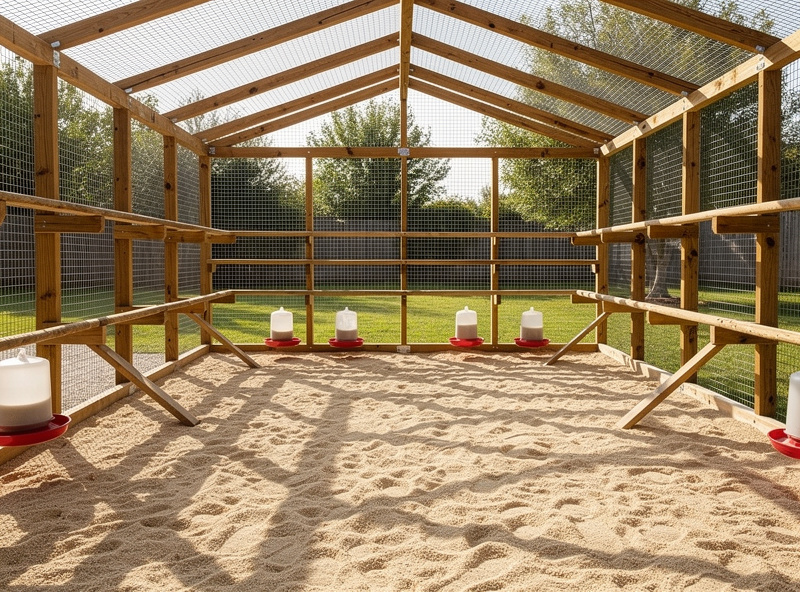
For a static (non-rotating) large run, sand on top of well-graded dirt with a buried apron is the most common best practice. Rotation paddocks can stay on natural dirt because each paddock rests long enough to recover.
Common Large-Run Mistakes
- Sizing exactly to current flock. Most keepers expand. Build for 50% larger than starting count.
- No internal supports. Spans over 8 ft sag without internal posts or trusses.
- Single rotation paddock. Static runs accumulate parasites — at large scale, this becomes a real flock-health problem within 12–24 months.
- Cramped run height. 4-ft heights are uncomfortable and slow. Walk-in (6.5+ ft) is mandatory at scale.
- Too few gates. A 200 sq ft run needs human access from at least two sides for efficient cleaning.
- Cheap predator latches. More gates = more attack vectors. Every gate needs double-latching.
- Skipping ventilation in covered runs. Large covered runs trap ammonia. Plan high-roof vents for airflow.
Cost Estimate for a Realistic 12×16 Walk-In Run
| Component | Cost |
|---|---|
| 4×4 corner posts (treated, 4x 8ft) | $80–$120 |
| 2×4 framing (60 board ft) | $120–$180 |
| 1/2″ hardware cloth (200 sq ft) | $180–$280 |
| Buried apron (1/4″ hardware cloth, 60 sq ft) | $80–$140 |
| Roofing (metal panels for 192 sq ft) | $140–$240 |
| Gate hardware (2 gates, latches) | $60–$120 |
| Concrete blocks or skids | $80–$140 |
| Sand for floor (2 cu yd) | $100–$160 |
| Hardware (screws, brackets) | $60–$100 |
| Total materials | $900–$1,480 |
| Labor (DIY at $0/hr) | 20–30 hrs of work |
Most readers land in the $900–$1,200 range with reasonable lumber pricing. The premium tier (cedar framing, 1/4″ cloth, polycarbonate roof) pushes it to $1,400–$1,800.
When to Hire It Out
A 12×16 walk-in run is typically the largest project most home builders tackle alone. Above that size — 16×20, 20×20, or larger — hiring a contractor for the framing and trusswork makes sense:
- Cost of contractor framing: $20–$40/sq ft for the structure (not predator-proofing or wire)
- Total contractor build (20×20 walk-in): $4,000–$8,000
- DIY equivalent (20×20): $1,800–$2,800 in materials + 50–80 hours labor
For most backyard keepers, even at very large flock sizes, DIY pencils out cheaper. Contracting becomes attractive only above 25-bird flocks or when the build location has access constraints.
Frequently Asked Questions
How big should a chicken run be for 15 chickens?
At least 150 sq ft (10×15 minimum, 12×15 comfortable). At 8–10 sq ft per bird, 150 sq ft hits the floor for 15 birds. Walk-in height (6.5+ ft) is mandatory at this scale because crawling through a 150 sq ft run twice daily becomes impractical.
What is the cheapest way to build a large chicken run?
Hoop-style with cattle panels delivers the lowest cost per square foot for runs over 120 sq ft. A 12×16 hoop run costs $440–$680 in materials versus $580–$880 for equivalent wood-frame DIY. The curved roof sheds snow and rain naturally without separate roofing materials.
Do I need walk-in height for a large chicken run?
Yes for any run over 100 sq ft or any flock of 12+ birds. Daily egg collection, weekly cleaning, and catching individual birds for health checks all require walk-in height (6.5+ ft). The 10–25% material premium pays back in maintenance time within the first year.
How do I prevent parasites in a large chicken run?
Rotation. Build 2 or 3 adjacent paddocks each sized for the flock and rotate every 2–6 weeks. Static runs at scale accumulate parasite loads within 12–24 months. For very large flocks (25+) on 1+ acres, continuous pasture rotation with a chicken tractor eliminates parasite buildup.
Can I extend an existing chicken run to make it larger?
Yes — modular metal kits from OverEZ, Producer’s Pride, and Pawhut bolt extension panels onto existing runs. Cost is $300–$600 per added 5×10 section. Wood-frame DIY runs can be extended by adding new posts and rails, but seal the joint carefully to maintain predator-proofing.
How much does a 12×16 chicken run cost?
DIY wood-frame with 1/2 inch hardware cloth, walk-in height, sand floor, and proper predator apron costs $900–$1,480 in materials plus 20–30 hours labor. Hoop-style cattle panel construction runs $440–$680 with similar capacity. Premium prefab equivalents reach $1,400–$2,400.
Related Articles
Related Guides
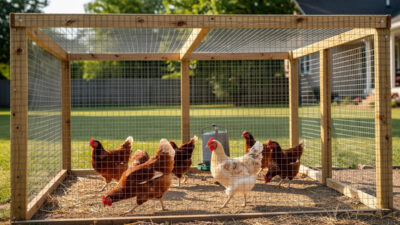
Chicken Enclosure Types: Open vs Covered Runs
A backyard chicken enclosure falls into one of four basic types — fully covered run, partially covered run, open-top run,…
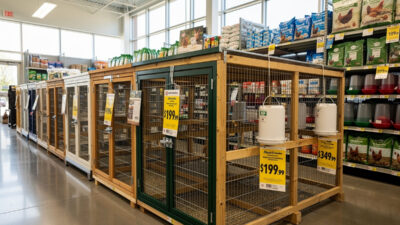
Chicken Runs For Sale: Best Online Sources 2026
The best places to find quality chicken runs for sale in 2026 are direct from manufacturers (OverEZ, Omlet, YardCraft), big-box…
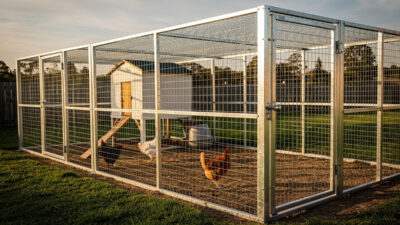
Metal Chicken Runs: Pros, Cons & Top Brands
A metal chicken run built from galvanized steel framing and welded-wire panels typically lasts 15–25 years in temperate climates —…