
The smart chicken coop market has exploded in 2026. What started as a niche hobbyist segment has evolved into a full-fledged ecosystem of automation devices, integrated systems, and IoT-connected poultry management tools. Whether you are building a new coop from scratch or upgrading an existing setup, the sheer variety of available technology can feel overwhelming.
This comprehensive guide cuts through the noise. We have tested, researched, and compared the best smart chicken coop devices across every category — automatic doors, feeders, waterers, cameras, sensors, and climate control systems. By the end, you will have a clear understanding of what works, what does not, and how to build a cohesive automation system that actually makes chicken keeping easier.
Every product recommendation includes real-world testing insights, compatibility notes, and budget considerations. We also mark future affiliate opportunities with tags where premium partnerships make sense.

Smart Coop Device Categories: The Complete Breakdown
Before diving into specific products, understand the six core automation categories. A truly smart coop integrates multiple systems working together:
1. Automatic Coop Doors
The foundation of predator protection and daily convenience. Modern automatic doors combine light sensors, timers, and smartphone control to open at dawn and close at dusk without human intervention.
Key Features to Look For:
- Dual-sensor technology (light + timer backup)
- Smartphone app with manual override
- Battery backup for power outages
- Adjustable sensitivity for different seasons
- Weatherproof construction
- Quiet motor operation
For a deep dive into automatic doors specifically, see our complete automatic door buyer’s guide.
2. Automated Feeders
Consistent feeding schedules improve chicken health and egg production. Smart feeders dispense precise portions at programmed times, track consumption, and alert you when supplies run low.
Key Features to Look For:
- Programmable feeding schedules (multiple times daily)
- Portion control accuracy
- Large capacity (reduces refill frequency)
- Weatherproof and rodent-resistant design
- Low-feed alerts via app
- Consumption tracking over time
Learn more about feeding automation in our automated feeders and waterers guide.
3. Automated Waterers
Clean, consistent water access is critical for chicken health. Automated waterers ensure fresh water availability 24/7 with minimal maintenance.
Key Features to Look For:
- Auto-refill from reservoir or water line
- Heated base options for winter climates
- Nipple or cup design (cleaner than open troughs)
- High capacity for reduced refills
- Algae and bacteria resistant materials
- Easy cleaning and maintenance
4. Coop Cameras and Monitoring
WiFi-enabled cameras transform chicken keeping by providing remote visibility. Monitor flock health, confirm door operation, check egg laying, and detect problems from anywhere.
Key Features to Look For:
- 1080p or higher resolution
- Night vision capabilities
- Two-way audio
- Motion detection alerts
- Cloud storage or local recording
- Weatherproof outdoor rating
- Wide viewing angle (130+ degrees)
Explore comprehensive monitoring solutions in our cameras and sensors guide.
5. Environmental Sensors
Temperature and humidity monitoring prevents heat stress, frostbite, and respiratory issues. Smart sensors trigger alerts when conditions become dangerous.
Key Features to Look For:
- Accurate temperature readings (±1°F precision)
- Humidity monitoring
- Remote alerts via smartphone
- Historical data logging
- Long battery life or AC powered
- Integration with smart home systems
6. Climate Control Systems
Automated heating, cooling, and ventilation maintains optimal coop conditions year-round without constant manual adjustment.
Key Features to Look For:
- Thermostat-controlled operation
- Adjustable temperature triggers
- Multiple control zones
- Smart plug integration
- Safety features (overheat protection)
- Energy efficient operation
Top Product Recommendations by Category
Best Automatic Coop Doors
1. RUN-CHICKEN Model T50 — Best Overall Value
The RUN-CHICKEN T50 has earned its reputation as the go-to automatic door for good reason. It strikes the perfect balance between features, reliability, and price.
Specifications:
- Light sensor + programmable timer
- Aluminum door panel (predator-proof)
- Battery and AC power options
- Manual override button
- Weatherproof to -15°F
- Installation: 15-20 minutes
- Price range: $199-$249
Why It Stands Out: The T50 just works. The light sensor accurately detects dawn and dusk across seasons, the motor is quiet enough not to spook chickens, and the construction quality withstands years of daily operation. Battery life exceeds 6 months under normal conditions.
Best For: Most backyard chicken keepers seeking reliable automation without breaking the bank.
Limitations: No smartphone app control (timer-based only). For app control, step up to the T50 Plus.
2. ChickenGuard Premium — Best for Tech Enthusiasts
For those wanting maximum control and monitoring capabilities, the ChickenGuard Premium represents the current state-of-the-art.
Specifications:
- Full smartphone app control (iOS/Android)
- Light sensor, timer, and manual modes
- Push notifications for door events
- Battery level monitoring in app
- Lift capacity: 4kg (heavy doors supported)
- Weatherproof construction
- Price range: $299-$349
Why It Stands Out: The app integration transforms how you interact with your coop. Receive notifications when the door opens/closes, check battery status remotely, manually trigger operation from anywhere, and view event logs. The lift capacity handles even heavy custom doors.
Best For: Tech-savvy keepers who want full remote control and monitoring.
Limitations: Higher price point. Requires reliable WiFi signal at the coop.
3. Add-A-Motor D20 — Best Budget Option
If you want basic automation at minimal cost, the D20 delivers core functionality without premium features.
Specifications:
- Light sensor operation
- Simple timer backup
- Battery powered (4 D-cells)
- Works with existing coop doors
- 6-month battery life
- Price range: $149-$179
Why It Stands Out: Affordability without sacrificing reliability. The D20 focuses on doing one thing well — automatically opening and closing based on light levels. No apps, no complexity, just dependable operation.
Best For: Beginners testing automation waters or those on tight budgets.
Limitations: No manual override button (must use light sensor). No app connectivity.
Best Automated Feeders
1. Grandpa’s Feeders Automatic Chicken Feeder — Best Overall
This treadle-operated feeder has stood the test of time, helping thousands of chicken keepers reduce waste and eliminate daily feeding chores.
Specifications:
- Treadle mechanism (chickens step on pedal to open)
- 20lb or 40lb capacity options
- Galvanized steel construction
- Rodent and weatherproof
- No electricity required
- Price range: $189-$249
Why It Stands Out: Simplicity equals reliability. No batteries to fail, no timers to reset, no apps to update. Chickens learn to use it within days, and the treadle design keeps feed secure from pests and weather. One filling lasts 4-6 days for 6 chickens.
Best For: All chicken keepers wanting reliable, low-tech automation.
Limitations: Not “smart” in the IoT sense — no app control or scheduled dispensing.
2. PetSafe Smart Feed Automatic Feeder — Best Smart Features
For true smart feeding with portion control and scheduling, this WiFi-connected feeder brings smartphone convenience to chicken care.
Specifications:
- WiFi connectivity with smartphone app
- Programmable feeding schedules (up to 12 times daily)
- Portion control (1/8 to 4 cups per feeding)
- 24-cup capacity hopper
- Low food notifications
- Price range: $129-$169
Why It Stands Out: True set-and-forget feeding. Program exact portions at exact times, receive alerts when food runs low, adjust schedules remotely for vacations or weather changes. The app interface is intuitive and reliable.
Best For: Keepers wanting precise feeding control and remote management.
Limitations: Requires AC power and WiFi. Plastic construction requires protection from elements in outdoor coops.
3. RentACoop Port Feeder — Best Budget Pick
A simple, effective gravity feeder that eliminates daily refills at minimal cost.
Specifications:
- Gravity-fed design
- 10lb or 20lb capacity
- No-waste port design
- Weather resistant plastic
- Mountable or free-standing
- Price range: $29-$49
Why It Stands Out: Unbeatable value. While not “smart,” this feeder eliminates the daily refill chore by holding multiple days of feed. The port design reduces waste compared to trough feeders.
Best For: Budget-conscious keepers wanting basic automation.
Limitations: Not pest-proof like treadle feeders. Requires protection from rain.
Best Automated Waterers
1. Premier 1 Supplies Heated Poultry Waterer — Best for Cold Climates
Winter water management challenges end with this thermostatically controlled heated base.
Specifications:
- Thermostatically controlled heater (activates below 35°F)
- 3-gallon capacity
- Horizontal nipples (cleaner than vertical)
- 110V operation
- Insulated base design
- Price range: $89-$119
Why It Stands Out: The most reliable heated waterer available. The nipple design keeps water cleaner than cup or trough systems, and the thermostatic control prevents energy waste while ensuring water never freezes.
Best For: Northern climates with freezing winters.
Limitations: Requires electrical outlet. Nipples require training (chickens learn quickly).
2. RentACoop Automatic Chicken Waterer — Best Overall Value
This bucket-and-nipple system provides clean, automatic water delivery with minimal maintenance.
Specifications:
- 5-gallon bucket with 4 horizontal nipples
- Gravity-fed auto-refill capability
- Bucket lid prevents contamination
- Can connect to garden hose for true automation
- No electricity required
- Price range: $39-$59
Why It Stands Out: Outstanding value and functionality. Connect a garden hose with a float valve for weeks of truly automatic water. The nipple design eliminates the daily scrubbing that open waterers require.
Best For: All climates except extreme cold (requires heated version or supplemental heat).
Limitations: Requires mounting at proper height. Needs freeze protection in winter.
Best Coop Cameras
1. Blink Outdoor Camera — Best Budget Option
Amazon’s Blink delivers reliable outdoor monitoring at an unbeatable price point.
Specifications:
- 1080p HD video
- Two-year battery life (2 AA batteries)
- Weather resistant (IP65 rated)
- Motion detection alerts
- Night vision (infrared)
- Two-way audio
- Price range: $99-$129 (1 camera + sync module)
Why It Stands Out: Incredible battery life eliminates wiring hassles. The motion detection works reliably for detecting chicken activity and door operation. Blink’s app is straightforward and stable. Cloud storage included with subscription ($3/month per camera).
Best For: Budget-conscious keepers wanting reliable basic monitoring.
Limitations: Requires WiFi. Subscription needed for cloud storage beyond trial.
2. Wyze Cam v3 — Best Value Features
Wyze delivers premium features at a budget price, making advanced monitoring accessible to everyone.
Specifications:
- 1080p Full HD with color night vision
- IP65 weather resistance
- Two-way audio
- Motion and sound detection
- Continuous recording option (with SD card)
- Smart home integration (Alexa, Google)
- Price range: $35-$49
Why It Stands Out: Feature-to-price ratio is unmatched. Color night vision (via starlight sensor) provides better nighttime visibility than infrared-only cameras. Local storage option eliminates subscription requirements. The build quality exceeds the price point.
Best For: Value seekers wanting premium features without premium pricing.
Limitations: Requires AC power (no battery option). Subscription unlocks advanced AI features.
3. Reolink Go PT Plus — Best for Remote Locations
When WiFi is unavailable at your coop, this 4G LTE camera maintains connectivity anywhere with cellular coverage.
Specifications:
- 4G LTE connectivity (SIM card required)
- 2K 4MP resolution
- Battery powered with solar panel option
- Pan/tilt capability (355° horizontal, 140° vertical)
- Color night vision
- Two-way audio
- Price range: $249-$299
Why It Stands Out: The only solution for coops without WiFi access. Solar panel compatibility enables completely off-grid operation. PT (pan-tilt) lets you remotely look around the entire coop interior. 4G connectivity is reliable and fast enough for smooth streaming.
Best For: Remote coops without WiFi infrastructure.
Limitations: Requires cellular data plan ($10-20/month). Higher upfront cost.
Best Environmental Sensors
1. SensorPush Wireless Thermometer/Hygrometer — Best Overall
These compact sensors deliver professional-grade monitoring with consumer-friendly setup and pricing.
Specifications:
- Temperature and humidity monitoring
- Bluetooth connectivity (with WiFi gateway option)
- ±0.5°F temperature accuracy
- ±3% humidity accuracy
- 1+ year battery life
- Historical data logging (unlimited via app)
- Price range: $49-$69 per sensor, $99 gateway
Why It Stands Out: Accuracy and reliability. The app interface displays beautiful graphs of temperature and humidity trends over time. Alerts notify you immediately when conditions exceed safe ranges. The gateway enables remote monitoring from anywhere.
Best For: Serious keepers wanting detailed environmental data.
Limitations: Bluetooth range limited without gateway. Gateway required for remote access.
2. Govee WiFi Thermometer Hygrometer — Best Budget Smart Sensor
Govee provides WiFi-connected environmental monitoring at a price point accessible to all.
Specifications:
- Direct WiFi connectivity (no gateway needed)
- Temperature and humidity monitoring
- App alerts and notifications
- Historical data and graphs
- Works with Alexa and Google Assistant
- Price range: $24-$39
Why It Stands Out: Direct WiFi means simpler setup and no additional hardware to buy. The app is polished and reliable. Integration with smart home platforms enables voice commands (“Alexa, what is the coop temperature?”).
Best For: Budget-conscious keepers wanting WiFi monitoring without complexity.
Limitations: Requires WiFi signal at coop. Less accurate than premium options (±1°F).
Best Climate Control Systems
1. K&H Pet Products Thermo-Chicken Heated Pad — Best Heating Solution
This thermostatically controlled heating pad provides safe, efficient warmth without the fire risks of heat lamps.
Specifications:
- Thermostatic control (warms to 102°F when chicken sits on it)
- Energy efficient (40 watts)
- Safe, low-voltage operation
- Waterproof and durable
- Multiple sizes available
- Price range: $49-$89
Why It Stands Out: Safety first. Unlike dangerous heat lamps (fire hazards), these pads only activate when a chicken sits on them. The low wattage keeps electricity costs minimal. Place under roosts or in nesting boxes for targeted warmth.
Best For: Cold climate coops needing supplemental heat.
Limitations: Requires AC power. Individual chickens must choose to use it.
2. AC Infinity Airlift Cooling Fan — Best Ventilation System
Proper ventilation prevents heat stress and respiratory issues. This smart fan automates airflow based on temperature.
Specifications:
- Temperature and humidity triggered operation
- 10-speed settings
- Quiet operation (important for coops)
- WiFi connectivity and smartphone app
- Programmable smart modes
- Price range: $99-$149
Why It Stands Out: Intelligent automation. The fan responds to actual conditions rather than running constantly. The app lets you set temperature triggers (activate at 80°F, max speed at 95°F). Quiet operation does not stress chickens.
Best For: Hot climates or summer heat management.
Limitations: Requires AC power and WiFi. Not suitable for very dusty environments without filter cleaning.

Device Compatibility: What Works Together
A smart coop is more than a collection of gadgets — it is an integrated system. Here is how to ensure your devices play nicely together:
Smart Home Platform Integration
Home Assistant: The most powerful option for tech enthusiasts. Integrates virtually any WiFi or Zigbee device into a unified dashboard. Create complex automation rules (“If coop temperature exceeds 90°F AND it is daytime, turn on ventilation fan AND send phone alert”).
Amazon Alexa: Many modern coop devices work with Alexa. Enable voice commands like “Alexa, show me the chicken coop” (displays camera) or “Alexa, what is the temperature in the coop?”
Google Home: Similar integration to Alexa. Good for households already in the Google ecosystem.
Apple HomeKit: More limited coop device support, but growing. Best for dedicated Apple households.
Power Considerations
Plan your electrical infrastructure before buying:
- AC-powered devices: Cameras, heated waterers, heating pads, fans — require reliable outdoor-rated outlets
- Battery-powered devices: Blink cameras, SensorPush sensors, some automatic doors — provide flexibility but need periodic battery replacement
- Solar options: Available for cameras, some doors, and ventilation — ideal for off-grid coops
Recommendation: Run outdoor-rated conduit to your coop during initial construction. Even if starting with battery devices, future-proof for AC expansion.
WiFi Signal Strength
Most smart coop devices require WiFi connectivity. Test signal strength at your coop location before purchasing:
- Use your smartphone to check signal bars at the coop
- Run a speed test — you need at least 2 Mbps upload for reliable camera streaming
- If signal is weak, install a WiFi extender or mesh node closer to the coop
- Powerline adapters can extend network through electrical wiring if coaxial cable exists
Pro tip: Many modern routers show connected device signal strength in their admin interface. Use this to verify all coop devices have strong connections.

Smart Coop Starter Kit: Our Recommended Beginner Setup
If you are overwhelmed by options, here is a curated starter kit that delivers 80% of smart coop benefits at a reasonable investment:
Phase 1: Essentials ($400-$500)
The foundation that transforms daily chicken keeping:
- Automatic Door: RUN-CHICKEN T50 ($199-$249)
The single most impactful upgrade. Eliminates daily door duty. - Feeder: Grandpa’s Feeders Treadle Feeder ($189-$249) or RentACoop Gravity Feeder ($39)
Choose based on budget. Both eliminate daily feeding. - Waterer: RentACoop Bucket Waterer with Nipples ($39-$59)
Clean water with weekly (not daily) refills. - Camera: Blink Outdoor or Wyze Cam v3 ($35-$99)
Peace of mind and remote monitoring capability.
Total: $400-$500
This setup eliminates the three most time-consuming daily tasks (door operation, feeding, checking), provides remote visibility, and protects your flock from predators automatically.
Phase 2: Enhancement ($300-$400 additional)
Add after Phase 1 is running smoothly:
- Environmental Monitoring: SensorPush or Govee sensors ($25-$69)
Track temperature and humidity, receive dangerous condition alerts. - Second Camera: Cover the run and entry area ($35-$99)
Complete visibility of all coop zones. - Smart Feeder Upgrade: PetSafe Smart Feed ($129)
Precise portion control and remote schedule management. - Heated Waterer: Premier 1 Supplies Heated Base ($89-$119)
Essential for northern climates — winter water management solved.
Running Total: $700-$900
Phase 3: Full Automation ($500-$1,000 additional)
The complete smart coop experience:
- Climate Control: AC Infinity Fan + K&H Heated Pads ($150-$250)
Automated ventilation and supplemental heating. - Advanced Door: Upgrade to ChickenGuard Premium ($299-$349)
App control, notifications, maximum reliability. - Sensor Network: Additional sensors for run and nesting box areas ($50-$100)
Complete environmental monitoring coverage. - Home Automation Hub: Home Assistant setup ($100-$200)
Unified control dashboard and complex automation rules.
Grand Total: $1,200-$2,000
This phased approach spreads costs over time, lets you learn each system before adding complexity, and ensures reliable operation at every stage.
On a tighter budget? Our DIY smart coop under $200 guide shows how to build a basic automated setup using creative, affordable solutions.
Future-Proofing Your Smart Coop
Technology evolves rapidly. Here is how to ensure your coop remains current:
Choose Open Standards
Prefer devices using standard protocols (WiFi, Zigbee, Z-Wave) over proprietary systems. This enables integration with multiple platforms and easier replacement of individual components.
Plan for Upgrades
Run extra conduit during initial construction. Install mounting brackets that accommodate different device sizes. Choose expandable systems over closed ecosystems.
Software Matters
Devices with regular firmware updates and active manufacturer support last longer. Check company reputation and update history before purchasing.
Modularity Wins
Buy devices that do one thing well rather than all-in-one units. If the camera fails in a combo unit, you replace everything. If your separate camera fails, you replace just the camera.
Bottom Line: Building Your Perfect Smart Coop
The smart chicken coop market in 2026 offers something for every budget and technical comfort level. From basic automatic doors that simply work to sophisticated IoT ecosystems with AI-powered monitoring, you can build exactly the system your flock needs.
Start with the essentials: an automatic door, reliable feeder, clean waterer, and basic camera. These four devices eliminate the daily grind while protecting your chickens and providing peace of mind. Then expand gradually based on your climate, flock size, and personal preferences.
Remember, the goal is not to have the most technologically advanced coop — it is to have healthy, happy chickens and a lifestyle that accommodates your schedule. Smart technology should serve that goal, not complicate it.
For detailed guidance on specific automation categories, explore our specialized guides:
- Automatic chicken coop doors — the #1 first upgrade
- Automated feeders and waterers — eliminate daily chores
- Cameras and monitoring systems — remote visibility and alerts
- Budget DIY options — automation under $200
Ready to dive deeper? Return to our comprehensive smart chicken coop building guide for step-by-step construction and integration instructions.
Does a chicken coop need electricity?
No, but it heavily depends on your climate and lifestyle. If you live in freezing temperatures, a power trench allows you to run water heaters. Otherwise, a battery-powered door and gravity feeder are completely off-grid.
Can a smart device warn me if water runs low?
Yes. Heavy-duty float switches or simple optical liquid-level sensors can be installed inside a PVC water reservoir to trigger a push notification to your phone when the water level drops.
Do chickens need a light in their coop at night?
No, chickens need complete darkness to achieve restorative sleep. Artificial lighting is only used briefly in the evening to encourage winter egg production, but it must be turned off overnight.
Are smart egg counters reliable?
Commercial rollout nesting boxes with built-in counters exist, but they are expensive and often prone to false readings. A high-resolution Wi-Fi camera paired with visual monitoring remains the best tool.
What is the best first smart coop device to buy?
An automatic chicken coop door is the single best first upgrade. It eliminates your most time-consuming daily chore, protects your flock from predators every night, and costs $150-$300 depending on features.
Related Articles
Related Guides
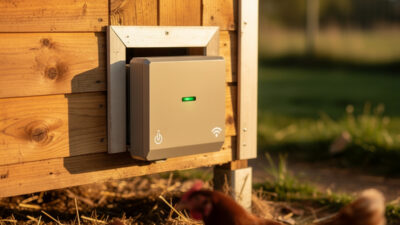
Smart Coop Door Schedules: Alexa, Google, Home Assistant
Smart coop door schedules built around Alexa, Google Home, or Home Assistant turn the morning chicken routine from a manual…
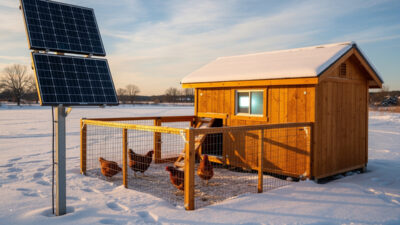
Solar Panel Sizing for Chicken Coops: Watts for Heat, Light, and Door
Solar panel sizing math for off-grid chicken coops. Watts needed for lights, heaters, and automatic doors with climate multipliers and…

Smart Chicken Coop Permits & HOA Rules in the US
Most US backyard smart chicken coop permits fall into three categories: a backyard chicken/livestock ordinance check (free or under $50),…