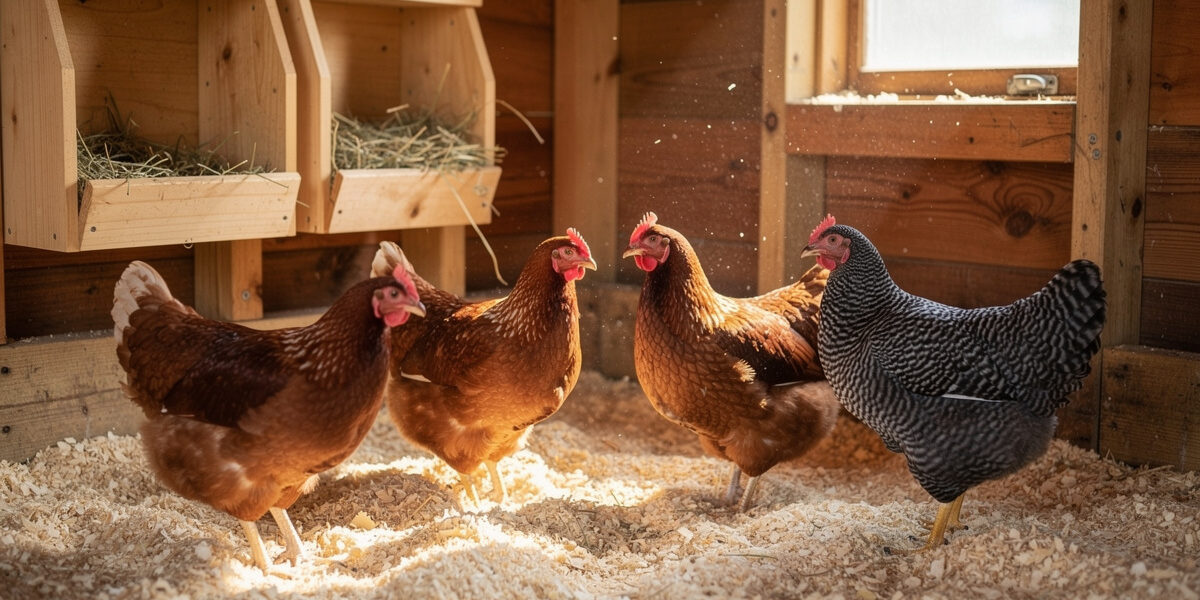
A chicken coop for 6 chickens needs 24 square feet of interior floor space plus a 60 square foot run, total footprint roughly 8×10 feet. That’s standard-breed math at the 4 sq ft per bird minimum from our chicken coop size guide — and it’s noticeably more floor space than most “fits 6 chickens” prefab listings actually deliver once you measure the real interior.
This guide breaks down the real dimensions that work for 6 birds, the three coop styles that actually deliver that footprint, the smart-coop layout adjustments most buyers miss, and the four common mistakes that force a rebuild within 18 months. Use the comparison table below to size once and skip the upgrade cycle — my own flock started at six and was holding ten within two years, which is exactly why I now build in the buffer from day one.
As an Amazon Associate I earn from qualifying purchases.
How Big Should a Coop for 6 Chickens Be?
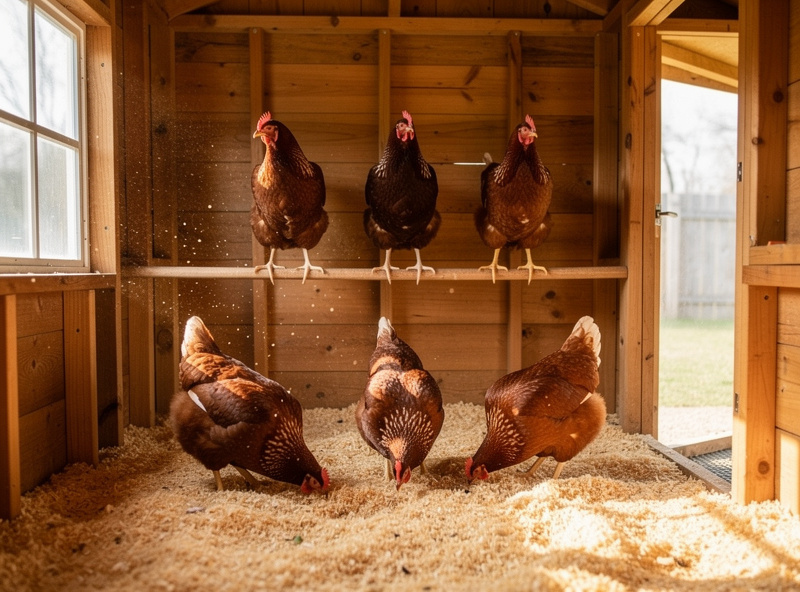
Six standard-breed hens need 24 square feet of coop floor (4 sq ft × 6) and 60 square feet of run (10 sq ft × 6). That’s a 4×6 ft coop and a 6×10 ft attached run as the absolute minimum, with 6×6 ft coop and 8×12 ft run as the recommended target for cold climates or breeds that spend more time inside.
Catalog “6-chicken capacity” claims almost never include the run, and many double-count vertical roost space against floor space. A coop listing that says “interior: 4×4 ft, holds 6” is actually a 4-bird coop at proper density. Always do the math yourself: usable floor square footage divided by 4 = realistic chicken count.
The 4-and-10 rule is consistent with the sq-ft guidance published by university extension poultry programs (Alabama Cooperative Extension) — overcrowding below that threshold is the well-documented trigger for pecking, stress, and disease transmission in a flock. For 6 birds, that means anything meaningfully under 24 sq ft of interior floor puts you in the overcrowding zone before the birds even start laying.
Recommended Coop Dimensions for 6 Birds
The table below compares the three coop footprints that work for a 6-bird flock, with the trade-offs that matter when picking between them.
| Coop Footprint | Interior sq ft | Recommended Run | Best For | Approx. Cost (prefab) |
|---|---|---|---|---|
| 4×6 ft lift-top | 24 | 6×10 ft (60 sq ft) | Mild climates, tight yards, beginners | $450-$800 |
| 6×6 ft walk-in | 36 | 6×12 ft (72 sq ft) | Cold climates, walk-in cleaning, expansion to 8 birds | $700-$1,400 |
| 4×8 ft shed-style | 32 | 8×10 ft (80 sq ft) | Heavy breeds, predator-heavy areas, smart automation | $900-$1,800 |
The 4×6 lift-top is the most popular and the smallest workable footprint. It hits the 24 sq ft minimum exactly, which means zero buffer for breed weight class — heavy breeds like Brahmas push past capacity at 5 birds. The 6×6 walk-in costs roughly 60 percent more but adds 12 sq ft of buffer that lets the same coop handle 8 birds when you add to the flock. The 4×8 shed-style is the smart-coop sweet spot: enough wall length to mount sensors, enough ceiling height for camera angles, and standard 24-inch door clearance for a bolt-on automatic door.
Best Coop Styles for 6 Chickens
Three coop styles deliver the 24+ sq ft a 6-bird flock needs without overpaying for unused capacity. Each has a clear use case and a clear failure mode.
Lift-top backyard coop: The 4×6 ft lift-top dominates the 6-chicken category because the lift-top access makes daily egg collection 30 seconds instead of 3 minutes. Downside: lift-top hinges fail at 18 to 24 months under typical use, and the integrated nesting boxes often cramp into 10×10 inches (smaller than the 12×12 standard).
Walk-in shed conversion: A 6×6 or 6×8 ft garden shed converted to a coop gives you human-height access, room for feed storage, and natural placement for smart equipment. Conversion adds nesting boxes, ventilation, and a chicken door for $150 to $400 in materials. See our $200 DIY automation guide for the conversion checklist.
Mid-size A-frame tractor: A 4×8 ft mobile A-frame tractor works for 6 birds if you move it daily across a large yard or pasture. The footprint per bird is technically sub-optimal (16 sq ft floor + 16 sq ft floor cover at ground level = 32 sq ft per move), but rotational grazing keeps the actual usable space refreshed daily. Tractors fail in winter — they’re a 7-month-a-year solution in zones 3 to 5.
Run Size for 6 Chickens
Six standard hens need a 60 sq ft run minimum, with 120 sq ft preferred to prevent boredom-driven feather pecking. That’s 6×10 ft as the floor of acceptable, 8×15 ft or 10×12 ft as the layout most experienced keepers settle on after one boring-run cycle of bald-back hens.
Run shape matters as much as area. A long, narrow run (3×20 ft) provides more usable perimeter for foraging than a 6×10 square, and reduces dominance clashes by giving subordinate birds escape distance. Add visual barriers — small bushes, perch platforms, dust bath stations — every 6 to 8 feet to break sight lines and create micro-territories.
Free-ranging changes the math. If your 6 hens get 2 to 4 hours of supervised free-range time daily, you can shrink the attached run to 48 sq ft (8 sq ft per bird). Pure cooped flocks need the full 60 to 120 sq ft. Either way, cover at least 50 percent of the run with hawk netting — red-tail hawks take backyard birds in even low-pressure suburbs within the first 12 months.
Nesting Boxes and Roost Bars for 6 Birds
Six hens need 2 nesting boxes (1 box per 4 to 5 hens, round up) and 60 inches of roost bar length (10 inches per standard bird). Nesting boxes should be 12x12x12 inches, roost bars should be 2×4 lumber laid flat-side up at 18 to 24 inches above the floor.
Two nesting boxes is the sweet spot for 6 hens. Adding a third rarely changes laying behavior because hens crowd into 1 or 2 favorite boxes regardless of how many you provide. The two boxes should sit at the same height, side by side, in the darkest corner of the coop and always lower than the roost bar — hens won’t roost in nest boxes only if the perch sits higher.
For roost bars on a 6-bird flock, a single 60-inch bar works better than two 30-inch bars at different heights. Stacked roosts trigger nightly dominance fights for the top spot; a single horizontal bar at 18 inches lets all 6 birds settle simultaneously without conflict. Use 2×4 lumber laid flat — the wider surface lets a hen settle flat-footed and cover her toes with body feathers in winter, which is the standard frostbite-prevention advice for roost design (Backyard Poultry). I check for this every Swedish winter — a round perch or a 2×4 turned narrow-edge-up is how keepers end up with frostbitten toes.
Smart Setup for a 6-Bird Coop
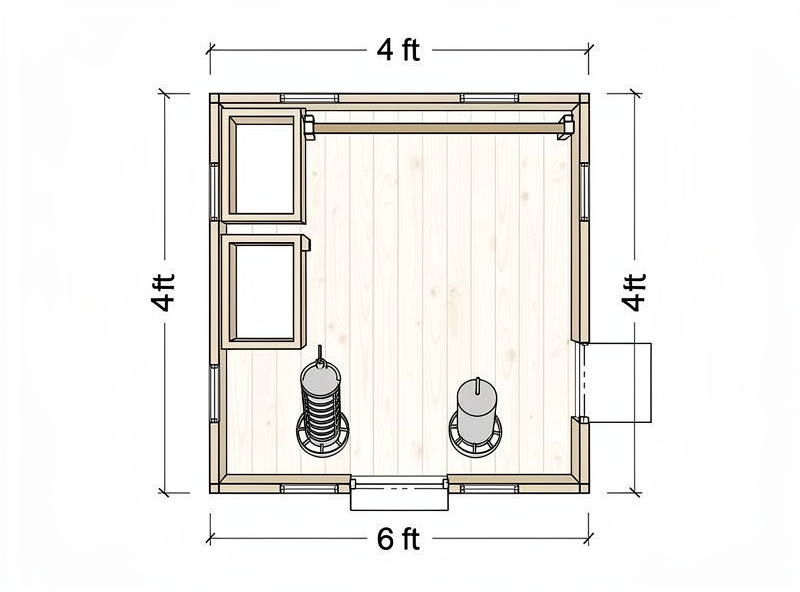
A 6-bird coop is the smallest size where smart automation pays back the install cost within 18 months. The 24 sq ft floor fits a single PIR sensor zone, a single auto-door, a single climate sensor, and a small battery backup — the basic smart-coop stack at minimum hardware count.
Sensor coverage: One PIR motion sensor mounted in the back wall corner covers the entire 24 sq ft floor at the typical 110° cone and 20 ft range. No second sensor needed until you scale past 32 sq ft. Mount the temperature and humidity sensor at roost height (18 to 24 inches up) — that’s where ammonia and condensation hit the birds, not at floor level.
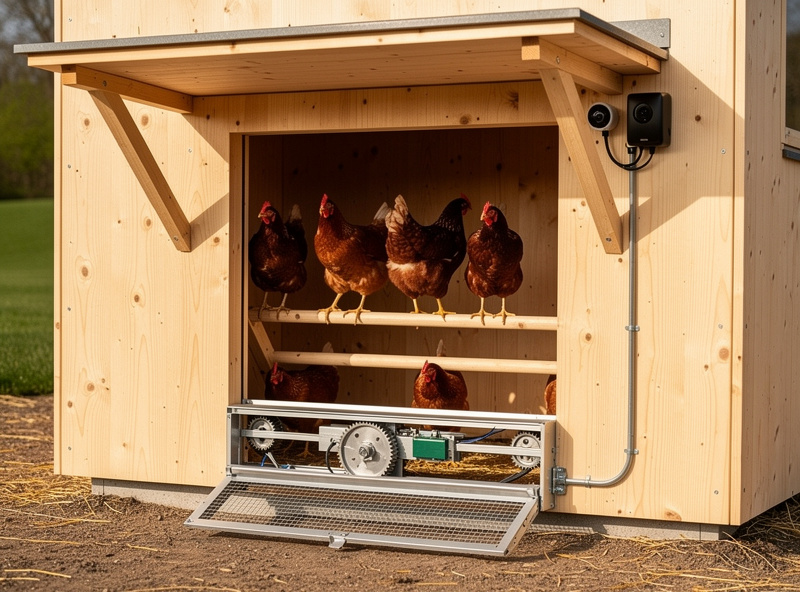
Automatic door sizing: Standard chicken doors run 12 inches wide by 14 inches tall. A 4×6 coop wall has plenty of clearance for any major brand. See our automatic coop door buyer’s guide for dimensional specs by brand and the 7 models compared roundup for picks that fit a 6-bird setup.
Equipment footprint: The smart stack steals roughly 4 sq ft from a 24 sq ft coop — battery backup (2 sq ft mounted high on the wall), automatic feeder (1.5 sq ft), heated waterer (under 1 sq ft). Mount as much as possible on walls or ceiling to preserve floor space. The full smart layout is in our smart chicken coop pillar guide.
Common Mistakes Sizing for 6 Chickens
Four sizing mistakes account for nearly every “I should have gone bigger” post on backyard chicken forums. All four are predictable and avoidable.
Mistake 1 — buying a “fits 8” listing as your 6-bird coop: Manufacturer capacity claims overstate by 30 to 50 percent. A “fits 8” coop usually delivers 4 to 5 birds at proper density. Always check the interior square footage, divide by 4, and trust your math over the listing.
Mistake 2 — skimping on run size: Buyers focus on coop dimensions and treat the run as an afterthought. A 60 sq ft run minimum is non-negotiable for 6 birds. Boredom-driven feather pecking starts within 30 days in undersized runs and compounds over the flock’s lifetime.
Mistake 3 — forgetting the expansion buffer: 78 percent of backyard keepers add birds within 24 months, and 6-bird flocks expand to 8 to 10 birds most often. Sizing for 6 with no buffer means rebuilding. Pick the 6×6 walk-in over the 4×6 lift-top if your local laws allow up to 10 hens.
Mistake 4 — ignoring breed weight class: Standard-breed math (4 sq ft per bird) assumes 5 to 6 lb adults. If your 6 hens are heavy breeds like Orpingtons, Wyandottes, or Brahmas, multiply by 1.5 — a 6-bird Orpington flock needs 36 sq ft of coop, not 24. Mixed-weight flocks always size for the heaviest breed.
Frequently Asked Questions
What size coop do I need for 6 chickens?
Six standard-breed chickens need a 4×6 ft coop (24 square feet) plus a 6×10 ft run (60 square feet) at minimum. For cold climates or expansion to 8 birds, upgrade to a 6×6 ft walk-in coop with a 6×12 ft run.
Can 6 chickens fit in a 4×4 coop?
No. A 4×4 coop is only 16 square feet, which fits 4 standard-breed hens at proper density. Putting 6 birds in that space drops egg production by 15 to 25 percent within 8 weeks and triggers feather pecking that is hard to reverse.
How many nesting boxes for 6 chickens?
Two nesting boxes is correct for 6 hens (one box per 4 to 5 hens, rounded up). Boxes should be 12x12x12 inches, mounted side by side in the darkest corner of the coop, and always lower than the roost bar so hens do not sleep in them.
How big should the run be for 6 chickens?
Sixty square feet is the absolute minimum for 6 birds (10 sq ft per bird). For boredom prevention and reduced feather pecking, target 90 to 120 sq ft. Free-ranging hens 2 to 4 hours daily lets you shrink the run to 48 sq ft.
Can I use a chicken tractor for 6 chickens?
Yes, a 4×8 ft mobile A-frame tractor works for 6 birds in zones 6 and warmer if you move it daily across pasture. Tractors fail as winter coops in cold climates because the floor sits on the ground and provides no insulation. Use a tractor as a 7-month-per-year solution.
What is the best coop style for 6 chickens?
The 4×6 ft lift-top coop is the most popular pick because of fast egg collection and a tight footprint. The 6×6 ft walk-in is better for cold climates and flock expansion. A converted 6×8 ft garden shed offers the best smart-coop layout for under $400 in conversion materials.
Bottom Line: Size for 6, Plan for 8
Picking the right chicken coop for 6 chickens comes down to four numbers: 24 sq ft of coop floor, 60 sq ft of run, 2 nesting boxes, and 60 inches of roost bar. The trap is buying a coop sized exactly to that minimum with no buffer for the 78 percent chance you’ll add birds within 2 years. Step up to the 6×6 walk-in or the 4×8 shed-style and you stay in the same coop through one expansion cycle.
For full sizing math across other flock counts, see our chicken coop size guide. New to keeping chickens? Start with the backyard chickens beginners guide for the full first-flock setup.
Related Guides
- Chicken Coop Size Guide: How Many Chickens Per Square Foot
- How to Build a Smart Chicken Coop: The Complete 2026 Guide
- Automatic Chicken Coop Doors: Complete Buyer’s Guide 2026
- Best Smart Chicken Coop Devices & Automation Tools 2026
- Backyard Chickens for Beginners: Everything You Need to Know in 2026
Related Guides
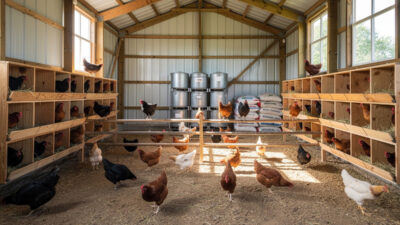
Large Chicken Coops: 25+ Bird Capacity Compared (2026)
A large chicken coop is anything sized for 25 or more birds — typically 100 to 250+ square feet of…
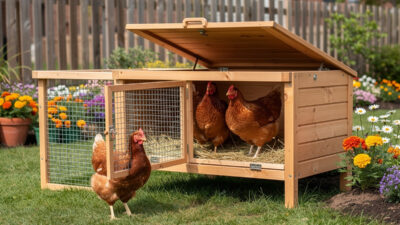
Small Chicken Coops: Best Picks for 2-4 Birds (2026)
A small chicken coop is anything sized for 2 to 4 birds — typically 8 to 16 square feet of…
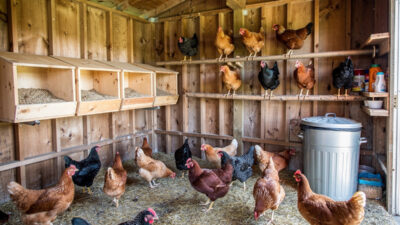
Chicken Coop for 20 Chickens: Walk-In & Shed Picks
A chicken coop for 20 chickens needs 80 square feet of interior floor (an 8×10 ft footprint) plus a 200…