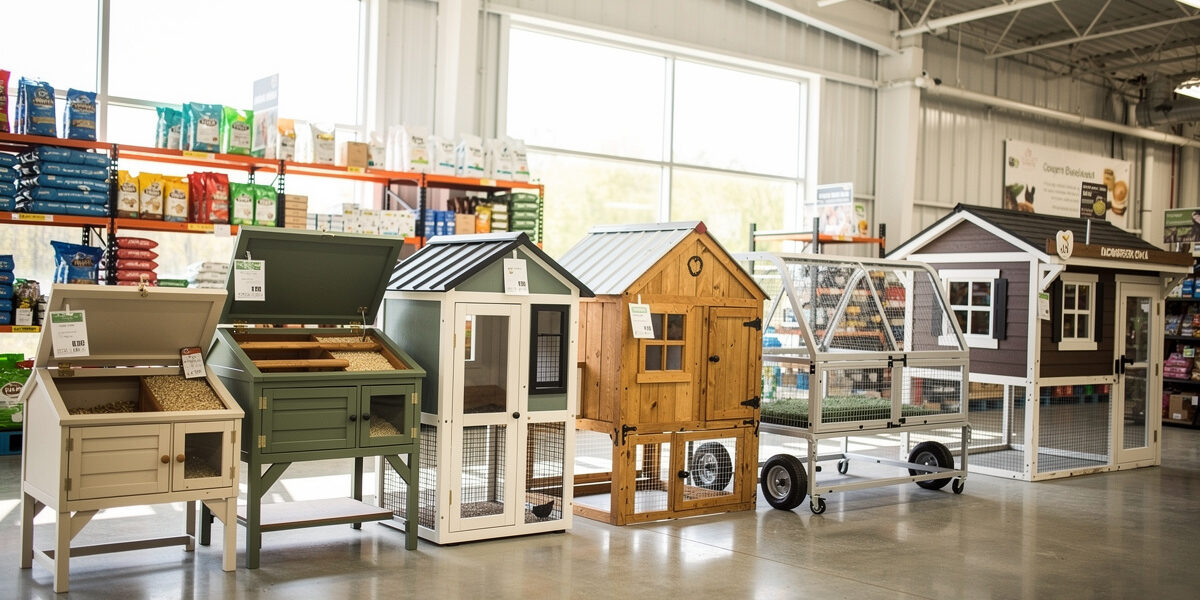
The best chicken coop in 2026 is the one that fits your specific flock size, climate zone, daily-routine reality, and 5-year ownership horizon — not the highest-rated prefab on Amazon. Generic “best coop” rankings ignore that a $500 lift-top works perfectly for 4 backyard hens in zone 7 but fails completely for 12 birds in zone 4. This guide gives you the matrix that actually matters: 7 coop types matched to 5 buyer profiles, with the trade-offs that determine whether the coop lasts 2 years or 15. I have owned or built most of these formats — a big-box lift-top, a mobile tractor, and the insulated walk-in I run my flock in now — so the trade-offs below are the ones I have actually hit.
This guide covers the 7 coop categories competing for “best coop” status, the buyer-profile matrix that maps your situation to the right coop type, the 8 quality markers that separate genuine 5-year coops from 2-year disposables, the smart-coop integration considerations that change pricing math, and the four buying mistakes that drive 80 percent of coop purchase regret. For exact sizing math, see our chicken coop size guide. For a brand-focused breakdown of the 10 manufacturers and retailers worth shopping, see our complete chicken coop brands comparison.
As an Amazon Associate I earn from qualifying purchases.
Seven Chicken Coop Categories Compared
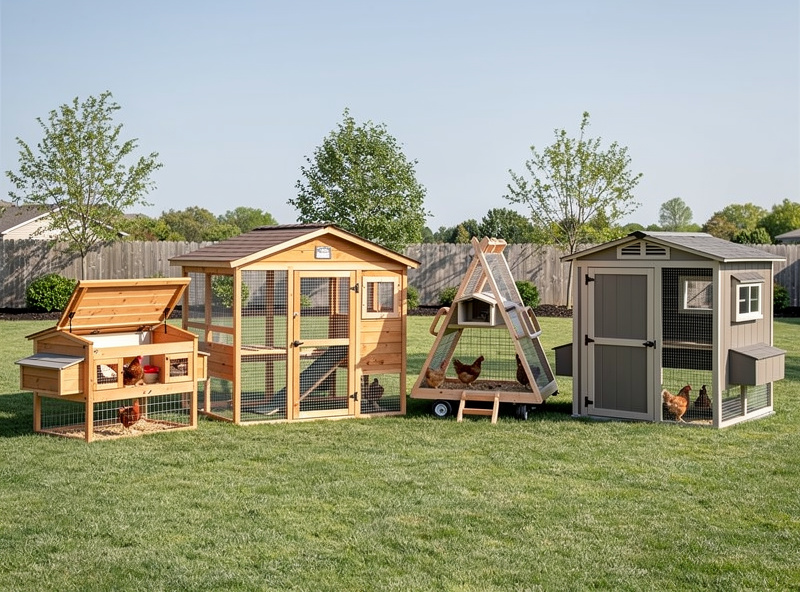
Seven distinct coop categories compete for “best coop” status, each with different price ranges, capacity, and use-case fit. Picking the right category for your situation matters more than picking the best model within the wrong category.
| Coop Type | Bird Capacity | Approx. Cost | Best For | Key Trade-off |
|---|---|---|---|---|
| Compact lift-top (3×4 to 4×4 ft) | 2-4 hens | $280-$550 | HOA-restricted yards, beginners | Limited expansion, fixed format |
| Mid-size lift-top (4×6 to 4×8 ft) | 4-8 hens | $450-$1,200 | Suburban backyards, daily egg collection from outside | Lift-top hinges fail at 18-24 months |
| Walk-in prefab (6×6 to 8×10 ft) | 8-20 hens | $1,200-$3,500 | Mid-flock keepers, cold climates, smart automation | Higher upfront cost, larger footprint required |
| Converted garden shed (8×10 to 12×16 ft) | 15-50 hens | $700-$2,500 (DIY conversion) | Family flocks, value-conscious keepers | Requires 8-15 hours of conversion labor |
| A-frame chicken tractor (4×6 to 4×8 ft) | 2-6 hens | $280-$900 | Daily forage rotation, pasture grazing | Daily-move discipline required, fails in winter |
| Mobile pasture pen (5×10 to 8×12 ft) | 6-15 hens | $900-$2,200 | Small homesteads, weekly rotation, rotational grazing | Heavier, requires terrain-appropriate wheels |
| Custom-built dedicated coop (any size) | Any | $2,000-$15,000 | Long-term keepers, specific design needs, premium materials | Highest upfront cost, longest planning timeline |
Lift-top coops dominate the entry-and-mid market because lift-top access makes daily egg collection a 30-second task instead of 3 minutes of bending into a walk-in. Walk-in coops take over above 8 birds because the larger interior demands human-height access for sustainable daily chores. Converted sheds deliver the best dollar-per-square-foot value at 10+ bird scales. A-frame tractors and mobile pasture pens compete in a different category — forage-focused rotation rather than fixed housing. Custom-built coops are the long-term play for keepers who plan to maintain a flock for 10+ years and want exactly the right coop for their property.
Site Prep and Placement Before You Buy
The coop itself is only half the equation — where you put it decides how much of the eight-quality-marker checklist below actually holds up over five years. I have watched a genuinely well-built coop rot from the bottom up because it sat in a low spot that pooled every spring thaw, and I have watched a cheaper one outlast its rating because the site did half the work the materials couldn’t.
Grade and drainage
Pick the highest, driest patch of yard available, even if it means a shorter run or a longer walk from the house. Standing water at the base of a coop wicks up into framing regardless of how good the lumber is, and it turns deep litter into a soggy mess no amount of pine shavings fixes. If your only option is a low spot, plan on a gravel or paver base under the coop footprint before you ever unbox it — cheaper than replacing rotted floor joists in year three.
Orientation for ventilation, not just sun
Most buying guides tell you to face the coop for morning sun and call it done. I care more about where the ridge vent and soffit gaps end up relative to your prevailing wind. Ventilation that dumps moisture without drafting the birds directly on the roost is the difference between a coop that stays dry through a wet winter and one that doesn’t — orient the high vents so they aren’t pointed straight into your worst weather, and keep the roost out of the direct draft line, even if that means the vents and the roost end up on different walls than the diagram in the manual suggests.
Run footprint and future expansion
Buy — or build — with more run footprint than your current flock needs. It is far cheaper to fence extra ground now than to extend hardware cloth and posts around an existing run later, and “chicken math” being what it is, most keepers end up wanting the extra space within a couple of years anyway.
Buyer Profile Matrix
Your buyer profile determines which coop category fits. Five profile patterns cover most backyard chicken keepers.
Profile 1 — First-time backyard keeper, 3 to 4 hens, mild climate: Best fit is a 4×4 ft lift-top compact coop ($280 to $550). Simple format, low risk, easy to upgrade later if you commit to a longer-term flock. See our 4-chicken coop guide for specific picks.
Profile 2 — Suburban family, 6 to 8 hens, mixed climate: Best fit is a 4×8 ft lift-top or a 6×6 ft compact walk-in ($600 to $1,500). The walk-in costs more but meaningfully cuts daily chore time — no bending or kneeling to collect eggs or scoop litter — and handles winter access better. Detailed picks in our 6-chicken and 8-chicken coop guides.
Profile 3 — Small homestead, 12 to 20 hens, cold climate: Best fit is an 8×10 ft converted garden shed ($700 to $1,800 in conversion materials and labor) or a 6×10 ft prefab walk-in ($2,200 to $4,000). The shed conversion delivers the best value; the prefab walk-in saves 12+ hours of conversion work. See our 12-chicken and 20-chicken coop guides.
Profile 4 — Pasture-focused keeper, 4 to 12 hens, warm climate: Best fit is a 4×8 ft A-frame chicken tractor ($280 to $900) or a 5×10 ft wheeled mobile coop ($900 to $1,800). Daily forage rotation offsets a real slice of the feed bill during growing season — pastured-poultry nutrition research puts forage intake at roughly 5 to 20 percent of total diet depending on bird age and forage quality (The Poultry Site), not the dramatic feed-cost-cut some tractor marketing implies. Full mobile-coop comparison in our portable chicken coops hub.
Profile 5 — Long-term smallholder, 25+ hens, any climate: Best fit is a custom-built dedicated coop or a converted pole barn ($2,500 to $12,000 in materials). Plan for rotational paddocks, in-coop bulk feed storage, dedicated quarantine area, and full smart automation from day one. See our large chicken coop guide for the 25+ bird tier.
Eight Quality Markers That Matter
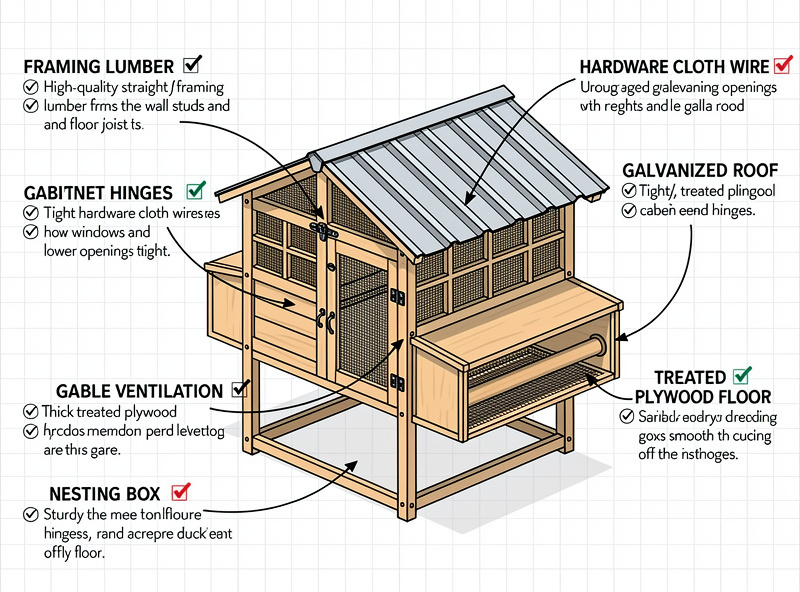
These are the eight specs I check first on any coop — they separate genuine 5-year coops from 2-year disposables, and I have been burned by ignoring more than one of them. Verify before paying — return options drop sharply once a coop is assembled.
1. Framing lumber: 2×2 minimum for any coop, 2×4 for walk-in or 6×6+ ft footprint. Sub-2×2 framing (1×2 or 1×3 pine) fails within 18 to 24 months under typical use, regardless of how nice the coop looks new.
2. Wire panel material: 1/2 inch galvanized hardware cloth, never chicken wire. Chicken wire keeps chickens IN but a determined raccoon defeats it in under 60 seconds. This single spec separates real coops from decorative ones.
3. Roof material: Galvanized corrugated metal lasts 15+ years. Asphalt shingles last 10 to 12 years. Treated plywood lasts 5 to 8 years. Untreated plywood lasts 2 to 3 years before water damage. Match roof material to expected service life.
4. Hardware quality: Cabinet-grade steel hinges (not pot metal), 2-point latches (not single-spring catches). A single spring-loaded hook is the most common failure point I see on breached coops — extension research on predator management documents raccoons working through simple button, hook, and lever latches by trial and error (poultry.extension.org), which is why a second, dissimilar latch mechanism is worth the extra few dollars on any coop you buy.
5. Floor construction: Treated plywood with 1/4 inch drainage gaps at corners, OR molded plastic floor (Eglu-style) that hoses down completely. Avoid plain pine floors that absorb urine and rot within 3 years.
6. Ventilation area: 1 sq ft of high vent area per 10 sq ft of floor space, located above hen height. A sealed coop lets ammonia from droppings build past the 20-25 ppm range where it starts stressing the birds’ respiratory systems (The Poultry Site) faster than most keepers expect, regardless of bedding turnover schedule.
7. Nesting box dimensions: 12x12x12 inch boxes minimum, mounted 18 to 24 inches off the floor and lower than the roost bar. Boxes smaller than 10×10 inches force hens to lay outside the box.
8. Roost bar specs: 2×4 lumber laid flat-side up (not on edge). 10 inches of bar per standard bird, mounted at 18 to 24 inches above the floor. Multiple bars at the same height — never staggered, which triggers nightly dominance fights. See the chicken coop bedding guide for the floor-and-roost surface combinations that work.
Predator-Proofing Checklist Before You Buy
A coop that looks solid in a listing photo can still be a raccoon buffet if the latch and the mesh gauge are wrong. Before you buy — new, used, or DIY plans — check these against whatever you are about to spend money on:
- Mesh, not chicken wire: half-inch hardware cloth on every opening, including under-floor vents. Chicken wire keeps birds in; it does not keep anything determined out.
- Two-step latches: a single spring-loaded hook is the weak point on more coops than any other single spec — extension research on predator management specifically documents raccoons working through buttons, hooks, and simple lever latches by trial and error (poultry.extension.org). A second, dissimilar latch mechanism — a carabiner or slide bolt in addition to the spring hook — is cheap insurance most prefab coops skip.
- Buried apron, not just a fence line: extension guidance recommends burying hardware cloth at least 12 inches to stop diggers. Verify the coop or run plans you’re buying account for this — most prefab kits ship with zero dig-barrier hardware included.
- No gaps at the roofline: check where the roof meets the walls. A gap large enough for a hand is large enough for a raccoon to reach through and grab a bird off the roost.
On my own coop, the auto-door works because it sits on top of a welded steel run frame with a buried hardware-cloth apron — it’s one layer of a system, not a standalone fix, and that’s the mindset worth buying into before you spend money on any single component.
Cold-Climate Buying Checklist (Zones 3-5)
Mistake 3 below touches on climate zone, but cold-climate buying deserves its own checklist, because it’s the variable most “best coop” round-ups written from a mild-climate perspective get wrong.
Insulation is about moisture control, not just warmth
The instinct is to buy the most insulated box available and call the winter problem solved. Insulation matters, but ventilation matters more — a tightly sealed, well-insulated coop with inadequate ridge or soffit venting traps moisture from respiration and droppings, and that moisture is what actually damages a comb in cold weather, not the raw temperature. Extension research on cold-weather poultry health is consistent on this: frostbite is driven mainly by moisture, not cold itself, and a dry, well-ventilated coop prevents it far more reliably than heat lamps or extra insulation alone (poultry.extension.org). Buy — or build — for airflow above the birds’ heads that still keeps the roost out of a direct draft, not a sealed box.
Door mechanism cold tolerance
Not every automatic door handles sub-zero temperatures well. Battery-powered doors lose capacity fast in the cold, and some gear-driven mechanisms bind up when grease thickens below freezing. If you are buying for a genuinely cold climate, check the manufacturer’s rated operating temperature before you buy, not after the first hard freeze.
Water freezing is a design problem, not a maintenance problem
Budget coops rarely ship with any provision for winter water. Plan the heated-waterer power run and mounting point at purchase time, not as an afterthought in November. On my own coop the heated waterer runs off a freeze-watch automation rather than staying plugged in around the clock — a small detail, but the kind of thing that separates a coop bought by someone who has actually run one through a real winter from one designed by a catalog copywriter in a mild climate.
Smart Coop Integration: Does Your Coop Support It?
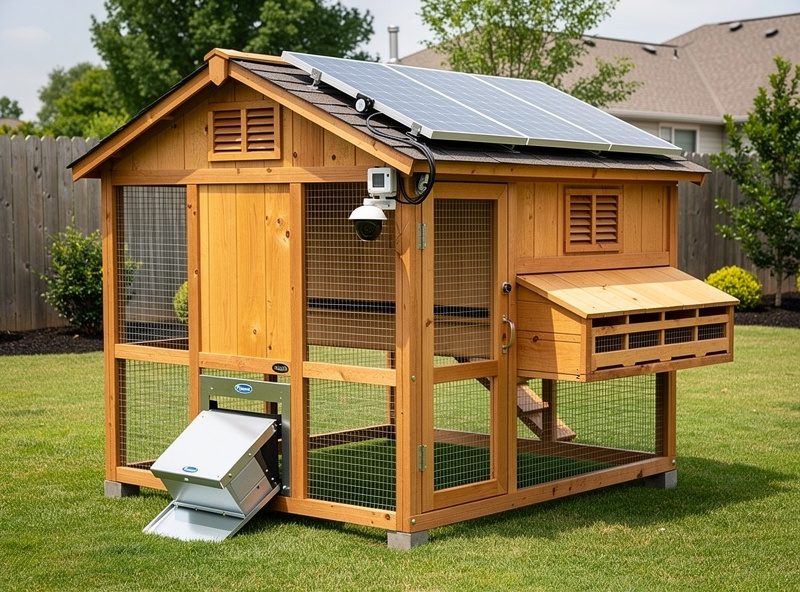
Smart-coop automation is the fastest-growing segment of chicken keeping in 2026, but most prefab coops weren’t designed with smart features in mind. Five integration considerations determine whether your coop supports a $400 to $800 smart automation upgrade or requires custom modifications that double the project cost.
Auto-door wall area: Standard automatic chicken doors need a flat wall area roughly 24 to 30 inches tall to clear the runners and mounting hardware, with the actual pop-hole opening itself running closer to 10 to 13 inches depending on brand and model (ChickenGuard’s own product-measurements page is the one to check against your coop before buying). Many A-frame coops have angled walls throughout, making auto-door installation awkward. Verify before buying. See our automatic coop door buyer’s guide for dimensional specs by brand.
Sensor mounting surfaces: Wireless temperature, humidity, and motion sensors need flat interior wall surfaces with line of sight to the rest of the coop interior. Solid-walled coops support this naturally; mostly-wire coops require custom sensor brackets.
Power source: Static coops can use wired electrical from the house. Mobile coops require battery-powered or solar-charged hardware. Plan power infrastructure before buying smart components.
Camera placement: A single 1080p camera covers up to 48 sq ft of coop floor. Above that footprint, plan for 2 cameras at opposite corners. Position so nesting boxes are in frame — that’s the most actionable smart-coop data stream. Our smart coop monitoring guide covers selection details.
Equipment footprint: The smart-coop stack steals 4 to 6 sq ft of floor space (battery backup, automatic feeder, heated waterer, sensor hub). In small coops, that’s a meaningful percentage of capacity. See our best smart coop devices guide for full hardware inventory and our smart chicken coop pillar guide for layout patterns.
Cost Math: New vs Used vs DIY
The total cost of a chicken coop covers three components: initial purchase, ongoing maintenance, and eventual replacement. A $300 prefab that fails in 3 years costs more long-term than a $900 quality coop that lasts 12 years.
New prefab coops: $280 to $4,000 depending on capacity. Best for buyers who value time-to-deployment over cost optimization. Verify the eight quality markers before paying.
Used coops (Craigslist, Facebook Marketplace): $100 to $1,500, typically 40 to 70 percent of new price. Best for budget-conscious buyers willing to inspect in person. Watch for: rust on wire panels, rot at ground-contact framing, hinge play, roof water damage. Anything that creaks or flexes under load will fail within 6 to 12 months.
DIY builds: $200 to $1,500 in materials plus 8 to 30 hours of build time depending on coop complexity. Best for handy keepers who want exactly the right design and materials. The $200 DIY automation guide covers smart-feature integration into DIY builds.
Converted structures: $300 to $1,800 in conversion materials (existing shed, barn corner, or stall) plus 6 to 18 hours of conversion labor. Best value at 12+ bird scales where prefab walk-ins become disproportionately expensive.
5-Year Maintenance Cost View
The sticker price is only one component of total coop ownership cost. The 5-year maintenance picture varies dramatically across coop types and tells you which coops actually deliver value over time. The ranges below come from the failure patterns I’ve tracked across coops I’ve owned, built, or been asked to repair or replace for other keepers — not a formal industry survey, so treat the maintenance-cost figures as realistic ranges to budget around rather than a guarantee for any single coop.
| Coop Type | 5-Yr Maintenance | Replacement Probability | 5-Yr Total Cost (initial + maintenance) |
|---|---|---|---|
| Sub-$250 prefab (entry-level) | $80-$200 (paint, hinges, wire patches) | High — most fail well before year 3 | $330-$700 (replacement included) |
| $280-$550 quality compact lift-top | $100-$250 (paint, hinges, roof maintenance) | Low — a solid majority last past year 5 | $380-$800 |
| $600-$1,200 mid-size lift-top | $150-$350 (paint, hinges, lift mechanism) | Low — replacement by year 5 is uncommon | $750-$1,550 |
| $1,200-$3,500 walk-in prefab | $200-$500 (paint, door hardware, vent maintenance) | Very low — replacement within 5 years is rare | $1,400-$4,000 |
| $700-$1,800 converted shed | $150-$400 (paint, ventilation upgrades, predator hardening) | Very low — a sound shed conversion routinely outlasts 5 years | $850-$2,200 |
| $280-$900 chicken tractor | $120-$300 (wheel replacement, wire patches, ground-contact rot) | Medium — wheels and ground-contact wear drive a real share of 5-year replacements | $400-$1,200 |
The pattern is consistent across the entire prefab market: cheap prefab coops cost more long-term than mid-tier quality coops because of high replacement probability and the hidden costs of dealing with failed materials, broken hinges, and accelerated bedding turnover from drafty construction. The $600 to $1,200 mid-size lift-top is the sweet spot for typical 4 to 8 bird backyard flocks — best dollar-per-year-of-service in the market. Converted sheds dominate the 12+ bird scale on the same metric. Premium walk-in prefabs win when conversion labor isn’t an option but cost the most upfront.
Common Coop Buying Mistakes
These four mistakes are the ones I see repeated most often in “I should have bought differently” posts on backyard chicken forums, and in the coops I’ve been asked to help fix after the fact.
Mistake 1 — trusting capacity claims: Manufacturer “fits X chickens” claims routinely overstate what a flock can comfortably live in long-term. Always verify usable interior square footage, divide by 4 sq ft per standard bird, and trust your math over the listing. The chicken coop size guide covers the math by flock count.
Mistake 2 — buying for current flock with no expansion buffer: “Chicken math” is close to a universal law — most backyard keepers end up adding birds within a year or two of starting. Build coop capacity at 150 percent of starting flock size — a 4-bird starter flock should live in a 6-bird sized coop. Cost difference is usually $150 to $400; cost of a second coop is $400 to $1,500.
Mistake 3 — ignoring climate zone: Cold-climate (zones 3 to 5) flocks need solid-walled coops with R-13 insulation minimum. Hot-climate (zones 8+) flocks need raised coops with maximum cross-ventilation. Generic “any climate” coops fail at the temperature extremes. New keepers from our beginners guide should match coop format to local climate first.
Mistake 4 — skipping the smart-coop check: Adding smart automation to an unsuitable coop costs 2x more and rarely works as well as a coop designed with smart integration in mind. If you plan to automate within 24 months, verify smart-coop compatibility before buying.
Warranty, Return Windows, and What They Actually Cover
Warranty terms vary enormously across the prefab market, and the fine print matters more than the length of the coverage window. Before buying, check three things specifically.
What’s actually covered: Most prefab warranties cover structural framing defects, not wear items — hinges, latches, and roof sealant are frequently excluded or covered for a much shorter window than the frame itself. Read the exclusion list, not just the headline “5-year warranty” claim.
Return window on assembled coops: Many retailers only accept returns on unassembled coops still in original packaging. Once you’ve put a coop together — which you generally need to do to properly inspect the quality markers above — the return window can close fast. Inspect materials as thoroughly as possible from photos and reviews before committing, since your practical return option shrinks the moment the first bolt goes in.
Shipping damage claims: Flat-pack coops shipped via freight arrive damaged often enough that it’s worth photographing every panel before assembly. Manufacturers generally require damage claims within a short window of delivery, not whenever you get around to noticing a cracked panel mid-build.
Frequently Asked Questions
What is the best chicken coop to buy?
The best chicken coop depends on flock size, climate, and daily-routine fit. For 3 to 4 hens in mild climates, a 4×4 ft lift-top ($280 to $550) works well. For 6 to 8 hens, a 4×8 ft lift-top or 6×6 ft walk-in ($600 to $1,500). For 12+ hens, a converted 8×10 ft shed ($700 to $1,800) delivers the best value. There is no universal best – match the coop type to your buyer profile.
How much should a good chicken coop cost?
A quality coop costs $280 to $550 for 2-4 hens, $600 to $1,500 for 6-8 hens, $1,200 to $3,500 for 8-20 hen walk-in prefabs, and $700 to $1,800 for converted shed builds. Avoid prefab coops under $250 – they typically use thin OSB and chicken wire that fail within 2 to 3 years.
What is the best chicken coop for cold climates?
For zones 3 to 5, the best coop is a converted garden shed or custom build with R-13 insulated walls, galvanized metal roofing, and tight-fitting human access door. Prefab walk-in coops with insulation packages also work but cost more. Avoid open-bottom or lightly-walled portable coops as primary winter housing in cold climates.
Are walk-in chicken coops worth the money?
Yes for 8+ birds. Walk-in coops meaningfully cut daily chore time compared to lift-top coops at the same capacity – no bending or kneeling to collect eggs or scoop litter. The cost premium is real, but most keepers doing daily chores themselves find it worth paying once flock size passes 8 birds. For 4 to 6 birds, lift-top coops still win on cost-to-convenience ratio.
Can I buy a chicken coop on Amazon?
Yes, but verify carefully. Amazon stocks coops from $150 to $1,500 with highly variable quality. Capacity claims are often inflated – verify interior square footage and divide by 4 sq ft per bird. Avoid sub-$280 listings that use chicken wire instead of hardware cloth. Read recent reviews specifically mentioning 2+ year service life.
How long should a chicken coop last?
A quality chicken coop with proper materials lasts 8 to 15 years. Premium materials (galvanized metal roof, treated lumber, sealed ball bearing wheels on mobile coops) push service life to 15+ years. Cheap prefab coops at $150 to $250 typically fail within 2 to 3 years – the false economy is significant when you factor replacement cost.
Bottom Line: Match Coop to Buyer Profile, Not to Generic Rankings
The best chicken coop for you is determined by your flock size, climate, daily-routine reality, and 5-year ownership horizon — not by generic “best coop” rankings that ignore your situation. Use the buyer-profile matrix to identify the right category first, then verify the eight quality markers within that category. Plan for the smart-coop integration check if you’ll automate within 24 months, and build expansion buffer into your sizing math.
For deep dives on each cluster topic: chicken coops for sale covers the 6 buying channels, cheap chicken coops covers budget picks, backyard chicken coop guide for suburban yards, prefab chicken coop tier comparison, Amish chicken coops for premium quality, custom chicken coops for bespoke needs, and chicken coops near me for local sourcing. For sizing math, see the chicken coop size guide; for mobile-format alternatives, the portable chicken coops hub.
Related Guides
- Chicken Coop Size Guide: How Many Chickens Per Square Foot
- Portable Chicken Coops & Tractors: Complete 2026 Guide
- How to Build a Smart Chicken Coop: The Complete 2026 Guide
- Automatic Chicken Coop Doors: Complete Buyer’s Guide 2026
- Best Smart Chicken Coop Devices & Automation Tools 2026
- Backyard Chickens for Beginners: Everything You Need to Know in 2026
- Chicken Coop for 6 Chickens: Best Picks & Layout
Related Guides
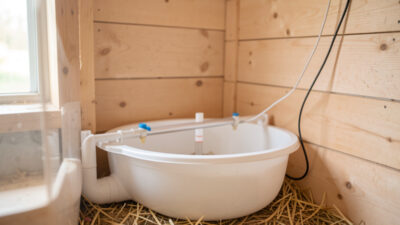
Water-Level and Flow Sensors: Knowing the Waterer Is Empty Before They Do
A coop water-level sensor tells you the drinker is going dry — or freezing solid — before the flock does,…
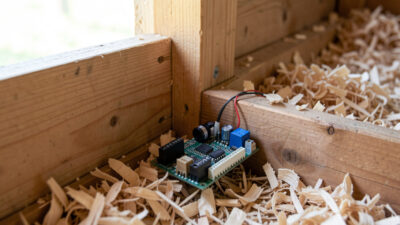
Ammonia Sensors for the Coop: Catching Air Problems Before You Smell Them
An ammonia sensor belongs at the birds’ breathing height, close to the litter where the gas is generated, because that…

Node-RED vs Home Assistant Automations for the Coop: When to Use Which
Use native Home Assistant automations for the coop’s simple, safety-critical rules — the sunrise door, the freeze-watch waterer — and…