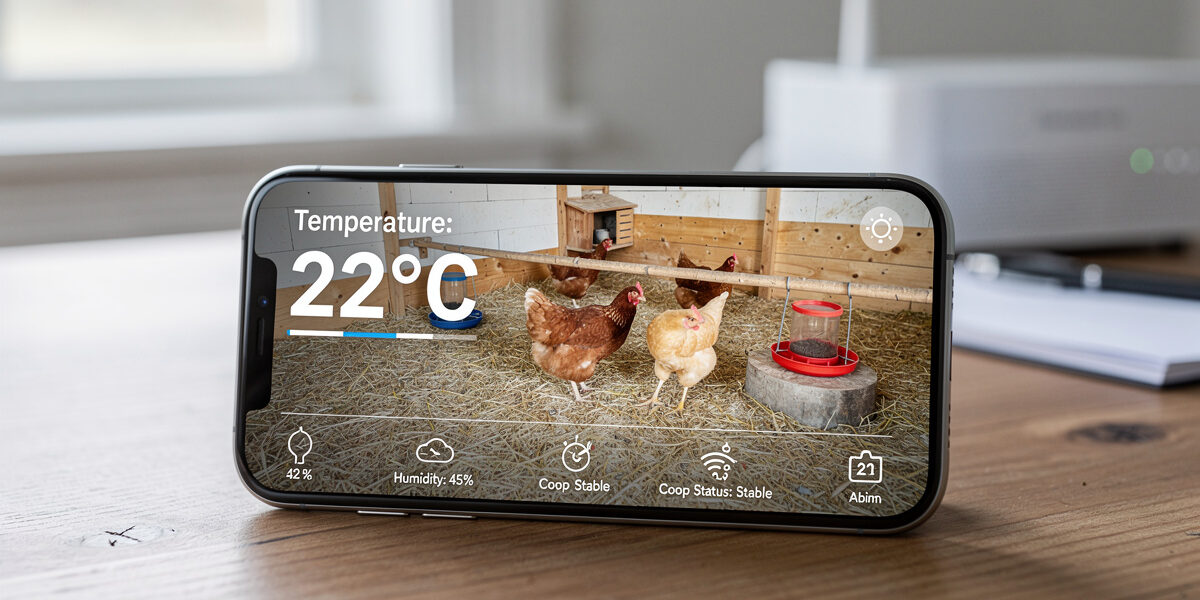
The true power of a smart chicken coop lies not just in automation, but in visibility. Knowing what is happening inside your coop — whether you are at work, on vacation, or simply inside your house — transforms chicken keeping from a guessing game into a data-driven, confident practice. WiFi cameras, environmental sensors, and smartphone apps provide the eyes and ears you need to monitor flock health, confirm automated systems are functioning, and catch problems before they become disasters.
This comprehensive guide explores the monitoring technologies available in 2026. From basic WiFi cameras to sophisticated sensor networks integrated with smart home platforms, we cover everything you need to build a comprehensive visibility system for your coop. Whether you want simple peace of mind or full IoT integration with automated responses, this guide shows you how. I run cameras, temperature and humidity sensors, and a freeze-watch automation on my own coop, all wired into Home Assistant — so the picks below are filtered through what actually survives a Nordic winter at the run edge and what quietly dies there.
What to Monitor: The Critical Data Points
Effective coop monitoring tracks four essential categories:
1. Visual Surveillance (Security & Behavior)
Why It Matters: Cameras let you check on your flock anytime, from anywhere. Visual monitoring serves multiple purposes:
- Predator detection: Identify threats before they breach security
- Flock behavior: Spot illness, aggression, or egg-eating early
- Automation confirmation: Verify automatic doors open/close correctly
- Egg collection timing: Know when eggs are laid for optimal collection
- Visitor observation: See who (or what) visits your coop when you are not there
- Peace of mind: The simple ability to “check on the chickens” reduces worry
2. Environmental Conditions (Temperature & Humidity)
Why It Matters: Chickens are hardy but not invincible. Temperature extremes and humidity imbalances cause serious health issues:
- Heat stress: Temperatures above 85°F start reducing egg production; short periods above roughly 94-95°F can overwhelm a chicken’s temperature regulation entirely and become life-threatening (eXtension Poultry)
- Cold stress: Below freezing, chickens burn excessive calories; combs and wattles freeze, driven mainly by trapped coop moisture rather than the cold alone (Ohio State University Extension)
- Humidity: Above 70% humidity causes respiratory problems; below 30% causes dry skin and feather issues
- Ammonia buildup: Poor ventilation combined with high humidity damages respiratory systems
Environmental monitoring provides early warning before conditions become dangerous.
3. Security Status (Door Position & Entry Detection)
Why It Matters: Knowing your coop is secure provides the foundation for peace of mind:
- Door position confirmation: Is the automatic door actually closed?
- Entry detection: Did a predator attempt to breach the coop?
- Motion alerts: Unusual activity inside or outside the coop
- Unauthorized access: Human intruders (unfortunately, chicken theft is real)
4. System Health (Automation Function Monitoring)
Why It Matters: Automated systems can fail. Monitoring those systems ensures they are working:
- Automatic door operation: Did it open this morning? Close this evening?
- Feeder status: Is feed dispensing? Is the hopper empty?
- Waterer function: Is water flowing? Is it frozen?
- Power status: Are devices receiving power? Battery levels adequate?
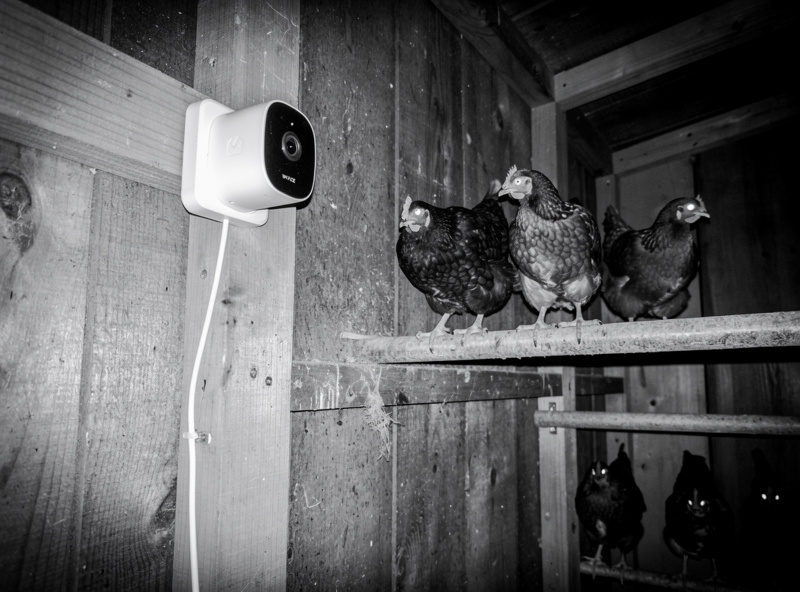
Camera Options: From Basic to Advanced
Cameras form the backbone of coop monitoring. Here are the primary options ranked by capability and cost:
As an Amazon Associate I earn from qualifying purchases.
1. Basic WiFi Security Cameras
What They Are: Consumer-grade indoor/outdoor security cameras designed for home use, repurposed for coop monitoring.
Best Options in 2026:
Wyze Cam v3 — Best Value
Check current price on Amazon →
- Resolution: 1080p Full HD with color night vision
- Weather rating: IP65 (outdoor rated)
- Features: Two-way audio, motion detection, continuous recording
- Night vision: Starlight sensor provides color night vision
- Storage: Cloud or local microSD (up to 256GB)
- Smart home: Works with Alexa, Google Assistant
- Price: $35-$49
Why It Works for Coops: Incredible value. Color night vision lets you distinguish chicken behaviors in low light. Weatherproofing handles coop humidity and temperature. Local storage eliminates subscription requirements.
Blink Outdoor — Best Battery Life
Check current price on Amazon →
- Resolution: 1080p HD
- Power: 2 AA lithium batteries (2-year life)
- Weather rating: IP65
- Features: Motion detection, two-way audio, night vision
- Storage: Cloud (subscription) or local with Sync Module
- Smart home: Alexa integration
- Price: $99-$129 (1 camera + Sync Module)
Why It Works for Coops: Two-year battery life eliminates wiring hassles. Motion alerts notify you of activity. Blink’s app is stable and user-friendly. Expandable to multiple cameras.
2. PTZ (Pan-Tilt-Zoom) Cameras
What They Are: Motorized cameras that pan (rotate horizontally), tilt (rotate vertically), and sometimes zoom — letting you look around remotely.
Best Option: Reolink E1 Outdoor
Check current price on Amazon →
- Resolution: 5MP Super HD
- PTZ: 355° pan, 50° tilt
- Power: AC or solar panel option
- Weather rating: IP65
- Features: Person/vehicle detection, color night vision, two-way audio
- Storage: MicroSD, cloud, or Reolink NVR
- Price: $99-$149
Why PTZ Matters for Coops: One camera covers the entire coop interior. Pan to check nesting boxes, tilt to see roosts, zoom in on specific chickens. No blind spots. Particularly valuable for larger coops or when you need to inspect specific areas.
3. Solar-Powered Cellular Cameras
What They Are: Cameras that use 4G LTE cellular data instead of WiFi, powered by solar panels — perfect for coops without internet access.
Best Option: Reolink Go PT Plus
Check current price on Amazon →
- Resolution: 4MP 2K
- Connectivity: 4G LTE (SIM card required)
- Power: Battery with solar panel option
- PTZ: 355° pan, 140° tilt
- Features: Color night vision, person detection, two-way audio
- Storage: MicroSD, cloud
- Price: $249-$299 (plus cellular data plan)
Why Cellular Matters: No WiFi infrastructure required. Works on remote properties, farms, or anywhere with cell coverage. Solar panel option provides truly off-grid operation. Data plans cost $10-20/month typically.
4. AI-Enhanced Smart Cameras
What They Are: Cameras with onboard artificial intelligence that can distinguish between people, vehicles, animals, and objects — reducing false alerts.
Example: Google Nest Cam (Outdoor)
Check current price on Amazon →
- Resolution: 1080p with HDR
- AI Features: Familiar face detection, package detection, animal detection
- Weather rating: IP54
- Storage: Cloud (subscription required)
- Smart home: Deep Google Home integration
- Price: $179-$199 plus subscription
AI Benefits: Receive alerts for “person detected” vs “motion detected.” Reduce spam notifications from shadows, trees, or your own chickens moving. More intelligent monitoring means you actually pay attention to alerts.
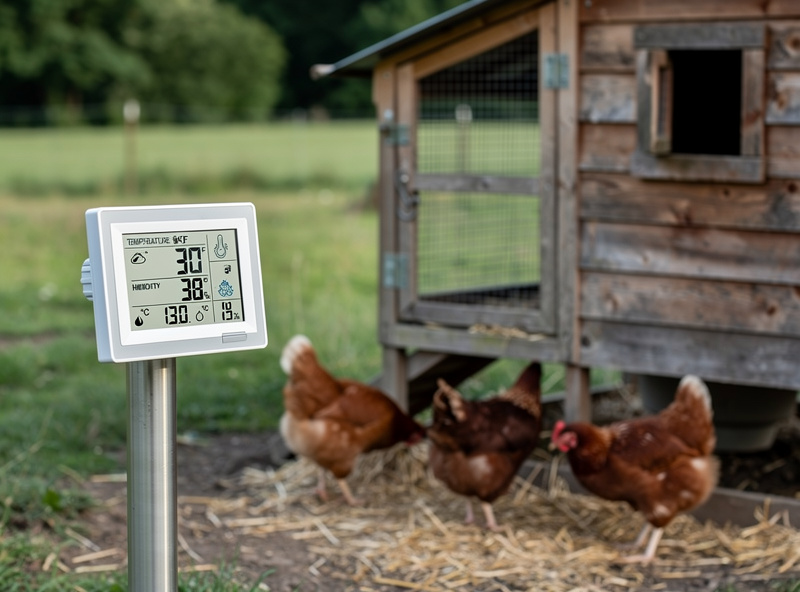
Environmental Sensors: Temperature, Humidity, and Air Quality
While cameras show you what is happening, sensors tell you what you cannot see — environmental conditions that affect flock health.
Basic Temperature and Humidity Sensors
SensorPush Wireless Thermometer/Hygrometer — Best Overall
Check current price on Amazon →
- Monitors: Temperature and humidity
- Connectivity: Bluetooth (with optional WiFi gateway)
- Accuracy: ±0.5°F temperature, ±3% humidity
- Battery: CR2477 (1+ year life)
- Data: Unlimited historical logging via app
- Alerts: Phone notifications when thresholds exceeded
- Price: $49-$69 per sensor, $99 gateway
Why It Excels: Professional-grade accuracy in a consumer package. The SensorPush app displays beautiful graphs showing temperature and humidity trends. Identify patterns (“coop heats up 3 hours after sunrise”) and optimize ventilation accordingly.
Govee WiFi Thermometer Hygrometer — Best Budget Smart Sensor
Check current price on Amazon →
- Monitors: Temperature and humidity
- Connectivity: Direct WiFi (no gateway needed)
- Accuracy: ±1°F temperature, ±5% humidity
- Battery: AAA (6-month life)
- Smart home: Works with Alexa and Google Assistant
- Price: $24-$39
Why It Excels: Direct WiFi connectivity eliminates the need for a separate gateway. The Govee app is polished and reliable. Smart home integration enables voice commands: “Alexa, what is the temperature in the chicken coop?”
Advanced Environmental Monitoring
Air Quality Sensors
Beyond temperature and humidity, advanced keepers monitor:
- Ammonia levels: MQ-137 sensors detect ammonia from droppings (dangerous above 25 ppm)
- CO2 levels: Poor ventilation causes dangerous buildup
- Particulate matter: Dust levels affect respiratory health
- VOCs (Volatile Organic Compounds): Detect mold, mildew, chemical contamination
Products like the Awair Element or IQAir AirVisual Pro track these advanced metrics, though they are overkill for most backyard coops.
Sensor Placement Strategy
Proper sensor positioning ensures accurate readings:
Temperature Sensors:
- Mount at chicken height (2-3 feet off floor) — not at ceiling where heat rises
- Avoid direct sunlight (causes false high readings)
- Keep away from heaters, lamps, or vents (local temperature ≠ ambient temperature)
- Place near roosting area (where chickens spend most time)
- Consider multiple sensors for large coops (zones may vary)
Humidity Sensors:
- Position away from waterers (local humidity spikes)
- Good air circulation but not directly in drafts
- At chicken height, not floor level
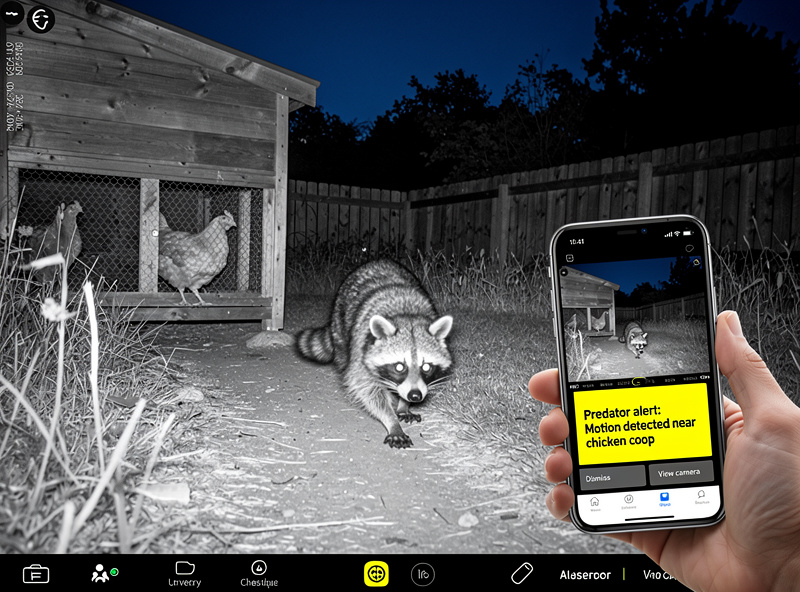
Smart Alerts and Notifications
The value of monitoring lies in alerts — knowing immediately when something requires attention.
Essential Alerts to Configure
1. Temperature Extremes
- High temp alert: 85°F (time to increase ventilation)
- Critical high: 95°F (emergency cooling needed)
- Low temp alert: 35°F (check heating systems)
- Critical low: 20°F (frostbite risk)
2. Humidity Imbalances
- High humidity: 75% (ventilation problem)
- Low humidity: 25% (respiratory irritation risk)
3. Motion Detection (Appropriate Times)
- Nighttime motion: Potential predator or intruder
- Daytime absence: All chickens should be active — possible illness or escape
4. Door Operation
- Door failed to open by 8 AM alert
- Door failed to close by sunset alert
- Unusual door operation (opened outside scheduled times)
5. Device Offline
- Camera disconnected
- Sensor offline
- Power loss detected
Configuring Smart Alert Rules
Avoid alert fatigue — too many notifications and you start ignoring them. Set intelligent rules:
Time-Based Rules:
- Disable motion alerts during normal daytime activity (8 AM – 6 PM)
- Enable critical temperature alerts 24/7
- Door alerts only during expected operation windows
Threshold Hysteresis:
- Temperature alert at 85°F, clear at 80°F (prevents rapid on/off alerts)
- Require 10 minutes above threshold before alerting (prevents false alarms from brief spikes)
Escalation:
- First alert: Phone notification
- Second alert (5 minutes later): Text message
- Third alert (10 minutes later): Phone call
Smart Home Integration: Building a Cohesive Ecosystem
Individual monitoring devices work better when integrated into a unified smart home system. Here is how to build your ecosystem:
Platform Options
1. Home Assistant — Most Powerful
Open-source home automation platform that integrates virtually any device, and the brain I run my own coop on — door schedule, freeze-watch on the heated waterer, and every sensor feeding one dashboard. The gold standard for tech enthusiasts.
Capabilities:
- Integrate any WiFi, Zigbee, Z-Wave, or Bluetooth device
- Create complex automation rules
- Custom dashboards showing all coop data
- Local processing (no cloud dependency)
- Free and open source
Example Automation:
“If coop temperature > 90°F AND time between 10 AM and 6 PM, turn on ventilation fan AND send phone notification AND lower automatic door 50% to increase airflow.”
Hardware Requirements: Raspberry Pi 4 or old computer to run Home Assistant software.
2. Amazon Alexa Ecosystem — Easiest Setup
For households already using Alexa, many coop devices integrate seamlessly.
Capabilities:
- Voice commands: “Alexa, show me the chicken coop”
- Routines: “Alexa, good morning” opens coop door, dispenses feed, reports temperature
- Drop-in feature: Two-way communication through camera
- Smart display integration: Show coop camera on Echo Show
Compatible Devices: Wyze, Blink, Ring, Nest cameras; Govee sensors; smart plugs for controlling heaters/fans.
3. Google Home — Android Integration
Similar capabilities to Alexa for Google/Android households.
Capabilities:
- Voice commands: “Hey Google, what is the coop temperature?”
- Nest Hub displays: Show camera feeds on smart displays
- Routines: Automated sequences combining multiple actions
- Phone notifications through Google Home app
Creating Automation Rules
Here are practical automation rules for your coop:
Climate Control Automation:
- IF temperature > 85°F THEN turn on ventilation fan
- IF temperature > 95°F THEN send critical alert AND turn on emergency cooling
- IF temperature < 35°F AND after 6 PM THEN turn on heat lamp
- IF humidity > 75% THEN increase ventilation speed
Security Automation:
- IF motion detected AND time between 10 PM and 5 AM THEN send alert AND record video
- IF door position = open AND time > 9 PM THEN send critical alert
- IF camera offline > 10 minutes THEN send technical alert
Health Monitoring Automation:
- IF feed consumption < 50% of average THEN send alert (possible illness)
- IF no motion detected for > 4 hours during daytime THEN check camera
- IF temperature fluctuation > 20°F in 1 hour THEN alert (door or heater malfunction)
DIY Monitoring: Raspberry Pi and Arduino Solutions
For tech enthusiasts, building custom monitoring systems offers unlimited customization at low cost.
Raspberry Pi Coop Monitor
What You Can Build:
- Temperature and humidity logging
- Camera streaming (using Pi Camera Module)
- Door position sensors (magnetic switches)
- Web dashboard accessible from anywhere
- Email/SMS alerts for threshold breaches
- Integration with Home Assistant
Components Needed:
- Raspberry Pi 4 ($55-$75)
- DHT22 or BME280 temperature/humidity sensor ($5-$10)
- Pi Camera Module ($25-$35)
- Magnetic door sensors ($5-$10)
- MicroSD card, power supply, case ($30-$40)
Total Cost: $120-$170 for complete monitoring station
Software Options:
- MotionEyeOS: Camera-focused OS with motion detection
- Home Assistant: Full smart home platform
- Custom Python scripts: Maximum flexibility
Arduino Environmental Logger
Simpler than Raspberry Pi, Arduino excels at dedicated sensing tasks:
Capabilities:
- Temperature and humidity logging to SD card
- Real-time clock for timestamped data
- LCD display showing current conditions
- Optional: WiFi module for remote monitoring
Components:
- Arduino Uno or Nano ($10-$15)
- DHT22 sensor ($8-$12)
- Real-time clock module ($3-$5)
- SD card module ($5-$8)
- LCD display ($10-$15)
- Optional ESP8266 WiFi module ($5-$8)
Total Cost: $40-$65 (add $5-$8 for WiFi)
For detailed DIY build instructions, see our smart coop automation under $200 guide.
Installation Best Practices
Camera Placement Strategy
Proper positioning maximizes monitoring effectiveness:
Interior Coop Camera:
- Mount in corner, high on wall (8-10 feet), angled down
- Should see: roosting bars, nesting boxes, feeder/waterer, general floor area
- Avoid: Direct sunlight, heat lamps (causes glare), dusty areas
- Power: Run outdoor-rated extension cord or use battery camera
Run/Entry Camera:
- Position to see coop door and main run area
- Capture approach paths (predator detection)
- Weatherproof essential (outdoor-rated camera)
- Night vision critical (most predator activity at night)
Nesting Box Camera (Optional):
- Small camera inside nesting box area
- Identify which hens are laying and when
- Detect egg-eating behavior early
- Privacy consideration: Position to see eggs, not detailed chicken anatomy
WiFi Signal Strength Optimization
Weak WiFi is the #1 cause of camera and sensor failures. Every camera I have lost at the coop went to weak WiFi or cold-killed batteries at the run edge, never to a bad sensor. Solutions:
Test Before Buying:
- Use smartphone WiFi analyzer app at coop location
- Speed test: Need 2+ Mbps upload for reliable camera streaming
- Signal strength: -60 dBm or stronger (bars do not tell full story)
If Signal is Weak:
- WiFi extender: Position halfway between router and coop ($30-$60)
- Mesh network node: Add dedicated outdoor mesh point ($100-$150)
- Powerline adapter: Uses electrical wiring to extend network ($50-$100)
- Point-to-point wireless bridge: Professional solution for distant coops ($100-$200)
Cellular Alternative:
- If WiFi extension not feasible, use 4G LTE cellular cameras
- Data plans: $10-20/month typically
- Works anywhere with cell coverage, regardless of WiFi infrastructure
Budget Tiers: Monitoring for Every Price Point
Tier 1: Basic Monitoring ($50-$100)
Equipment:
- Wyze Cam v3 ($35-$49)
- Govee WiFi Temperature Sensor ($24-$39)
Capabilities:
- Visual monitoring via smartphone
- Temperature alerts
- Motion detection notifications
- Basic night vision
Best For: Beginners testing monitoring waters, budget-conscious keepers, small flocks.
Tier 2: Enhanced Monitoring ($150-$250)
Equipment:
- Blink Outdoor 2-camera system ($180-$200)
- SensorPush with WiFi Gateway ($150)
- OR Wyze Cam + Govee sensors + smart plug for equipment control ($150-$180)
Capabilities:
- Multiple camera angles (interior + exterior)
- Temperature and humidity tracking
- Historical data and trends
- Smart home integration
- Remote equipment control (heaters, fans)
Best For: Serious keepers wanting comprehensive monitoring, those with irregular schedules needing remote management.
Tier 3: Professional Monitoring ($300-$600)
Equipment:
- Reolink PTZ camera or 3-camera system ($200-$400)
- Multiple environmental sensors ($100-$150)
- Home Assistant hub ($100-$150)
- Smart switches and plugs ($50-$100)
Capabilities:
- Complete visibility (pan-tilt-zoom coverage)
- Advanced automation rules
- Unified dashboard and control
- Predictive alerts based on patterns
- Integration with all smart coop systems
Best For: Tech enthusiasts, large flocks, commercial operations, those wanting maximum data and control.
Tier 4: DIY Budget Build ($80-$150)
Equipment:
- Raspberry Pi 4 with camera module ($100-$120)
- Environmental sensors ($20-$40)
- Custom software (free)
Capabilities:
- Custom camera streaming
- Temperature/humidity logging
- Web dashboard
- Email alerts
- Unlimited customization
Best For: Tech hobbyists, those wanting specific custom features, budget builders with technical skills.
For detailed budget build instructions, see our DIY automation under $200 guide.
Bottom Line: Visibility Transforms Chicken Keeping
Coop monitoring technology in 2026 makes keeping chickens easier, safer, and more enjoyable than ever before. From a simple $35 camera providing peace of mind to sophisticated sensor networks predicting problems before they occur, there is a monitoring solution for every budget and technical comfort level.
The investment pays dividends immediately: catching a predator attempt at 2 AM, noticing a sick chicken through behavioral changes, confirming your automatic door closed properly before bed. These moments of visibility eliminate worry and enable proactive management.
Start with a basic camera and temperature sensor. Expand as your needs and budget allow. The goal is not comprehensive surveillance — it is confidence. Knowing your flock is safe, comfortable, and healthy whether you are standing in the coop or sitting in an airport 1,000 miles away.
That confidence is worth every penny.
Ready to complete your smart coop system? Continue with these guides:
- Automatic chicken coop doors — the foundation of predator protection
- Automated feeders and waterers — eliminate daily chores
- Best smart coop devices — complete product comparisons
- Budget DIY options — build for under $200
Return to our comprehensive smart chicken coop building guide for the complete automation blueprint.
Frequently Asked Questions
Do coop cameras need an internet connection?
To view a live feed on your phone from work, yes, you need a Wi-Fi or cellular connection. However, standalone trail cameras can record footage locally to an SD card without internet.
How far can my Wi-Fi reach for a smart coop?
A standard home router generally reaches 100 to 150 feet outdoors. If your coop is further, you will need an outdoor Wi-Fi extender or a long-range wireless mesh network.
Why do I need a temperature sensor in my coop?
Chickens are susceptible to extreme heat and frostbite. A smart sensor sends instant alerts to your phone if the coop becomes dangerously hot or drops below freezing, allowing you to intervene.
Will predators trigger a motion camera?
Yes. Modern security cameras with AI detection can often differentiate between people, animals, and moving branches. They can alert you instantly if a raccoon or fox approaches the coop run at night.
What camera resolution do I need for a chicken coop?
1080p Full HD is sufficient for chicken coop monitoring. Higher resolutions like 2K or 4MP consume more bandwidth and storage without meaningful improvement for the viewing distances inside a coop.
Related Articles
Related Guides
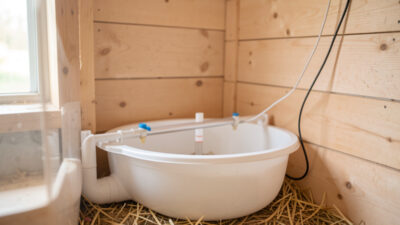
Water-Level and Flow Sensors: Knowing the Waterer Is Empty Before They Do
A coop water-level sensor tells you the drinker is going dry — or freezing solid — before the flock does,…
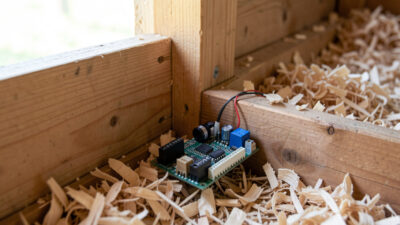
Ammonia Sensors for the Coop: Catching Air Problems Before You Smell Them
An ammonia sensor belongs at the birds’ breathing height, close to the litter where the gas is generated, because that…

Node-RED vs Home Assistant Automations for the Coop: When to Use Which
Use native Home Assistant automations for the coop’s simple, safety-critical rules — the sunrise door, the freeze-watch waterer — and…