Compare pine shavings, hemp, straw, wood pellets, and sand for chicken coop bedding. Learn about absorbency, cost, deep litter method, and seasonal bedding strategies.
Why Bedding Choice Matters for Your Flock
The bedding in your chicken coop does far more than make the floor look tidy. It absorbs moisture, controls odors, insulates against cold, and provides a comfortable surface for your birds to walk and scratch on. Choosing the best chicken coop bedding directly impacts your flock’s respiratory health, foot condition, and overall well-being.
I run the deep-litter method on pine shavings in my own coop, and I have cycled hemp, straw, and wood pellets through it over the years to see what actually holds up through a wet Nordic winter. With dozens of bedding options available, from traditional pine shavings to innovative hemp and coffee ground blends, finding the right material can feel overwhelming. This guide compares every major bedding type on cost, absorbency, dust levels, and availability so you can make an informed decision for your coop.
As an Amazon Associate I earn from qualifying purchases.
What Makes Good Chicken Coop Bedding
Before comparing specific materials, understanding the qualities that define excellent bedding helps you evaluate any option you encounter.
Absorbency
Good bedding absorbs moisture from droppings and spilled water quickly. High absorbency keeps the coop floor dry, reduces ammonia levels, and means less frequent cleaning. Poorly absorbent bedding becomes soggy within days, creating a breeding ground for bacteria and parasites. If mites or lice take hold despite clean bedding, the chicken mites and lice guide covers species identification, treatment timing, and repeat-treatment schedules.
Low Dust
Chickens have sensitive respiratory systems. Dusty bedding irritates their airways and can lead to chronic respiratory disease. The best bedding materials are kiln-dried or processed to minimize dust while maintaining their absorbent properties.
Insulation Value
Bedding provides a thermal barrier between your chickens and the cold coop floor. Thicker, fluffier materials trap more air and provide better insulation. In winter, 4-6 inches of quality bedding can make a noticeable difference in coop temperature.
Compostability
Used bedding becomes valuable compost for your garden. Materials that break down quickly and add nitrogen to your compost pile are ideal. Avoid bedding treated with chemicals or containing synthetic materials that do not decompose naturally.
Top Chicken Coop Bedding Materials Compared
Here is a detailed comparison of the most popular bedding options used by backyard chicken keepers.
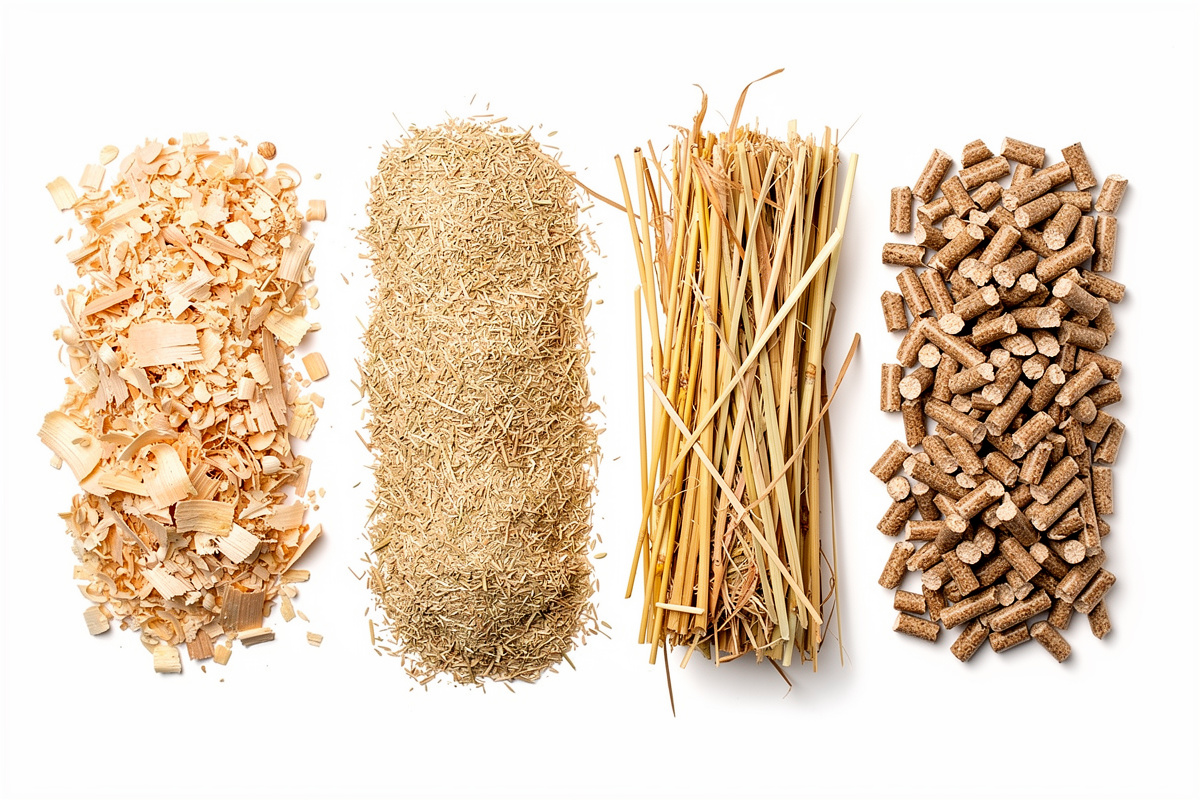
Pine Shavings
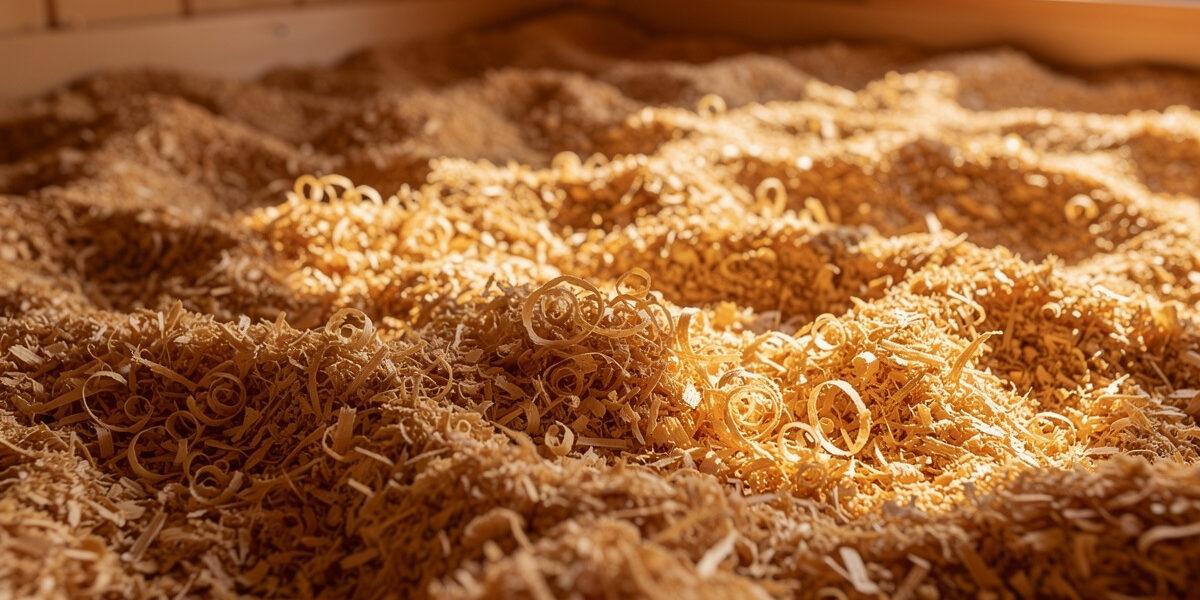
Pine shavings are the gold standard for chicken coop bedding and the most widely recommended material. They offer an excellent balance of absorbency, low dust, and affordability.
Absorbency: High. Pine shavings absorb moisture well and maintain their structure even when damp.
Dust level: Low to moderate. Look for “kiln-dried” or “low dust” labeled products. Avoid fine shavings that create excessive dust.
Cost: $5-8 per compressed bale, covering approximately 10-12 square feet at 3-inch depth.
Availability: Widely available at farm supply stores, pet stores, and online retailers.
Best for: All climates and coop types. The default choice for most flock owners.
Hemp Bedding
Hemp bedding has gained popularity in recent years as a premium alternative to wood shavings. It is significantly more absorbent than pine and produces virtually no dust.
Absorbency: Very high. Hemp absorbs up to 4 times its weight in moisture, outperforming pine shavings by a wide margin.
Dust level: Extremely low. Hemp processing removes fine particles, making it ideal for chickens with respiratory sensitivity.
Cost: $15-25 per bale, covering 15-20 square feet at 3-inch depth. Higher upfront cost but lasts longer between changes.
Availability: Growing availability at specialty feed stores and online. Less common in rural areas.
Best for: Owners prioritizing low dust and maximum absorbency. Excellent for coops with limited ventilation.
Straw
Straw is a traditional bedding material that remains popular due to its low cost and easy availability. However, it has notable drawbacks compared to modern alternatives.
Absorbency: Low to moderate. Straw does not absorb moisture well and tends to mat down, creating wet patches.
Dust level: Moderate. Straw can contain mold spores and dust, especially if stored outdoors.
Cost: $3-6 per bale, covering 15-20 square feet. The cheapest option per bale but requires more frequent replacement.
Availability: Widely available at farm stores, garden centers, and directly from farmers.
Best for: Budget-conscious owners in dry climates. Better suited as nesting box material than floor bedding.
Pine Shavings vs Straw vs Hemp
| Property | Pine Shavings | Straw | Hemp Bedding |
|---|---|---|---|
| Absorbency | High | Low-Moderate | Very High |
| Dust Level | Low | Moderate | Very Low |
| Cost per Bale | $5-8 | $3-6 | $15-25 |
| Longevity | 2-3 weeks | 1-2 weeks | 4-6 weeks |
| Compost Quality | Good | Good | Excellent |
| Odor Control | Good | Fair | Excellent |
Wood Pellets
Wood pellets, typically sold as horse stall or stove fuel pellets, are a compressed bedding option that expands when wet. They are highly absorbent and produce minimal dust.
Absorbency: Very high. Pellets break down into sawdust when they absorb moisture, creating a fine, absorbent layer.
Dust level: Low when dry, moderate when wet and broken down.
Cost: $6-10 per 40-lb bag. One bag covers a standard coop for 3-4 weeks.
Best for: Owners who want high absorbency at a lower cost than hemp. Works well in the deep litter method.
Sand
Sand is an unconventional but effective bedding material used by some experienced chicken keepers. Coarse construction sand (not play sand) provides excellent drainage and is easy to clean.
Absorbency: Low. Sand does not absorb moisture but drains it away, keeping the surface dry.
Dust level: Low when dry, but fine sand particles can become airborne.
Cost: $3-5 per 50-lb bag. Initial setup requires 2-3 inches depth, making it a moderate investment.
Best for: Warm climates and coops with excellent drainage. Not recommended for cold regions as sand does not insulate.
Other Bedding Options
Coffee ground bedding: Some roasters sell used coffee grounds as bedding. They are highly absorbent and naturally deodorizing, but availability is limited and they can mold if not dried properly.
Shredded paper: Free and readily available, but ink chemicals and poor absorbency make it a poor primary bedding choice. Acceptable as a temporary emergency option.
Leaves: Shredded dry leaves work in a pinch but break down quickly and offer minimal absorbency. Better used as a carbon layer in your compost pile than as coop bedding.
The Deep Litter Method
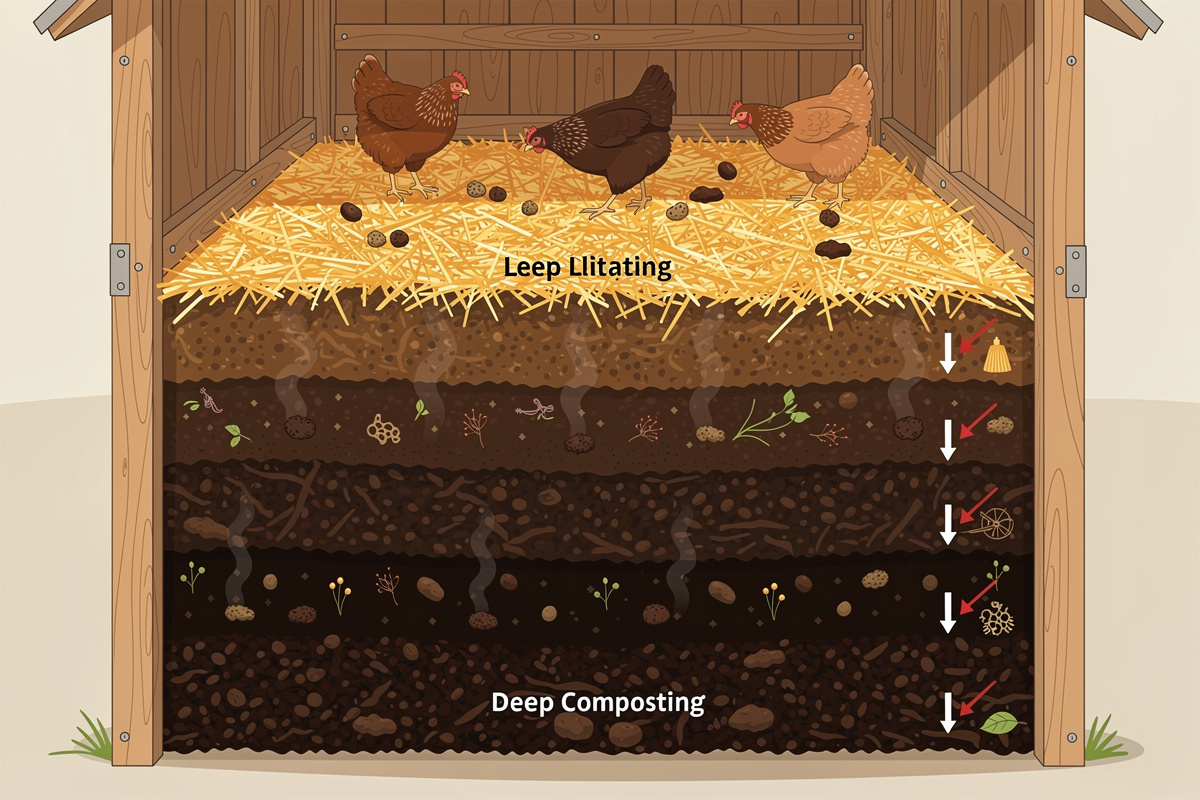
The deep litter method transforms your bedding into a self-composting system that reduces cleaning frequency and produces rich compost for your garden.
How It Works
Start with 4-6 inches of bedding material on the coop floor. Instead of removing soiled bedding weekly, add a fresh layer on top and turn the existing bedding with a rake or garden fork. The lower layers compost in place, generating heat that warms the coop in winter. On my own deep litter the pack runs noticeably warmer than the outside air by midwinter — I turn it weekly with a fork and let it ride. Remove the entire composted mass once or twice per year.
Best Materials for Deep Litter
Pine shavings and wood pellets work best for the deep litter method. Their structure allows air circulation between layers, which is essential for proper composting. Straw mats down too quickly and creates anaerobic conditions. Hemp works well but the higher cost makes the deep litter method less economical.
Maintenance Schedule
| Task | Frequency | Details |
|---|---|---|
| Add fresh bedding layer | Weekly | Add 1-2 inches of fresh material on top |
| Turn bedding | Weekly | Rake or fork to aerate lower layers |
| Check moisture level | Weekly | Bedding should feel like a wrung-out sponge |
| Full cleanout | 1-2 times per year | Remove all composted material and start fresh |
Benefits of Deep Litter
- Reduces cleaning labor by 70-80% compared to weekly full cleanouts
- Generates heat through composting, warming the coop 5-10°F in winter
- Produces finished compost ready for garden use
- Creates beneficial microbial activity that suppresses harmful bacteria
- Reduces ammonia odors when managed correctly
Bedding for Different Seasons
Your bedding needs change with the seasons. Adjusting your approach keeps your flock comfortable year-round.
Winter Bedding Strategy
In cold weather, increase bedding depth to 6-8 inches for maximum insulation. Pine shavings and hemp are the best winter choices because they trap warm air effectively. The deep litter method shines in winter as the composting process generates supplemental heat. Avoid sand, which conducts cold from the floor directly to your chickens’ feet. In my Nordic winters I run 6-8 inches of pine over deep litter; sand in a cold coop is a frostbite risk, not bedding.
Summer Bedding Strategy
In hot weather, reduce bedding depth to 2-3 inches to minimize heat retention. Sand becomes a good summer option because it stays cool and drains quickly. Increase cleaning frequency to prevent odor buildup, as higher temperatures accelerate bacterial growth in soiled bedding.
Wet Climate Considerations
If you live in a region with high rainfall or humidity, prioritize bedding with the highest absorbency. Hemp bedding and wood pellets handle moisture better than any other material. Ensure your coop has adequate ventilation to allow moisture to escape, regardless of which bedding you choose.
Bedding Depth Guidelines
Getting the bedding depth right affects both chicken comfort and your maintenance workload.
| Coop Area | Minimum Depth | Recommended Depth | Notes |
|---|---|---|---|
| Floor (standard) | 3 inches | 4-6 inches | Deeper in winter for insulation |
| Floor (deep litter) | 4 inches | 6-8 inches | Build up over time with weekly additions |
| Nesting boxes | 2 inches | 3-4 inches | Softer material preferred (straw or shavings) |
| Run area | 1 inch | 2-3 inches | Sand or pine shavings work best |
Common Bedding Mistakes to Avoid
Even experienced chicken keepers make bedding errors that affect flock health. Here are the most common pitfalls and how to avoid them.
Using Cedar Shavings
Cedar contains aromatic oils (phenols) that most poultry sources link to respiratory irritation in chickens, particularly young chicks. The strong scent that makes cedar appealing for human use is the same compound flagged as the concern. It is a genuinely debated topic — a small minority of poultry specialists have used cedar without issue — but the overwhelming majority recommendation, and the low-risk choice for your flock, is to always choose kiln-dried pine over cedar. If a product is labeled “cedar-pine blend,” avoid it entirely.
Insufficient Bedding Depth
A thin layer of bedding does not absorb enough moisture and provides no insulation. Chickens standing on a bare or thinly bedded floor are prone to bumblefoot, a painful bacterial infection of the foot pad. Maintain at least 3 inches at all times.
Ignoring Moisture Levels
Wet bedding is the single biggest cause of ammonia buildup in coops. Ammonia damages chickens’ respiratory tracts and makes them susceptible to disease — moisture management is the same root issue extension guidance flags for winter frostbite, not a separate problem (Ohio State University Extension). If bedding feels damp to the touch, it is time to add fresh material or do a partial cleanout.
Mixing Incompatible Materials
Combining different bedding types can create problems. For example, mixing straw with pine shavings causes the straw to mat and trap moisture against the shavings, reducing overall absorbency. Stick with one primary material for consistent results.
Cost Comparison: Annual Bedding Expenses
The true cost of bedding depends on how much you use, how often you replace it, and the material’s longevity. Here is an annual cost estimate for a standard 4×8 coop housing 6 chickens.
| Material | Bales per Year | Cost per Bale | Annual Cost |
|---|---|---|---|
| Pine Shavings | 20-24 | $6 | $120-144 |
| Hemp Bedding | 8-10 | $20 | $160-200 |
| Straw | 30-36 | $4 | $120-144 |
| Wood Pellets | 12-15 bags | $8 | $96-120 |
| Sand | 6-8 bags | $4 | $24-32 |
While sand appears cheapest, remember it provides no insulation and requires a different cleaning approach. Wood pellets offer the best value among traditional bedding materials, combining low cost with high absorbency.
Where to Buy Chicken Coop Bedding
Finding quality bedding at a reasonable price depends on your location and the material you choose.
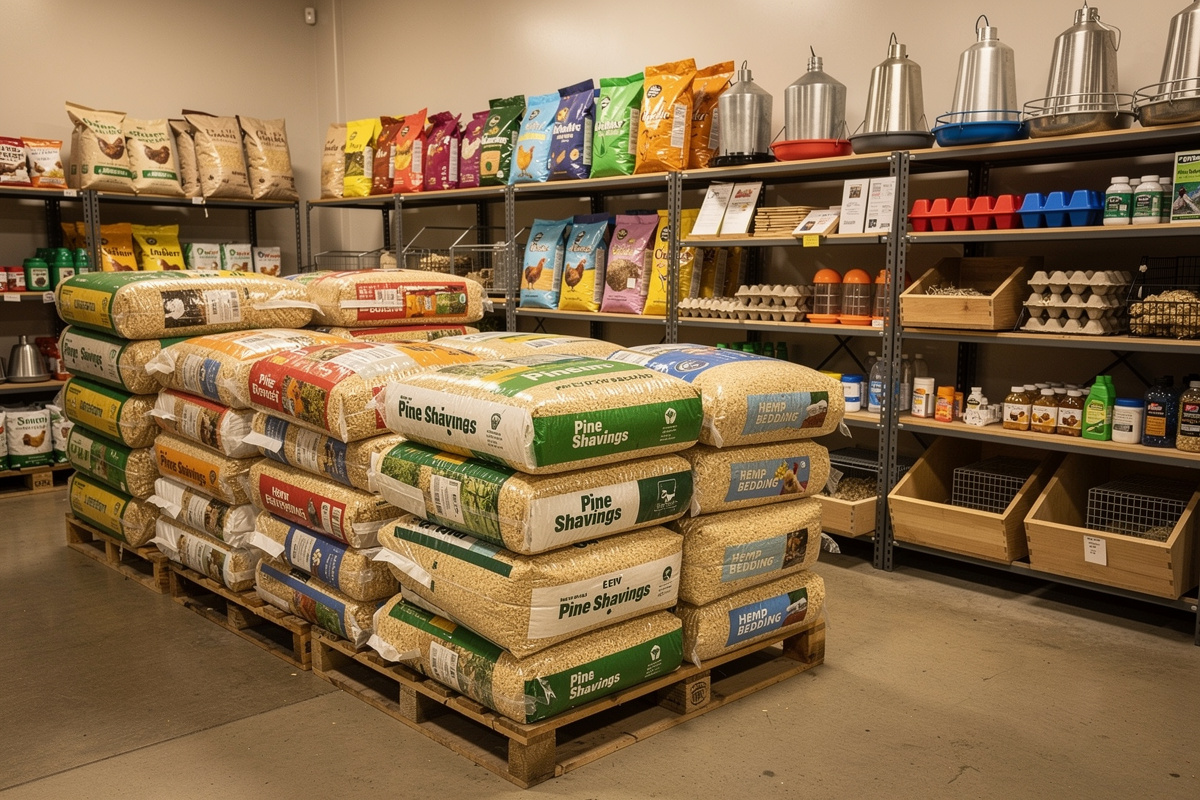
Farm supply stores: Tractor Supply, Rural King, and local farm stores carry pine shavings, straw, and wood pellets in bulk at the best prices.
Pet stores: Petco and PetSmart sell pine shavings in smaller packages at a premium. Useful for emergency top-ups but not cost-effective for regular use.
Online retailers: Amazon and Chewy offer hemp bedding and specialty materials that may not be available locally. Factor in shipping costs when comparing prices.
Direct from sawmills: If you live near a sawmill, you can often purchase pine shavings directly at a fraction of retail cost. Call ahead to confirm they sell poultry-grade shavings (untreated and kiln-dried).
Related Articles
- Backyard Chickens for Beginners: Everything You Need to Know in 2026
- How to Build a Smart Chicken Coop: The Complete 2026 Guide
- Smart Chicken Coop Monitoring: Cameras, Sensors & Apps That Actually Work
- How Automatic Chicken Coop Doors Work: Sensors, Motors, and Safety
- Automated Chicken Feeders & Waterers: The Set-It-and-Forget-It Guide
Frequently Asked Questions
What is the best bedding for a chicken coop?
Pine shavings are the best overall chicken coop bedding, offering the ideal balance of absorbency, low dust, affordability, and wide availability. Hemp bedding is the premium choice with superior absorbency and virtually no dust, but costs 2-3 times more than pine shavings.
How often should you change chicken coop bedding?
With the traditional method, replace bedding every 2-3 weeks. Using the deep litter method, add fresh bedding weekly and do a full cleanout only 1-2 times per year. The deep litter method saves significant time while producing excellent compost.
Can I use straw as chicken coop bedding?
Straw can be used as chicken coop bedding but is not ideal. It has low absorbency, tends to mat down, and can harbor mold spores. Straw works better as nesting box material than as floor bedding. Pine shavings or hemp are better choices for the coop floor.
Is cedar safe for chicken coop bedding?
No, cedar is not safe for chicken coop bedding. Cedar wood contains phenols and aromatic oils that damage chickens’ respiratory systems. Always use pine shavings instead, which are kiln-dried to remove harmful compounds while remaining safe for poultry.
How deep should chicken coop bedding be?
Chicken coop bedding should be 4-6 inches deep for standard management, or 6-8 inches for the deep litter method. Nesting boxes need 3-4 inches of softer material. In winter, increase floor bedding depth for additional insulation against cold.
Related Guides
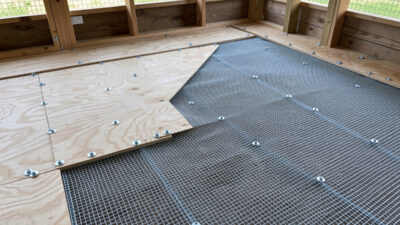
Rat-Proof Coop Floor: Stop Diggers Coming Up Through It
Rats don’t come over the coop wall — they come up through the floor, gnawing through plywood or tunneling under…
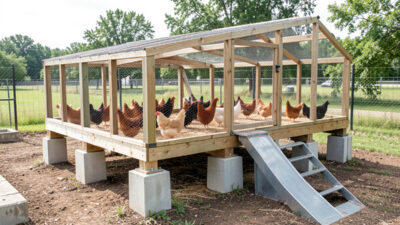
Raising a Coop Off the Ground: Footings & Skids
Every coop with a wooden floor should sit off the ground — a few inches at minimum, ideally enough to…
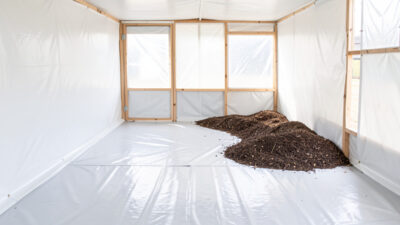
Vinyl & Linoleum Coop Floor: The Easy-Clean Upgrade
Sheet vinyl or linoleum over a plywood subfloor is the single best-value upgrade you can make to a coop floor:…