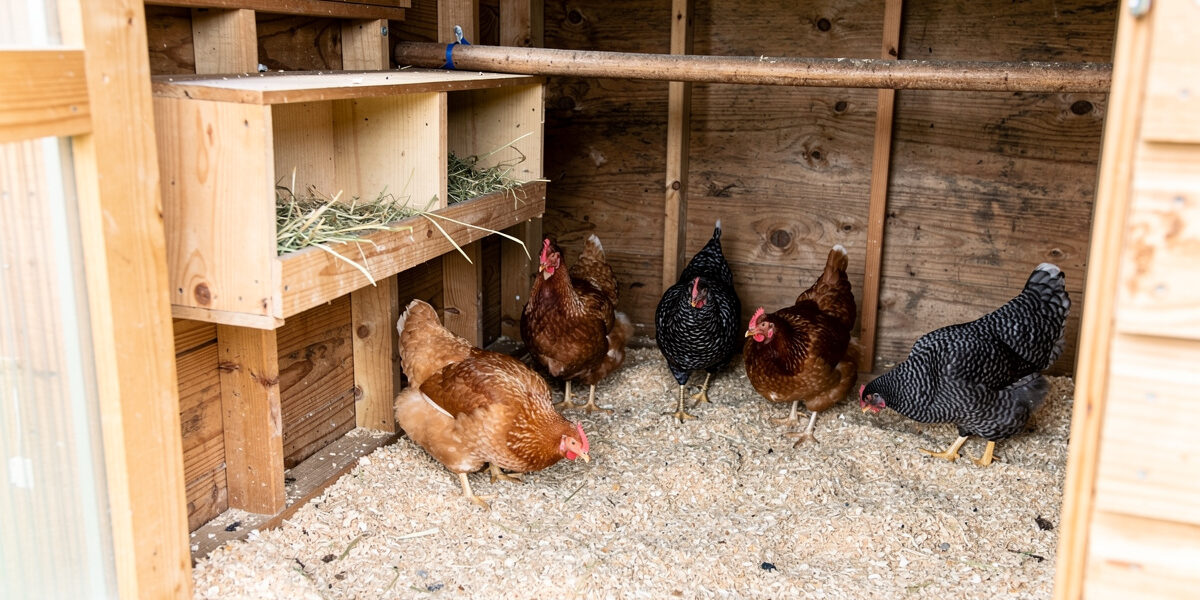
A chicken coop for 8 chickens needs 32 square feet of interior floor (a 4×8 ft footprint) plus an 80 square foot run, total 112 sq ft of yard space, consistent with university extension per-bird sq-ft guidance (Alabama Cooperative Extension). Eight birds is the transition flock count: the last size where a lift-top backyard coop is practical and the first size where walk-in coops start paying back the price difference. Most “fits 8” prefab listings noticeably overstate true comfortable capacity once you measure the real interior.
This guide breaks down which format to pick at this transition point, the three coop styles that genuinely deliver 8-bird capacity, why 8 birds is the most common HOA-permitted “max flock” size, and the four sizing mistakes specific to the lift-top-versus-walk-in decision. I run a walk-in myself, and at eight birds the deciding factor is rarely the dimensions — it’s whether you’ll still want to bend into a lift-top to swap a frozen waterer in January. Full sizing math for other flock sizes is in our chicken coop size guide.
As an Amazon Associate I earn from qualifying purchases.
How Big Should a Coop for 8 Chickens Be?
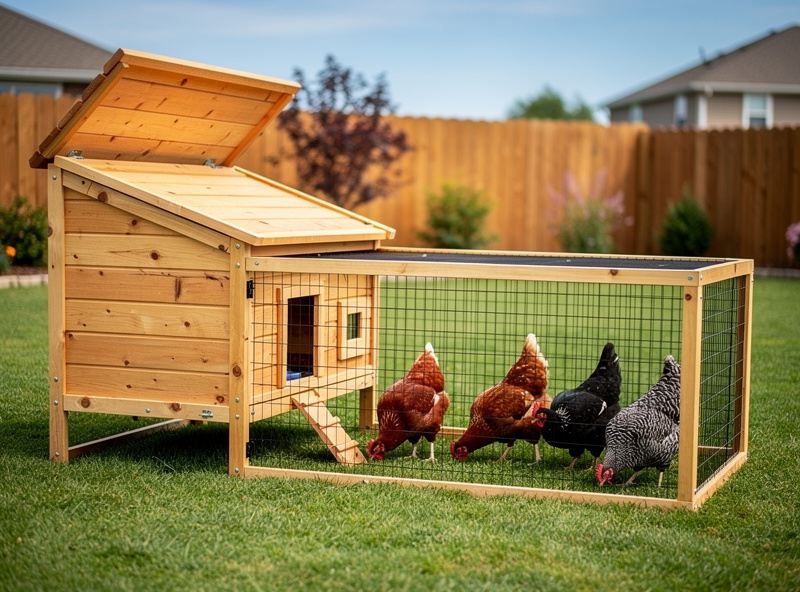
Eight standard-breed hens need 32 square feet of coop floor (4×8 ft) plus an 80 square foot run (8×10 or 10×8 ft). For cold climates or heavy breeds, target 40 to 48 sq ft of coop and 120 sq ft of run. Mixed breeds with bantams included can stay closer to the 32 sq ft minimum.
Eight birds sits at a structural threshold. A 4×8 ft coop is the largest practical lift-top dimension — push past 4 feet of front-to-back depth and you can no longer reach the back of the coop without climbing in. That’s why “fits 10” lift-top listings either fail the lift mechanism or force you to step inside daily, defeating the lift-top purpose entirely. Eight is the last flock size where lift-top still works.
Egg output at 8 birds hits a meaningful threshold too: 4 to 5 dozen eggs per week at peak production. That’s the sweet spot for a typical 4-person family with extras to give away — the most common “right-size” backyard target in suburban America. It’s also the size where automation pays back fastest because you save 6 to 8 hours per month in chore time, more than enough to justify a $300 to $500 smart stack.
Recommended Coop Dimensions for 8 Birds
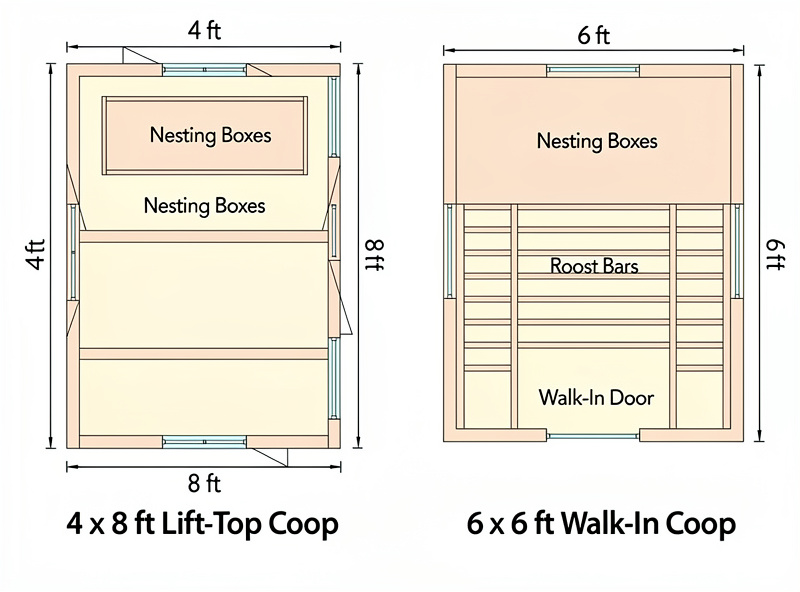
The table below compares the three coop footprints that work for an 8-bird flock at the lift-top-vs-walk-in transition.
| Coop Footprint | Interior sq ft | Recommended Run | Best For | Approx. Cost |
|---|---|---|---|---|
| 4×8 ft lift-top | 32 | 8×10 ft (80 sq ft) | Mild climates, daily egg collection from outside, tight yards | $650-$1,200 |
| 6×6 ft walk-in | 36 | 8×12 ft (96 sq ft) | Cold climates, heavy breeds, smart automation, easier cleaning | $900-$1,800 |
| 4×10 ft shed-style walk-in | 40 | 10×10 ft (100 sq ft) | Long-term keepers, expansion to 10-12 birds, predator-heavy areas | $1,200-$2,500 |
The 4×8 lift-top is the last format that works at this scale and the cheapest option. Trade-off: you’re at the maximum reach distance, so daily cleaning still requires a long-handled tool. The 6×6 walk-in costs more upfront but noticeably cuts daily chore time since you’re standing upright instead of reaching in — worth it for most keepers who do the daily cleaning themselves rather than reaching in from outside. The 4×10 shed-style is the long-term play if you plan to expand the flock — same coop comfortably handles 12 birds without rebuild.
Best Coop Styles for 8 Chickens
Three coop styles work at the 8-bird scale, and the choice between them depends more on your daily-routine preferences than on flock requirements.
4×8 ft lift-top backyard coop: The last size where lift-top access is practical. The 4-foot depth is the maximum reach distance from outside, which means you can collect eggs and spot-clean without climbing in — but barely. Use a long-handled scoop for daily droppings cleanup and plan a weekly deep-clean that does require entering the coop. Trap: lift-top hinges fail faster at 4×8 size due to the heavier lid weight. Spec metal hinges, not plastic.
6×6 ft walk-in coop: The first walk-in size that works for 8 birds. Standing-height interior (5 to 6 ft ceiling), human-access door on one side, integrated nesting box bank on opposite wall. Daily chore time drops from 8 to 10 minutes (lift-top) to 3 to 4 minutes (walk-in). The format makes more sense the colder your winter — bending into a lift-top in 20°F weather gets old fast. See our $200 DIY automation guide for walk-in retrofit tips.
4×10 ft shed-style coop: The long-term value play. Full walk-in interior, room for feed storage in one corner, and capacity headroom for flock expansion to 12 birds. Often built as a converted 4×10 garden shed for $600 to $1,000 in materials versus $1,500 to $2,500 for prefab. Best smart-coop layout because the long wall gives you room for sensor placement, camera angles, and a properly-sized auto-door without crowding the human entry door.
Run Size for 8 Chickens
Eighty square feet is the absolute minimum run for 8 birds (10 sq ft per bird). Target 120 to 160 sq ft (15 to 20 sq ft per bird) for boredom prevention and to support the more complex group dynamics that emerge in flocks of 8 or more.
Run shape matters more at 8 birds than at smaller flock sizes. A long 4×20 ft or 5×16 ft run gives birds clear escape distance from each other, which prevents the dominance-fight cycles that emerge as flock size grows. Square runs (8×10 or 10×10 ft) work, but only with intentional visual barriers — small bushes, perch platforms, dust bath stations — every 6 to 8 feet to break sight lines and create micro-zones.
Predator pressure scales with flock visibility. Eight birds in a run are louder, more visible, and more attractive to hawks and raccoons than a 4-bird flock. Hardware cloth (1/2 inch mesh) on all sides plus an 18-inch buried apron is non-negotiable (Garden Betty). Cover at least 50 percent of the run with hawk netting. Pair with a quality automatic coop door so birds self-secure inside the coop at dusk regardless of whether you’re home.
Nesting Boxes and Roost Bars for 8 Birds
Eight hens need 2 nesting boxes (1 box per 4 to 5 hens) and 80 inches of roost bar length (10 inches per standard bird). Standard layout: 2 boxes side by side in the darkest corner at 18 to 24 inches off the floor, single 80-inch (6.7 ft) roost bar across the back wall.
Two boxes is correct for 8 hens. Adding a third rarely improves laying behavior because hens crowd into 1 or 2 favorite boxes regardless of how many you provide. The exception: mixed-temperament flocks (one assertive Buff Orpington plus several flighty Mediterranean breeds, for example) often benefit from a third box at a different height, giving subordinate hens an option when the dominant hen blocks the favorite spot.
For roost bars at 8 birds, a single 80-inch bar works better than two shorter bars at different heights. Stacked roosts trigger nightly dominance fights for the top spot. If you must use two bars due to coop layout, mount them at the SAME height with 18 inches of horizontal separation. A single 2×4 laid flat-side up at 18 to 24 inches above the floor is the standard.
Smart Setup for an 8-Bird Coop: Where Automation Starts Paying Back Fast
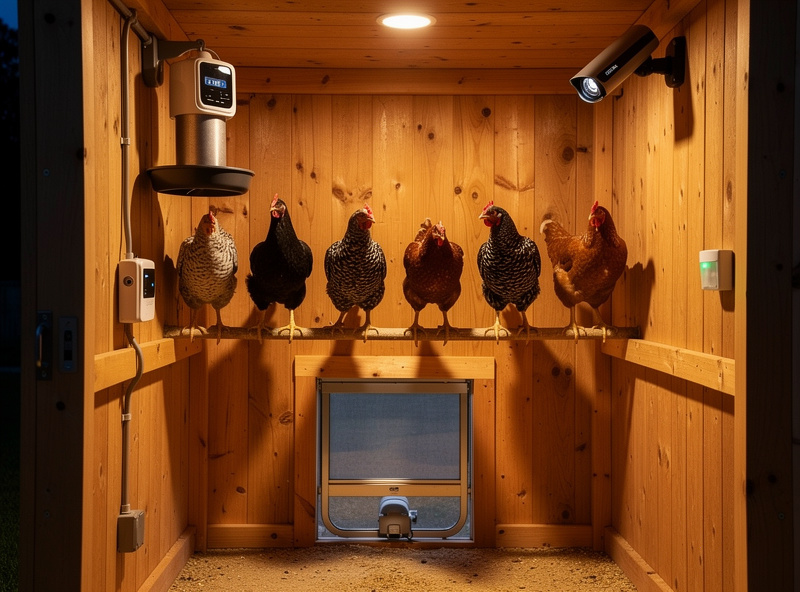
Eight birds is where the smart-coop ROI math turns favorable across both lift-top and walk-in formats. A $300 to $500 smart stack saves 6 to 8 hours per month in chore time and prevents an average of 1 to 2 predator losses per year — payback hits within 12 to 16 months at typical egg and replacement-bird values.
Sensor coverage: A 32 to 40 sq ft coop fits within the cone of a single PIR motion sensor mounted at one wall. Mount the temperature and humidity sensor at roost height (18 to 24 inches up) where the birds actually live, not at the floor. Skip the ammonia sensor at this scale unless you run deep litter — small flocks rarely build dangerous ammonia levels with weekly bedding turnover.
Camera placement: A single 1080p camera mounted in the upper corner opposite the coop door covers a 32 to 40 sq ft floor in one frame. Position so nesting boxes are visible — egg-production data is the most actionable smart-coop metric. See our smart coop monitoring guide for camera and sensor selection details.
Equipment placement at 32 sq ft: Wall-mount the battery backup high (out of pecking range), hang the automatic feeder from the ceiling at hen head height, and place the heated waterer on a raised platform. The 4 to 6 sq ft of floor space saved (vs. floor-mounted equipment) is meaningful in a 32 sq ft coop — that’s a full bird’s worth of capacity. The complete smart-coop layout is in our smart chicken coop pillar guide.
Common Mistakes Sizing for 8 Chickens
Four mistakes specific to the 8-bird transition zone account for nearly every “should have gone bigger” or “should have gone smaller” rebuild request.
Mistake 1 — buying a 5×6 lift-top “rated for 8”: A 5×6 ft lift-top is 30 sq ft, which fits 7 birds at proper density. Adding an 8th creates a tight density that triggers feather pecking within 30 to 60 days. Always do the math: usable interior sq ft divided by 4 = realistic bird capacity.
Mistake 2 — picking lift-top when winter routines matter: Lift-top access is a non-issue in summer and a real problem in winter. Bending into a 4×8 lift-top at 20°F to retrieve a frozen egg or replace a frozen waterer is miserable and gets skipped — I keep a walk-in for exactly this reason; in a Swedish winter the chore you dread is the chore that does not get done. Cold-climate keepers should default to walk-in at 8 birds even though lift-top still technically fits.
Mistake 3 — undersizing the run by trusting the “attached run” footprint: Many 4×8 lift-top coops come with attached runs that are 4×6 ft (24 sq ft). For 8 birds, that’s 3 sq ft of run per bird — drastically under the 10 sq ft minimum. Plan to extend or replace the attached run with a properly-sized 80+ sq ft enclosure.
Mistake 4 — forgetting the expansion buffer: If your local laws cap you at 8 hens permanently, the 4×8 lift-top is correct. Anywhere else, “chicken math” is one of the most consistent patterns in backyard keeping, and 8-bird flocks commonly expand to 10 to 12 birds within a couple of years. The 4×10 shed-style coop costs $300 to $500 more upfront and saves a full rebuild later. New keepers from our beginners guide should size for the maximum their laws allow, not their starting flock.
Frequently Asked Questions
What size coop do I need for 8 chickens?
Eight standard-breed chickens need a 4×8 ft coop (32 square feet) plus an 8×10 ft run (80 square feet) at minimum. For cold climates, heavy breeds, or expansion to 10-12 birds, upgrade to a 6×6 ft walk-in or a 4×10 ft shed-style coop with a 10×10 ft run.
Can 8 chickens fit in a 4×6 coop?
No. A 4×6 coop is 24 square feet, which fits 6 standard-breed hens at proper density. Putting 8 birds in that space is a reliable trigger for stress-related drops in egg production and feather pecking. The minimum for 8 standard chickens is 32 square feet (4×8 ft).
Should I get a lift-top or walk-in coop for 8 chickens?
Eight birds is the transition point. Lift-top works in mild climates with daily egg collection from outside the coop. Walk-in is better in cold climates, for heavy breeds, or if daily chore time is a priority – standing upright to clean is meaningfully faster than reaching in from outside. Walk-in costs more upfront but pays back in saved time for anyone doing daily hands-on cleaning.
How many nesting boxes for 8 chickens?
Two nesting boxes is correct for 8 hens (one box per 4 to 5 hens). Boxes should be 12x12x12 inches, mounted side by side in the darkest corner of the coop, and lower than the roost bar. A third box rarely changes laying behavior because hens crowd into 1 or 2 favorite boxes regardless.
How big should the run be for 8 chickens?
Eighty square feet is the absolute minimum for 8 birds (10 sq ft per bird). Target 120 to 160 sq ft for boredom prevention. Run shape matters: a long 4×20 ft run beats an 8×10 ft rectangle for behavior. Free-ranging hens 2 to 4 hours daily lets you shrink the run to 64 sq ft.
How many eggs will 8 chickens produce per week?
Eight standard-breed hens at peak production lay 4 to 5 dozen eggs per week (48 to 60 eggs). Production drops to 2 to 3 dozen per week in winter or for older flocks. Eight birds is the typical threshold where the egg surplus regularly exceeds a 4-person household and you start sharing or selling eggs.
Bottom Line: Eight is the Decision Flock Count
The chicken coop for 8 chickens decision comes down to format, not dimensions. The math is simple — 32 sq ft coop, 80 sq ft run, 2 nesting boxes, 80 inches of roost bar — but the lift-top-vs-walk-in choice shapes your daily routines for the next 5 to 10 years. Pick lift-top if your climate is mild and you only need outside-access egg collection; pick walk-in if you keep heavy breeds, live somewhere cold, or value the 5 hours per month of saved chore time.
For sizing math at smaller and larger flocks, see our chicken coop size guide, the 6-chicken coop guide, or step up to the walk-in mandatory zone at chicken coop for 10 chickens.
Related Guides
Related Guides
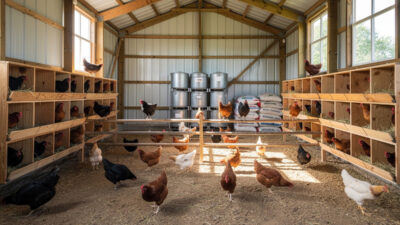
Large Chicken Coops: 25+ Bird Capacity Compared (2026)
A large chicken coop is anything sized for 25 or more birds — typically 100 to 250+ square feet of…
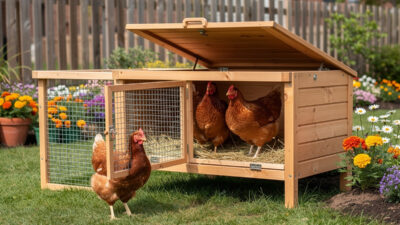
Small Chicken Coops: Best Picks for 2-4 Birds (2026)
A small chicken coop is anything sized for 2 to 4 birds — typically 8 to 16 square feet of…
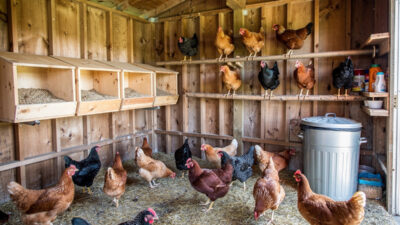
Chicken Coop for 20 Chickens: Walk-In & Shed Picks
A chicken coop for 20 chickens needs 80 square feet of interior floor (an 8×10 ft footprint) plus a 200…