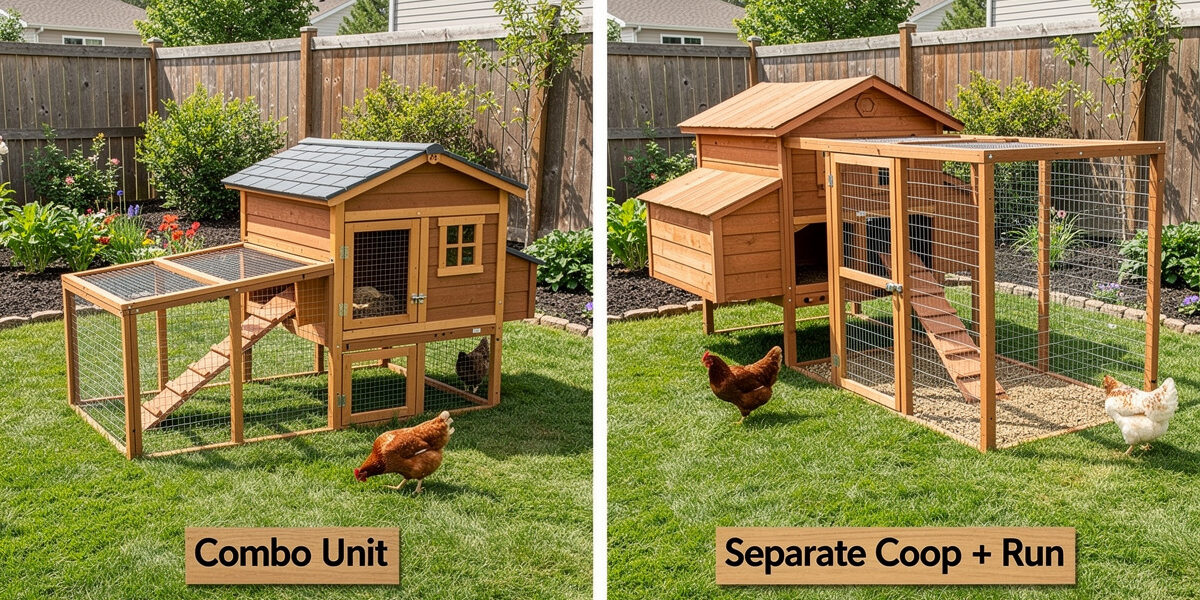
The decision to buy a chicken coop with run already attached versus building or buying separates comes down to four variables: flock size, your existing infrastructure, build skill, and time available. Combos beat separates for first-time keepers with no existing coop building 4–6 birds in 1 weekend at $450–$1,700. Separates win for larger flocks, custom designs, walk-in heights, or when you already have a coop you like.
This guide gives you the decision math without the marketing — when each path beats the other, by how much, and the situations where the answer is obvious. My own setup is separates: a welded run frame I built myself bolted to a coop I built myself, because I wanted walk-in height and a footprint no prefab combo offers. But I’ve helped enough neighbors get their first flock set up to know the combo path is the right call for most people starting out. For combo product picks, see our chicken coop and run combos guide. For run-only build details, see our chicken run guide.
As an Amazon Associate I earn from qualifying purchases.
The Two Architectures
Combo means a single physical structure: the coop and the run share a wall (the coop’s pop door is the run’s coop access). Most prefab kits are combos. Most DIY plans are also combos.
Separates means the coop and run are independent structures, sometimes connected by a tunnel or covered ramp, sometimes with a moveable run that drops next to a fixed coop, sometimes with the coop opening directly into a free-range area without a fully enclosed run.
Decision Matrix at a Glance
| Your Situation | Recommendation |
|---|---|
| First-time keeper, no existing coop, 3–6 birds | Combo — fastest deployment, predator-tight transition |
| Existing coop you like, no run | Add separate run — keep your coop investment |
| Larger flock (8+ birds) | Separates — most combos top out at 6–8 birds |
| Want walk-in run height (6+ ft) | Separates — most prefab combos have low run ceilings |
| Limited time (one weekend max) | Combo — assembly is faster than dual builds |
| Custom site or aesthetic | Separates — combos are dimensionally fixed |
| Mobile/portable need | Combo (chicken tractor) — see our portable coops guide |
| Plan to expand flock significantly | Separates — easier to upgrade either piece |
Most readers fit cleanly into one of these rows. If you cannot decide between two adjacent rows, the tiebreaker is almost always time available — combos take 5–10 hours of assembly, separates take 20–40 hours of build.
Cost Comparison: Combos vs Separates
| Approach | Capacity | Total Cost | Build Time | Lifespan |
|---|---|---|---|---|
| Budget combo (Pawhut + upgrades) | 4–6 birds | $520–$780 | 6–10 hrs | 5–8 yrs |
| Budget separates (DIY 4×4 coop + DIY 4×8 run) | 4 birds | $580–$840 | 20–30 hrs | 10–15 yrs |
| Mid combo (Producer’s Pride Guardian) | 10–14 birds | $600–$900 | 5–8 hrs | 10–15 yrs |
| Mid separates (Prefab coop + DIY run) | 6–8 birds | $1,400–$2,000 | 10–18 hrs | 10–15 yrs |
| Premium combo (OverEZ Small) | up to 5 birds | $1,300–$1,700 | 6–10 hrs | 15–20 yrs |
| Premium separates (DIY 6×8 + DIY 10×12 run) | 8–10 birds | $2,200–$3,200 | 30–50 hrs | 15–20 yrs |
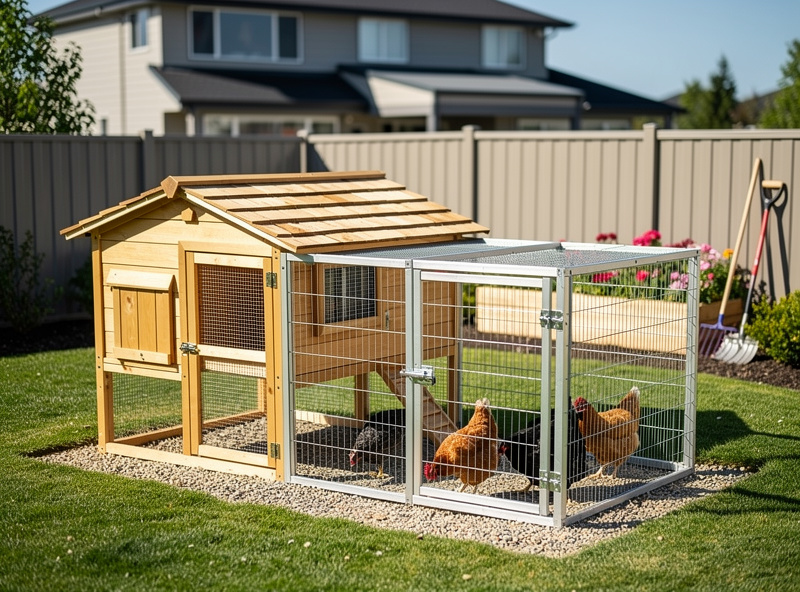
Combos almost always win on labor cost. Separates win on capacity ceiling and customization. The premium tier of separates supports larger flocks than any standard prefab combo can match.
Where Combos Outperform
1. Predator-Proof Transition
The single weakest point in any coop+run setup is the joint where the coop wall meets the run wall. In a combo, this joint is engineered shut at the factory. In separates, the builder has to seal it correctly — and most home builders leave 1/4″ to 1/2″ gaps that weasels and rats exploit.
For first-time builders, this matters more than it sounds. A poorly-sealed coop-to-run joint is one of the most commonly reported predator entry points in small-flock loss stories — the kind of gap that looks fine until a weasel or rat finds it. Combos eliminate the failure mode by design.
I learned this on my own build. The first winter, wind-driven snow found a gap I’d left where the run wall met the coop wall, and I spent a February afternoon re-flashing it with the coop already occupied and the birds unhappy about the disruption. A factory-sealed combo joint skips that lesson entirely — you pay for it in dollars instead of a cold afternoon with a caulk gun.
2. Fast Deployment
Combo: arrives in one delivery, assembles in one weekend. Done.
Separates: source coop materials, source run materials, build coop, build run, integrate the joint, predator-proof the connection. 2–3 weekends minimum, sometimes more. If you want chickens in the yard within 14 days of deciding to keep them, combos are the only realistic path.
3. Single-Footprint Permitting
Where building permits are required, a combo registers as one accessory structure. Separates sometimes register as two structures (coop + run), doubling the permit fees and inspection visits in some jurisdictions.
Where Separates Outperform
1. Larger Flocks
Most prefab combos top out at 6–8 birds. Larger flocks (8–20+ birds) still have standard-catalog options — the OverEZ XL is rated for up to 20 birds — but beyond that ceiling you’re into custom builds or separates.
Our 12-chicken coop guide and 20-chicken coop guide cover the larger end where separates dominate.
2. Walk-In Height
Cleaning a 4-foot-tall run on your hands and knees gets old fast. Most combos have run heights between 4 and 5 feet. Walk-in runs (6+ ft tall) are nearly always built from separates — usually a standalone run kit attached to a separately-purchased coop, or fully DIY.
3. Existing Coop Owners
If you already own a coop, buying a combo means abandoning that investment. Adding a separate run extension is the obvious move. Most run-only kits (Producer’s Pride Run Extension, Pawhut Walk-In Cage, OverEZ Run) are designed exactly for this.
4. Custom Sites
Combos are dimensionally fixed. If your site has an irregular shape, a sloped grade, or specific orientations you need, DIY separates give full flexibility. Most prefab combos require a 8×16 or larger flat pad — sometimes hard to find in suburban yards.
The Hybrid Path
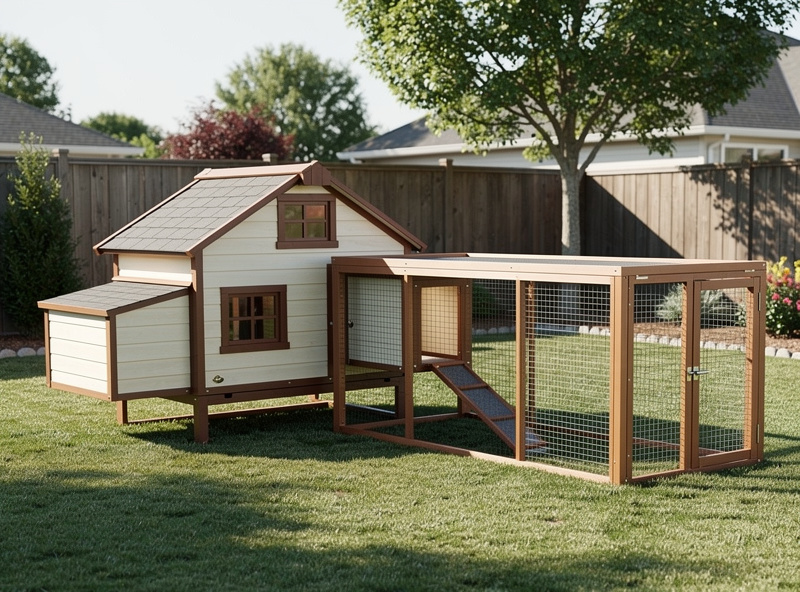
A third option exists that captures most combo benefits with most separate benefits:
- Buy a quality prefab coop alone from a brand like Producer’s Pride or OverEZ ($600–$1,200)
- Buy a compatible prefab run extension from the same brand ($340–$680)
- Bolt them together using brand-supplied connection kits
This delivers a combo-quality joint between coop and run with the flexibility to size each piece independently. Cost: $940–$1,880, similar to a premium combo but with capacity for 8–10 birds.
Combos We Recommend by Use Case
| Use Case | Recommended Combo | Notes |
|---|---|---|
| First flock, 4 birds | Producer’s Pride Sentinel | Cheapest coop built from real steel/wood materials — but the claimed 6-bird capacity runs tight; comfortable for 3–4 in practice |
| First flock, 4–6 birds | Producer’s Pride Guardian | 14-bird rating gives genuine room to grow past the “chicken math” trap most first flocks hit within a year |
| Premium build, lifetime ownership | OverEZ Small Combo | Best materials and longest lifespan |
| Aesthetic priority | YardCraft Small Coop Kit | Best-looking prefab, Amish-built wood construction |
| Tight budget | Pawhut + upgrades | Cheapest path; needs $80–$160 in upgrades |
| Plastic / hose-clean | Omlet Eglu Cube + Run | Premium plastic, integrates with smart-coop app |
Detailed reviews of these brands live in our best chicken coop brands roundup, including Over EZ, Omlet Eglu, Pawhut, and Producer’s Pride.
Worth reading before you buy the Sentinel specifically: owner reviews on BackYardChickens.com are consistent that it runs small for its claimed capacity — a fine starter or isolation coop, not a permanent home for a full 6-bird flock. And the OverEZ XL’s real 20-bird capacity is confirmed on its own Tractor Supply listing — worth checking directly since capacity claims vary more than you’d expect between similarly-named coop tiers.
Separates We Recommend by Use Case
| Use Case | Recommended Path |
|---|---|
| Existing coop + new run | OverEZ Wooden Chicken Run or Producer’s Pride Low-Profile Chicken Run |
| Walk-in run for larger coop | YardCraft Walk-In Chicken Run + separate prefab coop |
| Custom design, full DIY | Wood-frame coop + wood-frame run with hardware cloth |
| 10+ birds, walk-in setup | DIY 8×10 coop + 12×16 walk-in run |
Standard DIY combos and separates both work — pick based on time available and skill level. The math in the cost table above assumes typical lumber pricing in 2026. Note the brand swap from what you may have seen elsewhere: Yardistry is a real outdoor-structures brand, but it makes gazebos, pergolas, and sheds — not chicken coops or runs. The Amish-built YardCraft coop and run line is the one that actually fits this use case.
Decision Tree (Fast Version)
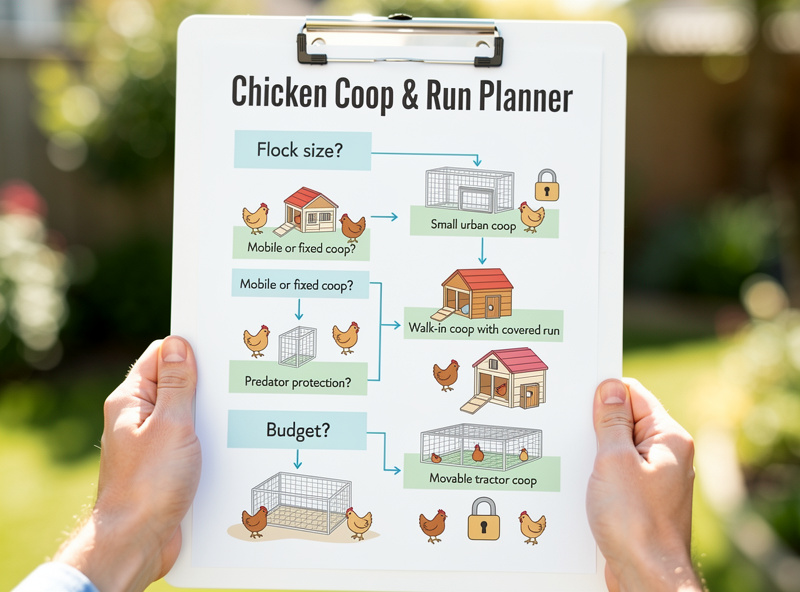
- Do you already own a coop? Yes → buy a separate run extension. No → continue.
- Are you keeping more than 8 birds? Yes → DIY separates or hybrid path. No → continue.
- Do you have only one weekend available? Yes → combo. No → continue.
- Do you want walk-in run height? Yes → hybrid path or DIY separates. No → combo.
- Do you have specific aesthetic or site requirements? Yes → DIY separates. No → combo.
Most readers exit at step 1, 3, or 5. The combo wins for the majority of suburban first-time keepers; separates win for larger flocks and existing-coop owners.
Common Decision Mistakes
- Buying a combo too small for the eventual flock. “Chicken math” is a running joke in every flock-keeping community for a reason — plenty of keepers expand past their starting headcount. Build for 50% larger than your starting flock. Combos make this hard because they are dimensionally fixed.
- Building separates when a combo would have shipped in 5 days. If your project timeline matters, do not over-engineer. Combos are the fast path.
- Trusting any combo’s predator-proofing as-is. Even premium combos benefit from a buried apron and double-latched gates (covered in our chicken run guide).
- Ignoring the joint when building separates. The coop-run connection is the failure point. Hardware-cloth lap joints, sealed flashing, and tight wire-to-wood transitions matter more than the wall materials themselves.
- Picking based on price alone. Cheap combos with chicken wire fail faster than well-made separates. The lifetime cost favors quality at any price tier.
What If You Are Still Unsure?
Default to a quality mid-tier combo (Producer’s Pride Guardian or OverEZ Small) for first flocks — browsing a well-reviewed chicken coop with run kit is the fastest way to compare current options side by side. The savings over premium DIY are modest, the labor savings are significant, and the predator-tight transition is engineered. Upgrade to separates when you outgrow the combo or need walk-in capability. My own run frame is welded steel because I already had the welder and wanted a shape no catalog run would match — but that’s a workshop-crossover reason, not a general recommendation. If you don’t already own a welder, a bolt-together run extension from your coop’s own brand is the smarter move, and it’s what I point most people toward.
This is the path most successful backyard keepers take — start combo, scale to separates after 18–36 months once they know what they actually want.
Frequently Asked Questions
Should I buy a chicken coop with a run already attached?
Yes for first-time keepers with no existing coop building 3–6 birds. Combos save 15–30 hours of build labor, ship with a predator-tight coop-to-run joint, and arrive in one delivery. For larger flocks, walk-in heights, or custom designs, separates win.
Is it cheaper to buy a coop and run combo or build separately?
Combos cost slightly more in materials but save substantial labor — typically 15–30 hours over equivalent DIY separates. At any reasonable hourly value of your time, combos pencil out cheaper for most first-time builds. DIY wins on capacity and customization.
What size combo do I need for 4 chickens?
For 4 birds, a 4×4 coop (16 sq ft, 4 sq ft per bird) plus a 4×8 run (32 sq ft, 8 sq ft per bird) is the realistic minimum. Producer’s Pride Sentinel and Pawhut’s 3-4 or 4-6 chicken combos both meet this footprint, though the Sentinel’s claimed 6-bird capacity runs tight in owner reviews — plan on 3-4 full-size birds comfortably. For real room to grow, step up to the 14-bird-rated Producer’s Pride Guardian instead.
Can I attach a run to my existing chicken coop?
Yes. Standalone run kits from OverEZ, Producer’s Pride, and Pawhut are designed to bolt or zip-tie onto existing coops, and YardCraft sells a dedicated walk-in run kit. Cost is $280–$1,650 depending on size and material. The most important detail is sealing the joint where the new run meets your existing coop.
What is the disadvantage of a coop and run combo?
Combos are dimensionally fixed (you cannot resize either piece), most top out at 6–8 birds capacity, and walk-in run heights are rare. Larger flocks, custom layouts, and existing-coop owners do better with separate coop + separate run.
How long does a chicken coop and run combo last?
Budget combos with 1 inch wire and thin lumber last 5–8 years. Mid-tier combos with hardware cloth and steel framing last 10–15 years. Premium combos like OverEZ and YardCraft last 15–20+ years with annual inspection and periodic sealant or stain refresh.
Related Articles
Related Guides
Chicken Enclosure Types: Open vs Covered Runs
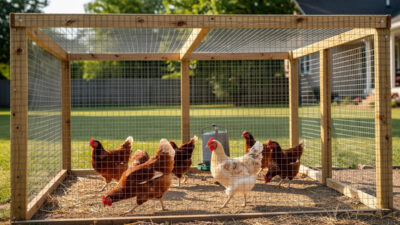
A backyard chicken enclosure falls into one of four basic types — fully covered run, partially covered run, open-top run,…
Chicken Runs For Sale: Best Online Sources 2026
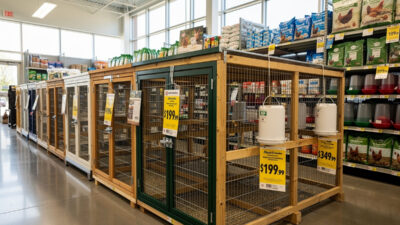
The best places to find quality chicken runs for sale in 2026 are direct from manufacturers (OverEZ, Omlet, YardCraft), big-box…
Large Chicken Run: Sizing for 12+ Birds
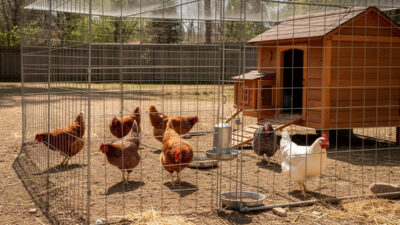
A large chicken run for 12+ birds needs at least 120 sq ft of secure outdoor space, walk-in height (6+…