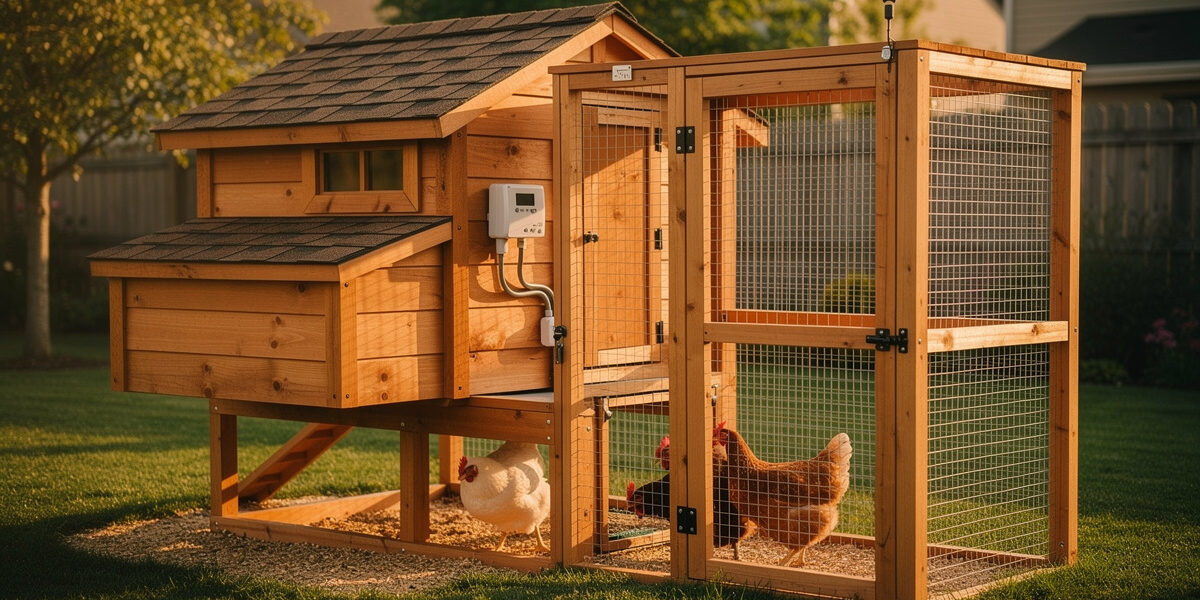
A typical smart chicken coop cost in 2026 lands between $1,800 and $4,500 fully built — roughly $800–$2,200 for the coop structure plus $600–$1,800 for automation, with another $400–$500 for first-year operating costs. The biggest swing factors are coop size, climate (heating + insulation drive winter costs), and whether you DIY the build or buy prefab.
This guide breaks every line item down with current 2026 prices, including the hidden costs that catch first-timers (permitting, electrical, predator-proofing). The numbers below are the same categories I track against my own build and retrofit spending — not a formal industry survey, but a real line-item pattern from a coop that has been added onto, rewired, and predator-proofed in stages over several years. For the broader build picture, see our complete smart chicken coop guide.
The Three Cost Buckets
Every smart coop budget falls into three buckets, and confusing them produces wildly different “total cost” numbers across reviews and forums:
- One-time build cost — the coop, the run, the automation hardware, electrical work, permits
- Year-one operating cost — feed, bedding, electricity, water, replacement components, vet/health
- Ongoing 5-year cost — operating cost compounded plus replacement cycles for batteries, sensors, and consumables
Most “$500 smart coop” posts only count the automation hardware. Most “$5,000 coop” posts include the labor of a contractor-built structure. Both are correct for their assumptions but neither matches what most backyard keepers actually spend.
One-Time Build Cost: Realistic Tiers
| Tier | Setup | Total | Best For |
|---|---|---|---|
| Budget DIY | Used materials build + $200 automation kit | $700–$1,200 | Small flock (3–5 birds), handy keeper, tight budget |
| Standard DIY | New 4×8 wood coop + standard automation | $1,800–$2,800 | Most backyard keepers (4–8 birds) |
| Prefab + automation | $1,200 prefab coop + $800 retrofit kit | $2,200–$3,400 | No DIY skills, fast deployment |
| Premium DIY | Walk-in 6×8 with insulation + full automation | $3,500–$5,500 | Cold climate, larger flock (8–15 birds) |
| Contractor-built | Built by carpenter + automation install | $5,500–$9,000+ | No time/skills, want it done right |
The standard DIY tier is the realistic baseline for most readers. The numbers below break that tier down line by line.
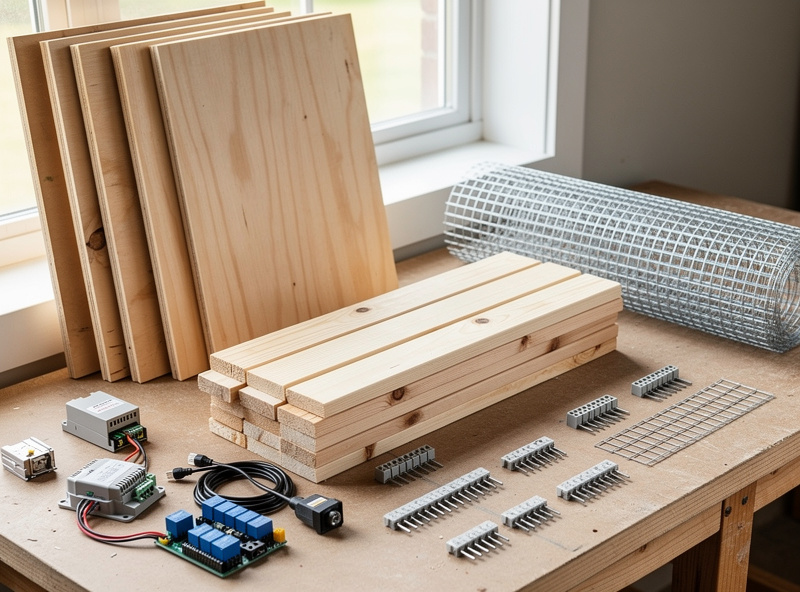
Standard DIY Build: Line-Item Breakdown
For a 4×8 wooden coop with attached 8×10 run, full smart automation, and grid power within 50 feet of the build site:
| Category | Items | Cost |
|---|---|---|
| Lumber | 2×4 framing, plywood walls, T1-11 siding, OSB roof deck | $420–$580 |
| Hardware | Screws, hinges, hardware cloth (1/4″), latches, nails | $140–$200 |
| Roofing | Metal panels or asphalt shingles + underlayment | $110–$180 |
| Run | 4×4 posts, additional hardware cloth, gate hardware | $220–$340 |
| Foundation | Concrete blocks or treated 4×4 skids | $60–$120 |
| Paint/sealer | Exterior paint, primer, sealant | $50–$90 |
| Coop subtotal | $1,000–$1,510 | |
| Automatic door | App-controlled with light sensor | $220–$380 |
| Auto feeder | 10–20lb capacity treadle or programmable | $80–$160 |
| Auto waterer | 5-gal nipple system + heated base for winter | $60–$120 |
| WiFi camera | Outdoor 1080p with night vision | $50–$120 |
| Sensor hub | Temp + humidity + door-open sensor | $60–$110 |
| LED light strip | 12V dimmable for laying season | $25–$45 |
| Wiring + power supply | 12V supply + distribution + cable | $80–$140 |
| Automation subtotal | $575–$1,075 | |
| Electrical install | 20A circuit + GFCI + outlet, DIY | $120–$220 |
| Bedding (initial) | 3 cu ft pine shavings or hemp | $25–$45 |
| Permits (if required) | Backyard chicken/structure permit | $25–$150 |
| Other subtotal | $170–$415 | |
| BUILD TOTAL | $1,745–$3,000 |
The cost variance inside each line comes from regional pricing, brand selection, and whether you buy new or salvage materials. Framing lumber pricing has been genuinely volatile — NAHB’s framing lumber price tracking shows double-digit percentage swings within single quarters through 2026, driven by tariffs and mill capacity — so price the lumber line the week you buy, not off a number in this guide.
Hidden Costs Most Articles Skip
Five line items consistently get missed in build budgets:
- Predator-proofing extension. Hardware cloth aprons buried 12″ out from the run perimeter add $80–$140 in materials — cheap next to what it protects. My own run is welded-frame with a buried apron on every side, and the apron alone is the line item I would never cut regardless of budget; extension predator-management guidance backs up why chicken wire alone does not hold against a determined digger.
- Electrical permits + inspections. If you pull a new branch circuit (covered in our smart chicken coop wiring guide), permits in most jurisdictions run $40–$120 plus an inspector visit.
- Soil prep and leveling. A coop on uneven ground will rot at the low side within 3 years. Add $50–$150 for gravel base or grading.
- Tools you don’t own. A circular saw, drill, and impact driver are assumed. Add $150–$300 if you are starting from zero.
- Delivery fees. A 4×8 sheet of plywood does not fit in most cars. Lumberyard delivery is $50–$120 per trip.
Prefab Coop + Retrofit Path
If you do not want to build, the realistic prefab path is buying a $900–$1,800 wooden prefab coop and adding a $500–$900 automation retrofit kit. The cost gets you to the same place faster:
| Item | Cost |
|---|---|
| Prefab coop (4–8 bird capacity) | $900–$1,800 |
| Coop assembly time/labor (DIY weekend or +$150 paid) | $0–$150 |
| Predator-proofing upgrades (hardware cloth, latches) | $120–$200 |
| Automation retrofit kit (door + sensors + camera) | $500–$900 |
| Electrical install | $120–$220 |
| Bedding + setup | $25–$45 |
| Total | $1,665–$3,315 |
The cost is roughly equivalent to DIY but the structure is typically smaller, less insulated, and built with thinner lumber. Prefab coops at this price point usually need predator-proofing upgrades — the included hardware is often chicken wire (which raccoons defeat in seconds), not 1/4″ hardware cloth.
Year-One Operating Cost
Once the coop is built, ongoing costs depend mostly on flock size and climate. For a 6-bird flock:
| Category | Annual Cost | Notes |
|---|---|---|
| Feed | $220–$340 | ~1.5 lb per bird/week × 52 weeks × $0.45–$0.70/lb |
| Bedding | $60–$110 | Refresh every 4–6 weeks for deep litter |
| Electricity | $25–$70 | $2–$6/month standard, higher with heated waterer |
| Water | $15–$30 | ~1L per bird/day for laying flock |
| Vet/health (preventive) | $30–$80 | Diatomaceous earth, electrolytes, occasional medication |
| Replacement consumables | $40–$90 | Door batteries, sensor batteries, minor parts |
| Year-one total | $390–$720 |
The economics of egg production: a productive 6-bird flock of good-laying breeds can hit around 1,500 eggs/year (250/bird × 6 birds), though the real number swings with breed — a flock leaning Australorp can run near that figure while an Orpington-heavy flock lands closer to 180–200/bird. Breed-specific laying data is worth checking against your own flock mix before you bank on the higher number, which is exactly the “chicken math” trap — the coop sized for 6 productive layers ends up holding 10 birds of mixed breed and age, and average lay rate drops accordingly. At $5/dozen retail equivalent, 1,500 eggs is $625 in eggs against $390–$720 in operating cost. Smart coops break even on operating cost but rarely “pay back” the build cost through eggs alone — the value is convenience, security, and quality, not cost savings.

5-Year Total Cost of Ownership
Looking at full TCO over 5 years for a standard DIY smart coop:
| Year | Build/Capex | Operating | Replacements | Cumulative |
|---|---|---|---|---|
| 1 | $2,300 | $555 | $0 | $2,855 |
| 2 | $0 | $555 | $60 (door batteries, sensors) | $3,470 |
| 3 | $0 | $555 | $80 (camera replacement) | $4,105 |
| 4 | $0 | $555 | $220 (auto door motor or feeder) | $4,880 |
| 5 | $0 | $555 | $80 (sensors, waterer parts) | $5,515 |
That works out to roughly $1,100/year all-in over 5 years for a productive 6-bird smart coop. By comparison, a non-automated traditional coop runs about $700/year (no replacement electronics, slightly lower year-one cost) but adds an estimated 2–3 hours/week of manual chores at peak season.
Where to Save Money Without Cutting Corners
Three areas yield real savings without compromising the build:
- Salvage lumber. Reclaimed pallets, leftover construction lumber, and Habitat for Humanity ReStore finds can cut framing costs 50–70%. Stick to untreated wood for interior surfaces.
- DIY automation board. An ESP32 + relay board + light sensor handles door automation for $25 instead of buying a $250 commercial unit — the same board talks to Home Assistant just as cleanly as a $250 unit does, and the 3D-printed bracket that mounts it costs a few cents in filament instead of a shipping charge. Our DIY automation under $200 guide walks through the build.
- Buy used cameras and sensors. Last-generation WiFi cameras and zigbee sensors regularly appear on Facebook Marketplace at 30–50% off retail. Verify they still get firmware updates before buying.
Areas to not save money on: hardware cloth (chicken wire is not predator-proof), the foundation (rotted bottom plates wreck a coop), and the automatic door (the cheap $80 doors fail within a year and are responsible for most predator losses on automated coops).
Climate-Specific Cost Adders
| Climate | Extra Cost | What It Adds |
|---|---|---|
| USDA zone 3–4 (cold) | +$300–$600 | Insulation, heated waterer, supplemental heat, thicker walls |
| Hot/humid (zone 8–10) | +$150–$300 | Larger ventilation fans, shade structures, automated misters |
| High wind (coastal/plains) | +$120–$240 | Heavier framing, hurricane straps, deeper foundation |
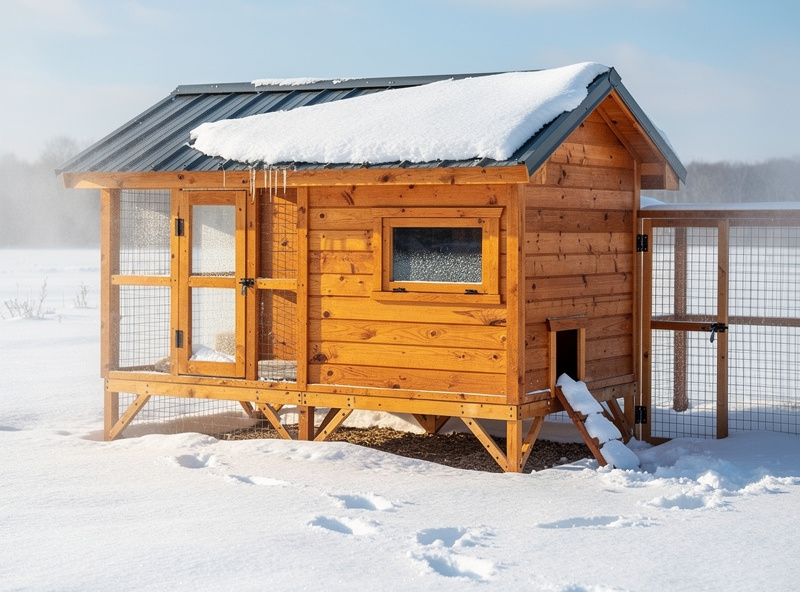
| Heavy snow load | +$80–$160 | Stronger roof framing, steeper pitch, snow guards |
Climate adders compound. A zone 3 coop on a windy plains property realistically adds $400–$800 to the standard build numbers above.
How Smart Coops Compare Cost-Wise to Traditional
The straight-up cost comparison:
| Type | Build | Y1 Operating | 5-Year TCO | Hours/Week (Y1) |
|---|---|---|---|---|
| Traditional DIY coop | $1,200–$2,000 | $390–$650 | $3,400–$5,500 | 3–5 hrs |
| Standard smart DIY | $1,800–$2,800 | $390–$720 | $4,400–$6,500 | 1–2 hrs |
| Premium smart DIY | $3,500–$5,500 | $420–$780 | $6,500–$9,500 | 1 hr |
The smart coop premium is real — typically $600–$1,500 more upfront and $50–$100/year more in replacements. What you get back is 100–150 fewer chore hours per year. The cost per hour saved depends on how you value your time, but for most keepers the math favors automation by year three.
Frequently Asked Questions
How much does a smart chicken coop cost in 2026?
A standard DIY smart coop runs $1,800–$2,800 fully built, including the structure, automation hardware, and electrical work. Premium builds for cold climates or larger flocks reach $3,500–$5,500. Contractor-built coops start around $5,500.
What is the cheapest way to build a smart chicken coop?
The budget DIY path lands at $700–$1,200 by combining salvaged lumber for the structure with a $200 DIY automation kit using an ESP32 microcontroller. This works for 3–5 bird flocks where the keeper has basic carpentry and electronics skills.
Is a smart chicken coop worth the cost?
For most backyard keepers, yes. Smart coops add $600–$1,500 to the build cost but save 100–150 chore hours per year through automatic door, feeding, and monitoring. The cost-per-hour saved typically beats minimum wage by year two of ownership.
How much does it cost to run a smart chicken coop monthly?
Year-one operating cost averages $32–$60 per month for a 6-bird flock, including feed, bedding, electricity, water, and minor consumables. Electricity alone runs $2–$6 per month standard, higher with a heated waterer in winter.
Do smart chicken coops save money on eggs?
Smart coops break even on operating cost through egg production for a productive flock — about $625 in eggs against $390–$720 in annual costs. They rarely pay back the build cost through eggs alone. The real value is time savings and reduced predator losses.
What hidden costs catch first-time smart coop builders?
The five most-missed costs are predator-proof apron extensions ($80–$140), electrical permits ($40–$120), foundation prep ($50–$150), tools the builder does not own ($150–$300), and lumberyard delivery fees ($50–$120 per trip).
Related Articles
Related Guides
Water-Level and Flow Sensors: Knowing the Waterer Is Empty Before They Do
A coop water-level sensor tells you the drinker is going dry — or freezing solid — before the flock does,…
Ammonia Sensors for the Coop: Catching Air Problems Before You Smell Them
An ammonia sensor belongs at the birds’ breathing height, close to the litter where the gas is generated, because that…

Node-RED vs Home Assistant Automations for the Coop: When to Use Which
Use native Home Assistant automations for the coop’s simple, safety-critical rules — the sunrise door, the freeze-watch waterer — and…