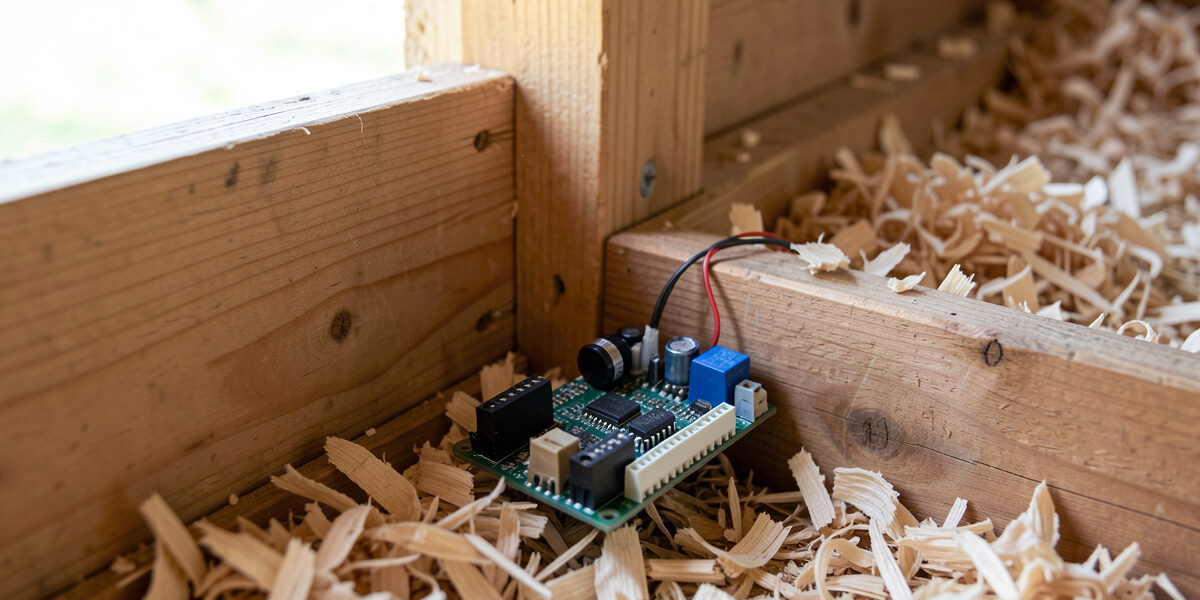
An ammonia sensor belongs at the birds’ breathing height, close to the litter where the gas is generated, because that is the air the flock actually inhales — and it catches a problem your own nose gives up on within minutes. The human smell threshold for ammonia sits around 20 ppm, and your sensitivity collapses fast once you are inside a contaminated coop, so a flock can breathe damaging air for hours while you walk around convinced it smells fine.
I treat the ammonia probe as the sensor that protects the flock from me, specifically. I am a careful keeper, and I am also a mammal whose nose is built to stop noticing a steady smell. The instrument does not have that weakness. It is the one reading I would fit if I could only fit two sensors in a coop, alongside the door contact covered in the coop sensors and monitoring overview.
This article is about the ammonia-specific hardware: the sensor types worth knowing, where to mount one, the ppm thresholds that actually matter to a flock, and the honest limits of the cheap sensors most keepers will actually buy. The broader job of getting ammonia and humidity back under control once the sensor flags a problem is covered in the ammonia-and-humidity control guide, and the smell-troubleshooting decision tree lives in the coop odor control article.
Why Can’t You Just Smell Ammonia?
You cannot rely on your nose for ammonia because olfactory fatigue sets in within minutes of exposure, meaning the same concentration that stung your eyes when you opened the door feels like nothing after you have been inside doing chores. The sensor in your head recalibrates to the new baseline and goes quiet, and the bird that never leaves the coop has no such luxury.
There is a specific sensation to real ammonia that you only catch in the first seconds. You crack the pop door on a still, damp morning and the back of your throat catches — a sharp, cool, biting note distinct from the warm barnyard smell of the droppings themselves. If your eyes water, you are already well past the level that damages a respiratory tract over time. By the time I have topped up the feed and checked the waterer, that first catch is gone and I would swear the air is fine. The probe is there to tell me my nose is lying.
The numbers put that lie in perspective. The occupational limit for human workers set by OSHA’s permissible exposure limit table is a 50 parts-per-million time-weighted average with a 35 ppm short-term ceiling, and the recommended exposure limit from occupational health bodies sits lower still, around 25 ppm. Purdue Extension’s poultry housing guidance pushes the target for a coop lower than the human workplace limit, because a laying hen lives in the air continuously rather than for an eight-hour shift. I alarm my sensor well below the 20 ppm smell threshold, which means the probe is usually warning me about a problem I cannot yet smell at all.
How Ammonia Forms in the Coop Litter
Ammonia in a coop is not produced by the birds directly; it is produced by bacteria breaking down the uric acid in the droppings, and that breakdown accelerates with warmth and moisture. Dry droppings on dry litter release very little ammonia. The same droppings on damp, compacted litter, in a warm coop, release it fast — which is why a single leaking waterer or an overdue clean-out can take a coop from fine to eye-watering in a day.
This is why the ammonia sensor and the humidity probe tell related stories. The same moisture that pushes coop humidity toward the frostbite danger band I describe in the humidity-and-frostbite guide also supercharges ammonia production in the litter. A wet coop is a double problem: it frostbites combs from above and it burns lungs from below. Managing the litter — keeping it dry, friable, and biologically active so it binds the nitrogen rather than releasing it — is the single biggest lever on ammonia, and the right way to do that without creating the moisture problem in the first place is in the deep-litter guide.
What Ammonia Level Is Dangerous for Chickens?
The ammonia ladder I work to puts the flock-comfort target under 10 ppm, the “something is wrong, fix the litter and the airflow” band between 10 and 25 ppm, and anything sustained above 25 ppm as a real welfare problem that damages the respiratory tract and suppresses laying over time. At 50 ppm — the human eight-hour workplace ceiling — a bird is in acute distress, and by then the smell is usually obvious even to a fatigued nose.
What makes chronic, moderate ammonia so insidious is that the damage is invisible and cumulative. A coop sitting at 20 to 30 ppm does not look dramatic. The birds are not gasping, the air does not knock you over, and a keeper who trusts their nose will report that everything is fine while the flock’s respiratory cilia are being steadily damaged and feed conversion quietly suffers. The sensor exists to make that invisible, moderate band visible, because it is the band that does the most total harm across a winter.
Ammonia Sensor Types Compared
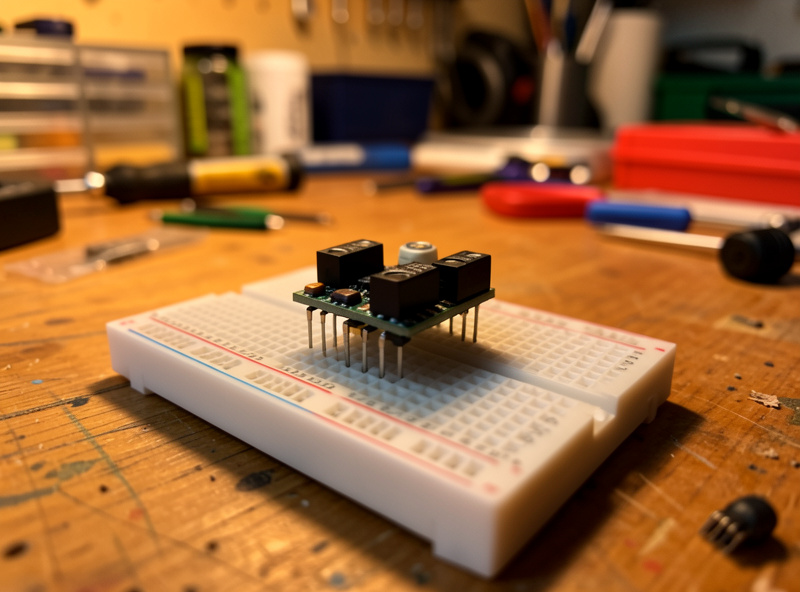
There are four practical ways to measure coop ammonia, and they span two orders of magnitude in price and accuracy. The cheap heated metal-oxide modules are what most keepers will actually wire up; the electrochemical and tube options are what you reach for when you need a number you can take to the bank.
| Type | How it works | Accuracy and selectivity | Rough cost | Best use |
|---|---|---|---|---|
| MQ-series heated module (MQ-135, MQ-137) | Heated metal-oxide layer; resistance shifts with gas | Low, cross-sensitive to several gases | Very low | Hobbyist trend and threshold alarming |
| Electrochemical NH3 cell | Current proportional to ammonia at an electrode | High accuracy and selectivity | High | Serious continuous monitoring |
| Colorimetric tube and hand pump | One-shot chemical tube, stain length = ppm | Accurate spot check | Per-tube cost | Periodic reference check |
| Poultry-house air quality monitor | Pre-built multi-gas unit with logging | Good, factory-calibrated | High | The no-build commercial path |
| Passive dosimeter badge | Slow colour change over days of exposure | Rough cumulative exposure only | Low | A cheap “is there a problem” flag |
The MQ modules, like the MQ-class gas sensor modules you can find anywhere electronics are sold, are the entry point because they cost less than a bag of feed and they integrate onto an ESP32 board in an afternoon. The trade-off is honesty: an MQ sensor will tell you that ammonia is rising and roughly when it crosses your alarm line, but it will not give you a laboratory-accurate ppm, and it will wander as it ages. The electrochemical route gives you the real number but costs as much as a small coop; the tube-and-pump method gives you an accurate spot reading for the price of a tube, which makes it the perfect occasional sanity-check against a drifting MQ.
As an Amazon Associate I earn from qualifying purchases.
Where Do You Mount an Ammonia Sensor in a Coop?
You mount an ammonia sensor at the birds’ breathing height, near the litter but not buried in it, because that is the air the flock actually draws into its lungs. Ammonia gas itself is lighter than air, so in a well-ventilated coop it rises and exits through the high vents rather than pooling — but in a still, under-ventilated coop it accumulates and mixes instead of escaping, and the strongest source is always the floor, so the gradient runs from high at the litter to lower at the ceiling.
For my adult flock I place the probe roughly 30 cm off the floor, on a wall away from the pop door and away from the direct path of any vent, so it samples the air the birds are breathing rather than a draft channel or the fresh-air inlet. For chicks and growing birds, which live much closer to the litter, I drop the probe lower, because the ammonia concentration at chick height is the one that matters to them and it can be markedly higher than at my standing height. This is the same principle as mounting a temperature probe at roost height rather than on the ceiling, which I cover in the temperature and humidity sensor guide: measure the air the bird is in, not the air the ceiling is in.
The Limits of a Cheap Ammonia Sensor
A cheap MQ ammonia sensor has real limitations, and pretending otherwise is how a keeper ends up trusting a number that is fiction. The heated metal-oxide element needs a burn-in period — often a day or two of powered-on aging before it settles — and then a warm-up of minutes each time it cycles on. It drifts over weeks and months, it responds to gases besides ammonia, and its “ppm” output is really a rough calibration of a resistance curve rather than a direct measurement. Used honestly, it is a trend instrument; used as a precision gauge, it will mislead you.
The way I keep mine honest is to treat it as a relative device and re-anchor it regularly. I watch the trend and the threshold crossings, not the absolute decimal, and every few weeks I compare its reading against a known reference — a tube-and-pump spot check, or even just the calibrated nose-test of a fresh walk-in — and adjust my alarm line rather than chasing the absolute number. I once dismissed a persistent 28 ppm reading as sensor noise because the coop smelled fine to me after I had been inside two minutes. The reading was correct and my nose had given up; the litter was wet under a roost I had not turned. That is the mistake the cheap sensor exists to prevent, but only if you respect what it can and cannot tell you.
What I Run and What an Alarm Looks Like
On my coop I run an ESP32 board with an MQ-class ammonia module built on ESPHome, reporting into the same Home Assistant dashboard as the rest of the coop instruments. The sensor draws a slow trend line on the screen, and I have two alarm lines: a soft warning when the reading climbs through my “check the litter” threshold, and a hard alert when it sustains above the level I consider a welfare problem. The hard alert pings my phone, and the response is always the same — go turn the litter, find the moisture source, and confirm the high vent is clear.
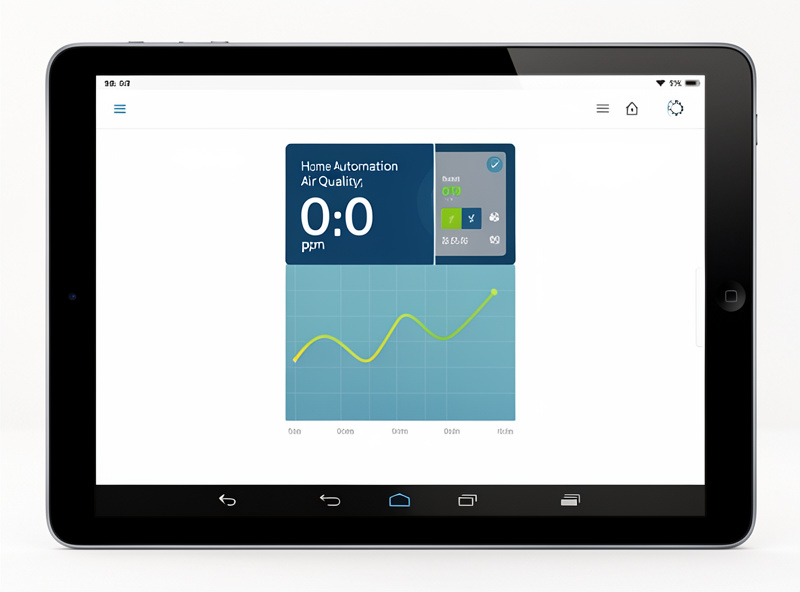
Crucially, an ammonia alarm and a ventilation alarm are the same response, which is why the two belong on one screen. When ammonia climbs, the fix is almost never a filter or a chemical dosing; it is air exchange and dry litter, in that order. My coop’s ventilation path is designed to move air without drafting the birds, a distinction I make much of in the ventilation-versus-draft article, and the ammonia probe is how I confirm that path is keeping up with what the litter is producing. Everything lands on the dashboard I describe in the coop dashboard build, so a single glance tells me whether the air is safe before I ever open the door.
Do chicken coops need an ammonia sensor?
Yes, if you want to catch air-quality problems before they harm the flock. Your nose desensitises to ammonia within minutes, so you cannot reliably smell moderate, damaging levels. A sensor set to alarm below the 20 ppm smell threshold warns you about air your own nose has stopped noticing.
What ammonia level is dangerous for chickens?
Keep coop ammonia under 10 ppm for comfort. Sustained levels of 25 ppm and above damage the respiratory tract and suppress laying over time, and 50 ppm is acute distress. The most harmful range is the invisible 20 to 30 ppm band that a fatigued nose will not notice.
Where should an ammonia sensor be placed in a coop?
Mount it at the birds breathing height, about 30 cm off the floor for adults and lower for chicks, near the litter but not buried in it, and away from the pop door and the vent inlets. Measure the air the flock actually inhales, not the air at the ceiling or the fresh-air path.
Are cheap MQ ammonia sensors accurate?
Not as precision instruments. A cheap heated MQ module needs a burn-in period, drifts over time, and responds to gases besides ammonia, so its ppm reading is approximate. Used honestly as a trend and threshold alarm, checked occasionally against a known reference, it is useful and inexpensive.
Worth Reading Next
Related Guides
Water-Level and Flow Sensors: Knowing the Waterer Is Empty Before They Do
A coop water-level sensor tells you the drinker is going dry — or freezing solid — before the flock does,…

Node-RED vs Home Assistant Automations for the Coop: When to Use Which
Use native Home Assistant automations for the coop’s simple, safety-critical rules — the sunrise door, the freeze-watch waterer — and…
Home Assistant Coop Notifications: Door-Failed and Predator-Motion Alerts
The only two coop notifications I let reach my phone are door-failed — the door was commanded closed but the…