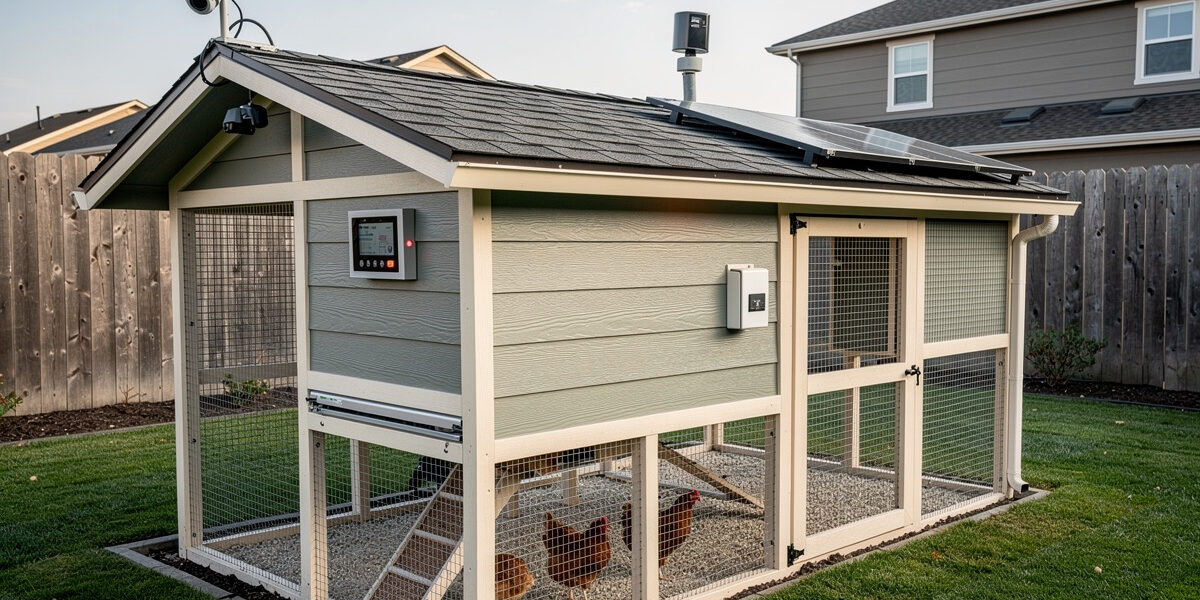
Custom chicken coops are designed and built for your specific situation — exact dimensions, particular climate adaptations, integrated smart-coop wiring, and aesthetic match to your existing structures. They cost 2x to 5x more than equivalent prefabs but solve problems that off-the-shelf coops can’t address. The math works when standard prefab dimensions don’t fit your yard, your HOA requires specific aesthetics, your climate demands non-standard insulation, or you need integration with existing buildings.
This guide covers when custom chicken coops genuinely beat prefab on cost-per-year basis, the four custom coop categories with realistic price ranges, the design specification process that determines whether you get exactly what you need or an expensive miscommunication, and the four mistakes that turn $5,000 custom builds into $7,000 disappointments. For matching coop type to broader buyer profile, see our best chicken coops buyer’s guide. For the strongest premium prefab alternatives that approach custom-build longevity at lower cost, our Omlet Eglu honest long-term review and our Over EZ chicken coop review cover the two contenders worth comparing against custom.
When Custom Coops Beat Prefab
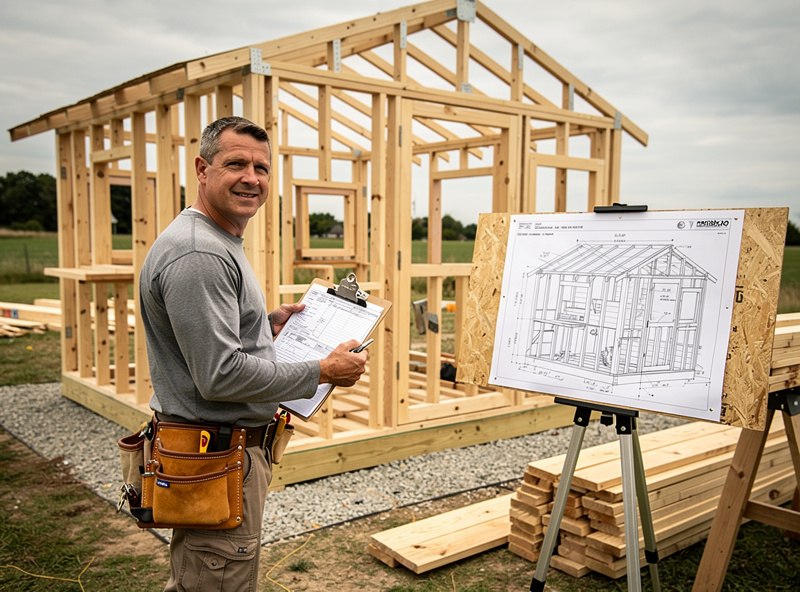
The custom-vs-prefab decision turns on five specific scenarios where prefab simply can’t deliver what you need.
Standard dimensions don’t fit your yard: HOA setback rules, awkward lot shapes, slopes, mature trees, or buried utilities can constrain placement to dimensions no prefab matches. A custom 5×9 ft coop might be the only configuration that fits between your shed and property line setback.
HOA aesthetic requirements: Some HOAs require chicken coops to match house siding, paint color, roof style, or trim details. Prefab coops rarely match these specifics. Custom builds let you spec siding, roofing, and trim to match the house exactly.
Climate-specific construction: Cold climate (zones 3 to 5) flocks need R-13+ insulation (in line with ENERGY STAR’s wall R-value recommendations by climate zone, which run higher still in the coldest zones); hot climate (zones 8+) flocks need raised construction with maximum cross-ventilation. Generic prefabs fail at temperature extremes. Custom builds incorporate climate-appropriate features from the design phase. My own coop in Sweden is double-wall construction with the ridge and soffit vents sized to dump moisture rather than draft the birds — that combination is the whole game in a real cold-climate build, and it’s exactly the kind of thing a stock prefab’s generic ventilation panel can’t be talked into doing right.
Smart-coop integration from day one: Premium prefabs sometimes ship smart-coop ready, but custom builds let you spec exact auto-door wall location, sensor wiring channels, camera mount positions, and battery backup placement. The result is a coop that integrates with smart automation seamlessly. See our smart chicken coop pillar guide for the full integration plan.
Long-term ownership horizon (15+ years): A $5,000 custom coop with 20-year service life costs $250 per year. A $1,500 mid-tier prefab with 8-year service life costs $187 per year — but you replace it 2 to 3 times over 20 years, factoring rebuild labor and disruption. Custom wins on annualized cost when ownership horizon is genuinely long.
Four Custom Coop Categories
Custom coops fall into four price-and-feature tiers, each fitting different buyer scenarios.
| Category | Price Range | Lead Time | Best For |
|---|---|---|---|
| Custom-spec from existing builders | $1,800-$3,500 | 4-12 weeks | Standard coop with custom dimensions or finishes |
| Custom Amish/Mennonite builds | $2,500-$5,500 | 6-16 weeks | Premium materials with traditional craftsmanship |
| Architect-designed coops | $5,000-$12,000 | 12-24 weeks | Aesthetic-focused properties, design integration |
| Custom shed-conversion or barn-corner | $1,500-$4,500 | 4-12 weeks | Existing structure conversion with custom adaptation |
Custom-spec from existing prefab manufacturers is the entry point — order a model from their standard catalog with custom dimensions, paint colors, or roof options. Custom Amish builds offer premium materials and traditional craftsmanship at moderate prices (see our Amish chicken coops guide). Architect-designed coops are the high-end where the coop becomes a designed property feature, not just functional housing. Custom shed conversions adapt existing garden sheds to coop use with bespoke modifications.
The Custom Design Specification Process
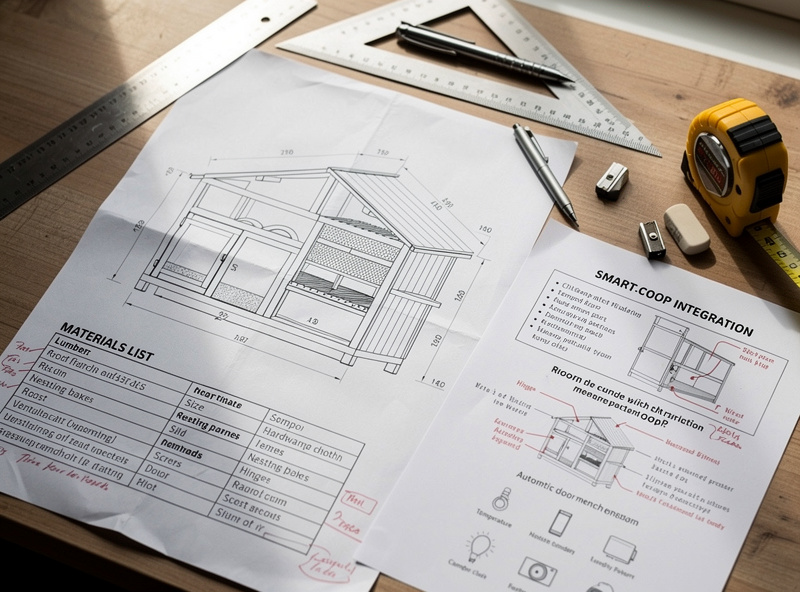
Custom coop projects succeed or fail based on specification quality. Vague briefs (“I want a nice 6-bird coop that looks good”) produce miscommunications and disappointment. Detailed specifications produce coops that match expectations.
Required spec elements (always include):
- Exterior dimensions: length x width x height (peak), with tolerances if appropriate
- Interior dimensions: usable floor area after walls, nesting boxes, and equipment
- Bird capacity at standard density: number and breed weight class
- Climate zone and expected temperature range (worst-case low and high)
- Wall material and treatment: hardwood vs softwood, painted/stained/sealed
- Roof material: galvanized metal vs asphalt shingles vs cedar shingles
- Floor type: hardwood with drainage gaps vs molded plastic vs concrete (for fixed builds)
- Number and dimension of nesting boxes
- Roost bar configuration: parallel bars at same height, total length
- Ventilation: location and total square footage of vents
- Door specifications: human access door dimensions, chicken door dimensions
- Hardware grade: cabinet vs commercial steel hinges and latches
Smart-coop specification (if applicable):
- Auto-door wall location: which wall, which height, exact dimensions for the door cutout
- Sensor wiring channels: routing from interior mounting locations to exterior junction box
- Camera mount positions: number, exact locations, ceiling vs wall mount
- Battery backup placement: dedicated cabinet location, ventilation requirements
- Power infrastructure: AC outlets, low-voltage wiring channels, conduit specs
See our best smart coop devices guide for hardware specifications to incorporate, and our automatic coop door buyer’s guide for auto-door wall area requirements.
Working with Custom Builders
Three patterns for working with custom coop builders deliver predictable results. Picking the right pattern for your situation prevents most communication failures.
Pattern 1 — Detailed specification (best for technical buyers): You provide a complete specification document with dimensions, materials, hardware, and feature list. Builder quotes against the spec, no design iteration. Best when you know exactly what you want and have technical understanding of construction details. Lowest risk of scope creep and price escalation. When I had the run frame welded, I wrote the spec the same way I’d want to receive one — exact tube dimensions, mesh gauge, apron depth, gate swing direction, all on paper before anyone struck an arc. Nothing kills a build budget faster than “figure it out as you go” instructions to a fabricator who’s billing by the hour.
Pattern 2 — Design collaboration (best for aesthetic-focused buyers): You provide goals (number of birds, climate, aesthetic preferences) and the builder iterates designs with you. Typically 2 to 4 design rounds before final specification. Higher cost (design time adds $300 to $1,200 to project) but delivers better fit when aesthetic matters more than precision.
Pattern 3 — Reference build modification (best for prefab-shoppers stepping up): You start with an existing prefab model from the same builder’s catalog and request specific modifications (dimensions, paint, roof, smart-coop additions). Most efficient path when standard models almost-but-not-quite fit your needs.
Smart Custom Coops: The Integration Advantage
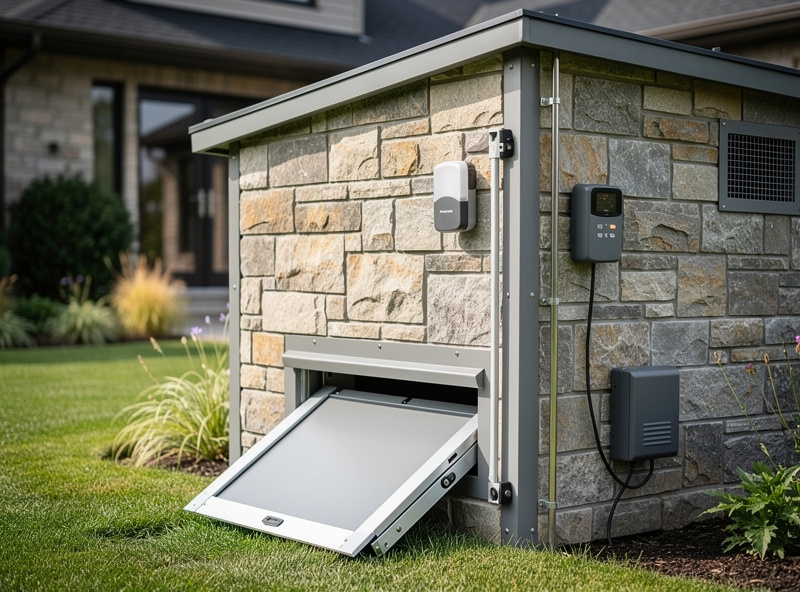
Custom chicken coops have one decisive advantage over prefab for smart-coop integration: every feature can be designed in from day one rather than retrofitted. The result is a coop where smart automation works seamlessly, costs less to install, and delivers better service over time.
Wired electrical infrastructure: Custom builds can include AC outlets, low-voltage wiring runs, and dedicated junction boxes from initial construction. Eliminates retrofit conduit installation that always costs more and looks worse than designed-in wiring.
Sensor mounting brackets: Pre-installed sensor mounts at exact ideal locations (roost-height temperature, floor-level ammonia, ceiling-corner motion). Eliminates post-installation drilling and bracket retrofitting.
Camera infrastructure: Pre-installed camera mount points with conduit routing for power and data cables. Position cameras to cover nesting boxes and roost area without compromise.
Auto-door integration: Wall framing designed around auto-door dimensions. No adapter plates needed, no compromises in placement. I didn’t plan my own conduit runs before the walls went up on my first pass — the Home Assistant sensor wiring ended up stapled along the baseboard instead of buried in the frame, which works fine but looks like exactly what it is: an afterthought. If I built again I’d run the low-voltage channels during framing, which is the entire argument for speccing this stuff into a custom build up front instead of retrofitting later. The full smart-coop architecture is in our smart chicken coop pillar guide.
Future-proof power and data: Custom builds can include extra conduit runs and junction boxes for features you haven’t picked yet. Adding a 4th camera or new sensor type 3 years later becomes a 30-minute install instead of a half-day project. Our smart coop monitoring guide covers expansion patterns.
Common Custom Coop Mistakes
Four mistakes drive most custom-coop project disappointment.
Mistake 1 — vague specifications: “Build me a nice 6-bird coop” produces miscommunications and arguments over what was promised. Always specify dimensions, materials, hardware, and features in writing before signing the contract.
Mistake 2 — choosing custom when prefab would work: Custom builds cost 2x to 5x more than equivalent prefabs. If standard prefab dimensions actually fit your situation, the custom premium isn’t justified. Verify that your situation genuinely requires custom before committing.
Mistake 3 — scope creep during the build: Adding features mid-project (“can we also add a window here?”) inflates costs well beyond the price of the feature itself — construction-industry data on scope creep puts typical project overruns in the 25 to 50 percent range once mid-build changes start compounding, because changes during construction are far more expensive than changes during design. Lock the spec before construction starts.
Mistake 4 — skipping the smart-coop check: If you’ll automate within 24 months, designing smart-coop features into the custom build adds $300 to $800 upfront but saves $500 to $1,200 in retrofit work later. Always include smart-coop spec elements in the design even if you won’t automate immediately. New keepers from our beginners guide often skip this and regret it within 18 months.
Frequently Asked Questions
What are custom chicken coops?
Custom chicken coops are designed and built for your specific situation – exact dimensions, particular climate adaptations, integrated smart-coop wiring, and aesthetic match to your existing structures. They cost 2x to 5x more than equivalent prefabs but solve problems that off-the-shelf coops cannot address.
Are custom chicken coops worth it?
Yes when standard prefab dimensions do not fit your yard, HOA requires specific aesthetics, your climate demands non-standard insulation, or you need integration with existing buildings. Also worth it for 15+ year ownership horizons where annualized cost beats prefab replacement cycles. Not worth it when standard prefabs would work fine.
How much do custom chicken coops cost?
Custom-spec from existing builders cost $1,800 to $3,500. Custom Amish builds cost $2,500 to $5,500. Architect-designed coops cost $5,000 to $12,000. Custom shed conversions cost $1,500 to $4,500. Add 10 to 25 percent for smart-coop integration features specced from day one.
How long does a custom chicken coop take to build?
Custom-spec from existing builders takes 4 to 12 weeks. Custom Amish builds take 6 to 16 weeks. Architect-designed coops take 12 to 24 weeks (including design phase). Custom shed conversions take 4 to 12 weeks depending on existing structure availability.
Can I get a custom chicken coop with smart features?
Yes, and custom is actually the best path for smart-coop integration. Designing in features from day one (sensor mounts, auto-door wall framing, wired electrical, camera infrastructure) eliminates retrofit costs and delivers seamless smart automation. Adds $300 to $800 to typical custom pricing but saves $500 to $1,200 in retrofit work later.
What should I include in custom chicken coop specifications?
Always specify: exterior and interior dimensions, bird capacity, climate zone, wall and roof materials, floor type, nesting box count and dimensions, roost bar configuration, ventilation specs, door specs, and hardware grade. For smart-coop integration also specify: auto-door wall location, sensor wiring channels, camera mount positions, battery backup placement, and power infrastructure.
Bottom Line: Custom Wins on Specific Constraints, Loses on Generic Needs
Custom chicken coops solve problems prefabs can’t — non-standard dimensions, HOA aesthetic requirements, climate-specific construction, designed-in smart-coop integration, and 15+ year ownership horizons. The 2x to 5x premium pays back when you genuinely need those features. Specify in detail before signing, lock the scope before construction, and include smart-coop provisions even if you’ll automate later.
For premium traditional builds, see our Amish chicken coops guide. For prefab alternatives at lower price points, the prefab chicken coops guide covers the four prefab tiers.
Related Guides
- Best Chicken Coops 2026: Complete Buyers Guide
- Amish Chicken Coops: Premium Build Quality
- Prefab Chicken Coop: 4 Tiers Compared
- How to Build a Smart Chicken Coop: The Complete 2026 Guide
- Best Smart Chicken Coop Devices & Automation Tools 2026
- Chicken Coop Size Guide: How Many Chickens Per Square Foot
Related Guides
Chicken Coops Near Me: Local Sourcing Guide (2026)
Searching “chicken coops near me” in 2026 surfaces a mix of local farm stores, regional builders, and individual sellers —…
Amish Chicken Coops: Premium Build Quality (2026)
An Amish chicken coop is built by hand in a workshop in Pennsylvania, Ohio, Indiana, or Illinois — mortise-and-tenon joints,…
Prefab Chicken Coop: 4 Tiers Compared (2026)
A prefab chicken coop is a factory-assembled or kit-form coop sold ready-to-deploy, distinct from a custom-built coop designed and constructed…