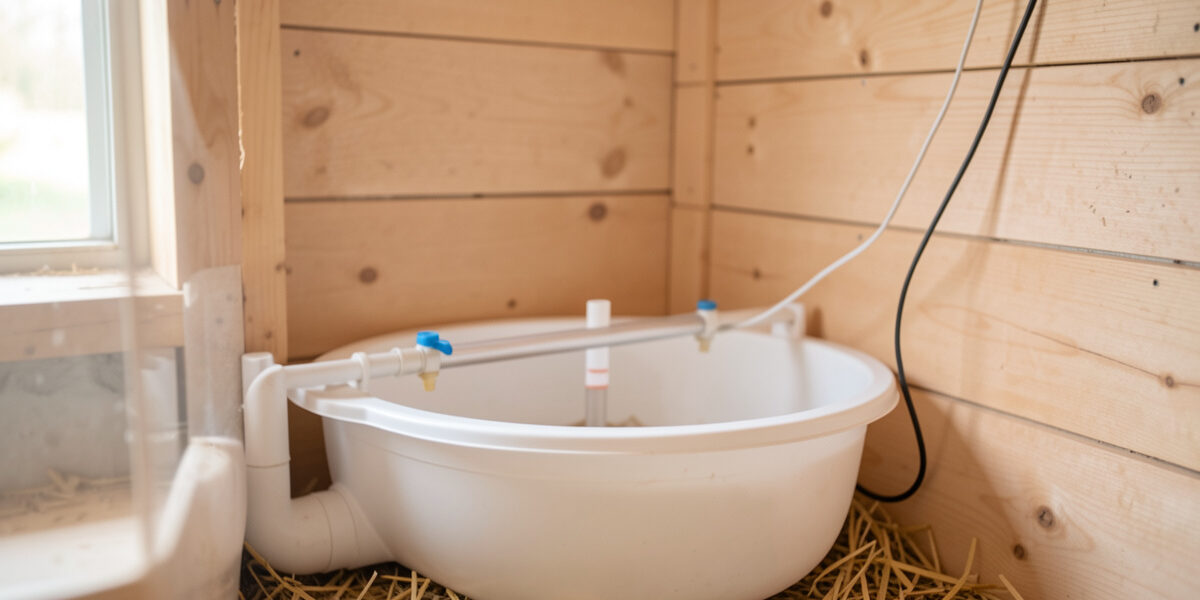
A coop water-level sensor tells you the drinker is going dry — or freezing solid — before the flock does, which in a Swedish winter is the difference between topping up a reservoir at lunch and walking out at dawn to hens pecking at a block of ice. I run a level probe in my heated waterer that reports into the same dashboard as the rest of the coop, and it has saved me more 5 a.m. trips than every other sensor combined.
The reason a water-level sensor is worth a wire in a cold climate is that a dry waterer and a frozen waterer look identical from the coop door, and the flock pays for the confusion in eggs. Hens go off lay surprisingly fast on reduced water, and the dehydration that quietly costs you a week of production is the kind of slow problem a sensor catches and a daily glance does not.
This article covers the water-level and flow hardware itself: the sensor types that actually work in a coop, which one fits which style of drinker, and how I wire it into the freeze-watch automation that protects the whole water system through winter. For the full sensor stack this belongs to, start at the coop sensors and monitoring overview.
Why a Water-Level Sensor Earns Its Wire in Winter
A water-level sensor earns its wire in winter because a frozen drinker gives you no visible warning, and because the flock’s water demand does not pause for the cold — if anything the dry winter air and the calories they burn staying warm keep intake up even as every surface in the coop wants to freeze. The sensor turns “is there water?” from a chore-time guess into a constant, remote fact.
The failure modes it catches are the ones that cost you quietly. A nipple drinker with a stuck valve can drain a reservoir onto the litter overnight, leaving the flock dry and the bedding wet — a problem that then shows up on the ammonia probe I describe in the ammonia sensor guide. A heated waterer whose thermostat has failed can freeze solid between bedtime and dawn, and the only outward sign is hens clustered at a nipple that gives them nothing. Without a level sensor, you find out by walking out. With one, you find out from the house.
How Much Water Does a Laying Hen Actually Drink?
A laying hen drinks roughly 300 to 500 millilitres of water a day — about twice her feed intake by weight — and that figure climbs sharply in heat and during peak lay, which tells you how fast a flock can drain a modest reservoir and how little margin you have when a drinker fails. The University of Florida’s poultry water requirements guidance treats water, not feed, as the first-limiting nutrient for egg production, because hens will tolerate a feed interruption far longer than they will tolerate going dry.
What that number means in practice is that my flock of around ten birds can empty a 10-litre reservoir in barely two days in summer, and a single stuck valve can put them on a clock measured in hours. The math is also why I size my winter reservoir generously and lean on the level sensor to tell me when the top-up is actually due, rather than guessing on a schedule. Michigan State’s poultry water requirements extension article makes the same point from the production side: water restriction measurably cuts egg output within days, well before the birds look obviously distressed. The sensor is how I keep that from ever being a variable in my coop.
The Ways to Sense Water Level in a Coop
There are five practical ways to sense water level in a coop, and they suit different drinkers and different levels of build effort. None is universally best; the right one depends on whether you run a gravity reservoir, a nipple line, or a cup system.
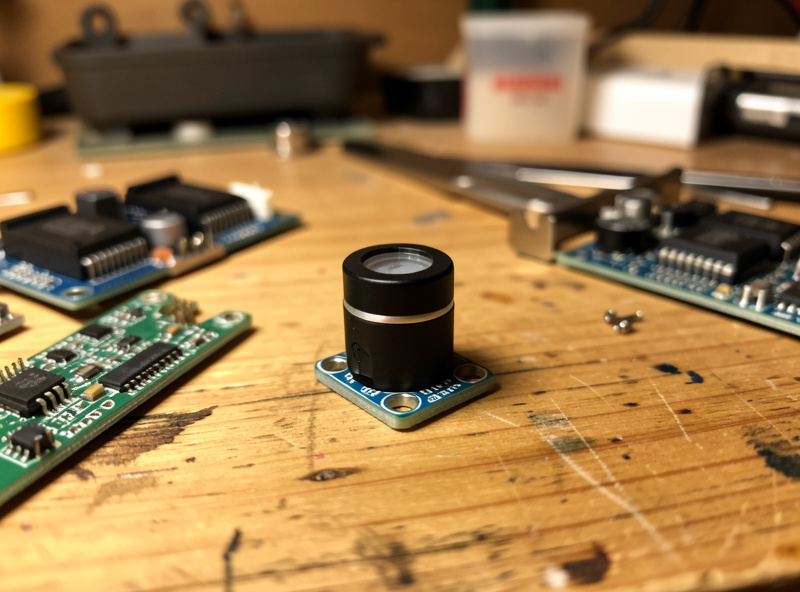
A float switch is the simplest and most reliable: a buoyant switch that opens or closes a contact as the water level lifts or drops it. It costs almost nothing, it has no calibration, and it tells you “above or below this line” with bulletproof certainty — which is usually all you actually need. A capacitive level sensor sticks to the outside of a plastic reservoir and senses the water through the wall, so nothing metal touches the drinking water; it gives a continuous reading rather than a single threshold. A waterproof ultrasonic sensor, the JSN-SR04T class, sits above the water and pings the surface to measure distance, giving a continuous level without any contact at all. A load cell under the waterer weighs the reservoir, so the weight reading is your level — elegant for a single-bucket gravity drinker. And a hall-effect flow sensor in the fill line counts the litres flowing in, which is the right choice if you want to know how much the flock is drinking rather than how full the tank is.
For most keepers the decision comes down to the float switch or the ultrasonic probe, and the choice is really about whether you want a single alarm point or a live level bar on the dashboard. A float switch is the one I would hand to anyone building their first sensor; the waterproof ultrasonic probe is the one I reach for when I want to watch the level drop across the day.
As an Amazon Associate I earn from qualifying purchases.
Which Water-Level Sensor Fits Which Waterer?
Matching the sensor to the waterer is what makes the difference between a reliable reading and a flaky one, because each drinker style has a level-sensing problem that one sensor type solves cleanly and the others solve badly. Here is the mapping I build to.
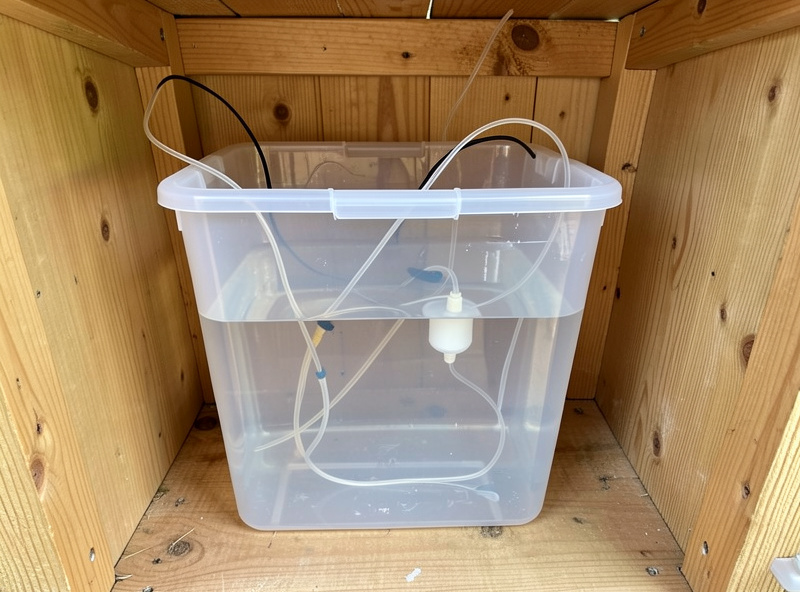
A gravity reservoir feeding a nipple or cup line — my own setup — pairs naturally with a float switch at the low line or an ultrasonic probe above the surface, because the reservoir is an open tank with a clear, calm surface to measure. A pressurised nipple line on a regulator is better served by a flow sensor in the supply, because there is no open tank to float in and the thing you actually want to know is whether water is moving. A single bucket or pan drinker sits happily on a load cell, turning the whole waterer into a scale that reports its contents. The principle is to sense the water where the water actually pools or flows, not to force an awkward sensor onto a drinker it was not meant for.
How I Wired Mine Into the Freeze-Watch Automation
I run a float switch at the low line of my heated gravity reservoir, wired to an ESP32 board on ESPHome that reports into Home Assistant, and the level reading is paired with a temperature probe on the waterer itself so a single automation watches both. The result is two distinct alarms: a “low water” notice when the float drops, and a louder “about to freeze” alert when the waterer temperature falls toward zero and the heater has not caught up. That pairing is the whole point, because in winter a low reading and a freezing reading require opposite responses — one means go top up, the other means go fix the heater.
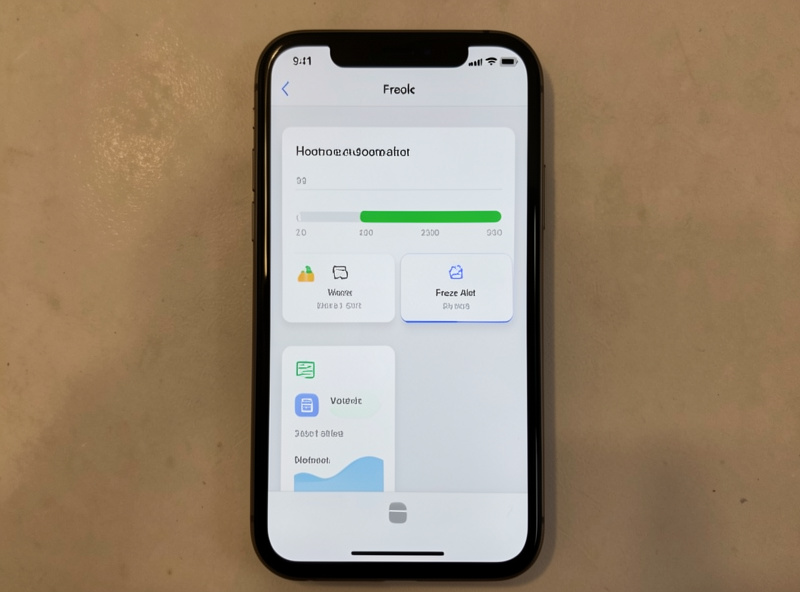
The exact blueprint for that freeze-watch logic — the sensor wiring, the threshold, and the notification that fires — is written up in the freeze-watch automation guide, and the dashboard that displays it alongside the door, the temperature, and the ammonia readings is in the coop dashboard build. I run the whole thing local-only, so a cloud outage does not silence the freeze alarm on the one night it matters most. A water sensor that stops reporting in a cold snap is worse than useless, so the system treats silence as the alarm.
What the Level Trend Tells You Beyond Full or Empty
The single most underrated thing about a continuous level sensor — the ultrasonic or load-cell kind, rather than a bare float — is the trend, because the rate at which the level drops tells you things the alarm line never will. A flock drinking down a reservoir at its normal cadence draws a steady, gentle slope across the day. A stuck or weeping valve draws a steeper slope that keeps falling right through the night, when the birds are asleep and should be drinking nothing at all. That overnight drop is the fingerprint of a leak, and it is exactly the signature that would have warned me a day before I found my dry waterer.
I watch the slope as much as the level. If the dashboard shows the waterer losing water between dusk and dawn, when demand should be near zero, something is leaving the reservoir that is not the flock, and I go hunting for a weeping nipple or a cracked joint before it empties the tank. A level sensor that only ever reported full or empty would miss that pattern entirely, which is why I lean toward a continuous reading on the winter waterer even though a cheap float would technically cover the alarm. The float tells you when you are already out; the trend tells you that you are quietly on the way.
The Day I Found a Dry Waterer at Noon
The mistake that put a level sensor in my coop was not a frozen waterer; it was a slow one. A nipple valve had been weeping for days, draining the reservoir a little faster than I was topping it up, and because the birds still had one working nipple they did not raise a fuss. I walked out at noon on a mild day to find the reservoir almost empty, the litter beneath it dark and soaked, and a faint ammonia catch already in the air. The smell problem I caught with my nose; the water problem I should have caught a day earlier with a sensor.
What I remember most clearly is the sound — the hollow, dry click of a hen working a nipple that had nothing behind it, a plastic tap-tap with no swallow following it. That sound is the audible version of a low-water alarm, and once you have heard it you do not forget it. Within a week I had a float switch in the reservoir and a low-water notification on my phone, and I have not heard that dry click in my coop since. The flock’s demand for water is relentless and unforgiving of my forgetfulness, and a level sensor is how I stopped asking the birds to be the alarm.
How does a chicken coop water level sensor work?
It detects whether the drinker is full or running dry and reports that to your phone. The simplest version is a float switch that opens or closes a contact as the water drops past a line; a fancier one uses a waterproof ultrasonic probe above the surface to measure a continuous level.
What is the best water level sensor for a coop waterer?
For a gravity reservoir feeding a nipple or cup line, a float switch at the low line is the cheapest reliable option, and a waterproof ultrasonic probe gives a continuous level bar. A pressurised nipple line is better served by a flow sensor in the supply, and a single bucket drinker works well on a load cell.
Can a sensor tell me if the coop waterer is frozen?
Not directly from the level alone, but a temperature probe on the waterer paired with a level sensor can. I watch both: a low level means go top up, while a waterer temperature falling toward zero means the heater has failed and the water is about to freeze.
How much water does a laying hen drink per day?
A laying hen drinks roughly 300 to 500 millilitres a day, about twice her feed intake by weight, and more in heat or at peak lay. That means a modest flock can drain a 10-litre reservoir in a couple of days, so a slow leak or a stuck valve puts them on a clock measured in hours.
Do I need a coop water level sensor in winter?
In a cold climate it is the season it pays for itself, because a dry waterer and a frozen waterer look identical from the door and the flock pays for the confusion in eggs. A level sensor plus a freeze alarm turns the waterer from a twice-daily chore into something you verify from your phone.
Keep Building
- Chicken Coop Sensors and Monitoring: The Complete Hardware Guide
- Home Assistant Freeze-Watch: Automating the Heated Waterer
- Ammonia Sensors for the Coop: Catching Air Problems Before You Smell Them
- Door-State and Contact Sensors: Confirming the Pop Door Really Closed
- Local-Only Coop Automation: Keeping the Door Working When the Cloud Goes Down
Related Guides
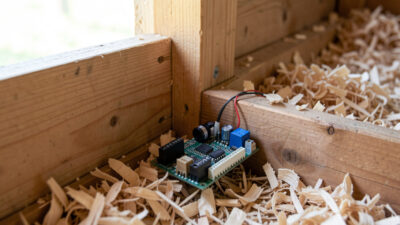
Ammonia Sensors for the Coop: Catching Air Problems Before You Smell Them
An ammonia sensor belongs at the birds’ breathing height, close to the litter where the gas is generated, because that…

Node-RED vs Home Assistant Automations for the Coop: When to Use Which
Use native Home Assistant automations for the coop’s simple, safety-critical rules — the sunrise door, the freeze-watch waterer — and…
Home Assistant Coop Notifications: Door-Failed and Predator-Motion Alerts
The only two coop notifications I let reach my phone are door-failed — the door was commanded closed but the…