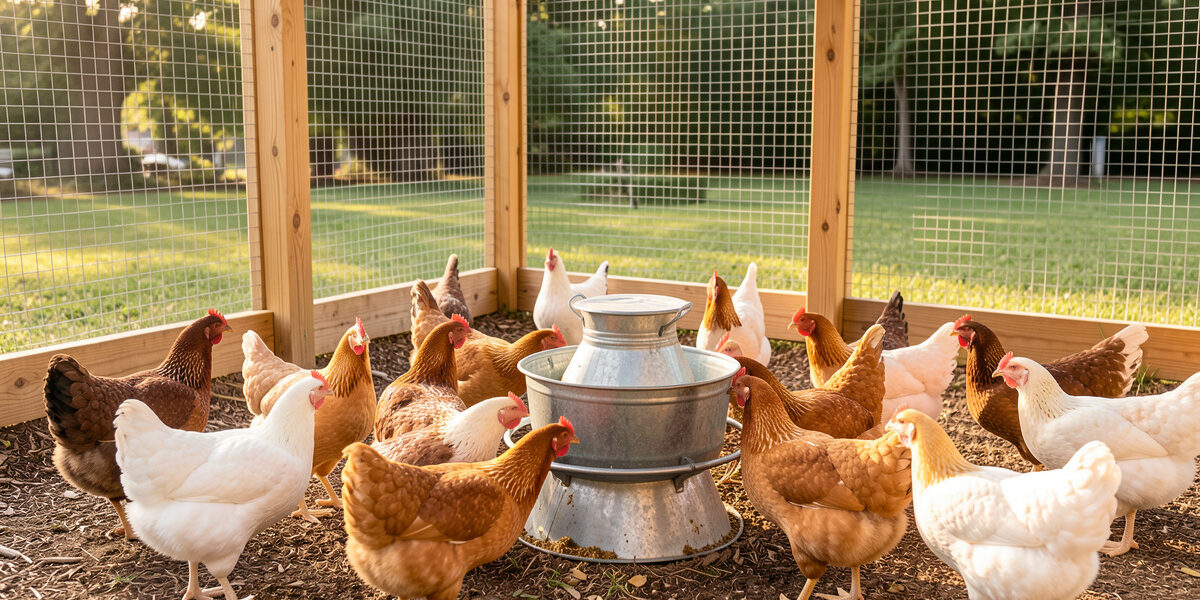
What you feed chickens decides almost everything you care about: how many eggs land in the nesting box, whether combs frostbite in a Nordic winter, and how heavily the rodents move in under the run. The short answer is that adult laying hens run on a complete layer feed of 16 to 18 percent protein with around 3.5 to 4 percent calcium, free-choice all day, with grit and oyster shell offered on the side and treats kept to roughly ten percent of the diet. Everything past that sentence is the detail that keeps a flock laying through the cold and off the vet’s table.
I keep a cold-hardy laying flock in Sweden in a coop I built and automated end to end, and feed is the one input I have changed the most over the years — different feeders, fermented mash through the dark months, scratch as a winter heat trick, sealed steel bins after the first rat. This guide is the whole feeding system the way I run it now, with each piece broken out into its own deeper article so you can dig into the part that matters for your flock.
What Chickens Actually Need in Their Diet
A laying hen needs a complete ration built around protein, calcium, energy, and a steady supply of clean water — and a commercial complete feed already balances the first three for you, which is why it should make up about 90 percent of what your birds eat. The hen does the rest by foraging, taking grit, and topping up calcium from a separate dish. Trying to mix your own balanced ration from scratch grains is the single most common way backyard keepers end up with thin shells and a sputtering lay.
Protein drives feather growth, muscle, and the egg itself — a hen pours roughly 6 grams of protein into every egg she lays. Calcium builds the shell, and a laying hen needs far more of it than a chick or a non-laying bird, which is the entire reason layer and grower feeds exist as separate products. Energy comes mostly from the grains in the feed, and it matters most in winter when birds burn calories just staying warm. Get the complete feed right and you have solved 90 percent of chicken nutrition before you ever think about a single treat.
How Much to Feed and How Often
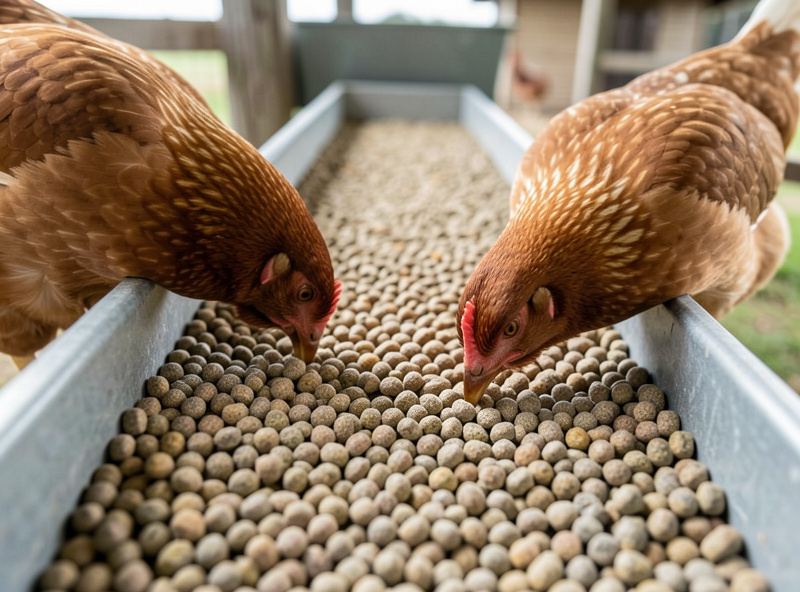
A standard laying hen eats roughly 110 to 130 grams of complete feed a day — about a quarter pound, or a packed half-cup — though the number drifts with breed size, season, and how much the birds forage. The honest answer for a backyard flock is that you do not measure it: you feed free-choice and let the birds self-regulate. A hen will eat to her energy needs and stop, and the appetite swings are real information — intake climbs in a cold snap and during molt, and drops in summer heat.
I run feed available from the moment the pop door opens until they roost, because a hen that has to compete or wait under-eats, and the lowest birds in the pecking order are the first to fall short. The one thing I do not do is leave a big open trough overnight — that is just a rodent invitation. Pellets versus crumble is mostly a waste question: pellets get billed onto the floor less, crumble suits smaller birds and works better fermented. Mash is the messiest dry form but the best base for the wet fermented feed I make. Whatever the form, the daily rhythm is the same: full feeder by day, sealed and rodent-denied at night.
Counting heads against a feeder matters more than people expect. A single feeder for a dozen birds creates a bottleneck the bossy hens guard, so I run more feeder stations than the bird count strictly needs. It is the same reasoning behind sizing the rest of the build generously, the way I lay out in my coop selection guide — feed access, like roost and nest space, is one of those numbers where the coop built for six ends up holding ten.
Layer Feed, Grower Feed, and Why the Difference Matters
The non-negotiable rule of chicken feeding is calcium timing: laying hens get high-calcium layer feed, but growing birds under about 18 weeks must not, because the excess calcium damages the kidneys of a bird that is not yet putting it into shells. Feed grower (or an all-flock starter-grower) until the first eggs appear, then switch to layer. Get this backwards and you can quietly harm a whole batch of pullets.
Protein percentage shifts with age too — chicks need the most, growers slightly less, and laying hens settle around 16 to 18 percent. The cleanest way to keep a mixed-age flock fed without poisoning the youngsters is to run an all-flock feed at a flat protein level and offer oyster shell separately, so only the hens that need calcium take it. The full sequence — layer versus grower, and how much protein a bird needs at each age — is broken out in the related guides below. For day-olds through point of lay, my guide to chick feed stages walks the starter-to-layer transition, and breed choice shapes the rest, covered in my chicken breeds comparison and the best laying breeds picks.
Grit and Oyster Shell Are Not the Same Thing
This trips up more new keepers than anything else: grit and oyster shell do completely different jobs and are not interchangeable. Grit is hard insoluble stone that sits in the gizzard and grinds food, because a chicken has no teeth. Oyster shell is soluble calcium the hen dissolves to build eggshell. A bird needs both, from separate dishes, and confusing them gives you either soft shells or a digestive jam-up.
Birds on full free-range pick up grit from the ground on their own, but any flock eating mostly commercial feed, scratch, or treats needs grit offered free-choice. Oyster shell goes in its own container so each hen self-regulates — a hen building shell takes what she needs and the others leave it. The full system, including when chicks need chick-sized grit, gets its own deep dive in the related guides. Calcium is also the through-line of shell quality and steady lay, which I cover in my egg production guide.
Treats, Scraps, and the Ten Percent Rule
Treats are where good intentions wreck a diet. The rule I hold to is simple: treats and kitchen scraps should never exceed about ten percent of the daily diet, because everything a hen eats that is not complete feed dilutes the protein and calcium balance that keeps shells hard and lay steady. A flock filled up on bread and mealworms is a flock that lays thin-shelled eggs and looks deceptively happy doing it.
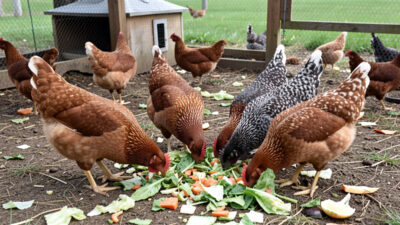
Plenty of kitchen scraps are genuinely good — leafy greens, squash, cooked vegetables, the odd handful of mealworms in a cold snap. A few things are flatly off the table: anything moldy, raw dried beans, avocado pits and skins, and heavily salted or sugary food. I keep a running safe-and-unsafe list — covered in detail in the related guides below — so you can check before you toss something over the run fence. The same restraint applies to scratch grains, which most keepers badly overfeed, and to anything dropped in the chicken run where it can sit and spoil.
Fermenting Feed for Better Use and Less Waste
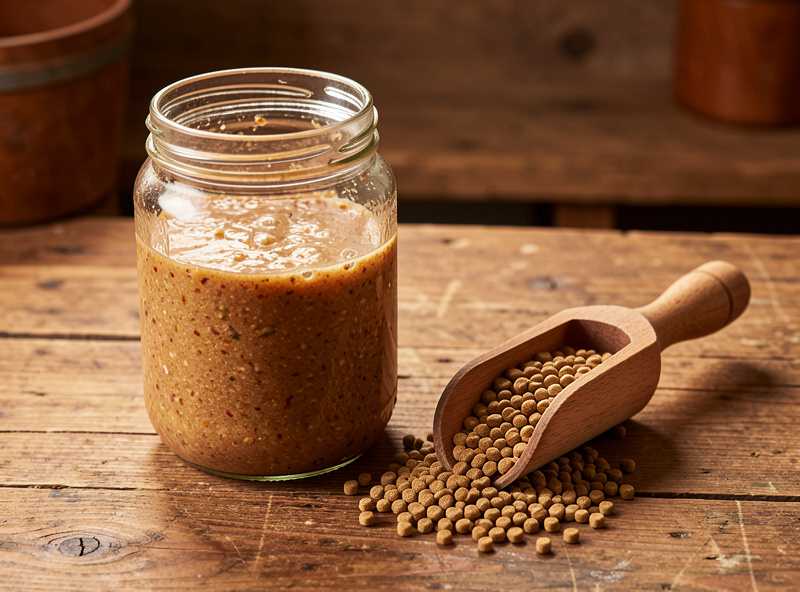
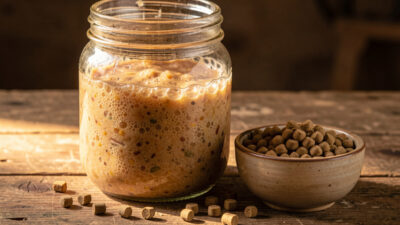
Fermenting feed is the one upgrade that earned its place in my routine. Soaking complete feed in water for two to three days until it goes pleasantly sour improves how well the birds use it and visibly cuts feed waste, because the wet mash is harder to bill out onto the floor and the fermentation predigests some of the grain. Through the dark Swedish winter, a warm-ish bowl of fermented mash in the morning is also a genuine welfare win for the flock.
It is not magic and it is not free of effort — fermented feed sours fast in summer heat, needs clean containers, and has to be made in small daily batches. But for a backyard flock the trade is worth it most of the year. My step-by-step on fermenting feed — the jar method, the smell to aim for, and the spoilage signs to bail on a batch — is one of the related guides below. Clean wet feed also ties straight into coop hygiene, the same logic as my coop bedding guide and routine coop maintenance.
Feeding Through Cold and Heat
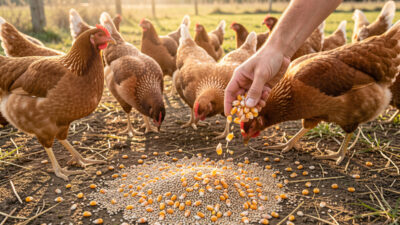
Cold changes the math. A hen burns calories to hold body temperature, so winter feeding is partly about energy — and the one trick I rely on is a handful of scratch grains tossed at dusk, because the digestion of those carbohydrates generates heat overnight when the birds need it most. The complete feed still does the nutritional heavy lifting; scratch is the bedtime calorie top-up, not the meal. The deeper scratch breakdown is in the related guides below.
Water is the silent half of winter feeding. A hen that cannot drink will not eat, and a waterer frozen solid by 7 a.m. is the most common cold-climate failure I see — which is why my heated horizontal-nipple setup matters as much as the feed bin. Heat works the other way: in a hot spell birds eat less, so I lean on cool water, shade, and lighter morning feeding. The cold-hardy side of this overlaps with breed choice, which I cover in cold-hardy chicken breeds, and with keeping the lay up in winter egg laying.
Water Is Half the Diet
It is easy to treat water as separate from feeding, but they are the same system: a hen who cannot drink stops eating within hours, and lay collapses fast on a flock that runs dry. A laying bird drinks roughly two to three times the weight of feed she eats, more in heat, and an egg is about 75 percent water. Clean, available water is not a side concern — it is the first thing I check when a flock goes off feed or the egg count dips for no obvious reason.
The delivery method earns its keep here too. I switched to horizontal-nipple drinkers years ago because open founts foul with bedding and droppings within a day, and dirty water suppresses intake the same way dirty feed does. In a Swedish winter the whole thing hinges on heat: a waterer frozen solid by 7 a.m. is the most common cold-climate failure I see, and it is why my drinker sits on a thermostatic base wired into the same Home Assistant freeze-watch automation that runs the rest of the coop. The complete waterer comparison lives in my automated feeders and waterers guide.
Summer flips the priority to volume and cool. Birds drink heavily and pant to shed heat, so I add shaded drinking stations and keep the water genuinely cool, since hens drink less of warm water exactly when they need it most. Electrolytes in the water during a heat wave or a recovery period are a cheap, genuine help. The principle across both seasons is the same: feed is useless if the water beside it fails.
Feeders, Waterers, and Rodent-Proof Storage
How you deliver feed matters almost as much as what is in it. A good feeder cuts waste and — critically — denies rodents a free buffet. I run a treadle feeder for exactly this reason: the lid stays shut until a bird’s weight opens it, and the rats that used to work the old gravity feeder gave up and left. The full comparison of gravity, treadle, timer, and smart feeders lives in my guides to the automatic chicken feeder and the broader automated feeders and waterers setup.
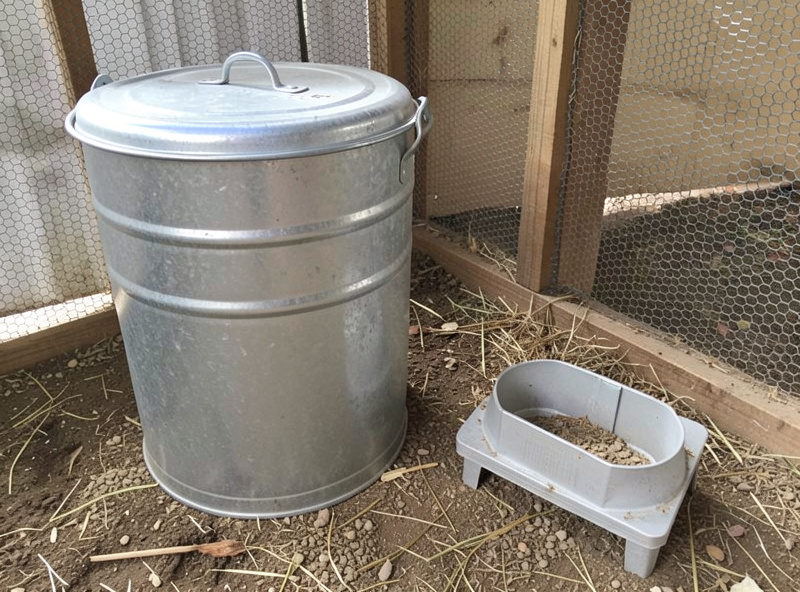
Storage is where most rodent problems actually start. A bag of feed in the corner of the shed is a rat magnet; the fix is galvanized steel cans with tight lids, which mice and rats cannot chew through the way they shred plastic totes. I treat feed storage as part of the coop’s predator perimeter, the same mindset as the rest of my predator-proof coop build and the structure itself, which I walk through in building a chicken coop. The complete rodent-proof storage approach gets its own guide in the related list below. Even the nesting boxes benefit when feed is locked away and rodents stop nosing around the coop at night.
Molt, Broody Hens, and the Special Cases
The standard layer ration covers a hen for most of the year, but a few situations call for a deliberate tweak. The big one is the annual molt: in autumn a hen drops and rebuilds her entire feather coat, and feathers are about 85 percent protein, so a molting bird needs more of it just as her lay pauses. I switch the flock to a higher-protein all-flock feed through the molt — the lay has stopped anyway, so the lower calcium is not a problem, and the extra protein gets the new feathers in before the cold lands. It is the single most useful seasonal feed change I make.
Broody hens eat and drink far less while they sit, so I make sure feed and water are within a short walk of the nest and keep an eye that the broody bird is leaving to eat at least once a day. Roosters and non-laying birds in a mixed flock are exactly why the all-flock-plus-separate-oyster-shell approach is so clean — nobody is forced to eat the laying hen’s calcium load. And birds recovering from illness or a hard winter benefit from a warm fermented mash and electrolytes in the water, though anything past general supportive feeding is a vet question, not a feed question.
One special case that is really a non-case: you do not need to “boost” a healthy laying flock with protein powders, layer boosters, or the parade of supplements sold for the purpose. A complete feed plus free-choice oyster shell and grit already balances the diet. The money is better spent on a feeder that does not waste feed and storage that does not feed the rats.
Feeding Quick Reference by Bird and Season
The table below is the cheat sheet I would hand a new keeper — feed type, calcium handling, and the seasonal tweaks that actually matter. Use it to sanity-check your setup, then dig into the linked guides for the depth on each line.
| Bird / Situation | Feed Type | Protein | Calcium Source | Key Notes |
|---|---|---|---|---|
| Chicks (0–8 wk) | Starter | 18–20% | None added | Chick grit if eating non-feed; never layer feed |
| Pullets (8–18 wk) | Grower | 16–18% | None added | Switch to layer only at first egg |
| Laying hens | Layer (complete) | 16–18% | Oyster shell free-choice | Free-choice all day; grit separate |
| Mixed-age flock | All-flock / flock raiser | ~18% | Oyster shell on the side | Hens self-select calcium; safe for young birds |
| Winter flock | Layer + scratch at dusk | 16–18% | Oyster shell free-choice | Scratch for overnight heat; unfrozen water critical |
| Molting hens | Higher-protein / all-flock | 18–20% | Oyster shell free-choice | Extra protein rebuilds feathers; lay pauses |
The Feeding Mistakes That Cost You Eggs
After years of running and re-running this, the failures cluster into a handful of repeats. Overfeeding treats is the big one — it is invisible because the birds love it, and it shows up only as thinning shells weeks later. Feeding layer to growing pullets is the most damaging. Skipping grit on a feed-only flock causes slow digestive trouble. And forgetting that water is part of the diet — that a frozen or filthy waterer suppresses feed intake — undoes good feed entirely.
The last quiet one is hygiene: feed left to go moldy in a damp feeder or stored in a chewed-open bag is an active health risk, not just waste. Mold toxins are exactly the kind of thing that lands a bird in front of an avian vet. Clean feeders, sealed dry storage, and small fermented batches you actually use up keep that risk near zero. If a bird does go off feed or show illness signs, that is a health question — see my chicken health guide and, for anything beyond husbandry, an avian vet.
Closing the Loop: Feed In, Compost Out
The part most feeding guides skip is the back end. Everything that goes into the flock comes out as some of the best compost input a garden can ask for, and I run that loop deliberately — the deep litter and droppings feed the beds rather than becoming a disposal problem. It is the same closed-system thinking as the rest of my build, and I cover it in the chicken-powered garden piece. Feed is not a line item; it is the input to the whole coop-to-bed cycle.
Get the complete feed right, keep treats honest, offer grit and shell separately, and lock the feed away from rodents — that is the entire system. From there it is just seasonal tuning. Start with whichever guide below matches the gap in your own setup.
Frequently Asked Questions
What should I feed backyard chickens?
Adult laying hens need a complete layer feed of 16 to 18 percent protein and about 4 percent calcium, fed free-choice all day. Offer grit and oyster shell separately, and keep treats under ten percent of the diet.
Can chickens eat layer feed before they lay?
No. Growing birds under about 18 weeks should eat grower or all-flock feed, not layer. The high calcium in layer feed can damage the kidneys of a bird that is not yet putting calcium into eggshells. Switch to layer at the first egg.
Do chickens need both grit and oyster shell?
Yes, and they do different jobs. Grit is insoluble stone that grinds food in the gizzard since chickens have no teeth. Oyster shell is soluble calcium for eggshells. Offer both free-choice from separate dishes.
How much can I feed chickens in treats?
Keep treats and kitchen scraps to about ten percent of the daily diet. More than that dilutes the protein and calcium balance of the complete feed and leads to thin shells and reduced laying over time.
How do I feed chickens in winter?
Keep complete layer feed available all day and toss a handful of scratch grains at dusk, since digesting those carbohydrates generates overnight body heat. Just as important, keep water from freezing, because a hen that cannot drink will stop eating.
How do I keep rodents out of chicken feed?
Store feed in galvanized steel cans with tight lids, since rats and mice cannot chew through metal the way they shred plastic. Use a treadle or rodent-resistant feeder, and never leave feed out overnight in an open dish.
Related Guides
The deep-dive feeding articles in this cluster — layer vs grower, protein by age, grit and oyster shell, treats and scraps, fermented feed, scratch grains, and rodent-proof storage — roll out alongside this hub; the links below are the live coop and flock guides that pair with them.
Related Guides
Scratch Grains for Chickens: Treat, Not a Meal
Scratch grains are the most overfed thing in backyard chicken keeping. Scratch is a treat — a cracked-corn-and-grain mix that…
Fermented Chicken Feed: A Practical Keeper Guide
Fermenting chicken feed is the cheapest upgrade in the coop that actually earns its place. Soaking complete feed in water…
What Treats Can Chickens Eat? Safe and Unsafe Foods
Chickens are enthusiastic about almost anything you hand them, which is exactly why treats are where good intentions wreck a…