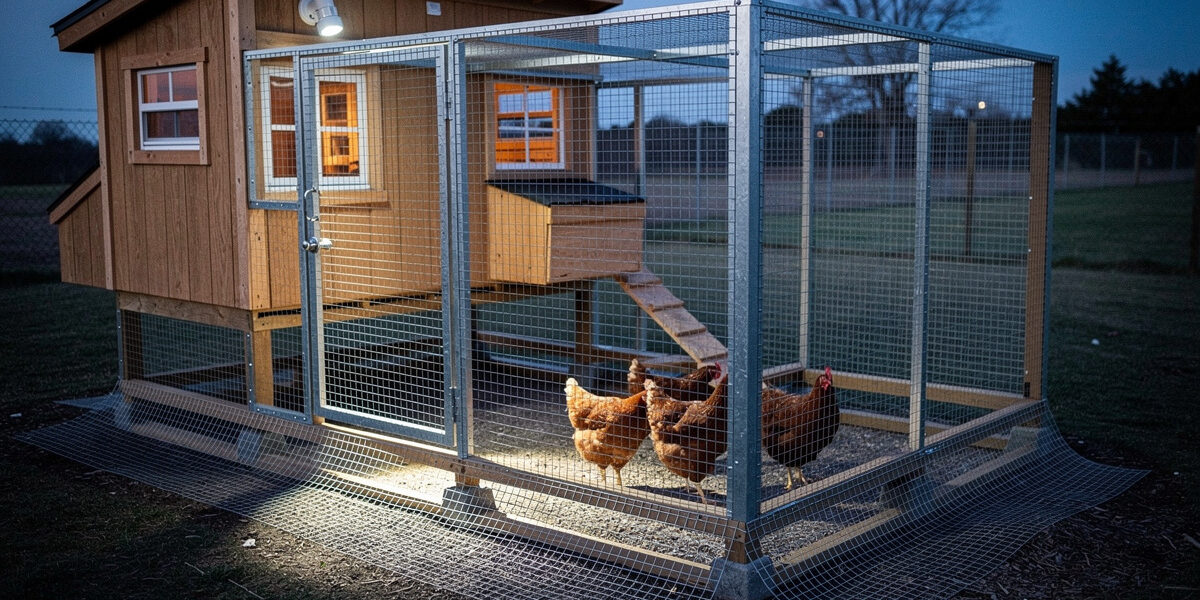
A truly predator-proof chicken coop combines three defense layers: hardware cloth on every opening (1/2" mesh, never chicken wire), a buried apron skirt that defeats digging, and predator-grade latches with two-step opening. Skip any layer and you eventually lose birds. The most common predators — raccoons, foxes, weasels, hawks, dogs, and rats — each defeat a single defense, but the layered system stops all of them. This guide covers the full system, the threats by region, and the 6 specific defenses every coop needs. I run all three layers on my own welded run in Sweden, and the one time something got through, it was a gap I had let open over winter — not a layer that failed.
For broader coop architecture, start with our Best Chicken Coops 2026 Buyers Guide. For the material decision (wood vs plastic vs metal — predator resistance varies by material), see Chicken Coop Materials.
A quick note: some links below are affiliate links — buy through them and I may earn a small commission at no extra cost to you. I only point to defenses I would actually run on my own coop. Details on my disclaimer page.
The Predator Hierarchy: Who Actually Kills Chickens
USDA Wildlife Services and state extension data show roughly the following ranking for backyard flock losses in the lower 48 states:
| Predator | Share of Losses | Active When | Primary Defense |
|---|---|---|---|
| Raccoons | ~30% | Dusk to dawn | Predator-grade latches + hardware cloth |
| Domestic dogs (loose) | ~18% | Daytime | Run fencing, secure perimeter |
| Foxes | ~15% | Dawn, dusk, night | Buried apron + run roof |
| Hawks | ~10% | Daylight only | Run roof or aerial cover |
| Coyotes | ~8% | Night, dawn | Buried apron + run height |
| Weasels / mink / fishers | ~7% | Night | 1/2" hardware cloth on every gap |
| Rats / opossums | ~5% | Night | Hardware cloth + clean coop |
| Snakes | ~3% | Daytime, warm months | Hardware cloth + egg collection |
| Owls / large hawks | ~2% | Dusk to dawn | Run roof, secure overnight |
| Bears (regional) | ~1% national, much higher in bear country | Any time | Electric fence + metal coop |
Three patterns matter. Raccoons are the #1 threat almost everywhere — every defense system must handle raccoons or it does not work. Domestic dogs are #2 and often the most overlooked threat — your neighbor's loose dog has killed more flocks than coyotes. Aerial predators only matter to free-range birds; if your run has a roof, hawks and owls drop out of consideration entirely.
The Three-Layer Defense Model
Effective predator defense is layered. No single defense stops every threat, but three independent layers means a predator must defeat all three to reach your birds — and no common predator defeats all three.
Layer 1: Coop hardening. The structure where birds sleep overnight. Hardware cloth on every opening, predator-grade latches, walls solid enough to resist gnawing. Every wood, plastic, or metal coop needs Layer 1 reinforcement.
Layer 2: Run reinforcement. The outdoor enclosure where birds spend the day. Buried apron skirt, hardware cloth (not chicken wire) sides, run roof or top netting. Layer 2 prevents incursion before predators reach the coop.
Layer 3: Active deterrents. Motion lights, secure-by-default closing, daily inspection. Layer 3 deters predators before they commit to sustained attack and detects breaches before they become mass losses.
The cost of all three layers on an 8-bird coop is roughly $200–$400 in materials and 8–12 hours of installation. Compared to losing a flock of $200 birds plus emotional cost, the math is clear.
Layer 1: Coop Hardening
Coop hardening means the structure itself resists breach. The five components:
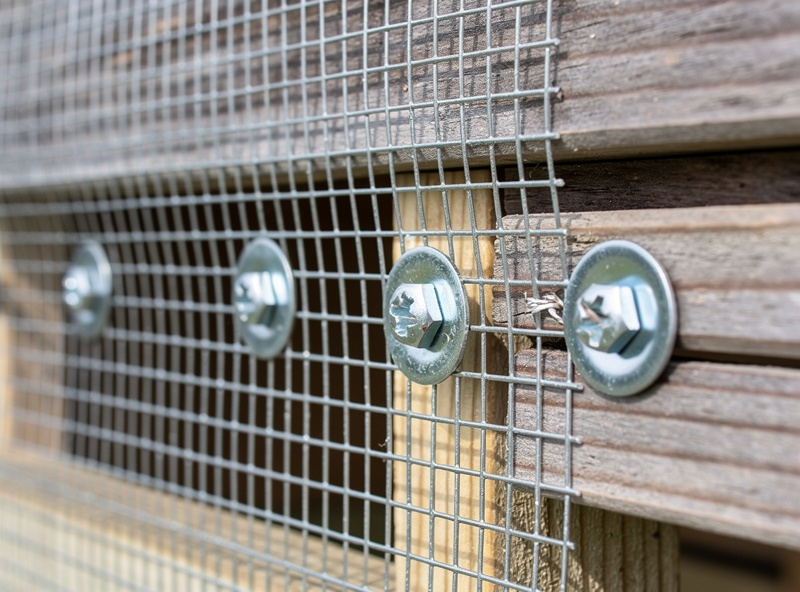
Hardware cloth on every opening. Vents, windows, pop doors, gaps under eaves — anywhere larger than 1/2" gets covered with 1/2" hardware cloth, screwed into place with washers. Chicken wire is NOT acceptable; raccoons reach through chicken wire and pull chickens apart through it. See Hardware Cloth vs Chicken Wire.
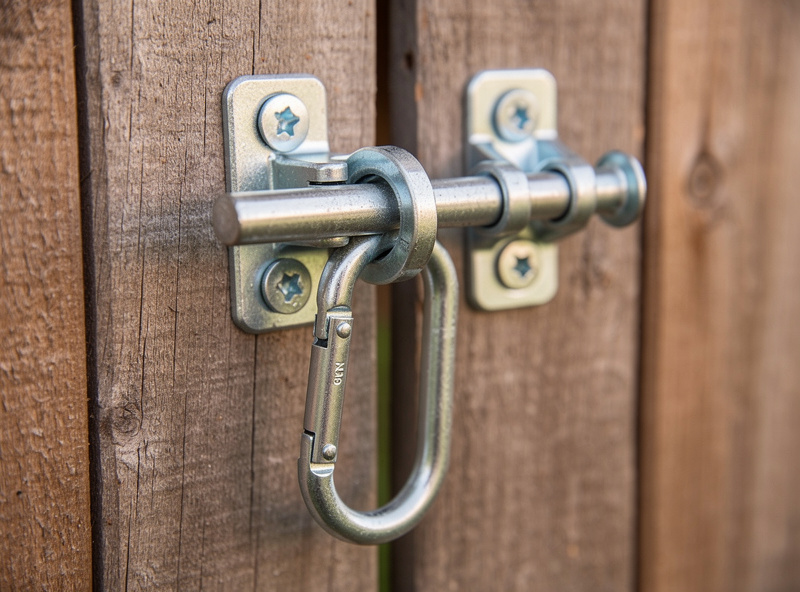
Predator-grade latches. Standard barrel bolts can be opened by raccoons within minutes. Use carabiner-locked T-handle latches, padlocks, or two-step latches that require human dexterity. See Raccoon-Proof Coop Latches.
Solid walls and floor. Walls at least 1/2" plywood (wood coops), HDPE panels (plastic coops), or galvanized steel (metal coops). The floor matters — predators dig under. Either elevate the coop on blocks or include a floor that extends 6" beyond the walls.
Pop door gap closure. Standard pop doors leave 1/2" gaps at the threshold; weasels and minks slip through. Use modern automatic coop doors with full-seal closure or add a rubber draft excluder strip to the threshold.
Roof seal. Roof-to-wall joints often leave 1–2" gaps under shingles. Inspect every gap; close with hardware cloth and silicone caulk.
Layer 2: Run Reinforcement
The run is where most attacks happen — coops are typically secure, runs are typically not. Three components:
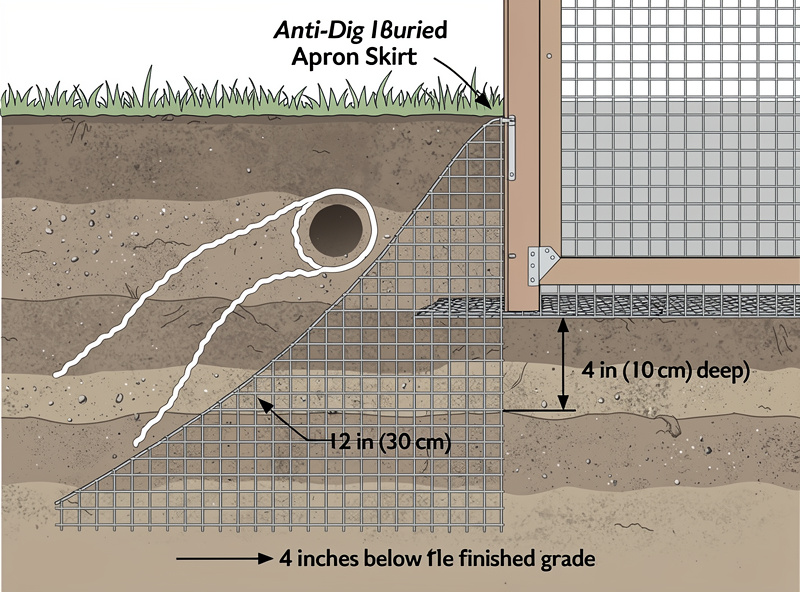
Buried apron skirt. The single most important predator defense. Bend 12 inches of hardware cloth outward at the base of the run wall and bury it 4 inches deep. Foxes and coyotes dig down at the wall, hit the apron, and give up. Without the apron, they tunnel under in 20 minutes. See Underground Predator Barriers for full construction details.
Hardware cloth run sides (lower 4 feet). The lower 4 feet of every run wall — the height a raccoon or fox can reach — must be 1/2" hardware cloth, not chicken wire. Above 4 feet, chicken wire or 1" mesh is acceptable for predators (though hawks still get through 1" mesh).
Run roof or top netting. Aerial predators (hawks, owls) and climbing predators (raccoons in particular) come from above. Solid roof is best; agricultural netting (1" mesh) is acceptable for daylight-only flocks. Without overhead protection, hawks pick off free-ranging birds within weeks of moving into your area. For aerial defense detail, see Hawk Protection for Backyard Chickens.
Layer 3: Active Deterrents
Active deterrents reduce predator interest before they commit to sustained attack.
Motion-activated lights. A 200+ lumen motion light on the run perimeter triggers raccoons, foxes, and coyotes to leave. Solar-powered units work without wiring. See Motion-Sensor Coop Lights for picks.
Automatic pop door closure. A flock that pop-doors itself in at sundown is dramatically safer than one that depends on you remembering to lock up. See Automatic Coop Doors Buyer's Guide.
Daily egg collection. Eggs left in nesting boxes overnight attract snakes, opossums, and rats. Collect every evening before sundown.
Predator scent deterrents. Predator urine (coyote for raccoons, wolf for coyotes) sold in 8 oz bottles for $15 deters by suggesting a larger predator is in the area. Refresh weekly. Effectiveness is real but moderate; works as supplement to physical defenses, not as replacement.
Electric fence (high-pressure environments). A single 4-strand electric fence on the run perimeter stops bears, dogs, coyotes, and fox simultaneously. See Electric Fence for Chickens.
Threats by Region
Predator pressure varies by region. Tailoring defenses to your specific threats saves cost and over-engineering.
Suburban East / Mid-Atlantic: raccoons dominate, plus loose neighborhood dogs, occasional foxes. Rare hawks. Standard 3-layer defense covers everything; bears in some Pennsylvania, New York, and New England suburbs require electric fence.
Rural Midwest / South: coyotes, raccoons, foxes, hawks, occasionally weasels. Run roof and buried apron are non-negotiable. Bears in Appalachian regions; cougars in some western Texas.
Pacific Coast / Oregon / Washington: raccoons, coyotes, hawks, owls. Bobcats in some areas. Wet ground accelerates apron-skirt failure; re-inspect quarterly.
Mountain West / Rockies: coyotes, bears, cougars, foxes, hawks, ravens (chick predation). Electric fence is standard in bear country; metal coops outsell wood by 3:1.
Southwest / Desert: coyotes, bobcats, hawks, snakes (heavy egg predation). Snake-proofing — hardware cloth on every gap — matters more than in other regions.
Urban backyards (anywhere): rats, raccoons, occasionally hawks, plus loose dogs. Apron and hardware cloth are usually enough; full predator-grade coop is overkill.
Raccoon Defense (The #1 Threat)
Raccoons account for 30% of backyard losses and are the predator your defenses must specifically handle. Their three abilities:
Dexterous hands. Raccoons open standard latches, untwist bolts, and pull chicken wire apart. Defense: predator-grade latches that require two-step operation, hardware cloth (1/2" mesh) screwed in with washers.
Climbing ability. Raccoons climb tree trunks, fence posts, and run walls. Defense: smooth-sided run posts (no toeholds), top mesh on runs, and clearing branches that overhang the coop.
Persistence. Raccoons return night after night. Defense: motion light, fixed perimeter, eliminating food sources (collect eggs, secure feed). One night of deterrence does not work; the system must hold every night.
The single most-cited raccoon defeat: standard barrel bolt opened by a raccoon at 2 a.m. Use carabiner-locked latches, period.
Fox and Coyote Defense
Foxes and coyotes are dig-and-grab predators. Their two abilities:
Digging. Both species dig under fences within 20 minutes of starting. Defense: buried apron skirt (12" outward bend, 4" deep) is the only reliable stop.
Jumping (foxes only). Foxes can clear 4-foot fences. Defense: 6-foot run walls or top netting, especially in suburban-edge areas where foxes are bold.
Coyotes also work in pairs and can pressure a fence section while another digs. Solid mesh + apron + 5-foot height stops both species in 99% of encounters.
Weasel, Mink, and Rat Defense
Small carnivores defeat large mesh. The rule: anything bigger than 1/2" lets a weasel or mink through. Both kill multiple birds per night for sport (a single weasel can kill 12 hens in one breach event). The mustelids are the ones I lose the most sleep over — they only need a half-inch gap, so weasel-proofing is really just relentless gap-proofing.
Defense is dimensional, not material — close every gap larger than 1/2". Inspect monthly. Pay special attention to roof-to-wall joints (where mesh meets wood), pop-door thresholds (often gap-prone), and ground-level seams (where ground settles below the apron).
Rats are similar but less deadly per breach — they take eggs and feed, occasionally chicks. Rat-proofing is the same as weasel-proofing: 1/2" mesh everywhere.
Aerial Predator Defense
Hawks (red-tailed, Cooper's, sharp-shinned) and owls (great-horned) take birds from above during the day (hawks) or at dusk and night (owls). Free-range birds without overhead cover are picked off within weeks of a hawk moving into the area.
Defense options:
- Solid run roof: the only complete defense. Polycarbonate panels or metal roofing.
- Agricultural netting (1" mesh): acceptable for daylight-only flocks, fails for owls (which can grab through 1" netting).
- Strategic ground cover: brush, shrubs, or mock predator silhouettes (rubber owls, hawk-shaped kites) discourage stooping. Effective only for a few weeks before hawks habituate.
- Roosters (alarm-calling): a vigilant rooster cuts hawk losses by ~50% by alerting the flock to dive for cover. Not a complete defense but a useful supplement.
For full hawk-defense detail, see Hawk Protection for Backyard Chickens.
Domestic Dog Defense
Loose neighborhood dogs kill more chickens than any wild predator in suburban areas. They attack in daylight, often after seeing the flock from the property line, and can clear or dig under standard fences.
Defense is perimeter-focused: solid 6-foot privacy fence around the entire backyard (not just the run), buried apron at the property line, and visual screening that prevents dogs from seeing the flock from outside. In rural areas, electric fence on the perimeter is the only reliable stop. Reporting persistent loose dogs to local animal control is effective in most jurisdictions.
Bear Defense (Regional)
Bears are uncommon overall but devastating where they occur. Black bears in particular develop chicken habits in residential areas and return nightly until the flock is gone. Standard defenses fail entirely against bears.
Effective defenses:
- Electric fence: 5-strand, 8,000+ volts. The only consistent stop.
- Metal coop: bears tear through wood and plastic; metal slows them.
- Lighting and noise: motion-activated; effective for 1–3 nights before bears habituate.
If bears have visited your property even once, the coop will be hit again. Install electric fence within 7 days; do not assume the bear will not return.
Daily and Weekly Inspection Routine
Defenses fail through wear, ground settling, and rodent damage rather than through predator force. The inspection routine catches failures before they become breaches.
Daily (5 minutes): close pop door at sundown, count birds in the coop, glance at run perimeter for fresh tracks or scat, verify motion light is functional. This is a one-pass walk-around with the egg basket.
Weekly (15 minutes): walk the full apron skirt looking for ground settling that has exposed the buried mesh, inspect every latch for wear or play, check hardware cloth for new chew marks or pulled-out staples, look under coop for rat tunnels or burrow starts. Any issue gets fixed within 48 hours.
Monthly (30 minutes): remove and inspect interior hardware cloth panels for staples that have backed out, replace any worn screws, refresh predator-scent deterrents if used, test electric fence voltage if installed.
Seasonal (1 hour): spring — re-bury any apron skirt that ground freeze pushed up; summer — verify all vents are still hardware-clothed and not blocked by debris; fall — close any new entry points rodents have probed; winter — check that snow has not weighted run roof to predator-reachable height.
The inspection time investment is small but the leverage is enormous. Most catastrophic flock losses happen because an issue went unnoticed for weeks. The weekly walk-through catches 95% of issues before they fail.
Best Predator-Proof Coop Designs
Some commercial coops ship with predator defenses already integrated. The best options:
| Model | Built-in Defenses | Price | Best For |
|---|---|---|---|
| Over EZ Steel-Frame Coop | Buried apron, hardware cloth integration, predator latches | $1,100+ | Premium full-system; review |
| RentACoop Insulated Metal | Steel walls, predator-grade latches, hardware cloth vents | $650 | Mid-budget metal pick |
| Omlet Eglu Cube + 3m Run | Anti-tunnel skirt, plastic-strip latches | $1,150 | Suburban premium; review |
| Amish Premium Coop (custom) | Custom-spec hardware cloth, premium latches | $1,500+ | See Amish coops review |
| DIY built to spec | Whatever you build in | $400–$800 | Customizable; DIY plans |
The honest take: most prefab coops under $400 ship with chicken wire and standard barrel bolts — predator-resistant in name only. Plan to spend an additional $80–$150 reinforcing any budget coop with hardware cloth, predator latches, and an apron skirt.
After a Predator Strike: Emergency Response
If you find dead or missing birds, work the response in this order within the first 24 hours:
- Identify the predator. Bite pattern (raccoon: head and crop missing; fox: full body taken; weasel: bite at neck, body left), tracks, scat, and time of day all narrow the field. State extension services have predator-ID guides; photograph evidence.
- Find and close the breach point. Walk the entire run perimeter and coop walls. The breach is somewhere. Often it is a gap that opened with seasonal ground settling or a chewed corner.
- Reinforce that night. Even a temporary fix (a board, a piece of wire, an extra latch) holds for one night. Permanent repair within a week.
- Assume return. Predators that succeeded once return. Add a deterrent (motion light, predator urine, electric fence) plus the structural fix.
Frequently Asked Questions
What is the most important predator defense for a chicken coop?
Hardware cloth on every opening (1/2-inch mesh, never chicken wire) plus a buried apron skirt around the run perimeter (12 inches outward, 4 inches deep). These two together stop 90% of predator attacks. Add predator-grade latches and you have the core layered defense.
Will chicken wire keep predators out?
No — chicken wire keeps chickens IN but does not keep predators OUT. Raccoons reach through chicken wire and pull birds apart through it. Use 1/2-inch hardware cloth on every opening and the lower 4 feet of every run wall instead.
How deep should you bury hardware cloth around a chicken coop?
Bend 12 inches of hardware cloth outward (away from the coop) at the base of the run wall and bury it 4 inches deep. Foxes and coyotes dig down at the wall, hit the apron, and give up. Burying straight down does not work — the outward bend is what stops digging.
What predators kill the most backyard chickens?
Raccoons (30% of losses), domestic dogs (18%), foxes (15%), and hawks (10%) account for over 70% of backyard chicken kills. Every defense system must specifically handle raccoons; suburban flocks must also handle loose dogs.
Do motion lights deter chicken predators?
Yes — 200+ lumen motion-activated lights deter raccoons, foxes, and coyotes effectively. They work as a supplement to physical defenses (hardware cloth, apron, latches), not as a replacement. Solar-powered units are the easiest install.
How do you protect chickens from hawks during the day?
A solid run roof or 1-inch agricultural netting overhead is the only complete defense. Other options (rooster alarm-calling, mock predator silhouettes, brush cover) reduce losses by 30-50% but do not eliminate them. Free-ranging without overhead protection loses birds within weeks of a hawk arriving.
Predator-Defense Cluster: Deep-Dive Guides
This guide covers the system. For depth on each defense layer and predator type, the six guides below go deeper:
- Aerial threats: Hawk Protection for Backyard Chickens — solid roof vs netting, free-range workarounds, post-strike response.
- Latch security: Raccoon-Proof Coop Latches — the four latches that work, the carabiner trick, and the cheapest predator-proof retrofit.
- Electric fence: Electric Fence for Chickens — bear-country defense, 4-strand layout, charger picks, and legal considerations.
- Active deterrents: Motion-Sensor Coop Lights — best 2026 picks, install pattern, and habituation fixes.
- Mesh foundation: Hardware Cloth vs Chicken Wire — why chicken wire fails, install best practices, and where to apply hardware cloth on every coop.
- Anti-digging: Underground Predator Barriers — the 12-inch buried apron skirt that stops foxes and coyotes, with step-by-step install instructions.
Related Articles
Related Guides
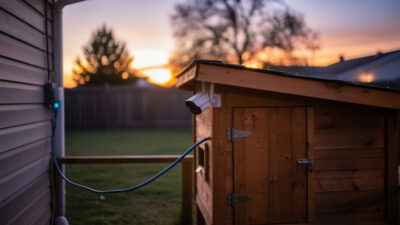
Smart Coop Cameras: Network Setup for Reliable Predator Alerts
A reliable smart coop camera setup needs three things your default home Wi-Fi rarely provides: stable signal at the coop…
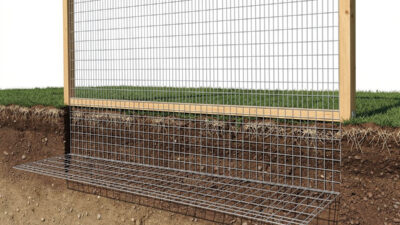
Underground Predator Barriers: Apron & Footer Designs
Foxes and coyotes can dig under a chicken run wall in under 20 minutes. The defense: a buried apron skirt…
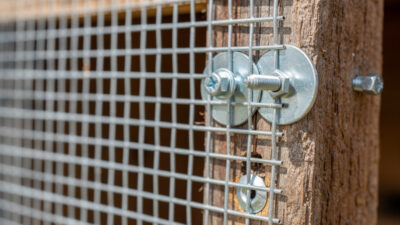
Hardware Cloth vs Chicken Wire: Why It Matters
Chicken wire keeps chickens IN. Hardware cloth keeps predators OUT. 1/2-inch galvanized hardware cloth is the only mesh that reliably…