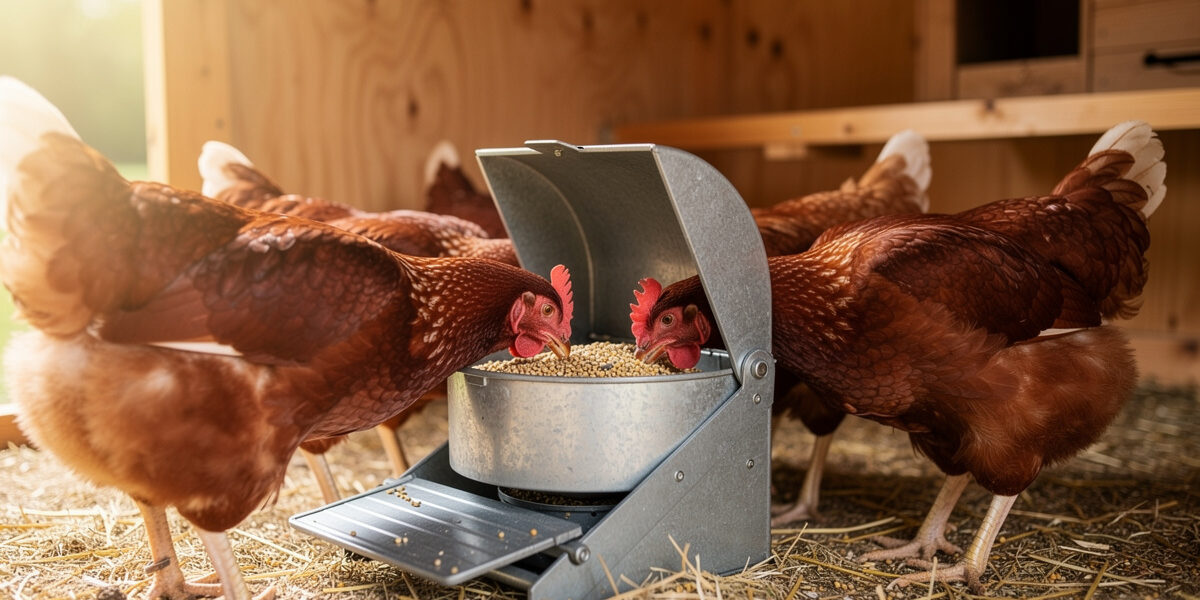
Complete guide to automatic chicken feeders. Compare gravity, treadle, timer, and smart WiFi feeders with capacity planning, training tips, and maintenance advice.
Why an Automatic Chicken Feeder Changes Everything
Feeding your chickens manually every day works fine until you want to take a weekend trip, sleep in, or deal with a busy work schedule. An automatic chicken feeder solves this problem by dispensing feed on a set schedule or on demand, ensuring your flock eats consistently whether you are home or away.
Beyond convenience, automatic feeders reduce waste, keep feed fresh, and prevent wild birds and rodents from stealing your chicken feed. This guide covers every type of automatic feeder, from simple gravity-fed models to smart WiFi-enabled units, with real-world performance data to help you choose the right one. I have run a treadle feeder on my own flock for years — it is the one type that finally ended the rat problem an open feeder created — so I am partial to it, but the right pick depends on your pests, climate, and whether you travel.
As an Amazon Associate I earn from qualifying purchases.
Types of Automatic Chicken Feeders
Automatic chicken feeders fall into several categories, each with different mechanisms, capacity, and price points. Understanding the differences helps you match a feeder to your flock size and management style.
Gravity-Fed Feeders
Gravity feeders are the simplest automatic option. A hopper holds several pounds of feed, and gravity pulls it down into a trough as chickens eat. There are no moving parts, no power requirements, and nothing to program.
Capacity: 5-20 pounds depending on model
Best for: Small flocks (4-8 chickens), owners who want a set-and-forget solution
Pros: No electricity needed, extremely reliable, low cost ($15-40)
Cons: Feed is always exposed, no portion control, can attract pests if not covered
Treadle Feeders
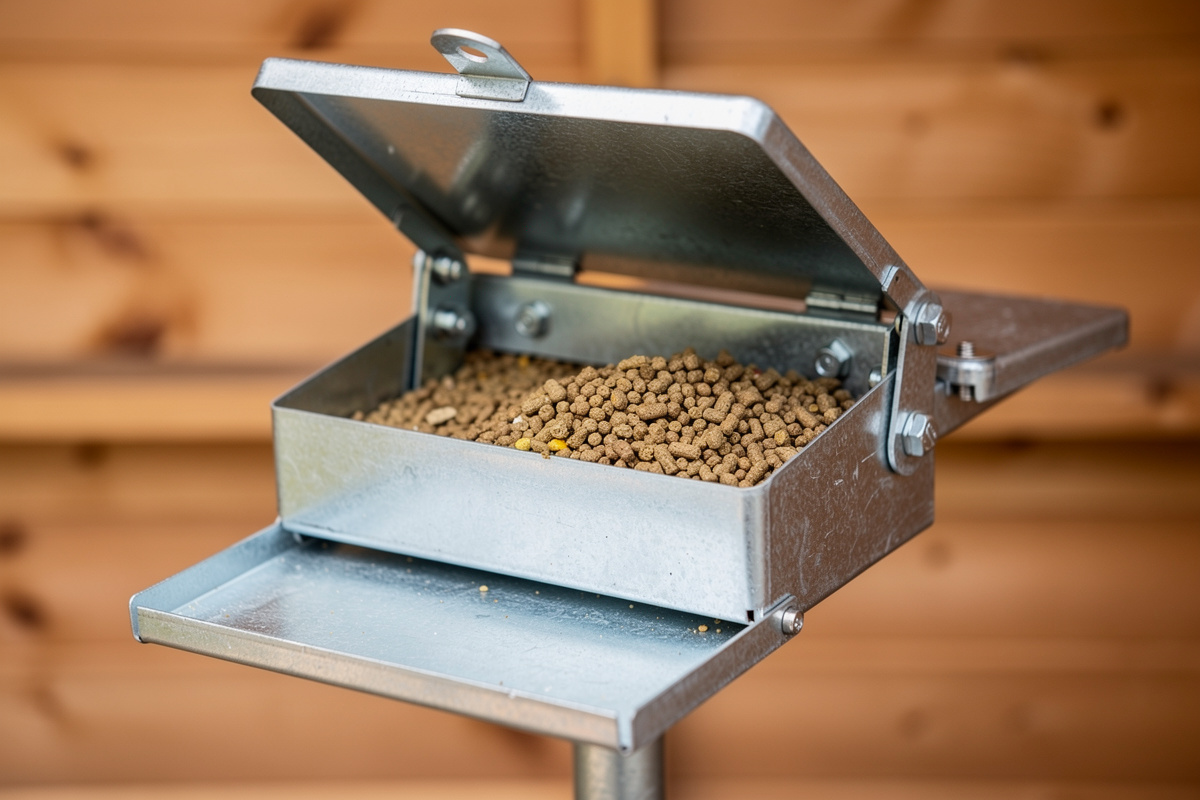
Treadle feeders use a weight-activated platform. When a chicken steps on the treadle plate, a lid opens to reveal the feed. When the chicken steps off, the lid closes. This design keeps feed sealed from wild birds, rodents, and rain — the same “seal it or a determined pest gets in” principle that governs predator-proofing the rest of the coop (Garden Betty).
Capacity: 5-15 pounds
Best for: Owners dealing with pest problems, flocks of any size
Pros: Pest-proof, weatherproof, no electricity, trains chickens quickly
Cons: Requires training period (3-7 days), mechanical parts can jam, heavier chickens may trigger it unintentionally
Timer-Based Feeders
Timer feeders dispense feed at scheduled intervals using a battery-powered motor and auger system. You set the feeding times and portion sizes, and the feeder handles the rest. These are the closest poultry equivalent to automatic pet feeders.
Capacity: 10-30 pounds
Best for: Owners who want precise portion control and scheduled feeding
Pros: Programmable schedules, portion control, reduces overfeeding, works while you are away
Cons: Requires batteries or power, mechanical complexity, higher cost ($50-150)
Smart WiFi Feeders
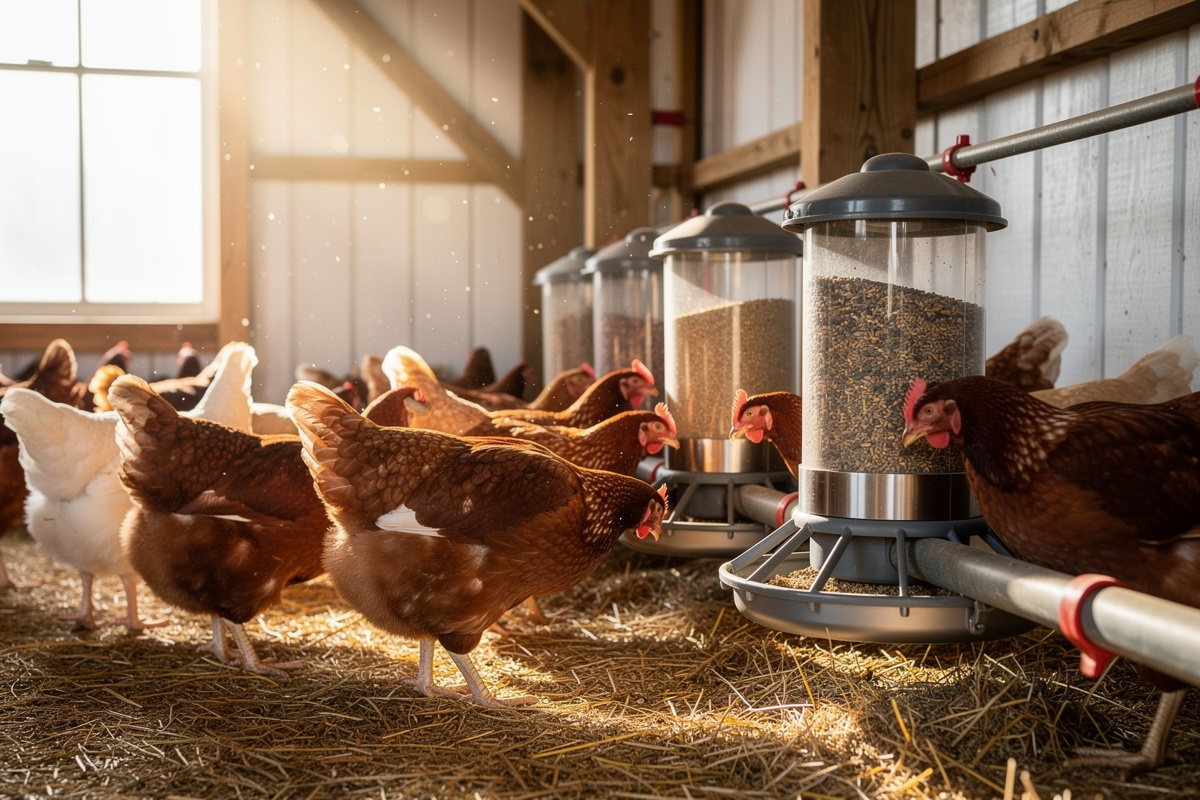
The newest category of automatic chicken feeders connects to your home WiFi network, allowing you to monitor feed levels, adjust schedules, and receive alerts from your phone. Some models include cameras so you can watch your flock while you are away.
Capacity: 15-40 pounds
Best for: Tech-savvy owners, large flocks, frequent travelers
Pros: Remote monitoring, smartphone alerts, feed consumption tracking, camera integration
Cons: Requires WiFi range to coop, highest cost ($100-300), dependent on app reliability
Gravity vs Treadle vs Timer Feeders
| Feature | Gravity-Fed | Treadle | Timer-Based |
|---|---|---|---|
| Price Range | $15-40 | $40-80 | $50-150 |
| Power Required | None | None | Batteries or AC |
| Pest Protection | Low | Excellent | Good |
| Portion Control | None | Moderate | Excellent |
| Capacity | 5-20 lbs | 5-15 lbs | 10-30 lbs |
| Maintenance | Minimal | Moderate | Moderate |
| Training Required | None | 3-7 days | None |
How to Choose the Right Feeder
Selecting the best automatic chicken feeder for your situation comes down to a few key factors.
Flock Size
A general rule, consistent with Alabama Cooperative Extension guidance, is that each chicken eats about 1/4 pound of feed per day. For a flock of 6 chickens, that is 1.5 pounds daily. A 10-pound feeder lasts about 6-7 days, while a 20-pound feeder lasts nearly two weeks. Size your feeder capacity to cover at least one week of feeding so you have a buffer for unexpected absences.
Climate Considerations
In wet or humid climates, feed spoilage is a major concern. Treadle feeders seal feed from moisture and are the best choice for rainy regions. In dry climates, gravity feeders work fine since feed stays fresh longer. In freezing climates, avoid feeders with water-based components or electronic displays that can crack in sub-zero temperatures.
Pest Pressure
If wild birds, squirrels, raccoons, or rodents are a problem in your area, a treadle feeder is worth the extra cost and training time. The sealed design denies pests access to your feed entirely. Gravity feeders with open troughs are an open invitation to every critter in the neighborhood.
Budget
For most backyard flock owners, a quality treadle feeder in the $40-80 range offers the best value. It is what I run on my own flock, and the five-day training paid off the first night the rats found they could no longer get in. It eliminates pest problems, requires no electricity, and lasts for years with minimal maintenance. Timer and smart feeders are worthwhile upgrades if you travel frequently or want precise feed management.
Training Chickens to Use a Treadle Feeder
If you choose a treadle feeder, your flock needs a short training period to learn how the mechanism works. Most chickens figure it out within 3-7 days, but some stubborn individuals may take up to two weeks.
Step-by-Step Training Process
Day 1-2: Set up the feeder with the treadle mechanism disabled (lid propped open). Fill it with feed and let chickens discover it as they would any new object. Place it near their usual feeding area.
Day 3-4: Enable the treadle but keep the sensitivity high so it opens with minimal weight. Place a few treats on the treadle plate to encourage chickens to step on it. When the lid opens and they see feed inside, they quickly connect the action with the reward.
Day 5-7: Adjust the treadle sensitivity to normal operation. Most chickens now step on the plate confidently. If any birds are still hesitant, gently place them on the treadle a few times so they feel the mechanism activate.
Week 2: Monitor usage. By this point, all but the most timid chickens should be using the feeder independently. Remove any alternative feed sources to ensure the treadle feeder is the only option.
Training Troubleshooting
If a chicken refuses to use the treadle after a week, check that the mechanism is not too stiff. Some treadle feeders have adjustable spring tension. Loosen it slightly and try again. Also verify that the feeder is placed at ground level, not elevated, so chickens can step on it naturally.
Feed Waste Reduction Strategies
Chickens are notoriously wasteful eaters. They scratch, flick, and scatter feed out of their trough as a natural foraging behavior. An automatic feeder alone does not solve this problem, but combining the right feeder with good management practices can cut feed waste by 30-50%.
Feeder Placement
Place the feeder at the height of your chickens’ backs. Too low, and they scratch feed onto the ground. Too high, and smaller birds cannot reach it comfortably. Adjust the height as your flock grows if you are raising chicks to adulthood.
Anti-Waste Feed Troughs
Many automatic feeders include anti-waste lips or grills that prevent chickens from flicking feed out. These features add 10-20% to the feeder cost but pay for themselves in saved feed within a month. Look for feeders with at least a 1-inch lip around the trough edge.
Feed Type Matters
Pellet feed creates less waste than crumble or mash. Pellets are too large for chickens to flick easily, while crumble scatters with every scratch. If waste is a persistent problem, switch to pellets and see if the improvement justifies the change.
Maintenance and Cleaning
Automatic feeders require regular maintenance to function reliably and keep your flock healthy. Neglected feeders become breeding grounds for mold, bacteria, and pests.
Weekly Tasks
- Check feed level and refill before it drops below 25% capacity
- Wipe the feeding trough with a dry cloth to remove dust and debris
- Inspect the treadle mechanism (if applicable) for smooth operation
- Look for signs of pest activity around the feeder base
Monthly Tasks
- Empty the entire feeder and wash with mild soap and water
- Rinse thoroughly and allow to dry completely before refilling
- Lubricate moving parts on treadle and timer feeders with food-safe lubricant
- Check battery levels in timer and smart feeders
Seasonal Tasks
Before winter, inspect all seals and gaskets on treadle and smart feeders. Cold weather makes rubber seals brittle, and a compromised seal lets moisture into the feed hopper. Replace any cracked or hardened seals before temperatures drop.
In spring, do a thorough deep clean of the entire feeder. Disassemble all removable parts, soak in a diluted vinegar solution to kill mold spores, and reassemble with fresh lubricant on all moving joints.
Common Problems and Solutions
| Problem | Cause | Solution |
|---|---|---|
| Feed not dispensing | Clogged auger or bridge in hopper | Break up clumped feed, check for moisture entry |
| Treadle lid sticks open | Debris in hinge or worn spring | Clean hinge mechanism, replace spring if needed |
| Wild birds accessing feed | Treadle sensitivity too high or lid not sealing | Adjust sensitivity, check lid alignment |
| Feed going moldy | Moisture in hopper, poor ventilation | Move feeder to covered area, add moisture absorber |
| Timer not triggering | Dead batteries or corrupted schedule | Replace batteries, reset and reprogram schedule |
| Chickens avoiding feeder | New object fear or mechanism too loud | Allow acclimation period, lubricate noisy parts |
DIY Automatic Chicken Feeder Options
If you enjoy building things, several DIY automatic feeder designs work reliably and cost a fraction of commercial units.
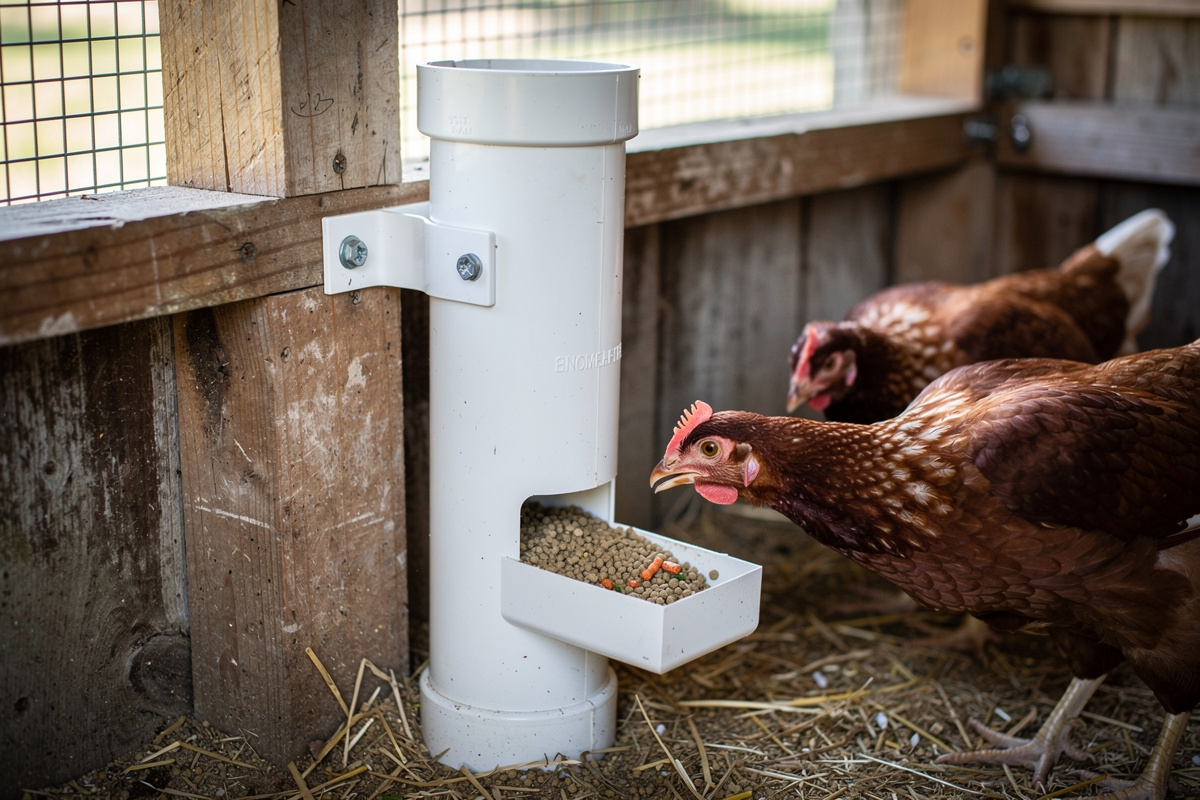
PVC Pipe Gravity Feeder
A 4-inch diameter PVC pipe with end caps and elbow fittings creates an effective gravity feeder for under $15. Cut a 3-inch opening near the bottom for the feed trough, cap the top for filling, and mount it vertically inside the coop. A 5-foot length holds about 10 pounds of feed and lasts a week for 6 chickens.
Bucket Treadle Feeder
A 5-gallon bucket with a hinged lid and a wooden treadle platform makes a functional treadle feeder for about $20 in materials. The bucket holds 12-15 pounds of feed, and the treadle mechanism can be built from scrap wood and a door hinge. Numerous free plans are available online with step-by-step instructions.
Smart Feeder Features Worth Having
If you are considering a WiFi-connected smart feeder, not all features are equally useful. Here is what actually matters versus what is marketing fluff.
Essential Features
Low feed alerts: A notification when feed drops below a threshold prevents your flock from running out while you are away. This is the single most valuable smart feature.
Feed consumption tracking: Monitoring how much feed your flock eats over time helps you detect health problems early. A sudden drop in consumption often indicates illness before visible symptoms appear.
Battery backup: Smart feeders should have a battery backup that keeps the dispensing mechanism running during power outages. Without it, a power failure turns your smart feeder into an expensive paperweight.
Nice-to-Have Features
Integrated camera: Watching your flock remotely is entertaining but not essential for feed management. The camera adds $50-100 to the cost and requires additional bandwidth.
Voice assistant integration: Alexa or Google Home compatibility is a novelty for chicken feeders. You are unlikely to ask your smart speaker to feed the chickens on a regular basis.
Automatic Feeder vs Automated Feeder: What Is the Difference?
The terms are often used interchangeably, but there is a practical distinction. An automatic feeder dispenses feed without human intervention on each use (gravity, treadle, or timer). An automated feeder typically refers to a system integrated into a broader smart coop setup, connected to sensors, cameras, and management software.
For most backyard flock owners, a standalone automatic feeder is all you need. Automated systems make sense if you already have a smart coop with centralized monitoring and control, like the setups described in our smart coop monitoring guide.
Feeder Capacity Planning
Choosing the right feeder size prevents both frequent refilling and feed spoilage from overstocking. Use this formula to calculate your ideal capacity:
Daily feed consumption = Number of chickens x 0.25 pounds
Minimum feeder capacity = Daily consumption x 7 days
For example, 8 chickens eat 2 pounds per day. A 14-pound feeder capacity covers one week. Round up to the nearest standard feeder size, which would be a 15-20 pound model.
| Flock Size | Daily Feed | Weekly Feed | Recommended Feeder |
|---|---|---|---|
| 4 chickens | 1 lb | 7 lbs | 10 lb capacity |
| 6 chickens | 1.5 lbs | 10.5 lbs | 15 lb capacity |
| 8 chickens | 2 lbs | 14 lbs | 20 lb capacity |
| 12 chickens | 3 lbs | 21 lbs | 25-30 lb capacity |
| 20 chickens | 5 lbs | 35 lbs | 40+ lb capacity |
Related Articles
- Automated Chicken Feeders & Waterers: The Set-It-and-Forget-It Guide
- Smart Chicken Coop on a Budget: DIY Automation Under $200
- Backyard Chickens for Beginners: Everything You Need to Know in 2026
- How to Build a Smart Chicken Coop: The Complete 2026 Guide
- Best Smart Chicken Coop Devices & Automation Tools 2026
Frequently Asked Questions
Do automatic chicken feeders work well?
Yes, automatic chicken feeders work reliably when chosen and maintained properly. Treadle feeders are the most dependable type, requiring no electricity and keeping feed pest-free. Gravity feeders are simple and effective for small flocks. Timer and smart feeders offer precision but require power and occasional maintenance.
How long can chickens go without being fed manually?
With a properly sized automatic feeder, chickens can go 7-14 days without manual feeding. A 20-pound feeder sustains 6-8 chickens for about a week. Always ensure the feeder has a reliable water source as well, since dehydration is more dangerous than a day without food.
Are treadle feeders worth the extra cost?
Treadle feeders are worth the investment if you deal with wild birds, rodents, or raccoons stealing feed. The sealed design eliminates pest access and keeps feed dry in rainy weather. The one-time training period of 3-7 days is a small tradeoff for long-term pest protection.
How much feed does a chicken eat per day?
An average adult chicken eats about 1/4 pound (4 ounces or 113 grams) of feed per day. This varies by breed, age, season, and whether the chickens free-range. Heavy breeds like Orpingtons eat slightly more, while bantam breeds eat less. In winter, consumption increases by 10-15%.
Can I use an automatic feeder for chicks?
Automatic treadle feeders are not suitable for young chicks because they are too light to activate the treadle mechanism. Use a standard chick feeder for the first 8-12 weeks. Once chicks reach full size, gradually transition them to the automatic feeder using the training process outlined in this guide.
Related Guides

Egg Handling and Storage: Nest Box to Kitchen
My eggs sit unwashed in a bowl on the kitchen counter, not the fridge, and that’s not neglect — it’s…
Coop Runoff as Hydroponic Nutrient: Closing the Waste-to-Food Loop
Chicken coop runoff contains dissolved nitrogen, phosphorus, and potassium at concentrations that make it a viable nutrient input for hydroponic…

Backyard Egg Quality: Feed, Forage, and Handling
Crack a carton of my own eggs next to a supermarket dozen and the difference is obvious before you even…