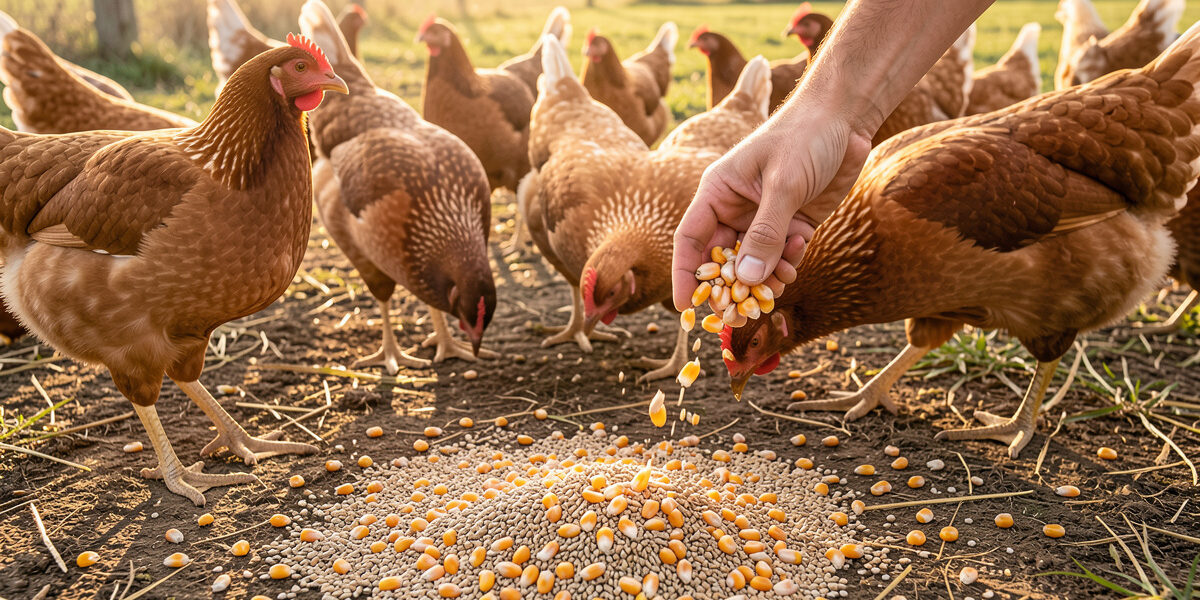
Scratch grains are the most overfed thing in backyard chicken keeping. Scratch is a treat — a cracked-corn-and-grain mix that is mostly energy, not a complete feed — and it should stay inside the same ten-percent treat ceiling as any other snack. Fed that way it is genuinely useful, especially as a dusk handful in winter, because digesting those carbohydrates generates body heat overnight. Fed as a meal, it quietly starves a flock of the protein and calcium that keep them laying. The whole trick with scratch is knowing it is dessert, not dinner.
I use scratch deliberately and sparingly, and it has a real job in my cold-climate routine. Here is what scratch actually is, why keepers overdo it, and the one time of day and year it earns its keep.
What Scratch Grains Actually Are
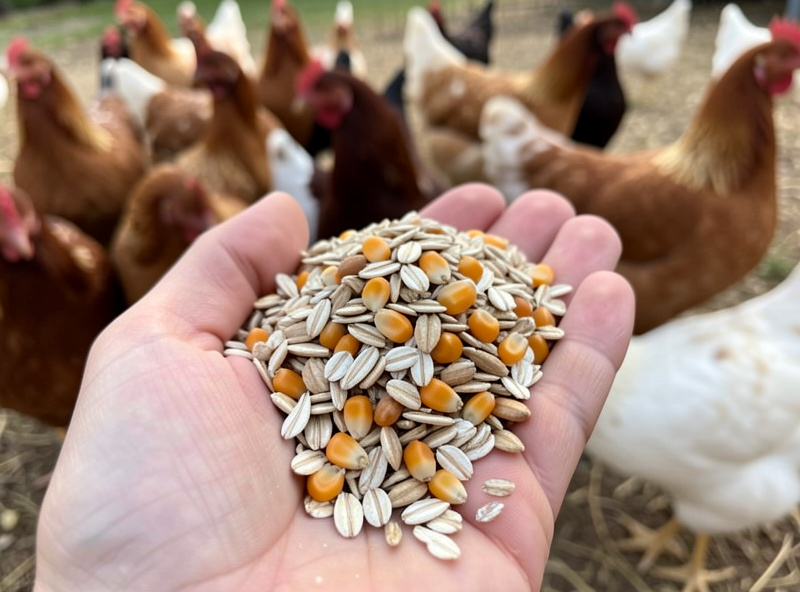
Scratch is a loose mix of whole and cracked grains — typically cracked corn, wheat, oats, barley, and sometimes milo or sunflower seeds. It is not formulated to be balanced; it is energy-dense and low in the calcium a laying hen needs, and lower in protein than a complete feed. That is the entire reason it cannot be a flock’s main ration: a bird filled up on scratch is a bird missing the nutrients that build eggshells and feathers.
The name comes from the behavior it encourages — scatter it and the birds scratch and forage for it, which is good enrichment. That foraging value is real and worth having. But it means scratch is best understood as a behavioral and energy treat layered on top of a complete feed, exactly the framing I use across my chicken feeding guide. The complete feed does the nutrition; scratch does the entertainment and a little winter warmth.
It is worth clearing up a common confusion: scratch is not the same as grower or layer feed, and it is not a “natural” alternative to commercial feed either. The idea that a flock can thrive on scattered grains the way they might have on an old farmstead does not survive contact with a modern laying hen, which has been bred to produce far more eggs than her ancestors and needs the protein and calcium of a formulated ration to keep up. Scratch is the indulgence on top of that ration, not a throwback that replaces it. Keepers who try to run a flock on grain alone end up with overweight, under-laying birds and a slow drift of health problems — exactly the outcome a balanced complete feed is designed to prevent.
Scratch vs Complete Feed vs Whole Corn
It helps to be clear on where scratch sits among the things people throw to chickens. Complete feed is the balanced ration, formulated to hit specific protein and calcium targets for the bird’s life stage. Scratch is a grain mix — energy-dense, low protein, low calcium, no formulation. Plain cracked corn is even more one-dimensional: pure energy, barely any protein, and the single fastest way to fatten a flock and thin its eggshells if it becomes a staple.
None of these grain treats is “bad,” but they live in completely different roles. I think of complete feed as the meal and scratch as the after-dinner handful that keeps the birds busy and warm. Whole corn I use even more sparingly than mixed scratch, mostly as a deep-winter energy boost, because on its own it is the least balanced thing in the bin. The mistake is letting any grain creep from treat-sized into meal-sized — that is the line where a useful enrichment becomes a nutritional problem.
Why Scratch Gets Overfed
Scratch is overfed for the same reason all treats are: the birds adore it and act starving, and a big scoop of grain feels like generous keeping. It is also cheap and visually satisfying to throw. But every gram of scratch displaces complete feed, and a flock that learns scratch is coming will hold out for it and under-eat the balanced ration. The result shows up weeks later as thinner shells and a slower lay — the same invisible cause-and-effect that catches keepers out with treats and scraps generally.
The discipline that fixes it is simple: keep scratch to a light handful per few birds, give it as a scattered afternoon treat rather than a morning meal, and make sure the flock has filled up on complete feed first. If your birds are leaving feed in the feeder to wait for grain, the scratch portion is too big.
Summer is when I cut scratch back hardest, and it is worth saying why. The overnight-heat benefit that justifies a winter handful simply does not apply in warm weather, and digesting a load of grain actually generates heat the birds do not want on a hot night. So through the warm months scratch shrinks to an occasional foraging treat — a little scattered in the run for enrichment — rather than a nightly ritual. Matching the scratch to the season this way keeps it useful and keeps the energy from going to waste fat instead of warmth. Protein and calcium are the non-negotiables a hen cannot get from a corn-heavy mix, which is exactly why I keep the balance tilted hard toward complete feed, as I lay out in my guide to protein by age.
The One Time Scratch Really Earns Its Place
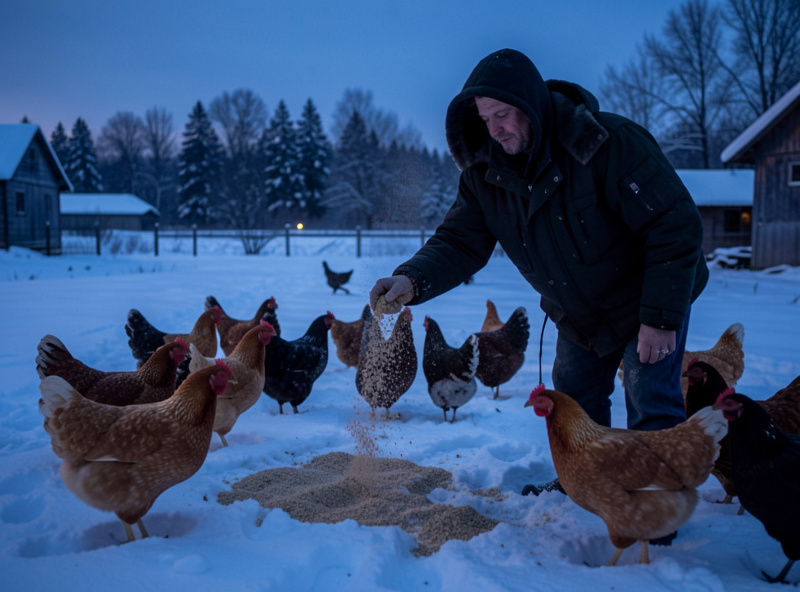
Winter is when scratch goes from optional treat to genuinely useful tool. A handful of scratch grains tossed at dusk gives the flock a slow-digesting carbohydrate load that generates body heat overnight, right when the birds need it most in a cold coop. The digestion itself is the point — the bird works through those grains during the coldest hours and stays warmer for it. In a Swedish winter it is a small, real welfare benefit I use most nights of the deep season.
The timing is what makes it work. Thrown in the morning, scratch just displaces the complete feed the birds should be eating to fuel the whole day. Thrown at dusk, it gives them one last thing to digest as they settle on the roost, so the metabolic heat lands during the coldest stretch of the night rather than being wasted at noon. I scatter it rather than bowl it, partly for the foraging value and partly because spreading it out means even the lowest birds in the pecking order get their share before the bossy hens hoover it up.
It is a supplement to a warm, well-fed, well-watered winter flock, not a substitute for any of it — the complete feed still runs all day, the waterer still has to stay unfrozen, and the coop still has to dump moisture without drafting the birds. Scratch at dusk is the bedtime calorie top-up that sits on top of all that. The rest of the cold-climate feeding picture — energy needs, unfrozen water, cold-hardy breeds — is something I cover across the feeding guide and my cold-hardy breeds picks.
Scratch Means You Need Grit
Whole and cracked grains are exactly the kind of food a chicken’s gizzard has to grind, which makes grit non-negotiable for any flock getting scratch. A bird with no access to natural grit and a diet that includes scratch can run into digestive trouble, so insoluble grit should be available free-choice — a point I cover alongside calcium in my guide to grit and oyster shell. In winter, when birds cannot forage grit from frozen ground, the indoor grit dish matters even more.
There is a knock-on welfare point here too. Whole grains take longer to grind and digest than fine crumble, which is part of why a dusk handful keeps birds occupied and warm — but that only works if the gizzard has the grit to process it. A flock fed scratch without grit gets the worst of both worlds: the displaced nutrition of a treat-heavy diet and the digestive strain of grain it cannot grind efficiently. Pair scratch with free-choice grit and you sidestep both problems, which is exactly why I never think about the two separately.
If you keep that pairing in mind — scratch as a small treat, grit always available, complete feed doing the real work — scratch becomes a useful part of the routine instead of a quiet drag on the flock’s nutrition. For convenience I keep a bag of chicken scratch grains in the sealed feed bin for winter evenings. As an Amazon Associate I earn from qualifying purchases. A single bag lasts a long time precisely because scratch should never be more than a handful at a time.
Store scratch the same way you store the rest of the feed: sealed against rodents in a metal can, kept dry so it does not go moldy or rancid. Grain that has gone off is no longer a treat — it is a health risk. A bag of scratch in an open corner of the shed is a rat magnet, and the moment rodents find the grain they will work the rest of the coop too. Treating scratch as part of the secured feed system, not a casual bag by the door, is the small habit that keeps a winter treat from turning into a pest problem.
Keep Reading
Scratch is one small piece of a larger feeding system. To put it in context, start with the complete chicken feeding guide, then dig into the safe treats and scraps list for the wider ten-percent picture, the grit and oyster shell guide for the digestion and calcium side, and the layer versus grower feed breakdown for getting the complete-feed base right in the first place.
Related Guides
Fermented Chicken Feed: A Practical Keeper Guide
Fermenting chicken feed is the cheapest upgrade in the coop that actually earns its place. Soaking complete feed in water…
What Treats Can Chickens Eat? Safe and Unsafe Foods
Chickens are enthusiastic about almost anything you hand them, which is exactly why treats are where good intentions wreck a…
Grit and Oyster Shell for Chickens: What Each One Does
Grit and oyster shell are the two supplements every chicken keeper hears about and almost everyone confuses. Grit is hard…