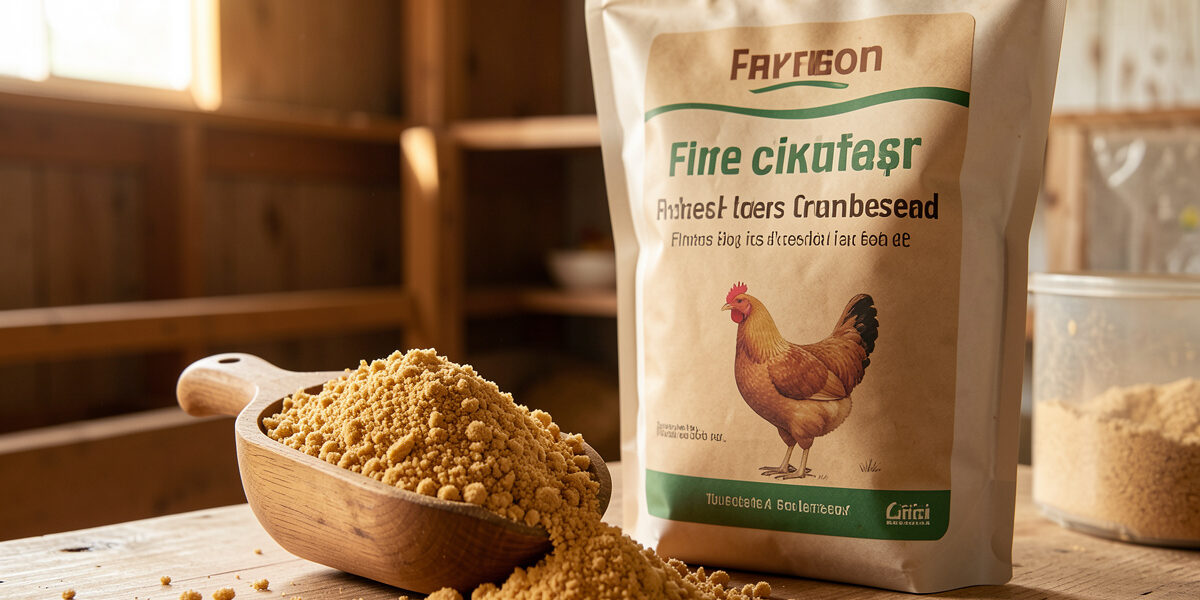
Chicks move through three feeds as they grow: high-protein starter for the first weeks, a lower-protein grower as they approach point of lay, and a calcium-rich layer feed only once they actually start laying. Get the order right and the exact protein percentages barely matter; get it wrong — especially by putting young pullets on layer feed too early — and you’re loading developing birds with calcium they can’t use. After raising batch after batch through to lay, this is the sequence I follow and the reasoning behind each switch.
The feed aisle makes this look more complicated than it is, with medicated and unmedicated options, “all-flock” formulas, and a wall of protein numbers. Strip it back to the three stages and a couple of real decisions and it becomes simple. Here is the whole sequence.
Stage 1: Starter Feed (Hatch to ~6–8 Weeks)
From day one, chicks eat starter feed — a high-protein crumble, typically in the area of 18–20% protein, formulated for rapid early growth. It comes as a fine crumble that tiny beaks can manage, and it should be available free-choice around the clock; chicks eat in frequent small meals and you never want them running empty at this age. Keep it dry and clean, because fouled or damp feed is wasted feed.
The one real decision at this stage is medicated versus unmedicated starter. Medicated starter contains a coccidiostat — usually amprolium — which helps young chicks build resistance to coccidiosis, one of the most common and deadly chick illnesses, by limiting the parasite load while their immunity develops. It is not an antibiotic and it is not a treatment for a sick bird; it is a management tool. The general guidance is that medicated starter pairs with unvaccinated chicks, while chicks already vaccinated against coccidiosis should get unmedicated feed so the vaccine isn’t undercut. If you’re unsure what your chicks received from the hatchery, that’s a question worth asking before you buy — and any active illness is a vet conversation, not a feed choice.
Stage 2: Grower Feed (~6–8 Weeks to Point of Lay)
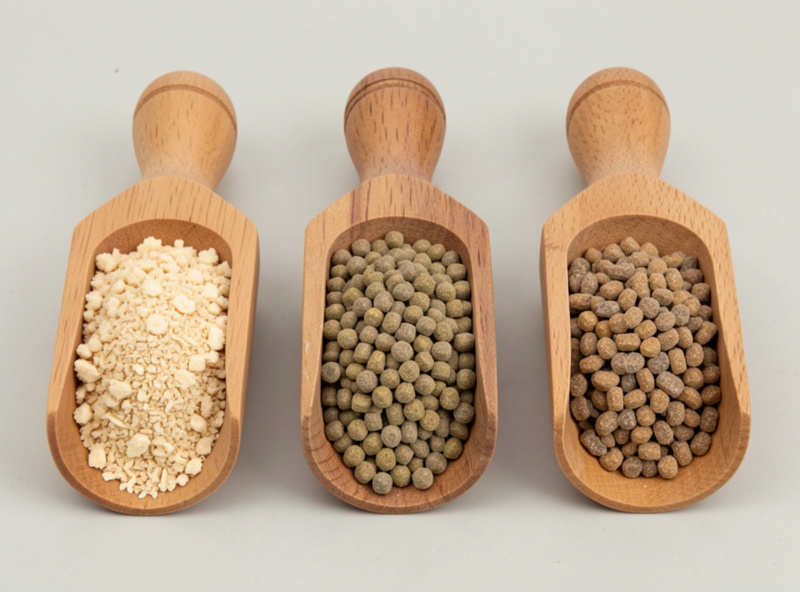
Once chicks are past the early growth sprint, they move to grower feed — a slightly lower protein (commonly around 15–17%) and crucially still low calcium. This is the stage that runs from a feathered juvenile to point of lay, roughly weeks six or eight through to about eighteen to twenty weeks. The lower protein suits steadier skeletal and muscle development rather than the frantic early growth, and keeping calcium low protects the kidneys of birds whose egg-making machinery hasn’t switched on yet.
This is the longest feed stage and the one people get impatient with, because it’s tempting to “just switch to layer” when the pullets start looking grown. Don’t. A pullet that isn’t laying has no use for the high calcium in layer feed, and feeding it early is a genuine stressor on developing birds. Some keepers simplify by running an “all-flock” or “grower/finisher” feed with low calcium and offering calcium separately on the side — that works fine too, as long as the principle holds: no loading calcium until they lay.
Stage 3: Layer Feed (At Point of Lay)
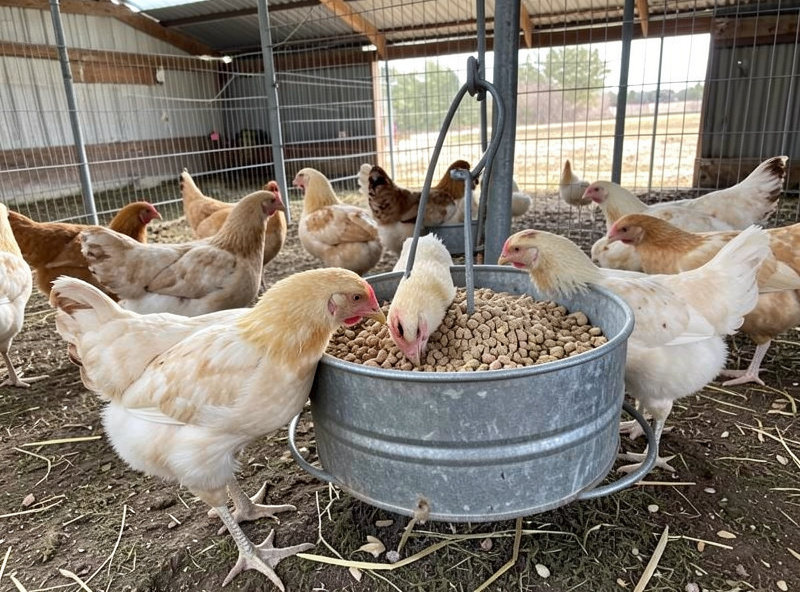
When the pullets actually begin laying — usually somewhere around eighteen to twenty-two weeks for standard breeds — they switch to layer feed. This is back up to around 16% protein but with a big jump in calcium (commonly 3.5–4.5%) to supply the shell of an egg a day. The trigger is the first eggs, or the unmistakable signs they’re imminent: deep red combs and wattles, investigating the nesting boxes, and the submissive squat. Calendar age is a guide, but the eggs are the real signal.
Alongside layer feed, offer crushed oyster shell free-choice in a separate dish rather than mixing extra calcium into the feed. Hens self-regulate — a bird laying hard takes more, a bird on a break takes less — and this is far better than guessing. The other free-choice item the whole flock needs once they eat anything but a complete crumble is grit: small insoluble stones they store in the gizzard to grind food. Grit and oyster shell are different things doing different jobs, and confusing them is a common mistake.
| Stage | Age (typical) | Protein | Calcium | Form |
|---|---|---|---|---|
| Starter | Hatch–6/8 wks | ~18–20% | Low | Fine crumble |
| Grower | 6/8 wks–point of lay | ~15–17% | Low | Crumble/pellet |
| Layer | From first egg | ~16% | High (~3.5–4.5%) | Pellet/crumble |
How to Switch Feeds Without Upset
Transitions should be gradual, not abrupt. When you move from one stage to the next, mix increasing amounts of the new feed into the old over several days to a week — this avoids digestive upset and lets the birds adjust to the new texture. The same goes for any feed change, including switching brands. Chickens are creatures of habit and a sudden swap can put fussy birds off eating for a day, which you don’t want during the growth stages.
A few habits make all three stages easier. Keep feed in a rodent-proof container, because spilled and stored feed is what draws rats and mice to a coop faster than anything. Don’t overdo treats and scraps, especially with young birds — anything beyond about 10% of the diet dilutes the balanced nutrition the formulated feed provides. And keep clean water always available; feed conversion and growth both fall apart without it.
Water deserves more attention than it usually gets, because feed only works if the birds are drinking. Chicks foul a waterer constantly — kicking shavings in, walking through it — so refresh it at least once a day and keep it at room temperature rather than icy cold. For the first 48 hours, especially with shipped chicks, dehydration is a bigger early killer than any feed problem — and it’s just one of several issues to watch for in the first weeks; see common chick problems and how to fix them for the full troubleshooting guide; dipping each new chick’s beak in the water when it goes into the brooder teaches it where to drink. As the birds grow, raising the waterer to back height cuts contamination dramatically and keeps the feed-and-water station from turning into a swamp. Get water right and the three feed stages do their job; get it wrong and the best feed in the world can’t compensate.
What About Fermented Feed and Treats?
Two questions come up constantly once people have the basics down. The first is fermented feed — soaking the formulated feed in water for a couple of days until it sours slightly. Plenty of keepers swear it improves digestibility and cuts feed waste, and it’s a legitimate practice for growers and layers; just keep it scrupulously clean, make small batches, and never let it go moldy, because moldy feed is genuinely dangerous to birds. I’d treat it as an optional refinement, not a requirement, and I wouldn’t bother with it for the youngest chicks.
The second is treats. Chicks and pullets do not need treats, and the urge to hand-feed them mealworms and kitchen scraps mostly serves the keeper, not the bird. Anything beyond roughly 10% of the diet dilutes the balanced nutrition the formulated feed is carefully built to provide, and young digestive systems handle variety poorly. Once the birds are older, scratch grains and the occasional treat are fine in moderation. While the birds are in the grower stage is also the right time to figure out which are pullets — see how to sex chicks before any surprise roosters crow at sixteen weeks — but they are a supplement to the stage-appropriate feed, never a replacement for it. The single biggest feeding mistake I see isn’t choosing the wrong feed; it’s drowning a good feed in treats.
Where Feed Fits the Bigger Picture
Feeding is one piece of raising a chick into a productive hen. The brooder, the heat source, sexing, and integration all sit alongside it — the full sequence is in the complete chick and pullet care guide, and the physical brooder build is covered in the brooder setup guide. Once your pullets are laying on layer feed, the next questions are about keeping production up. If you have an existing flock to merge them into, see integrating chicks into the flock for the step-by-step process before that point arrives — that’s where the egg production guide takes over.
Frequently Asked Questions
What do you feed baby chicks from day one?
Day-old chicks eat chick starter, a high-protein crumble (around 18–20% protein) made for rapid early growth. Keep it available free-choice and dry. The main early decision is medicated versus unmedicated starter, which depends on whether your chicks were vaccinated against coccidiosis.
When do I switch chicks from starter to grower feed?
Most keepers move chicks to grower feed around six to eight weeks of age, once the fast early growth phase eases. Grower is slightly lower in protein and still low in calcium, and it carries the birds all the way to point of lay. Make the switch gradually over several days to avoid digestive upset.
When can chickens start eating layer feed?
Switch to layer feed when the pullets actually start laying — usually around 18 to 22 weeks for standard breeds, signaled by deep red combs, nest-box interest, and the first eggs. Do not start layer feed earlier: the high calcium is hard on birds that are not yet laying.
Is medicated chick starter necessary?
It is a management choice, not a requirement. Medicated starter contains a coccidiostat that helps unvaccinated chicks resist coccidiosis as their immunity develops. If your chicks were already vaccinated against coccidiosis, use unmedicated feed so the vaccine is not undercut. It is not a treatment for a sick bird — that is a vet matter.
Do chicks need grit?
Chicks on a complete crumble alone do not strictly need grit, but any chick eating anything else — treats, scraps, or whole grains — needs chick-sized grit to grind it in the gizzard. Grit is insoluble stone for grinding; it is not the same as oyster shell, which is a calcium supplement for laying hens only.
Related Guides
- Raising Baby Chicks: The Complete Chick and Pullet Care Guide — the full journey from day-old to point of lay.
- Chick Brooder Setup — building the brooder where feed stage one happens.
- Automatic Chicken Feeder: Types, Setup & Guide — feeding the grown flock with less waste.
Related Guides
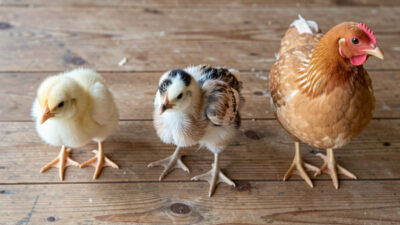
Chick Growth Timeline: From Day-Old to Point of Lay
A chick goes from a fragile day-old fluffball to a laying hen in roughly five months, passing through four recognizable…
Common Chick Problems: Signs, Prevention, and When to Get Help
Almost every common chick problem is an environment problem first — chilling, damp bedding, crowding, or dehydration — which is…
Integrating Chicks Into the Flock Without Bloodshed
You never just tip young birds into an established flock — chickens enforce a strict pecking order and a sudden…