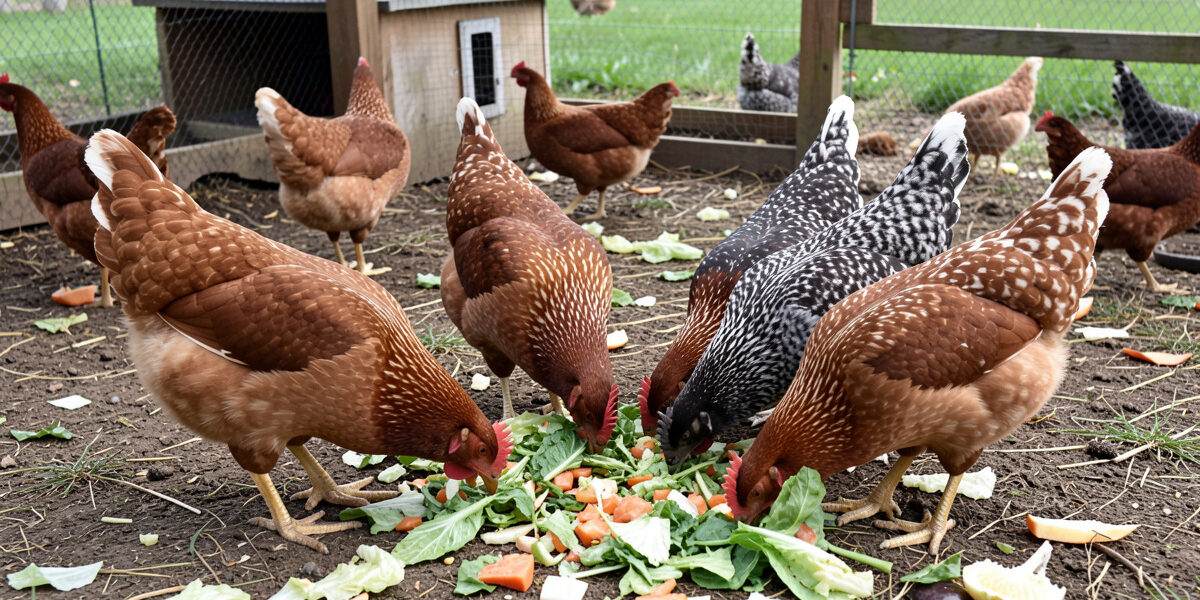
Chickens are enthusiastic about almost anything you hand them, which is exactly why treats are where good intentions wreck a flock’s diet. Treats and kitchen scraps should stay under about ten percent of the daily diet, with the complete feed doing the real nutritional work. Plenty of foods are genuinely good — leafy greens, vegetables, the odd handful of mealworms — and a short list is flatly off the table, including anything moldy, raw dried beans, and avocado pits and skins. Know which is which and treats become enrichment instead of a slow problem.
I toss my flock scraps most days, but I do it with a rule in my head, because the birds will always act starving and the temptation is to overdo it. Here is the safe-and-unsafe list I actually work from, why the ten-percent ceiling matters, and how to give treats in a way that helps the flock rather than thinning the eggshells.
The Ten Percent Rule
The single most useful number in treats is the ceiling: no more than roughly ten percent of what a hen eats each day should be treats or scraps. Everything beyond the complete feed dilutes the carefully balanced protein and calcium that keep shells hard and lay steady. A flock filled up on bread and corn looks delighted and lays thinner-shelled eggs a few weeks later — the cause and effect is invisible in the moment, which is what makes overtreating so common.
Think of treats as enrichment and foraging practice, not nutrition. They keep birds busy, reduce boredom-driven feather picking, and let a flock express natural scratching behavior. But the protein and calcium floor has to come from the complete feed, a point I make throughout my complete chicken feeding guide. If you find the birds leaving feed to wait for scraps, you are over the line and it is time to cut back.
The ten-percent figure is a working guide rather than a number to weigh out — nobody measures their flock’s daily intake to the gram. In practice it means treats are a topping, not a meal: a couple of handfuls for a small flock, a hung cabbage, a bowl of trimmings the birds clear in minutes. If the scraps you give in a day would noticeably outweigh the feed the birds ate, you have overshot, and the eggshells will tell on you a few weeks later.
Treats Chickens Love That Are Good for Them
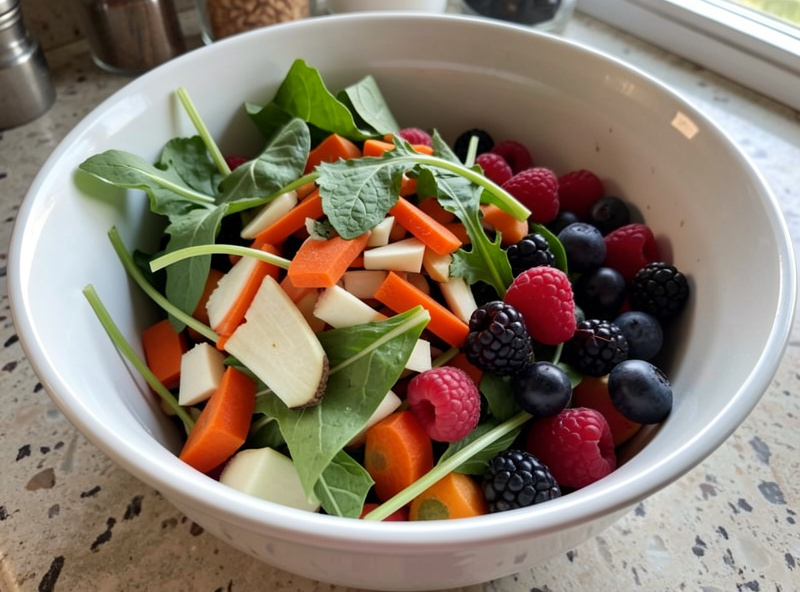
The best treats are close to what a chicken would forage naturally. Leafy greens, cooked or raw vegetables, squash and pumpkin, berries, and herbs are all excellent, and they add variety without much risk. Whole grains like oats are fine in moderation. For a genuine protein boost during a hard molt or a cold snap, a handful of mealworms or a little scrambled egg is legitimately useful — protein-rich treats are the one category that can do real good when timed to a molt.
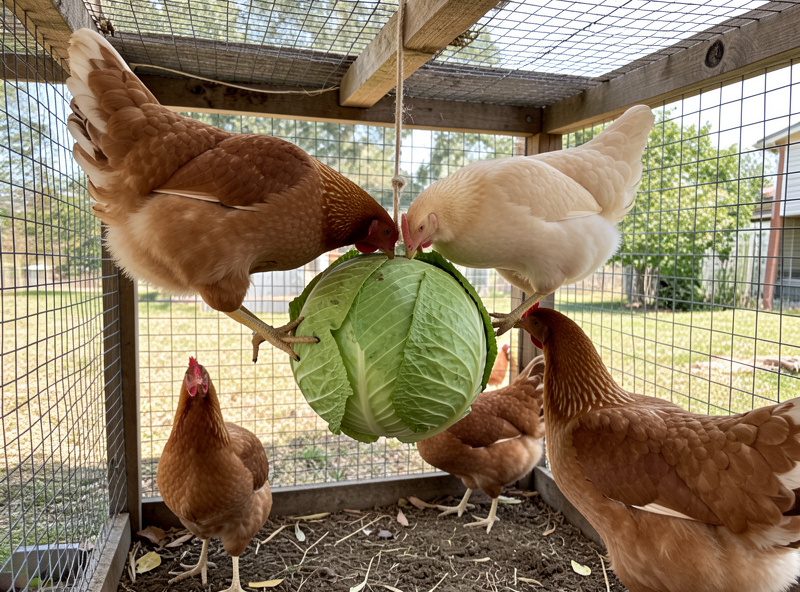
I lean on greens and vegetables most because they are low-risk and the birds work for them, which is half the point. Hanging a cabbage in the run keeps a bored winter flock occupied for hours. Just keep even the good stuff inside the ten-percent budget — “healthy treat” still counts against the ceiling. Watery vegetables in summer also help hydration, which pairs with keeping clean water available the way I describe in my feeders and waterers guide.
Seasonality is worth playing to. In summer my garden throws off more trimmings than the flock can use, and cool watery scraps like melon rind or cucumber double as a heat-relief treat on a hot day. In winter the priority flips to warmth and calories, so I lean on a bit more whole grain and the occasional warm vegetable. The treat list is the same year-round; what changes is which safe items earn a place that week. Garden surplus also closes a nice loop — what the flock does not eat goes to the compost and back to the beds, which I cover in the chicken-powered garden piece.
Treats Change the Grit Equation
One thing keepers miss is that feeding scraps quietly raises a flock’s need for grit. A bird eating only fine commercial crumble can almost get by on little grit, but the moment you add fibrous greens, vegetable peels, and whole grains, the gizzard has real work to do — and it needs hard insoluble stone to do it. Any flock getting regular treats should have grit available free-choice, which I cover alongside calcium in my guide to grit and oyster shell.
This is especially true for a confined or winter flock that cannot forage natural grit from the ground. I have watched a bored winter flock devour a hanging cabbage in an afternoon, and that fibrous load goes nowhere good without grit in the gizzard to break it down. Treats and grit are a package: give one, make sure the other is there.
Safe and Unsafe Foods at a Glance
This is the reference I check before tossing anything new over the fence. When in doubt, leave it out — the safe list is long enough that you never need to gamble on the questionable items.
| Category | Safe in Moderation | Avoid / Unsafe |
|---|---|---|
| Vegetables | Leafy greens, squash, pumpkin, cooked veg | Raw dried beans, green/sprouted potato, rhubarb leaves |
| Fruit | Berries, melon, apple flesh | Avocado pit and skin, apple seeds in quantity |
| Protein | Mealworms, scrambled egg, cooked meat scraps | Raw or moldy meat |
| Grains | Oats, cooked rice, cracked corn (sparingly) | Moldy bread, heavily salted snacks |
| General | Fresh herbs, garden trimmings | Anything moldy, salty, sugary, or chocolate/caffeine |
Foods to Keep Away From the Flock
A handful of foods are worth avoiding on principle. Anything moldy is the big one — mold toxins are a genuine health risk, not just waste, and a moldy scrap is never worth the gamble. Raw dried or undercooked beans contain compounds that are toxic to birds, so beans should only ever go out fully cooked. Avocado pits and skins, green or sprouted potato, rhubarb leaves, and chocolate or caffeine all belong on the no list as well.
Salty and sugary human snacks are not toxic in the dramatic sense but have no place in a flock’s diet and unbalance it fast. The framing I use is simple and conservative: feed garden and kitchen produce you would recognize as food, fully cooked where cooking matters, and skip anything processed, spoiled, or on the avoid list. If a bird does get into something it should not have and looks genuinely unwell, that is a veterinary question — see my chicken health guide and consult an avian vet rather than trying to treat it at home.
Giving Treats Without Making a Mess
How you serve treats matters almost as much as what you serve. Scattering scraps to encourage scratching is great enrichment, but anything left uneaten on the ground spoils and draws rodents — so I give a quantity the flock clears in a few minutes rather than a pile that sits. Leftover treats are exactly the kind of thing that starts a rat problem, which ties straight into how I handle feed overall and store it securely.
For convenience and a clean protein treat, I keep a tub of dried mealworms for chickens for molt season and cold mornings. As an Amazon Associate I earn from qualifying purchases. Used sparingly, they are a real treat the birds work hard for; used daily, they become just another way to overshoot the ten-percent ceiling. The discipline is the same with every treat — a little, as enrichment, on top of a complete feed that does the actual job.
Timing the treat matters too. I hold scraps until the birds have had a good run at their complete feed for the day, usually later in the afternoon, so they fill up on the balanced ration first and treat the scraps as dessert rather than the main course. A hen who learns that scraps arrive the moment the pop door opens will hold out for them and under-eat her feed — exactly the behavior that drifts a flock over the ten-percent line. Feed first, treat second, and the ratio mostly takes care of itself.
Frequently Asked Questions
What treats can chickens eat?
Chickens safely enjoy leafy greens, cooked or raw vegetables, squash, berries, herbs, oats, and protein treats like mealworms or scrambled egg. Keep all treats under about ten percent of the daily diet so they do not unbalance the complete feed.
What foods are unsafe for chickens?
Avoid anything moldy, raw dried beans, avocado pit and skin, green or sprouted potato, rhubarb leaves, chocolate, caffeine, and very salty or sugary snacks. When in doubt, leave it out, since the safe treat list is long enough already.
How many treats can I give chickens?
Keep treats and kitchen scraps to roughly ten percent of the daily diet. The complete feed must do the nutritional work. Overtreating dilutes protein and calcium, which shows up later as thinner eggshells and reduced laying.
Can chickens eat kitchen scraps?
Many kitchen scraps are fine, including vegetable trimmings, cooked rice, and leafy greens. Avoid moldy, salty, sugary, or processed foods and anything on the unsafe list. Serve only what the flock clears quickly so leftovers do not spoil or draw rodents.
Are mealworms good for chickens?
Yes, in moderation. Mealworms are a protein-rich treat that is especially useful during the autumn molt when hens rebuild feathers. Use them as an occasional treat within the ten-percent budget rather than a daily staple.
Further Reading
Related Guides
Scratch Grains for Chickens: Treat, Not a Meal
Scratch grains are the most overfed thing in backyard chicken keeping. Scratch is a treat — a cracked-corn-and-grain mix that…
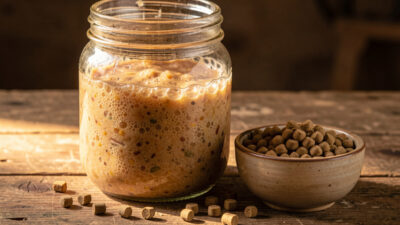
Fermented Chicken Feed: A Practical Keeper Guide
Fermenting chicken feed is the cheapest upgrade in the coop that actually earns its place. Soaking complete feed in water…
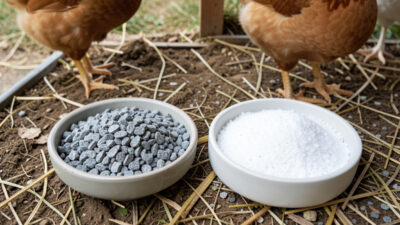
Grit and Oyster Shell for Chickens: What Each One Does
Grit and oyster shell are the two supplements every chicken keeper hears about and almost everyone confuses. Grit is hard…