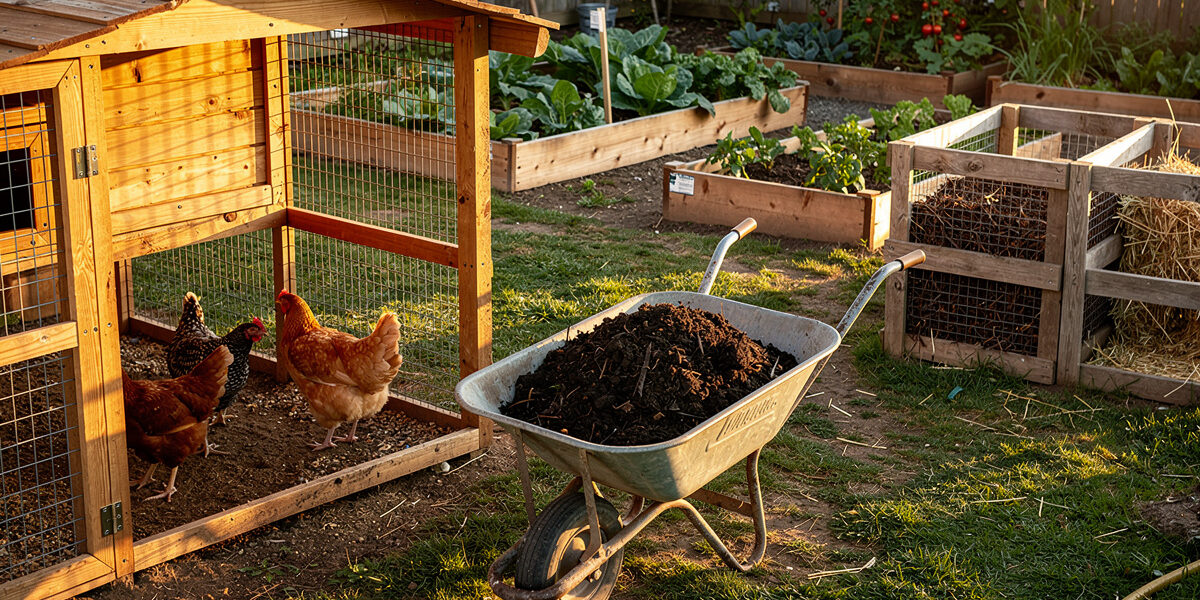
Chicken manure runs roughly 0.8-2.5% nitrogen by weight — three to five times the concentration in horse or cow manure, according to University of Nebraska–Lincoln Extension‘s manure-nutrient comparison tables — which makes it the highest-nitrogen manure a backyard keeper is likely to have on hand. Composted properly with deep-litter bedding, it produces a finished amendment that builds raised-bed soil faster than any single bag of store-bought compost. The cycle is simple: deep litter in the coop, hot compost in the bin, mature compost in the garden, and chickens cleaning up the kitchen scraps that started the cycle. I run this exact loop between my own coop and raised beds in Sweden — a flock that was built for six and, by the usual chicken-math tax, has never once stayed at six past midsummer.
This guide walks the full coop-to-bed loop: bedding choice, manure-to-carbon ratio, hot-pile management, the aging window, and how to apply finished compost to vegetable beds without burning seedlings. The setup works for a 4-6 bird backyard flock and scales to 20+ birds with a second compost bin in rotation.
Why Chicken Manure Is Garden Gold
A single mature laying hen produces around 1 cubic foot of fresh manure a year, carrying roughly 1.3 pounds of nitrogen — figures pulled from Utah State University Extension‘s animal manure-production tables, which track this per-bird by weight, volume, and nutrient content. Six birds’ worth of manure, composted alongside a season of deep-litter bedding, adds real, usable nitrogen to a vegetable garden without a single bag of synthetic 10-10-10 — exactly how many square feet it covers depends on your bed’s starting fertility and how much carbon-rich bedding you’re composting alongside the manure, so I’d rather keepers size by “does the bed look and feel right” than chase a number that doesn’t hold up bed to bed. The catch is that fresh chicken manure is hot enough to burn plant roots; it must compost for 90-120 days before touching a vegetable bed.
Chicken manure also seeds the compost pile with the right microbial community. The combination of nitrogen-rich poultry waste and carbon-rich bedding (pine shavings, straw, wood chips) hits the magic 30-to-1 carbon-to-nitrogen ratio that University of Kentucky Extension recommends for backyard poultry-litter composting, and that ratio is what drives a hot compost pile up past 140°F. That heat kills weed seeds, knocks back pathogens, and produces a finished compost that smells like forest soil rather than ammonia. The full carbon-nitrogen science is on the compost carbon to nitrogen ratio guide.
The first year I ran this loop I got impatient and side-dressed spring lettuce with compost that was maybe ten weeks old and still had a faint ammonia edge to it. Two rows scorched within 48 hours. Now I trust the smell test over the calendar — if it still smells like a coop instead of forest floor, it goes back on the pile, not the bed.
The third benefit is closing the kitchen-scrap loop. Chickens eat the wilted lettuce, melon rinds, and stale bread that would otherwise hit the compost bin slowly. Their manure carries that nitrogen back to the bin already partly digested, dramatically speeding up the overall cycle. A four-bird flock can process 3-5 pounds of kitchen scraps per week and convert most of it into garden-ready compost within 4 months.
The Deep-Litter Bedding System (Where the Cycle Starts)
Deep litter is a 6-12 inch bedding layer of pine shavings, straw, or hardwood shavings that you turn weekly and top off monthly. Manure drops into the bedding, gets mixed in by the birds scratching, and slowly composts inside the coop itself. By month 6, you remove half the bedding to the outdoor compost bin and add fresh shavings — the half left behind seeds the next round. That’s the deep-litter floor I run in my own coop, and the poop boards under the roost get scraped into the same bin on the same schedule, so the whole cycle stays on one calendar instead of three.
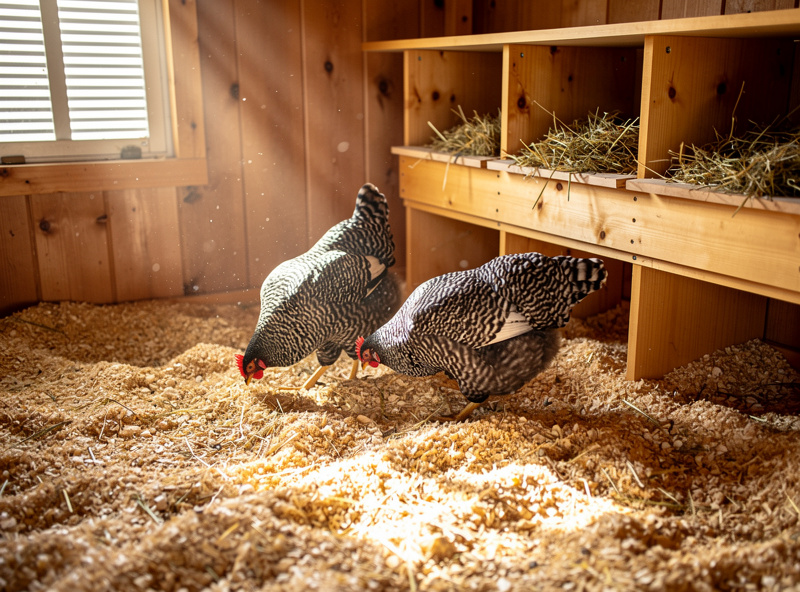
Pine shavings remain the best general-purpose bedding because they absorb 5x their weight in moisture, decompose at a controlled rate, and do not mat down like sawdust. Hemp bedding works and lasts longer but costs 3x more. Avoid cedar shavings — the volatile oils irritate chicken respiratory systems. The full bedding-material rundown lives on the best chicken coop bedding guide.
The bedding ratio matters: aim for one shovel of new shavings per square foot of coop floor every 30 days, plus a complete top-up after any wet-weather week. A coop with deep litter that smells of ammonia is under-bedded; the cure is more carbon, not bleach. The stocking density on the backyard chickens beginners guide covers the per-bird floor area that supports proper deep-litter management.
Pulling Manure-Bedding to the Compost Bin
Schedule a half-coop cleanout every 6 months. Use a fork to lift the top 6 inches of soiled bedding into a wheelbarrow, leave the bottom layer (richest in microbes) in the coop, and add 2-3 inches of fresh shavings on top. The removed material is the perfect hot-compost ingredient because the nitrogen-to-carbon ratio is already close to 30:1 from months of mixing. In my own run, this is the same fork-and-wheelbarrow job as the poop-board scrape, just twice a year instead of weekly — I’ve never found a reason to separate the two chores.
Time the cleanouts: late April (before summer heat slows decomposition) and late October (before winter freeze). The April pull goes into a hot pile that finishes by mid-August for fall planting beds; the October pull cold-composts through winter and finishes by April for spring planting. This rhythm matches a vegetable garden’s planting calendar without requiring an indoor processing space.
Hot Composting the Coop Bedding
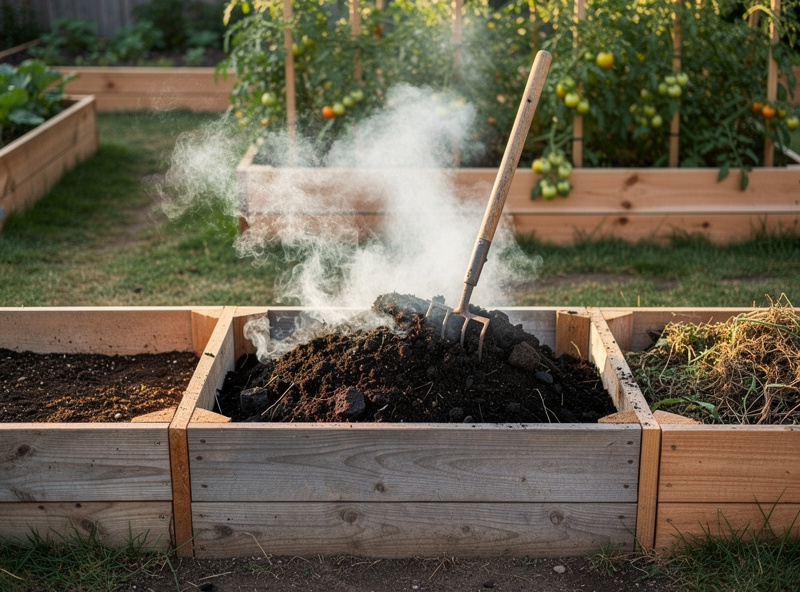
Build the pile at minimum 3x3x3 feet — smaller piles will not retain heat. Layer the soiled bedding with green inputs (kitchen scraps, fresh grass clippings, garden trimmings) in alternating 4-inch layers. Water each layer to the moisture level of a wrung-out sponge. The pile should hit 140-160°F within 3-4 days; if it does not, add more nitrogen-rich greens or check for excess moisture.
| Stage | Pile Temp | Duration | Action |
|---|---|---|---|
| Initial heat | 140-160°F | Days 1-14 | Turn on day 7, check moisture |
| Active decomposition | 120-140°F | Weeks 2-6 | Turn weekly, add water if dry |
| Cooling phase | 90-110°F | Weeks 6-10 | Stop turning, let microbes finish |
| Curing | Ambient | Weeks 10-16 | Cover, do not disturb |
| Finished | Ambient | Week 16+ | Screen, apply to beds |
Turn the pile on day 7, day 14, and day 21, then weekly until the temperature drops to ambient. The finished compost should be dark, crumbly, and smell sweet — not ammonia. If you can still identify pine shavings or kitchen scraps after 16 weeks, the pile lacked moisture or did not stay hot enough; let it cure another month.
Coop-to-Bed Application
Apply finished chicken-manure compost as a 2-inch top dressing on raised beds, then fork the top 4 inches of soil to mix lightly. A small flock’s finished compost — manure plus the bedding it composted with — typically covers a couple of raised beds at this rate over a season; a bigger flock or a deeper bedding pull stretches further, so treat the square footage as flexible rather than fixed. Over-application — more than a 3-inch layer at once — can spike soil nitrogen and cause leaf-burn on tender seedlings.
Time the application 2-4 weeks before planting. The brief settling period lets soil microbes integrate the new amendment and rebalances pH if the pile finished slightly acidic. For a deeper rebuild — turning a poor patch of yard into a productive vegetable bed — work 4-6 inches of compost into the top 12 inches of soil and let it rest one full season.

Avoid using fresh or under-composted manure as a side-dress on growing vegetables. The ammonia spike will burn roots within 48 hours, and any pathogen load that did not get killed in the pile can transfer to leafy greens — University of Nevada, Reno Extension notes that fresh manure can carry E. coli, Salmonella, and Cryptosporidium, and that a proper hot compost reaching 140-160°F is what actually kills most of those pathogens — aging alone only thins them out. The conservative rule: fully composted poultry manure on edible beds, partly composted material only on ornamental beds and around fruit trees. The home composting beginner guide covers the screening and storage steps that separate finished compost from material that needs more time.
Closing the Loop with Garden Trimmings
The garden returns the favor. Tomato suckers, bolting lettuce, harvested-out bean stalks, and weed pulls go into the coop run twice a week — the chickens eat the soft material, scratch the rest into the bedding, and accelerate the deep-litter compost. This single habit closes the cycle: kitchen scraps through chicken to compost, compost to vegetables, vegetable trimmings back to chickens. My rotational cattle-panel hoop coop pulls its own weight here too — moved onto fresh ground daily through the warm season, it composts a strip of yard in place without ever touching a bin, and it’s usually the first patch I plant into come spring.
Toxic plants must be excluded. Avoid avocado pits and skin, raw potato peels, onion skins in volume, rhubarb leaves, tomato leaves, and anything moldy. A printed exclusion list pinned inside the coop door avoids accidents. Beyond those exclusions, almost any garden trimming or kitchen scrap works — variety in the run input shows up as variety in egg yolk color and bedding microbial diversity.
Frequently Asked Questions
How long does chicken manure compost need to age?
Hot-composted chicken manure needs 90-120 days from pile build to garden-ready finish. Cold composting requires 6-12 months. Both timelines assume the bedding-to-manure ratio sits near 30:1 carbon-to-nitrogen and the pile stays moist as a wrung-out sponge.
Can I use chicken manure directly in the garden?
No. Fresh chicken manure has an ammonia-nitrogen content high enough to burn plant roots within 48 hours of application. Compost it with carbon-rich bedding for 90 days minimum before applying to vegetable beds, longer for leafy greens.
What is the best bedding for the deep-litter system?
Pine shavings work best for most backyard flocks because they absorb 5x their weight in moisture and compost at a controlled rate. Avoid cedar shavings, which release oils that irritate chicken respiratory systems.
How much manure does one chicken produce per year?
A mature laying hen produces about 1 cubic foot of fresh manure annually, carrying roughly 1.3 pounds of nitrogen (Utah State University Extension figures). Composted with a season’s bedding, six birds’ worth adds meaningful nitrogen to a vegetable garden each year, though the exact square footage it covers depends on bed size and how much carbon bedding is composted alongside it.
Can chicken manure compost cause salmonella in vegetables?
Properly hot-composted manure that hit 140-160 degrees Fahrenheit kills salmonella and most other pathogens. The risk is real with fresh or under-composted manure on leafy greens. Stick to fully finished compost and follow standard food-safety washing.
How often should I clean out the coop for composting?
Pull half the deep litter twice a year, in late April and late October. The April pull hot-composts through summer for fall beds; the October pull cold-composts through winter for spring planting. This rhythm matches a vegetable garden calendar.
Related Articles
- Best Chicken Coop Bedding: Complete Material Guide
- Backyard Chickens for Beginners: Everything You Need to Know
- Smart Chicken Coop Maintenance: Monthly & Seasonal Checklist
- Home Composting: The Complete Beginner Guide
- Compost Carbon to Nitrogen Ratio: The 30:1 Formula Explained
Related Guides
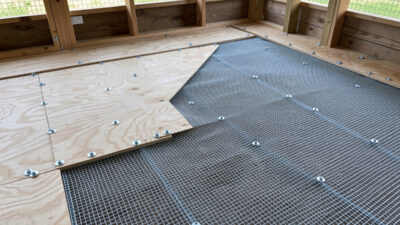
Rat-Proof Coop Floor: Stop Diggers Coming Up Through It
Rats don’t come over the coop wall — they come up through the floor, gnawing through plywood or tunneling under…
Raising a Coop Off the Ground: Footings & Skids
Every coop with a wooden floor should sit off the ground — a few inches at minimum, ideally enough to…
Vinyl & Linoleum Coop Floor: The Easy-Clean Upgrade
Sheet vinyl or linoleum over a plywood subfloor is the single best-value upgrade you can make to a coop floor:…