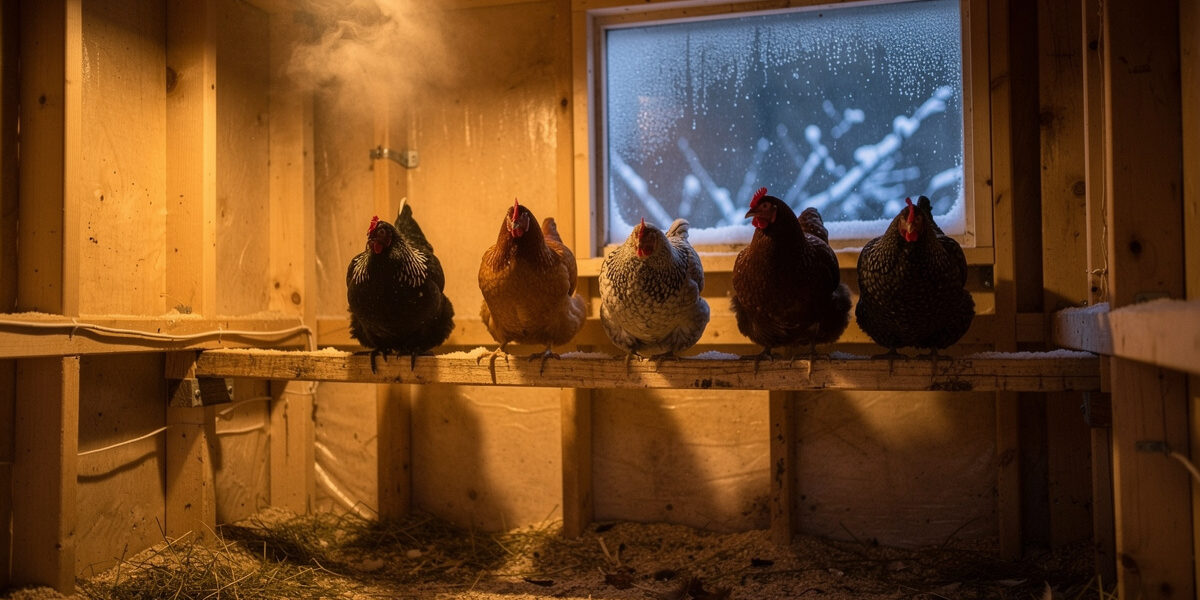
If you want to keep chickens laying through winter, the lever that matters is light, not heat. Hens need 14–16 hours of daylight to stay in lay; add a few hours of morning light to beat the short days and most flocks keep filling the basket while the neighbours’ birds quit.
I run a cold-hardy flock in Sweden, where the December sun barely clears the trees for six hours and the waterer can freeze solid by 7 a.m. The winter laying problem is one I have solved the hard way, season after season, in an insulated walk-in coop I built and automated end to end. This is the system I actually use — what moves the egg count in the dark months, what is a waste of money, and the cold-climate traps that cost you more eggs than the cold ever will.
Why Hens Stop Laying in Winter
Hens stop laying in winter because shortening days switch off their reproductive system, not because they are cold. A photoreceptor behind the eye reads day length; once light drops below about 12 hours, laying powers down. It is hardwired energy conservation from the wild ancestor that never laid through a dark winter.
This is the single fact that reframes the whole problem. Keepers spend money heating a coop and wonder why the eggs still vanish in November — because warmth was never the trigger. The bird is reading the sky, not the thermometer. As days shorten past the autumn equinox her body diverts resources away from eggs and toward simply surviving the lean season ahead. A hen in a heated coop with eight hours of daylight lays no better than one in an unheated coop with eight hours of daylight. Fix the light and you fix the lay.
Adding Supplemental Light the Right Way
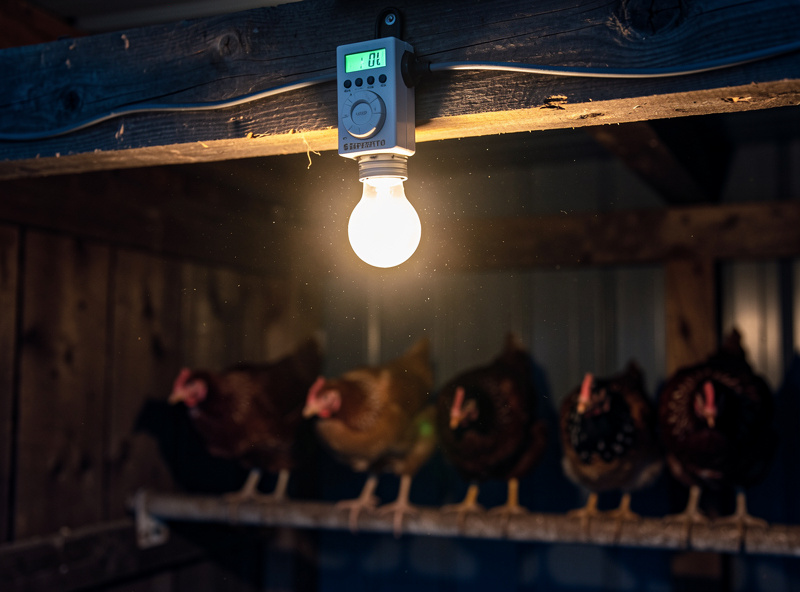
Add light in the morning, not the evening, to bring total daylight to 14–16 hours. A timer switches a warm-white LED on in the pre-dawn hours and off once the sun is up, letting natural dusk settle the birds onto the roost. A bulb bright enough to read a newspaper by is plenty — you are signalling season, not running a greenhouse.
The evening-light mistake is the one I see most. If you light the coop at dusk and the timer cuts the light abruptly, the flock gets caught off the roost in sudden darkness, panics, and piles in a corner. Morning light avoids that entirely: the birds wake to the lamp, eat and drink, and natural daylight takes over before the lamp clicks off. In my coop the light runs on the same Home Assistant logic as the auto-door — a fixed pre-dawn block, sunrise-aware, that I never touch by hand. A basic plug-in timer and a timer-controlled coop light does the same job for a few dollars.
Three rules keep it safe and effective. First, be consistent — yo-yoing the schedule stresses the flock and can trigger a partial molt. Second, keep the lamp modest and warm-toned; blazing cold-white light does nothing extra and can raise aggression. Third, accept the honest trade-off: a hen is hatched with all the ova she will ever have, and pushing winter lay spends that supply a little faster, so she may taper a season earlier. For a backyard laying flock that trade is usually worth it. If you keep heritage birds for the long haul, letting them rest through the dark is a legitimate choice, not a failure. I rank light against the other levers in my complete guide to increasing egg production.
Water: The Quiet Winter Killer
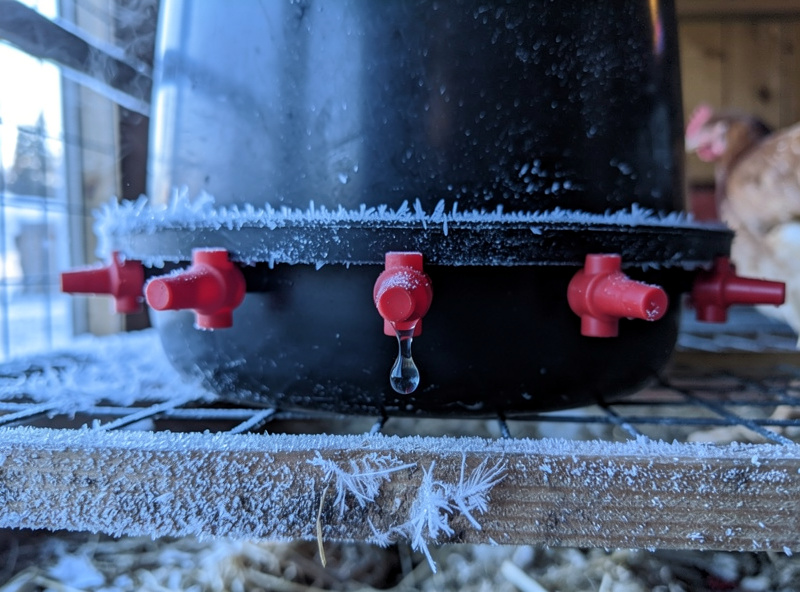
A hen that cannot drink stops laying within a day, and an egg is about 75% water. In a hard winter the biggest threat to the basket is not cold air — it is a fount frozen solid by mid-morning. A thermostatically heated waterer that stays liquid below freezing is not a luxury in a cold climate; it is the difference between laying and not.
My single biggest production threat in a Swedish January is never the temperature itself — it is water turning to ice before I have finished morning coffee. I run heated horizontal-nipple waterers on a freeze-watch automation so a temperature sensor kicks the heater on before the lines ice up. If you are not automating, a heated poultry waterer on a thermostat solves the same problem hands-off. Whatever you use, check it twice a day in a freeze — heaters fail, and a failed heater you do not notice is a stopped flock.
Disclosure: SmartCoopHQ is reader-supported. As an Amazon Associate I earn from qualifying purchases made through links in this article, at no extra cost to you. I only point to gear I actually use or would buy for my own coop.
Cold Is Fine. Moisture Is the Enemy
Counter-intuitively, dry cold barely dents laying — damp does. A dry, well-ventilated coop at −15 °C is a comfortable coop; a sealed, humid one at 0 °C frostbites combs and craters production. Moisture, not temperature, is what hurts hens in winter, and ventilation that dumps moisture without drafting the birds is the whole trick.
Chickens wear a down jacket they grow themselves; a healthy cold-hardy bird handles deep cold far better than most keepers believe. What they cannot handle is their own breath and droppings turning the coop into a damp box. Humidity condenses on combs and wattles and freezes them — that is frostbite, and it is a ventilation failure, not a cold failure. The fix is high vents up near the ridge that let warm moist air escape while the birds sit in still air below, plus dry deep litter on the floor. Sealing every gap to “keep them warm” is exactly backwards and the classic rookie mistake. Pick genuinely cold-tolerant birds and the equation gets easier still — I cover the breeds that shrug off a Nordic winter in my guide to cold-hardy chicken breeds for northern climates.
Should You Heat the Coop?
In most climates, no — and a heat lamp is an outright fire risk. Heating tricks you into sealing the coop, which traps the moisture that actually causes frostbite, and a flock acclimated to warmth has no cold tolerance if the power fails. Beyond roughly −20 °C with vulnerable breeds, gentle supplemental warmth can earn its place, applied safely.
I do not heat my coop for warmth, and I keep birds through Swedish winters. The instinct to add a heat lamp is understandable and almost always wrong: it is the leading cause of coop fires, it makes the moisture problem worse, and it leaves a soft flock helpless the night the breaker trips. Far better to spend the effort on ventilation, dry litter, draft-free roosts wide enough that birds cover their toes when they squat, and cold-hardy genetics. Where the climate is genuinely brutal, a low-wattage radiant panel rated for livestock — never a clamp heat lamp — can take the edge off, and a temperature-alert sensor tells you when it is actually needed. I get into safe heat options in the winter coop heating guide and the sensor side in coop temperature alerts.
What Actually Helps Winter Laying — And What Doesn’t
Keepers throw money at the wrong things every winter. This is how I rank the common interventions by how much they actually move the egg count in cold, dark months — work the top of the list first.
| Intervention | Effect on Winter Laying | Cost | My Verdict |
|---|---|---|---|
| Supplemental morning light to 14–16 hrs | Huge — the master switch | Low | Essential — do this first |
| Heated waterer / freeze-watch | Huge — no water, no eggs | Low–moderate | Essential in a freeze |
| Good ridge ventilation + dry litter | High — prevents frostbite drop | Low | Non-negotiable |
| Cold-hardy breed selection | High — sets the ceiling | Decided before you buy | Choose well up front |
| Higher-protein winter feed | Moderate — supports molt recovery | Low | Worth it through molt |
| Heat lamp for warmth | Near zero on eggs — fire + moisture risk | Low up front, high in risk | Skip it |
| Herbal “egg booster” supplements | None — marketing | Wasted | Skip it |
The pattern is the same one that runs through every laying question: output is limited by its worst constraint. In winter that constraint is almost always day length, with water a close second. Fix those and the basket fills; pile supplements on top of a light deficit and nothing changes.
Feed, Molt, and the Late-Autumn Dip
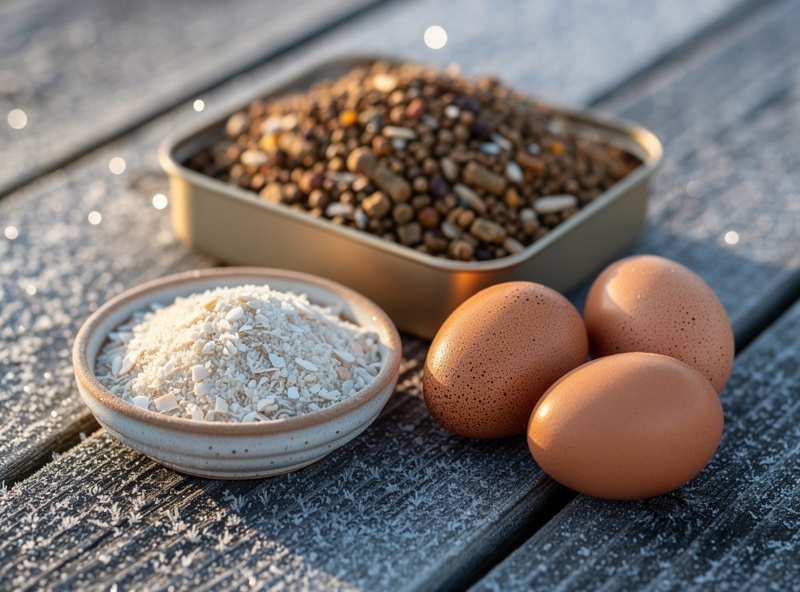
The autumn dip you see before winter proper is often molt, not cold. Hens drop and regrow feathers in their second autumn onward, and because feathers are mostly protein, the body pauses laying to rebuild the coat. Support it with a higher-protein feed near 20% and patience; do not try to light your way through a molt.
Through the cold months I keep a complete 16–18% layer feed as at least 90% of the diet and bump toward 20% during a hard molt. Calcium still matters in winter — a laying hen pulls about 2 grams a day for the shell — so free-choice crushed oyster shell stays in its own dish year-round. Resist the urge to load the birds with scratch grain “to keep them warm”; scratch is low-protein candy that dilutes the ration. A small handful per bird on a cold afternoon is fine as a treat and a roosting-time gut warmer, nothing more. The eggs you do get through winter are worth having — the nutrition story is genuinely good, which I cover in the health benefits of backyard eggs.
Realistic Winter Expectations
Even with light and water dialled in, expect winter output below the summer peak. A productive hen that lays five to six eggs a week in June might give three to five in January under supplemental light, and pullets that reach point of lay in deep autumn often wait for spring before they start. That is normal, not failure.
I set expectations this way because the alternative is chasing a problem that does not exist. Winter laying is about holding a respectable trickle, not matching the spring flood. If your lit, watered, well-ventilated flock is giving you a steady few eggs a day through the dark, the system is working. If laying has stopped entirely despite all of that, work the diagnostic order — light, water, molt, stress, hidden nests — before suspecting illness, and route a genuinely sick bird with lethargy or abnormal droppings to an avian vet rather than guessing. Breed choice quietly sets the floor under all of it, so it is worth knowing which birds keep going; I rank them in the best egg-laying chicken breeds roundup.
Frequently Asked Questions
How do I get my chickens to lay eggs in winter?
Add supplemental morning light to reach 14 to 16 hours of total daylight, keep unfrozen water available with a heated waterer, and ventilate the coop to stay dry. Light is the master switch; heat is not what triggers laying.
Do chickens need a heated coop to lay in winter?
No. Hens stop laying because of short days, not cold. A dry, well-ventilated coop and cold-hardy birds handle deep cold fine. Heat lamps are a fire and moisture risk and do little for egg output. Add light instead.
How many hours of light do chickens need to lay in winter?
About 14 to 16 hours total. Below roughly 12 hours, laying drops off sharply. Use a timer to add warm morning light in the pre-dawn hours so total daylight stays near 15 hours through the dark months.
Why did my chickens stop laying when it got cold?
Almost always shortening day length, not the cold itself. The drop usually coincides with autumn rather than the first frost. Molt and frozen water can stack on top. Add morning light and keep water liquid to recover the lay.
Should I leave a light on all night in the coop?
No. Hens need a dark rest period and constant light causes stress. Use a timer to add light only in the morning so total daylight reaches 14 to 16 hours, then let natural dusk settle the birds onto the roost.
Will my hens be cold without a heater?
A healthy cold-hardy hen tolerates deep cold far better than most keepers expect, thanks to her down. The real winter danger is moisture, not temperature. Prioritize ventilation and dry litter over heat to prevent frostbite.
Related Articles
Related Guides
Egg-Bound Hen: Signs, Risk Factors, and Prevention
An egg-bound hen has an egg stuck in her oviduct that she cannot pass. It is a serious, time-sensitive situation…

Double-Yolk Eggs: Causes, Safety, and Hatching
A double-yolk egg happens when a hen releases two yolks close together and both get wrapped in one shell. It…

How to Candle Eggs: A Keeper Step-by-Step Guide
Candling an egg means shining a bright, focused light through the shell in a dark room to see what is…