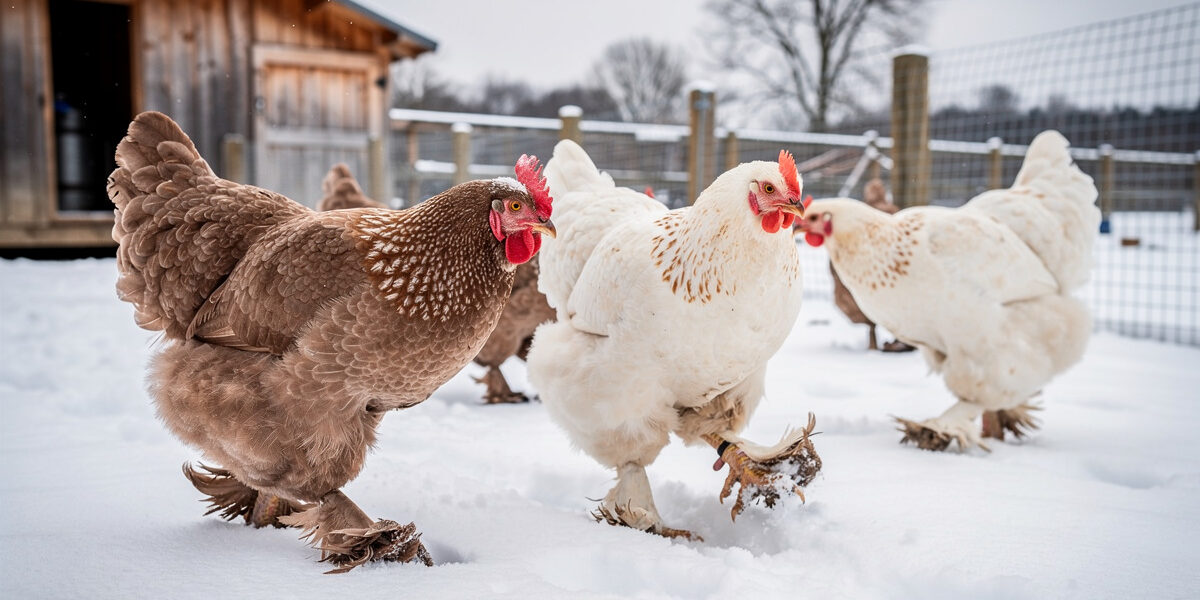
Cold-hardy chicken breeds tolerate sustained winter temperatures below 20°F with a smaller egg-production drop and a much lower frostbite risk when housed properly. Three traits make a breed cold-hardy: small or rose comb (less frostbite-prone tissue), heavy feathering for insulation, and body weight 7+ lbs for thermal mass. My own flock in Sweden runs almost entirely on this trait combination — Wyandottes, Orpingtons, Australorps, and a few heavy-line Easter Eggers — and it’s the reason I stopped losing sleep over combs the first winter I switched breeds. This guide covers the 10 best cold-hardy breeds, the coop modifications that protect any breed in cold weather, and what NOT to do (heated coops are usually a mistake).
Quick Answer: Best Cold-Hardy Chicken Breeds
Wyandotte (rose comb, heavy feathering, 200-240 eggs/year) and Buff Orpington (heavy bird, gentle, 200-280 eggs/year) are the two best cold-hardy breeds for most US backyards. Brahma is the gentle giant cold-hardy pick (150-200 eggs but exceptional frost tolerance). Faverolles, Plymouth Rock, and Australorp round out the standard cold-climate flock. Avoid Mediterranean breeds (Leghorn, Andalusian, Hamburg) — large combs frostbite easily. Skip heated coops — they cause more problems than they solve.
Why Some Breeds Tolerate Cold Better
Three biological factors determine cold tolerance:
1. Comb Size
The comb (red fleshy crest on top of the head) is poorly insulated and frostbites first. Small combs (rose comb, pea comb, walnut comb) lose less heat and resist frostbite. Single combs (the standard tall serrated style) are vulnerable below 20°F. Wyandottes have rose combs by breed standard. Brahmas have pea combs. Both designs survive winter without frostbite if the coop has good ventilation.
2. Feathering Density
Heavy feathering creates an insulating layer of trapped air around the body. Buff Orpingtons, Brahmas, and Cochins carry so much feathering they look noticeably bulkier than their actual body weight suggests — on my own Orpingtons that’s obvious the moment you pick one up in December. Nobody has published a reliable feather-count-per-breed figure, but the mechanism is straightforward: more feathers and denser down mean a thicker trapped-air layer, and that’s a bigger factor in cold tolerance than most starter-kit guides give it credit for.
3. Body Mass
Larger birds have more thermal mass — they take longer to cool down and longer to warm up. A 12-lb Brahma loses heat slower than a 4-lb Leghorn at the same exposure. Body weight is one of the most underrated cold-tolerance factors.
For broader breed selection, see our Chicken Breeds Complete Comparison Guide.
The 10 Most Cold-Hardy Chicken Breeds
| Breed | Comb Type | Body Weight | Eggs/Year | Cold Tolerance |
|---|---|---|---|---|
| Brahma | Pea | 9-12 lb | 150-200 | Exceptional |
| Wyandotte | Rose | 6-8 lb | 200-240 | Excellent |
| Cochin | Single | 9-11 lb | 120-180 | Excellent |
| Buff Orpington | Single | 7-8 lb | 200-280 | Excellent |
| Plymouth Rock | Single | 7-7.5 lb | 200-280 | Very Good |
| Faverolles | Single | 6-7 lb | 180-240 | Very Good |
| Australorp | Single | 6-7 lb | 250-300 | Very Good |
| Sussex (Light) | Single | 6-7 lb | 200-250 | Very Good |
| Rhode Island Red | Single | 6-7 lb | 250-300 | Good |
| Easter Egger (heavy lines) | Pea | 5-6 lb | 200-280 | Very Good |
Note: no extension source or hatchery publishes a lab-verified minimum survival temperature per breed — comb type, feathering, and body mass are the documented mechanisms behind cold-hardy breed selection, and the tiers above rank breeds on those three traits rather than claiming an exact degree threshold. Any of these breeds can suffer frostbite in a poorly ventilated or damp coop regardless of tier.
Brahma — The Cold-Climate King
9-12 lb gentle giants with pea combs and feathered legs — the heaviest breed on this list and, in my experience helping neighbors pick a first cold-climate bird, the one that shrugs off a bad winter with the least fuss. Egg production is moderate (150-200/year) but cold-weather durability is exceptional. Light Brahma is the most popular variety; Dark and Buff Brahmas are equally cold-hardy.
Wyandotte — Best Egg Production in Cold
6-8 lb birds with rose combs (less frostbite-prone than single combs). Lay 200-240 brown eggs/year, dropping in deep winter but still producing. Available in many color variants — Silver-Laced, Gold-Laced, Blue, Columbian. American heritage breed.
Buff Orpington — The Standard Cold-Tolerant Layer
Heavy buff-colored birds, single comb but heavily feathered, gentle temperament. Lay 200-280 eggs/year. The “default” choice for most backyard flocks in cold climates. Available everywhere.
Plymouth Rock (Barred) — Reliable American Heritage
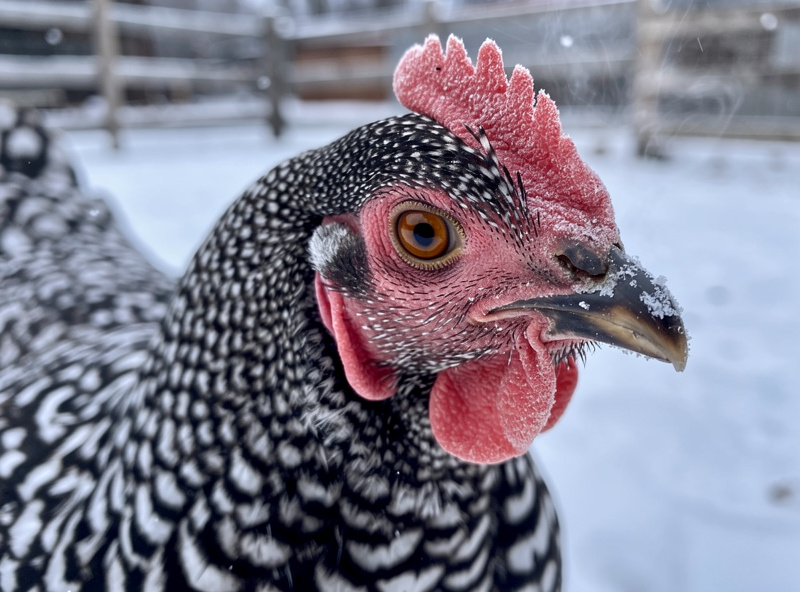
Black and white striped feathers, hardy in most US climates including northern winters. 200-280 eggs/year. Single comb is more frostbite-prone than rose comb breeds, but proper coop ventilation prevents most issues.
Breeds to AVOID in Cold Climates
These breeds struggle below 20°F sustained:
- Leghorn (any color): Mediterranean origin, large single comb, lean body. Eggs drop dramatically in winter. The large comb is the weak point — it can frostbite in a single hard cold snap if the coop stays damp or drafty, well before body temperature becomes the limiting factor.
- Andalusian: Spanish breed, designed for hot climates. Avoid in zones 3-5.
- Polish (any variety): Crested feathers cover eyes (vision impaired), making winter snow navigation difficult. Also vulnerable to frostbite on crests.
- Modern Game: Bred for show, lean body, very poor cold tolerance.
- Egyptian Fayoumi: Hot-climate adapted, Egyptian heritage.
- ISA Brown: Hybrid bred for moderate-temperature commercial production. Egg output falls off noticeably once sustained cold sets in, well ahead of the cold-hardy breeds above.
If you live in a zone 3-5 climate and want one of these breeds, it requires aggressive coop modifications (heated areas, sealed insulation, frostbite-proofing combs with petroleum jelly) — usually more work than just choosing cold-hardy breeds.
Cold-Climate Coop Modifications
Even cold-hardy breeds need coop adjustments for sustained sub-zero temperatures:
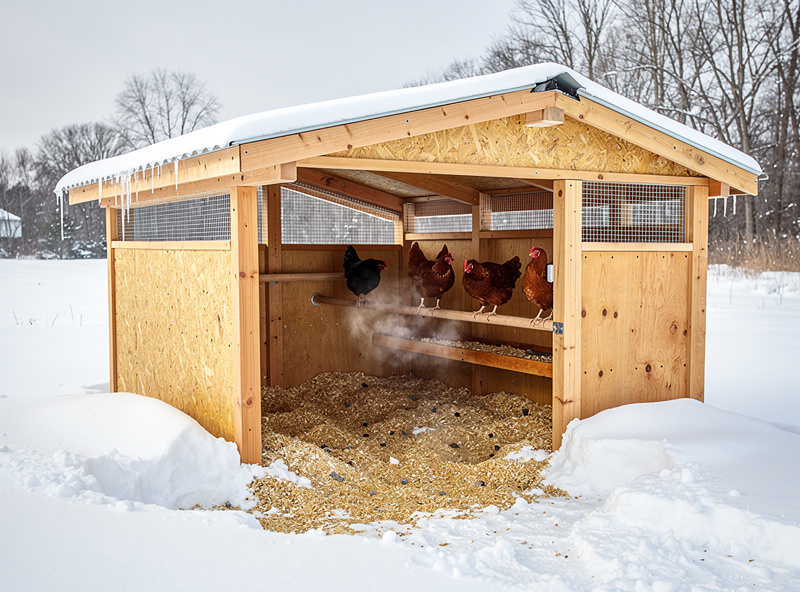
Ventilation Above Roosts
Counter-intuitive but critical: ventilation in winter is MORE important than in summer. Moisture from chicken breath and droppings is the #1 cause of frostbite — wet feathers don’t insulate, and high humidity inside a coop deposits moisture on combs that then freezes. Keep vents OPEN above roost height (chickens won’t be in the airflow). Close vents below roost height to prevent drafts — Ohio State University Extension’s winter backyard-chicken guidance covers the same moisture-and-frostbite mechanism in more detail if you want the full picture. My own coop runs passive ridge-and-soffit venting sized to dump that moisture without putting the birds in a draft, and it’s the single change that did more for comb health than anything else I tried.
Roost Height and Width
Roosts should be 2×4 lumber laid flat (4-inch top surface). Chickens sit on their feet to keep them warm. A 1-inch round dowel exposes feet to cold and causes frostbite. Roost height: 2-3 feet off the floor for most breeds; lower for Brahmas (heavy bodies hard to fly down from high roosts).
Bedding Depth (Deep Litter Method)
Deep litter means 6+ inches of pine shavings or chopped straw on the coop floor, refreshed (not removed) weekly rather than fully cleaned out. Decomposing organic material produces real ambient heat — keepers and extension guidance commonly report a coop running roughly 10°F warmer than the outside air once the litter is actively composting, though the exact gain varies with depth, moisture, and how cold it is outside. My own coop runs a deep-litter floor year-round and it’s a noticeable difference on the coldest mornings, not just a marketing claim. See our Best Chicken Coop Bedding guide.
Insulation
Most US climates don’t actually need coop insulation — chickens’ own down handles a lot of cold as long as the coop stays dry and drafts are controlled. Where sustained deep-cold makes it worth doing, rigid foam board (R-7 to R-19 depending on wall-cavity thickness) between studs, sealed behind plywood, is the realistic target — not the R-15+ “finished basement wall” standard some guides throw around (see The Poultry Site’s sidewall insulation guidance for the commercial-house baseline these DIY numbers are scaled down from). Skip fiberglass batts entirely: chickens peck at exposed fiberglass and the fibers are harmful if inhaled, so if you do use it, it has to be fully sealed behind solid interior wall on every side.
Water Heater Element
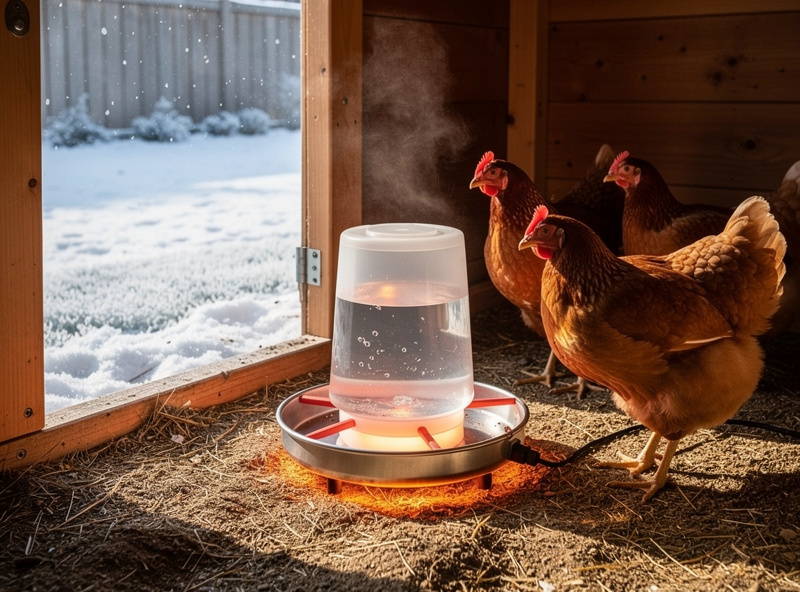
The single most useful winter chicken accessory. A 50-100 watt water heater base prevents waterer freezing. Available at any feed store for $30-50. Without one, you’ll be hauling buckets of warm water 2-3 times daily. Mine runs on a freeze-watch automation through Home Assistant that flags me the moment the base draws no current — a dead heater element is a much worse problem at 5 a.m. than a cold morning, and I’d rather get a phone notification than find a solid block of ice.
Why You Probably Shouldn’t Heat the Coop
Heated chicken coops are usually a mistake. Reasons:
- Fire hazard: Heat lamps and ceramic heaters cause coop fires. Each year multiple coop fires kill flocks across the US.
- Adaptation loss: Heated coops prevent chickens from acclimating to cold. A power outage in January means hens go from 50°F coop to -20°F outside instantly — they cannot survive.
- Humidity buildup: Heaters increase moisture cycling, which makes frostbite worse.
- Energy cost: Running 200-500W of heating in a coop, even on a thermostat that cycles rather than running continuously, is a real line item on the winter electric bill — plan for it, not for “basically free.”
The exceptions where heating is justified:
- Sub-zero stretches below -20°F where even cold-hardy breeds struggle (use radiant heat panels, not heat lamps)
- Flocks with vulnerable individuals (elderly hens, recently sick birds)
- Coops that cannot be properly ventilated (urban setups with strict noise/sound rules)
For winter heating safety, see our Solar Chicken Coop Heater guide.
Frostbite Prevention
Combs and wattles are the frostbite-vulnerable areas. Prevention:
- Petroleum jelly on combs: Apply Vaseline thick layer to combs and wattles when temperatures drop below 15°F. Repeat every 2-3 days. Old farmers method, still effective.
- Choose rose-comb or pea-comb breeds: Wyandotte, Brahma. Single-comb breeds are more vulnerable.
- Reduce humidity in coop: Ventilate to keep humidity below 70 percent. Wet conditions accelerate frostbite.
- Provide draft-free roosts: Wind chill at roost level is the #1 frostbite cause.
Mild frostbite (white tips on comb) heals in 1-3 weeks with no intervention. Severe frostbite (blackened tissue) requires removal of dead tissue — see a poultry vet if more than 10 percent of comb tissue is affected.
Egg Production in Cold Weather
All chicken breeds reduce egg production in winter — the driver is shortening daylight, not cold itself. University of Florida IFAS Extension guidance (Factors Affecting Egg Production in Backyard Chicken Flocks) puts the target at around 14 hours of daylight to maintain production, with a severe decline — sometimes a full stop — likely once day length drops well below that without supplemental light. Cold-hardy, dual-purpose breeds generally hold a noticeably higher winter floor than lean, heat-bred hybrids and Mediterranean layers, but no extension source publishes a clean percentage breakdown by breed tier — treat any exact number here (including ones on other sites) with some skepticism. On my own flock the difference between the Wyandottes/Orpingtons and a Leghorn-type bird in a bad January is obvious just from the egg count, even without a formal log.
Adding supplemental light (LED bulb on timer, keeping total day length around 14 hours) can maintain higher production. The tradeoff: chickens with year-round laying may have shorter productive lifespans.
For sustainable winter flock management, see our Chicken Coop Size Guide.
Frequently Asked Questions
What chicken breeds tolerate cold weather best?
Brahma, Wyandotte, Buff Orpington, Cochin, and Faverolles top the list. All have either a small comb (rose or pea, which resists frostbite), heavy feathering, or both — the two traits that most reliably predict cold tolerance, more than any single claimed temperature number.
Do chickens need a heated coop in winter?
Generally no for cold-hardy breeds. Heat lamps cause coop fires; heated coops prevent natural cold acclimation. Focus on ventilation, deep litter bedding, insulation, and a heated water base. Only consider supplemental heat during extreme sustained sub-zero stretches or for vulnerable individual birds.
What is the lowest temperature chickens can survive?
There is no single lab-verified number — no extension source publishes a precise per-breed survival threshold. Cold-hardy breeds with small combs and heavy feathering (Brahma, Wyandotte) handle sustained deep cold far better than Mediterranean breeds like Leghorns. Coop ventilation, dry bedding, and absence of drafts matter as much as the breed itself.
How do you prevent chicken frostbite?
Apply petroleum jelly to combs and wattles when hard freezes are expected. Choose rose-comb or pea-comb breeds (Wyandotte, Brahma). Maintain coop humidity below 70 percent — wet feathers and humid air accelerate frostbite. Use 2×4 roosts so chickens cover their feet.
Do cold-hardy chickens lay eggs in winter?
Yes, but output falls in winter mainly because of shorter daylight, not cold itself — extension guidance points to roughly 14 hours of daylight as the threshold for maintaining production. Cold-hardy breeds generally hold a meaningfully higher winter floor than heat-bred hybrids, but no extension source publishes an exact percentage breakdown by breed. Supplemental LED lighting can maintain higher production at the cost of a slightly shorter productive lifespan.
What is the best comb type for cold weather?
Rose comb (Wyandotte) and pea comb (Brahma, Easter Egger) are most frostbite-resistant. Walnut comb (some breeds) is also resistant. Single comb (Leghorn, Australorp) is most vulnerable. Comb shape is genetically fixed; you can’t change it but you can choose breeds with cold-resistant comb types.
Related Articles
- Chicken Breeds: Complete Comparison Guide
- Best Chicken Breeds for Backyards: 12 Picks
- Solar Chicken Coop Heater
- Best Chicken Coop Bedding
- Chicken Coop Size Guide
Related Guides

How to Choose Chicken Breeds: A Keeper Decision Guide
Learning how to choose chicken breeds is really a requirements exercise, not a beauty contest. Before you look at a…
Heritage Chicken Breeds Compared: A Keeper Guide
A heritage chicken breeds comparison comes down to three things most lists never separate: a true heritage breed mates naturally,…
Bantam Chickens for Small Spaces: Best Small Breeds
Bantam chickens for small spaces are the answer when you want a real flock but have a courtyard instead of…