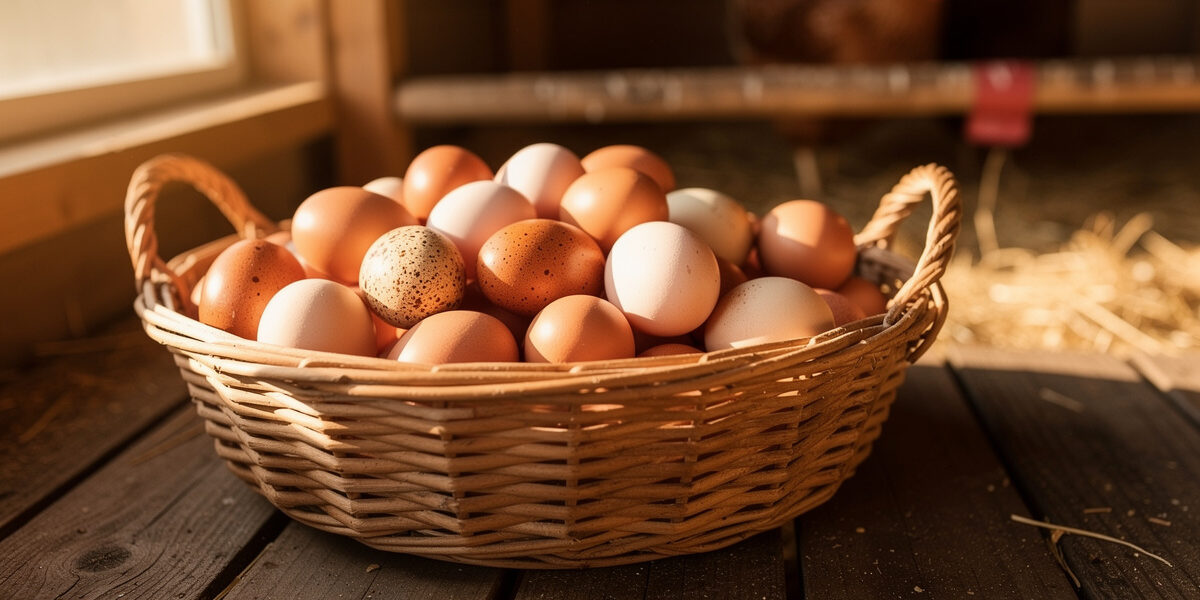
If you want to know how to increase egg production, the honest answer is that it comes down to four levers, in order: day length, nutrition, the bird’s age and breed, and stress. Get light and calcium right and most flocks jump from a trickle to five or six eggs a week per hen.
I keep a cold-hardy laying flock in Sweden, in an insulated walk-in coop I built and automated end to end. Over the years I have watched the basket go empty in November and refill in February with nothing changing but the hours of light the birds got. So this guide is not a list of supplements that promise more eggs. It is the actual production system — the levers that move the number, ranked by how much they move it, and the ones marketing wants you to chase that barely matter at all.
What Actually Drives Egg Production
A hen lays on a roughly 24-to-26-hour cycle, and that cycle is governed by light hitting a photoreceptor behind her eye — not by feed brand or coop gadgets. A healthy hen of a productive breed, in lay, with 14–16 hours of light and proper calcium, lays 5–6 eggs a week. Everything below is about removing whatever is blocking that baseline.
The mistake nearly every new keeper makes is treating egg output as a single dial they can crank. It is not. It is a stack of limiting factors, and the flock only lays as well as its worst limiter allows. You can buy the best layer feed on the shelf and still get three eggs a week if the birds are sitting in eight hours of December daylight. Fix the light and the same feed suddenly looks miraculous. Find the binding constraint first, then move to the next one. That diagnostic order is the whole game.
Light: The Single Biggest Lever
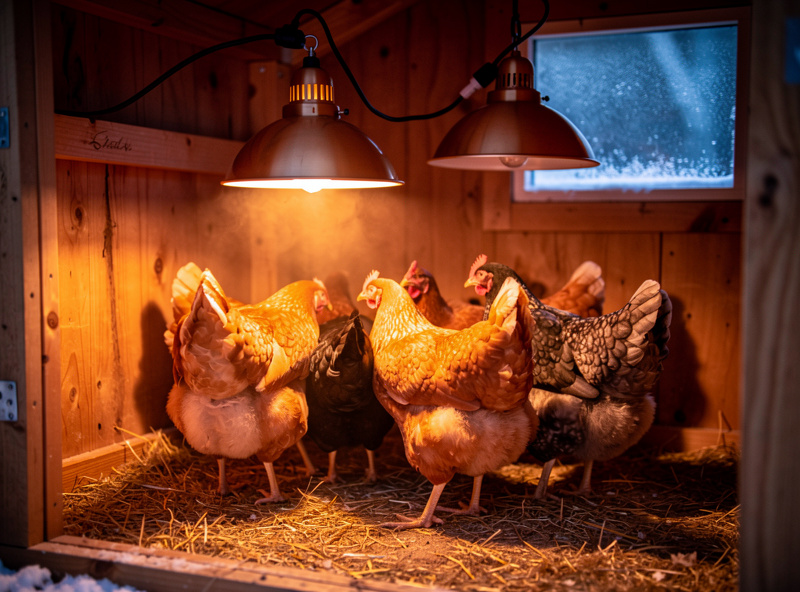
Day length is the master switch. Hens need 14–16 hours of light to lay consistently; below about 12 hours, production falls off a cliff. Adding a few hours of supplemental light in autumn and winter is the single change that moves the egg count more than anything else you can do.
The biology is simple once you see it. As days shorten past the autumn equinox, the bird’s reproductive system reads the falling light and powers down — this is hardwired, an energy-conservation instinct from the wild ancestor that never laid through a dark winter. In Sweden I lose daylight to barely six hours at the solstice, and without intervention the flock simply stops. A timer-controlled LED in the coop, set to switch on in the pre-dawn hours and bring the total up to about 15 hours, keeps them laying right through.
Three rules I follow on coop lighting. First, add the hours in the morning, not the evening — if light cuts out abruptly at night, birds get caught off the roost in the dark. A pre-dawn timer lets natural dusk settle them. Second, keep it modest: a warm-white LED bright enough to read by is plenty; you are signalling season, not running a greenhouse. Third, be consistent — yo-yoing the schedule stresses the flock and triggers partial molts. In my coop the light runs off the same Home Assistant logic as the auto-door, on a fixed pre-dawn block, and I never touch it manually. If you keep cold-climate birds, pair the lighting with the rest of a winter-ready setup; I cover the heat side in my guide to cold-hardy chicken breeds for northern climates and the warmth question in the winter coop heating guide.
One honest caveat: supplemental light uses up a hen’s finite lifetime egg supply faster. A hen is hatched with all the ova she will ever have. Pushing winter production means she may taper off a season earlier. For a backyard laying flock that trade is usually worth it; if you are keeping heritage birds for the long haul, you might choose to let them rest through the dark months. That is a values call, not a husbandry error.
Nutrition and Calcium: Feeding the Egg
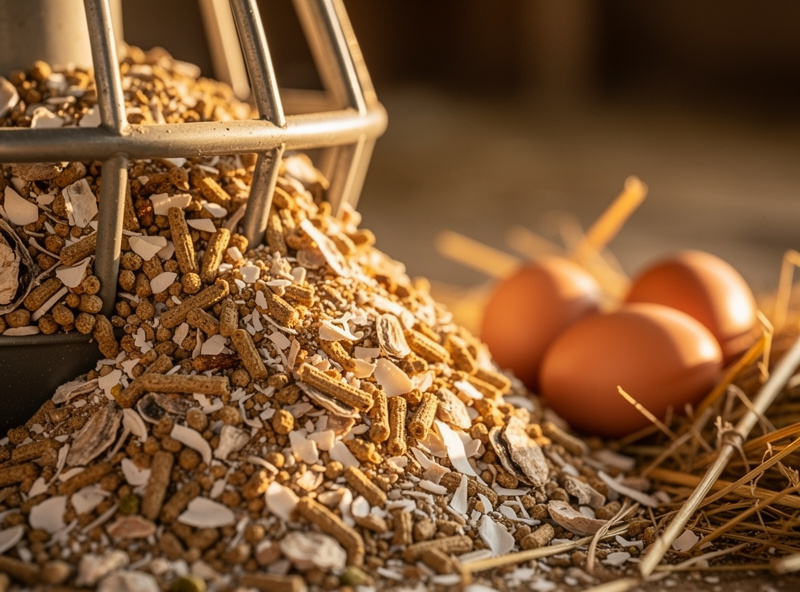
An egg is roughly 6 grams of protein and 2 grams of calcium leaving the hen’s body every single day she lays. A complete layer feed at 16–18% protein, plus free-choice oyster shell for calcium, covers that demand. Skimp on either and the shells thin, the laying slows, or the hen pulls calcium from her own bones.
Use a feed formulated specifically for layers once your pullets reach point of lay — not a grower, not a flock-raiser, and definitely not scratch grain as a staple. Scratch is candy: it is fun to toss, but it is low-protein and dilutes the balanced ration. I keep scratch to a small handful per bird on cold afternoons and nothing more. The complete feed should make up at least 90% of what goes in.
Calcium deserves its own bowl. Layer feed contains calcium, but individual hens vary in what they need, and a hen building a shell overnight will seek out extra. I offer crushed oyster shell free-choice in a separate dish, never mixed into the feed — the birds that need it eat it, the ones that don’t ignore it. Crushed eggshell works too, baked and crushed so they don’t connect it to the eggs in the box. Skip oyster shell and you get the classic thin-shell, dented-shell, or shell-less “rubber” eggs that signal a calcium deficit.
And water — the lever people forget. A hen that can’t drink stops laying within a day. An egg is about 75% water. In a Swedish winter my single biggest production threat isn’t cold, it’s a waterer frozen solid by 7 a.m., so I run heated horizontal-nipple waterers on a freeze-watch automation. In summer it’s the opposite: heat stress over about 30 °C tanks intake and output both. Clean, unfrozen, always-available water is non-negotiable. The nutrition of the egg itself is genuinely good — I get into that in the health benefits of backyard eggs.
Breed and Age: The Two You Can’t Coach
Breed sets the ceiling and age sets the curve — the two factors no amount of management overrides. A production hybrid like a sex-link or Leghorn lays 280–320 eggs a year; a heavy heritage or ornamental breed might give 120–180. And every hen, whatever her breed, follows the same age arc: ramp-up, peak, gradual decline.
If raw egg count is the goal, breed is a decision you make before you ever buy a bird, and it is close to irreversible for the life of the flock. The brown-egg sex-links and white Leghorns are laying machines bred for exactly this. Wyandottes, Orpingtons, and Australorps — my cold-hardy favorites — lay respectably (200–250 a year) and handle a Nordic winter, which matters more to me than squeezing out the last 40 eggs. Ornamental and bantam breeds are a different hobby; lovely birds, modest baskets. I rank the trade-offs in the best egg-laying chicken breeds roundup and the broader best backyard chicken breeds guide, and you can compare them all side by side in the complete chicken breeds comparison.
Age is the curve you ride. A pullet reaches point of lay (POL) around 18–22 weeks, depending on breed and season — pullets that hit POL in deep autumn may wait for spring light. Production climbs to a peak in the first laying year, then steps down roughly 10–15% each year after. A three-year-old hen laying four eggs a week instead of six is not sick; she is aging normally. Keepers chasing maximum output run a rolling flock, adding a few new pullets every year or two so the average age — and the basket — stays high.
Production Killers and Their Fixes
When a flock that should be laying isn’t, it is almost always one of a handful of causes. This is the diagnostic table I run through, top to bottom, when the basket goes light. Work it in order — light and water first, because they move the number fastest and cost the least to fix.
| Cause | Telltale Sign | How Much It Hurts | The Fix |
|---|---|---|---|
| Short day length | Drop-off in autumn, near-zero mid-winter | Severe — the #1 cause | Add morning light to reach 14–16 hrs total |
| Water failure | Sudden stop; frozen or empty fount | Severe — within a day | Heated waterer + freeze-watch; check twice daily |
| Low protein / wrong feed | Thin shells, slow lay, scratch-heavy diet | High | 16–18% layer feed as 90%+ of the diet |
| Calcium deficit | Soft, dented, or shell-less eggs | High | Free-choice oyster shell in a separate dish |
| Molt | Feathers everywhere, autumn timing | Temporary — weeks to months | Bump protein to 20%; let it run its course |
| Stress / predator pressure | Abrupt drop, jumpy birds, hiding | High while it lasts | Secure the run; remove the stressor |
| Hidden / eaten eggs | Empty boxes but hens act normal | Looks like a drop; isn’t | Hunt floor nests; fix egg-eating habit |
| Age | Slow, steady decline over years | Gradual, permanent | Rotate in new pullets; expect the taper |
Notice what is not on that list: expensive supplements, herbal “egg boosters,” and most of what gets marketed to keepers. None of them override a binding constraint. Fix the real limiter and the number moves; add a tonic on top of a light deficit and nothing happens.
Comfort, Space, and Nest Design
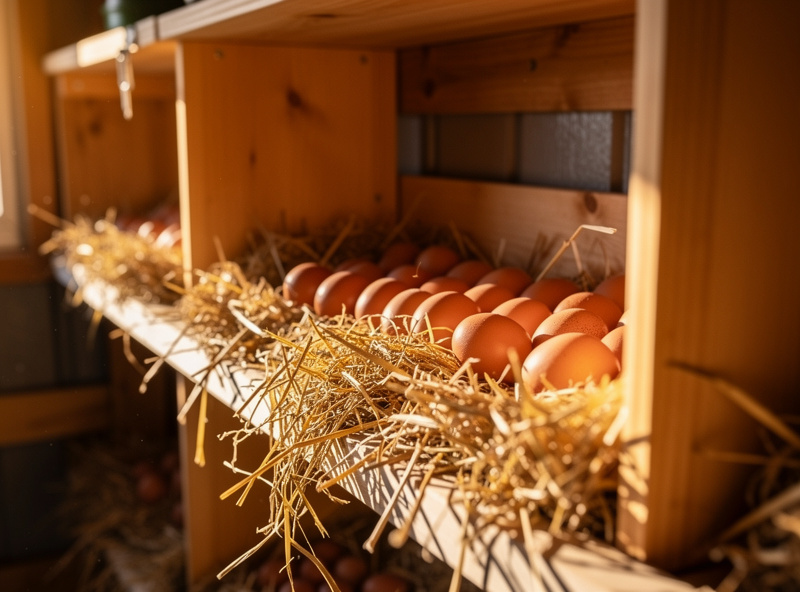
Crowded, uncomfortable, or badly-nested birds lay less — and lay in the wrong places. The standard is about 4 square feet of coop floor and 8–10 of run per bird, one nest box per 3–4 hens, and 8–10 inches of roost space each. Tight on any of these and you trade eggs for stress, feather-picking, and floor eggs you’ll never find.
Space is the quiet limiter. Overcrowding raises ammonia, spreads parasites, and ramps social tension — all of which suppress laying before you ever see an obvious problem. The “chicken math” trap is real: a coop built for six somehow holds ten within two years, and the eggs-per-bird quietly falls. Build bigger than you think you need.
Nest boxes earn special attention because a hen who doesn’t like her box lays on the floor, where eggs get dirty, cracked, eaten, or lost — output that exists but never reaches your basket. Hens want a dim, private, slightly enclosed box raised off the floor but below the roost, with clean dry bedding. Roughly one box per three to four hens; they will queue for a favorite anyway. I dig into the geometry in the complete nesting box sizing and setup guide, the headcount math in how many nesting boxes hens actually need, and the clean-egg upgrade in roll-away nesting boxes.
The Seasonal Reality: Winter, Heat, and Molt
Egg production is seasonal whether you fight it or not. Without supplemental light, expect output to fall through autumn, bottom out in winter, and rebound in spring — plus an annual molt that pauses laying for weeks. Knowing the rhythm stops you panicking at a normal dip and helps you target the dips worth fixing.
Winter is the dip most keepers want to beat, and light is how you beat it — my full winter egg laying guide walks the whole cold-climate system — but only if the rest of that system holds. A frozen waterer or a draughty, damp coop costs you eggs faster than the cold itself ever could. Counter-intuitively, the danger in winter is moisture, not temperature: a dry, well-ventilated coop at −15 °C is fine; a damp, sealed one at 0 °C frostbites combs and crushes production. Ventilation that dumps moisture without drafting the birds is the whole trick.
The annual molt is the other big seasonal pause, and it is not a problem to solve — it is maintenance. In autumn, usually in their second year and beyond, hens drop and regrow feathers, and because feathers are mostly protein, the body diverts resources from eggs to regrowth. Laying slows or stops for anywhere from three weeks to a couple of months. Support it with higher-protein feed (around 20%) and patience; do not try to push through it with light tricks. A hard molt that ends with a glossy new coat is a sign of a healthy bird, not a failing one.
A Drop in Eggs: The Order I Troubleshoot
When the basket suddenly goes light, run the checklist in order rather than guessing. Roughly 80% of unexplained drops trace to one of five things: day length, a water failure, molt, a hidden stressor, or hens laying somewhere you haven’t found. Diagnose before you change anything.
My order: First, count the days getting shorter — if it’s autumn and the light is fading, that’s your answer, add hours. Second, check water — frozen, empty, or fouled founts stop lay fast and recover fast once fixed. Third, look for feathers — molt is loud and visible once you know the look. Fourth, walk the run for stressors — a new predator at the wire (my cameras have caught a fox testing the apron at 3 a.m.), a dog, a rat infestation, a recent move, or a brutal heat wave all crater production. Fifth, hunt for hidden nests and egg-eaters — sometimes the eggs are being laid and lost, not missed. Only after all five come up clean do I start thinking about a sick bird, and that is when a vet enters the picture — production loss tied to lethargy, abnormal droppings, or respiratory signs is husbandry’s edge, where I route to an avian vet rather than guess. I break this whole diagnostic order down in why hens stop laying, and one acute emergency worth recognising fast — a hen straining and unable to pass an egg — is covered in egg-bound hen signs and prevention.
Frequently Asked Questions
How can I get my chickens to lay more eggs?
Give them 14 to 16 hours of light a day, a 16 to 18 percent layer feed with free-choice oyster shell, constant unfrozen water, and low-stress space. Light is the biggest lever; most winter drops are simply short days.
What time of year do chickens lay the most eggs?
Peak laying is spring and early summer, when natural day length runs 14 to 16 hours. Production falls through autumn and bottoms out in winter unless you add supplemental light to keep total daylight near 15 hours.
Does adding light to the coop really increase egg production?
Yes. Light is the master switch for laying. Adding a few hours of morning light to reach 14 to 16 hours total is the single most effective way to keep hens laying through autumn and winter when natural days are too short.
Why have my hens suddenly stopped laying?
The five usual causes are shortening days, a water failure, molt, a new stressor such as a predator or heat wave, or hens hiding eggs in a floor nest. Work through those in order before suspecting illness.
How many eggs should a healthy hen lay per week?
A productive breed in lay, with proper light and feed, lays five to six eggs a week. Heritage and ornamental breeds lay less, often three to four. Output declines roughly 10 to 15 percent each year as a hen ages.
Will feeding more protein make my chickens lay more?
Only if protein was the limiting factor. A complete 16 to 18 percent layer feed already covers laying demand. Extra protein helps during molt (aim for 20 percent) but will not raise output if light or water is the real constraint.
Related Guides
- Best Egg-Laying Chicken Breeds: 10 Top Producers
- Health Benefits of Backyard Eggs
- Cold-Hardy Chicken Breeds for Northern Climates
- Chicken Nesting Boxes: Complete Sizing & Setup Guide
- Solar Chicken Coop Heater: Winter Heating Guide
- How to Store Fresh Eggs: Counter vs Fridge
- How to Candle Eggs: Step-by-Step Guide
- Double-Yolk Eggs: Causes, Safety, Hatching
Related Guides
Egg-Bound Hen: Signs, Risk Factors, and Prevention
An egg-bound hen has an egg stuck in her oviduct that she cannot pass. It is a serious, time-sensitive situation…

Double-Yolk Eggs: Causes, Safety, and Hatching
A double-yolk egg happens when a hen releases two yolks close together and both get wrapped in one shell. It…

How to Candle Eggs: A Keeper Step-by-Step Guide
Candling an egg means shining a bright, focused light through the shell in a dark room to see what is…