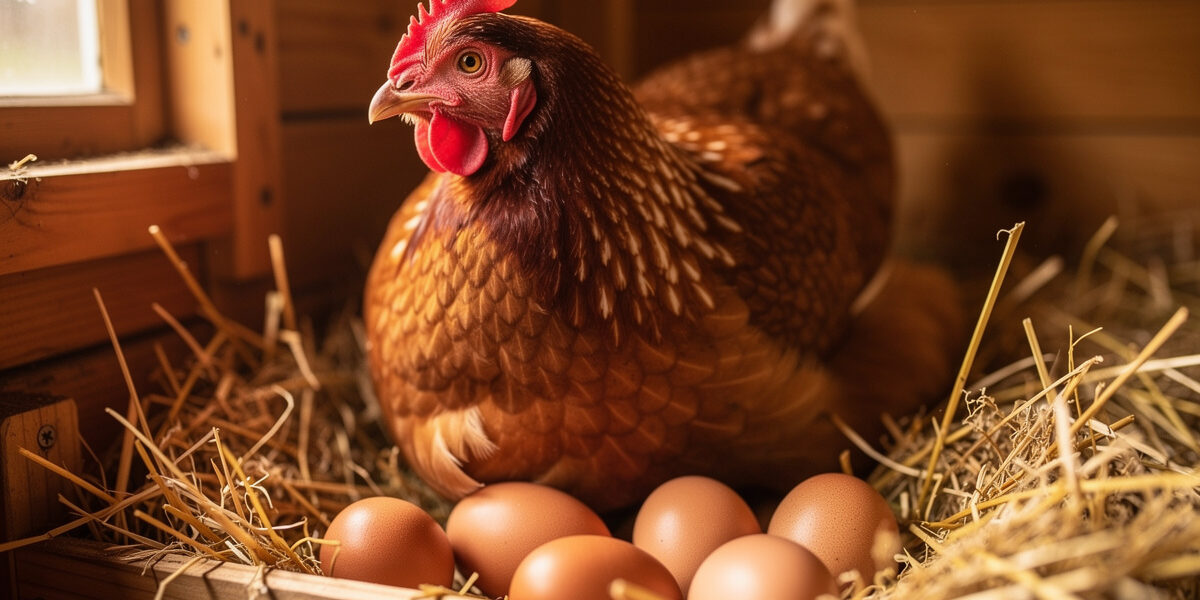
The best egg-laying chicken breeds produce 280 to 350 eggs per year — nearly an egg per day in peak season. ISA Brown hybrids top the chart at 300-350 eggs/year but burn out at 2-3 years of productive lifespan. Heritage breeds like Black Australorp and Leghorn produce 250-320 eggs/year and keep laying productively for 4-7 years. My own flock runs entirely on the heritage side of that trade — Wyandottes, Orpingtons, an Australorp-type bird, and Easter Eggers — and the “burns out fast vs. lasts for years” math below is the actual decision I made when I stocked it. This guide covers the 10 best laying breeds, the math on hybrid vs heritage egg production, and which breed to choose for your specific household needs.
Quick Picks: Best Laying Breeds 2026
- ISA Brown — 300-350 eggs/year, friendly, 2-3 year productive lifespan
- Leghorn (White) — 280-320 white eggs/year, heritage, hot-climate
- Black Australorp — 250-300 brown eggs/year, friendly, world-record holder
- Rhode Island Red — 250-300 brown eggs/year, hardy, sometimes assertive
- Plymouth Rock (Barred) — 200-280 brown eggs/year, dual-purpose
- Buff Orpington — 200-280 brown eggs/year, gentle family standard
- Easter Egger — 200-280 blue/green eggs/year, friendly
- Wyandotte — 200-240 brown eggs/year, cold-hardy
- Sussex (Speckled or Light) — 200-250 cream/light brown eggs/year
- Welsumer — 180-220 dark terracotta eggs/year (specialty color)
Hybrid vs Heritage Egg Production
The single biggest decision in choosing layers: hybrid commercial breeds vs heritage breeds. The math differs significantly:
| Type | Eggs/Year (Peak) | Productive Years | Total Lifetime Eggs |
|---|---|---|---|
| ISA Brown (hybrid) | 300-350 | 2-3 | 700-1050 |
| Black Australorp (heritage) | 250-300 | 4-7 | 1000-1800 |
| Leghorn (heritage) | 280-320 | 4-6 | 1100-1700 |
| Rhode Island Red (heritage) | 250-300 | 4-6 | 1000-1600 |
| Plymouth Rock (heritage) | 200-280 | 5-7 | 1000-1800 |
Heritage breeds produce more total lifetime eggs but at a lower peak rate. Hybrids burn out faster but produce more eggs in each productive month.
For commercial egg producers: hybrids win on per-bird production efficiency. For backyard hobby keepers: heritage breeds win on long-term ownership and replacement frequency.
For complete breed comparison context, see our Chicken Breeds Complete Guide.
Top Egg-Producing Breeds in Detail
ISA Brown — The Production Champion
ISA Brown is a hybrid breed (not pure heritage) developed in France in 1978 specifically for egg production. Hens are red-brown with white tail tips. They lay 300-350 brown eggs per year — among the highest documented production of any backyard-suitable breed, edging out comparable commercial hybrids like the Golden Comet (250-300/year).
Friendly disposition, easy to handle. Tolerate confinement well. Lay year-round with proper light management.
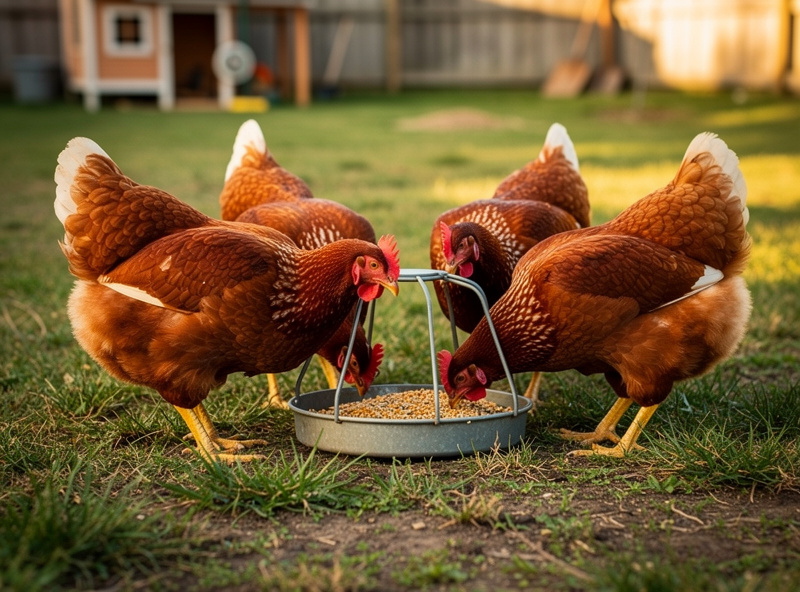
Tradeoffs: Productive lifespan is 2-3 years vs 4-7 for heritage breeds. Production drops off noticeably after the second laying season — commercial operations typically retire ISA Browns at this point precisely because the decline is steep enough that replacing the bird outperforms keeping her, though no source puts an exact percentage on the drop. By year 3, many hens have stopped laying in any meaningful volume. ISA Browns are also more susceptible to reproductive issues (egg binding, prolapse) than heritage breeds.
Best for: small farms wanting maximum eggs per bird per dollar of feed; households planning annual flock replacement.
Leghorn (White) — The Heritage Production Standard
Leghorn is the breed strains behind the large majority of US commercial white-egg production — commonly cited around 80-90 percent. White Leghorns lay 280-320 large white eggs per year. Mediterranean origin makes them excellent in heat, poor in cold.
Active and flighty — they will flap up to 6 feet vertically and escape low fences. Use 6-foot fencing or clip wing feathers. Less suited to handling than family breeds.
Heritage variant lays consistently for 4-6 years. The white eggs are popular for households wanting the supermarket-egg appearance from backyard birds.
Black Australorp — The Friendly Productive Champion
Black Australorp set the world record in 1922 — 364 eggs in 365 days. Modern lines lay 250-300 eggs/year, glossy black feathers, calm temperament. They’re often considered the best balance of egg production AND family-friendly handling.
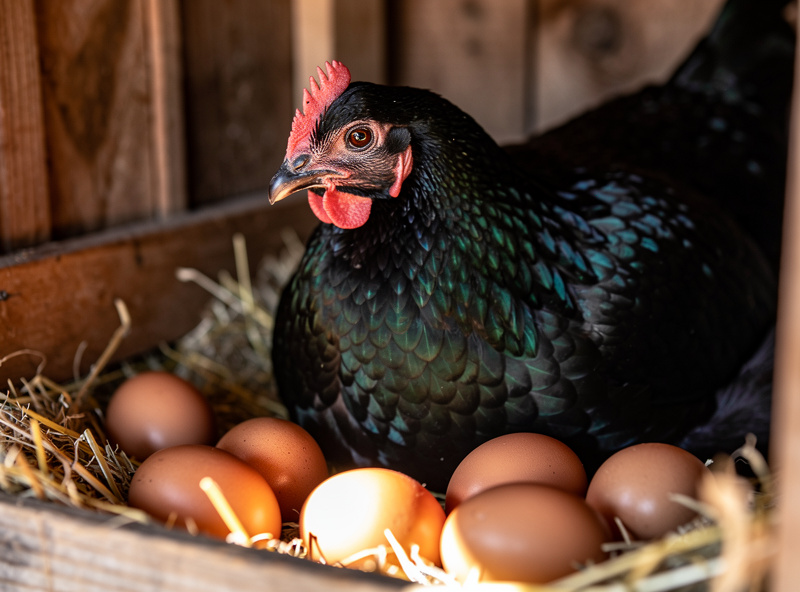
Australorps are heritage breed (no hybridization), so they produce productively for 4-7 years before declining. They tolerate cold well, and integrate peacefully into mixed flocks — the calmest bird in my own run is an Australorp, and she’s still laying reliably well past the age most of my hybrid-curious friends have already replaced their ISA Browns.
Best for: backyard families wanting maximum eggs from a friendly heritage breed. Available at every major hatchery.
Rhode Island Red — The American Standard
Rhode Island Red is the iconic American backyard chicken. Lay 250-300 brown eggs/year, hardy in most US climates, available everywhere.
Tradeoffs: Roosters can be aggressive; some hen lines are also more assertive than Australorps. The hens lay productively for 4-6 years.
For broader buying considerations, see our Best Chicken Coops 2026 Guide.
Egg-Per-Year Calculation by Goal
How many hens do you need for your egg consumption?
| Household Use | Eggs/Week | Hens Needed (Heritage 250 eggs/year) | Hens Needed (Hybrid 320 eggs/year) |
|---|---|---|---|
| Light egg use (smoothies) | 6 | 2 | 1-2 |
| Family of 2 (breakfast eggs 3-4x/week) | 12 | 3 | 2-3 |
| Family of 4 (eggs 4-5x/week) | 20 | 5 | 4 |
| Heavy bakers/cooks | 24 | 5 | 4 |
| Egg-selling sideline | 50+ | 11+ | 9+ |
Add 1-2 hens for slack: a sick or broody hen produces zero, so flock buffer matters. Most backyard households end up with 4-6 hens regardless of math, because that’s a comfortable flock size for one coop.
Egg Color Considerations
| Color | Productive Breeds |
|---|---|
| White (supermarket standard) | Leghorn, Andalusian, Hamburg |
| Brown (most common) | Australorp, RIR, Plymouth Rock, Buff Orpington, Wyandotte, Sussex |
| Dark “chocolate” brown | Marans (Black Copper, Cuckoo) |
| Dark terracotta/speckled | Welsummer (a distinct breed from Marans, not a variety of it — similarly dark but usually more speckled) |
| Blue (true blue) | Ameraucana, Cream Legbar |
| Green/olive | Easter Egger, Olive Egger |
| Cream/tan | Sussex, Faverolles, Silkie |
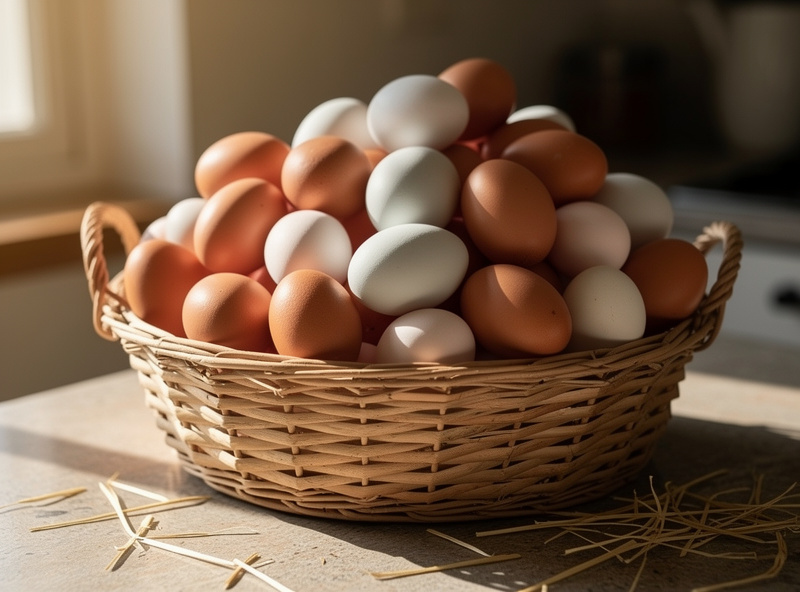
Egg color does not affect taste or nutrition. A mixed flock with 4-5 different egg colors is visually appealing for households that gift eggs, sell at farmers markets, or simply enjoy variety in the basket. (Welsummer and Marans are frequently confused for one another since both lay dark eggs, but they’re unrelated breeds with different origins.)
Maximizing Egg Production
Even the best laying breeds need proper conditions to hit their genetic potential:
1. Adequate Light (14+ Hours/Day)
Egg production correlates directly with daylight. 14 hours triggers consistent laying; under 12 hours signals reduced production. Add LED lighting on a timer for winter (extending daylight to 14 hours) to maintain production. Some keepers prefer natural light cycles for hen longevity at the cost of winter eggs.
2. Proper Feed (16-18% Protein Layer Feed)
Layer feed with 16-18 percent protein and 4 percent calcium is the standard for productive hens. Crumble or pellet form, not scratch feed. Free-ranging chickens supplement with bugs and greens but still need balanced layer feed for consistent production.
3. Calcium Supplementation
Crushed oyster shell free-choice in a separate dish. Hens self-regulate intake based on what their bodies need for shell production. Without supplemental calcium, eggshells thin and crack.
4. Stress Reduction
Stress from predators, overcrowding, heat, or flock disruption measurably drops egg production — heat stress alone is documented at roughly 15-40 percent reductions during sustained hot spells, and a predator visit that never even reaches the birds can knock production down by a comparable or larger margin for a stretch afterward. Maintain stable flock size, adequate space (4-6 sqft per bird in coop), and minimize disruptions.
For coop sizing, see our Chicken Coop Size Guide.
5. Fresh Water
Water deprivation drops egg production within hours. Hens need 1.5-2x as much water as feed by weight daily. Heated water in winter is essential — frozen waterers stop production.
Common Mistakes That Drop Egg Production
Insufficient light in winter. Without supplemental light, expect a severe drop in egg production November through February — University of Florida IFAS Extension notes it can mean a near-complete stop for some hens, not just a partial slowdown.
Underfeeding protein. Switching from layer feed (16-18 percent protein) to scratch grain (8-10 percent protein) drops production by half.
Overcrowding. 2 sqft per bird coop space is half the recommended minimum. Hens stress, peck, and stop laying.
Predator presence. Even unsuccessful predator visits stress hens and drop production for 1-2 weeks.
Mites or lice. Parasites cause stress and weight loss, dropping production. Treat with permethrin or DE (food grade).
Ignoring broodiness. Some breeds (Silkie, Cochin) go broody and stop laying for 3-5 weeks. Plan for this if your flock includes broody breeds, or break broodiness aggressively.
Frequently Asked Questions
What chicken breed lays the most eggs?
ISA Brown hybrid lays 300-350 eggs per year — highest of any backyard-suitable breed. Heritage champions: White Leghorn 280-320 white eggs, Black Australorp 250-300 brown, Rhode Island Red 250-300 brown. Hybrids burn out at 2-3 years; heritage breeds lay productively 4-7 years.
Are ISA Brown chickens better than heritage breeds?
For pure egg production per bird per year, yes. For long-term backyard ownership, no. ISA Browns produce 700-1050 lifetime eggs over 2-3 productive years. Heritage Australorps produce 1000-1800 lifetime eggs over 4-7 years with comparable per-week production.
How many chickens do I need for a family of 4?
4-5 hens of heritage breeds (250 eggs/year each) or 4 hybrid layers (320 eggs/year each). This produces 20-25 eggs per week, enough for daily breakfasts plus occasional baking. Add 1-2 hens for slack since sick or broody hens produce zero.
Why are my chickens not laying eggs?
Most common causes: insufficient light (under 14 hours daily), underfeeding protein (need 16-18 percent layer feed), overcrowding, predator stress, mites or lice, water deprivation, broodiness, or seasonal molt. Older hens (5+ years) naturally produce less.
What are the best brown egg laying chickens?
Black Australorp 250-300 eggs/year (calm temperament). Rhode Island Red 250-300 (hardy, sometimes assertive). Plymouth Rock 200-280 (dual purpose). Buff Orpington 200-280 (gentle family). Wyandotte 200-240 (cold-hardy). Easter Egger lays 200-280 blue/green eggs.
How many years do chickens lay eggs?
Heritage breeds lay productively for 4-7 years before declining. Hybrid layers (ISA Brown) burn out at 2-3 years. Most chickens live 6-10 years total but with declining production after their peak years. The first 2 years are typically the highest production.
Related Articles
- Chicken Breeds: Complete Comparison Guide
- Best Chicken Breeds for Backyards
- Cold-Hardy Chicken Breeds
- Friendly Chicken Breeds for Families
- Chicken Coop Size Guide
Related Guides

How to Choose Chicken Breeds: A Keeper Decision Guide
Learning how to choose chicken breeds is really a requirements exercise, not a beauty contest. Before you look at a…
Heritage Chicken Breeds Compared: A Keeper Guide
A heritage chicken breeds comparison comes down to three things most lists never separate: a true heritage breed mates naturally,…
Bantam Chickens for Small Spaces: Best Small Breeds
Bantam chickens for small spaces are the answer when you want a real flock but have a courtyard instead of…