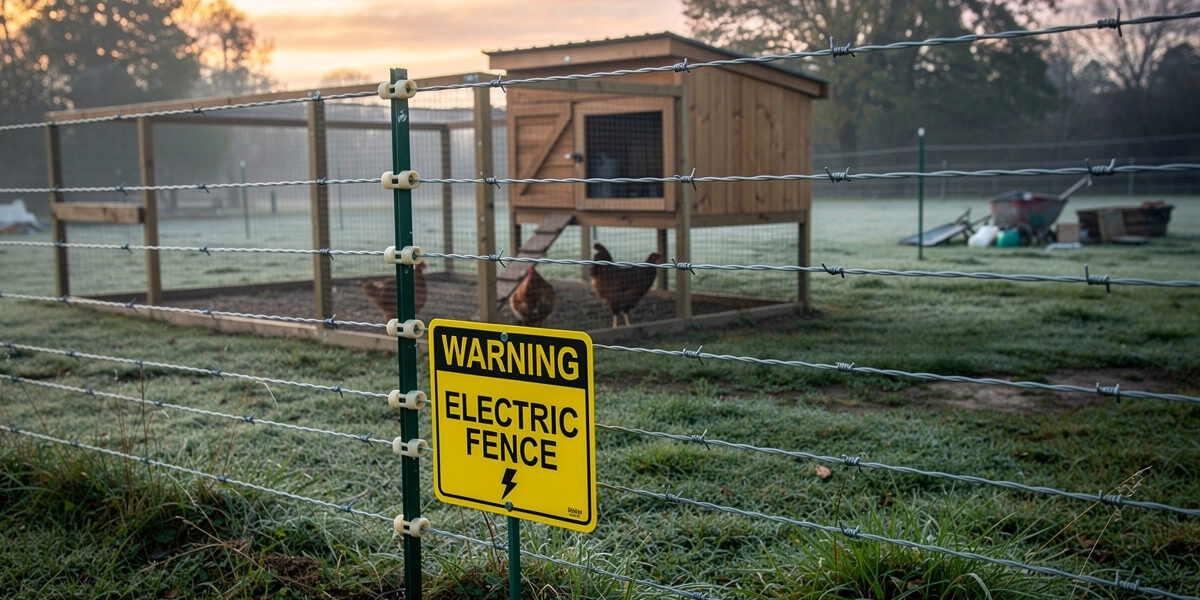
An electric fence around the chicken run is the most reliable defense against bears, persistent dogs, coyotes, and bobcats — a single 4-strand fence deters all four, though bobcats are the one exception worth knowing about (they can jump higher than the fence and occasionally do). A complete 100-foot system, itemized below, runs $325–$420 plus 4–6 hours of installation. This guide covers when to install, the wiring spec that actually works, the legal considerations, and how to keep chickens (and pets) safe inside the system.
Electric fence is the upper end of the predator-defense system. For ground-up basics covering raccoons, hardware cloth, and apron skirts, start with our Predator-Proof Chicken Coop Defense Guide.
When You Need Electric Fence
Electric fence is overkill for most suburban backyard flocks. It is mandatory in three situations:
Bear country. Black bears that have once accessed chickens will return repeatedly — a food-conditioned bear rarely gives up on its own, and the usual outcomes once wildlife officials get involved (trapping, relocation, or worse) are all worse for the bear than not getting in the first place. Standard wood, plastic, and metal coops do not slow a bear meaningfully. Electric fence is the single proven deterrent that does, and it’s the one predator-defense tool on this whole site I’d call genuinely non-negotiable rather than a nice-to-have — I run electric poultry netting on my own rotational run for exactly this reason, though my local pressure is coyote and fox rather than bear, and the joule/voltage math scales up hard once bear fur enters the picture.
Repeated dog attacks. Loose neighborhood dogs that have killed chickens once almost always return. Reporting to animal control is the first step; electric fence is the second when that fails. A single 7,000+ volt shock typically ends the chicken-killing habit permanently.
Active coyote pressure. Coyotes that have hunted your run multiple times become bolder with each attempt. Electric fence breaks the escalation cycle.
A note on bobcats specifically: a bobcat can jump considerably higher than a standard 4-strand fence when it wants to, and documented cases exist of bobcats clearing hot wires entirely. In practice most get deterred the same way other predators do — a curious nose or paw touches a wire during the first investigation pass, and the fence never gets tested again — but it’s not the airtight physical barrier against bobcats that it is against a bear or a dog that simply can’t jump that high. If bobcat pressure is active and persistent, pair the fence with full run coverage rather than relying on the fence alone.
For one-off raccoon, fox, or hawk pressure, traditional defenses (hardware cloth, apron skirt, latches) are sufficient and simpler. Save electric fence for predators that defeat those defenses.
4-Strand Wire Layout
The standard layout that stops bears, dogs, and coyotes:
| Strand | Height | Stops | Notes |
|---|---|---|---|
| 1 (lowest) | 6" | Skunks, raccoons, low-stoop dogs | Critical for ground-level threats |
| 2 | 14" | Foxes, coyotes, smaller dogs | Body-shock height for medium predators |
| 3 | 22" | Coyotes, large dogs, lunging deer | Chest height for most predators |
| 4 (highest) | 32" | Bears, jumping dogs | Bear-nose height; most important strand for bear country |
For bear country, add a 5th strand at 44" (bear-shoulder height) and switch to higher-voltage chargers (8,000–10,000V) for thicker bear fur penetration. Extension guidance for bear-deterrent fencing puts the floor at 0.5–0.7 joules and 5,000–7,000 volts minimum, with the wire spacing and heights above already in that range — the BearWise electric-fencing guide and Texas A&M AgriLife’s bear-fence guide both cover the specifics if you’re dialing in a system for confirmed bear pressure.
One detail both of those sources flag that a lot of DIY layouts miss: in dry soil, a bear (or any predator) standing on dry ground doesn’t complete the circuit well, so the fence delivers a weaker shock than the voltage reading suggests. The fix is a grounding apron — a 3-foot-wide strip of chicken wire or hardware cloth laid on the ground just outside the fence line and wired to the ground system — so anything that steps on it while touching a hot wire gets the full shock regardless of soil moisture. Worth the extra hour of work if your run sits on sandy or rocky ground that dries out fast.
Components and Costs
A complete 100'-perimeter 4-strand system:
- Fence charger: 0.5–1 joule output, $80–$150. Solar-powered units add $50–$80 but eliminate wiring.
- Wire: 17-gauge galvanized fence wire, ~$25 per 100' per strand. For 4 strands × 100' = $100.
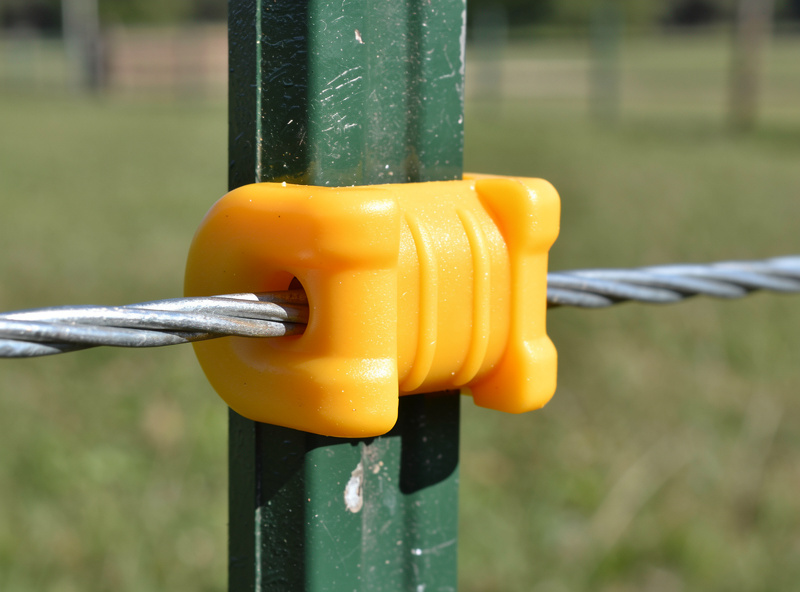
- Insulators: $1–$2 each, mounted on every fence post; ~30 insulators for 100' perimeter = $40.
- Fence posts: step-in plastic posts ($3 each, ~15 posts) or T-posts ($6 each, ~10 posts). Budget $45.
- Ground rod: 6-foot copper-clad ground rod, $20.
- Charger-to-fence connector wire: $10.
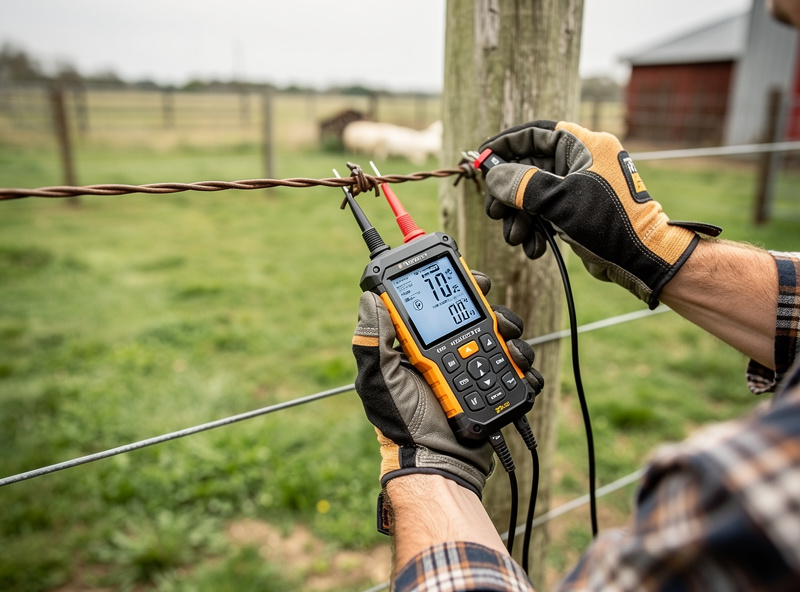
- Voltage tester: $15–$25. Mandatory — you cannot "feel" whether the fence is hot.
- Warning signs: $15–$30 (legally required in most jurisdictions).
Total: $325–$420 for a complete 100' system, adding up the line items above. Larger perimeters scale linearly on wire and posts but use the same charger.
Choosing a Fence Charger
Charger output is measured in joules. The right size:
- 0.25 joules: small backyards (under 50'), no bear pressure. Cheapest option.
- 0.5 joules: standard 100–300' perimeter, deters dogs, coyotes, foxes.
- 1.0 joules: bear country, larger perimeters (300–500').
- 2.0+ joules: commercial-scale or active bear pressure.
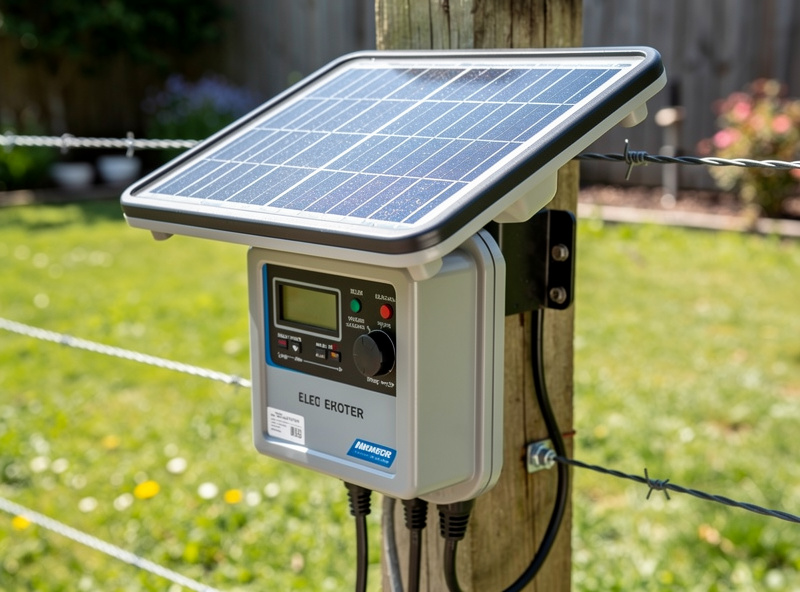
Plug-in chargers are cheaper but require running power to the fence location. Solar chargers cost more but install anywhere; the panel charges a built-in battery during the day, runs the fence overnight when bears and coyotes hunt.
Three real, currently-available models worth knowing by name rather than just spec: Parmak Magnum 12 U.O. (12V battery-powered — not plug-in, despite what some retailers imply — 1.1 joules on low output up to 3.1+ joules on high, roughly $149) is the workhorse pick for bear or heavy coyote pressure and runs off a car-battery-style 12V source you charge or swap. Patriot PMX50 is the straightforward AC plug-in option (0.5 joule output, roughly $90–$105) for a run within reach of an outlet. For a self-contained solar unit, the Patriot SolarGuard 150 (0.15 joule, integrated panel and battery in one case, roughly $190) covers small perimeters and light predator pressure, but its joule rating sits below what I’d want facing a determined coyote or bear — for solar in bear country, size up to a higher-joule SolarGuard model rather than assuming any solar unit will do. Chargers in this category generally hold up for years with basic maintenance (battery care on solar/battery units, keeping terminals clean), but I wouldn’t quote a specific service-life number without a source backing it.
Installation Steps
- Plan the perimeter. Walk the run boundary; identify post placement every 8–10 feet. Note ground variation (fences need consistent strand height; uneven ground requires extra posts to maintain spacing).
- Drive ground rod. 6-foot copper-clad rod, driven into soil at least 4 feet deep, ideally near the charger. Without proper grounding, the fence does not deliver shocks.
- Set posts. Step-in posts go in by foot pressure. T-posts need a post pounder. Spacing 8–10 feet on flat ground, closer (6 feet) on slopes.
- Mount insulators. Screw or clip insulators to posts at the heights from the table above. All 4 (or 5) heights on every post.
- Run wire. Pull each strand through every insulator, anchor at corners with strain-relief insulators. Keep tension snug but not tight enough to bend posts.
- Connect to charger. Charger has two terminals: ground (to the ground rod) and fence (to the wires). Connect all 4 strands to the fence terminal, in parallel, so they all carry voltage.
- Test. Use a voltage tester to confirm each strand carries 5,000+ volts (7,000+ for bear country). Walk the perimeter; touch the tester to each strand and check the reading.
- Install warning signs. Every 50 feet of fence, plus on every gate and access point.
Keeping Chickens Safe Inside
Electric fence is for the run perimeter, not inside the chicken area. Chickens that touch a hot fence get a painful shock; repeated shocks cause stress and laying drops. Two configurations work:
Outside-perimeter system. Run the electric fence around the outside of the chicken run, with the run wall (hardware cloth) between the fence and the chickens. Chickens cannot reach the wires; predators must penetrate both the wall and the fence.
Standalone perimeter system. Run the electric fence as a standalone perimeter 3–4 feet outside the run wall, with no wall behind. Predators hit the fence first. Chickens inside the run never contact the wires. This is cheaper to install but less secure.
Never install electric fence wires inside the chicken run or attached to the run walls themselves.
Legal and Insurance Considerations
Most jurisdictions allow electric fences for agricultural and residential animal containment but with restrictions:
- Warning signs every 50' are usually legally required.
- Maximum voltage may be capped in residential zones (often 8,000V max) — check local code.
- Setback from property lines often required (5–10 feet from a public road or shared boundary).
- Charger safety compliance — commercial chargers sold in the US should be UL 69-listed (the safety standard for electric-fence controllers); look for the UL mark rather than assuming, since it governs shock duration and pulse safety limits.
Insurance: notify your homeowner's insurance before installing. Coverage and premium impact vary by carrier — some require nothing more than notification, others want to see warning signage and code-compliant installation. Don’t assume; ask. Liability for someone touching the fence is generally lower risk with signs posted, but that’s not a substitute for actually checking your policy.
Maintenance Routine
Weekly: walk the fence with a voltage tester. Verify each strand carries full voltage. Trim any plant growth touching the wires (vegetation drains voltage; this is the #1 cause of fence failures) — this is the exact same weekly habit I’ve got for my own electric poultry netting on the rotational run, and it’s the check I skip most often to my later regret. A fence that reads fine in July can be quietly grounded out by August growth nobody noticed.
Monthly: inspect insulators for cracks or corrosion. Replace any that look damaged. Verify ground rod connection is tight.
Seasonally: after winter, re-tension wires that loosened with cold contraction. After summer storms, walk the entire perimeter for fallen branches or debris on the wires. After heavy rain, check the ground rod is still in damp soil (dry ground reduces fence effectiveness).
Annually (solar units): replace the rechargeable battery if voltage drops below spec.
Frequently Asked Questions
Will an electric fence keep predators out of a chicken coop?
Yes — a 4-strand electric fence at heights 6, 14, 22, and 32 inches stops bears, dogs, coyotes, and foxes simultaneously. It is the only reliable defense against bears specifically, and the most effective against persistent loose dogs.
How much does it cost to install an electric fence around a chicken run?
A complete 100-foot perimeter 4-strand system costs $325-420 including charger (0.5-1 joule), wire, insulators, posts, ground rod, voltage tester, and warning signs. Larger perimeters scale linearly on wire and posts but use the same charger.
Do electric fences hurt chickens?
Yes, contact causes a painful shock. Install the fence outside the run perimeter with the run wall (hardware cloth) between the fence and the chickens, or as a standalone perimeter 3-4 feet outside the run. Never install electric wires inside or attached to the run walls.
What voltage stops a bear from a chicken coop?
7,000-10,000 volts is required to penetrate bear fur and deliver an effective shock. Use a 1-joule or higher charger and a 4 or 5 strand layout with the highest strand at 32-44 inches (bear nose to shoulder height).
Solar or plug-in fence charger for a chicken run?
Solar is best for runs without nearby power outlets — installs anywhere, runs overnight on a built-in battery. Plug-in is cheaper (roughly $90-150 vs $190+ for a comparable solar unit) and reliable for runs near a power source. Match the joule rating to your predator pressure either way — a low-joule solar unit is not automatically equivalent to a higher-joule plug-in charger.
Are electric fences legal for backyard chicken keepers?
In most jurisdictions yes, with restrictions: warning signs every 50 feet, maximum voltage caps in residential zones (often 8,000V), setback from property lines, and a charger that’s UL 69-listed for electric-fence-controller safety. Check local code and notify your homeowner insurance before installing.
Related Articles
- Predator-Proof Chicken Coop Defense Guide
- Raccoon-Proof Coop Latches
- Hardware Cloth vs Chicken Wire
- Underground Predator Barriers
- Motion-Sensor Coop Lights
Related Guides
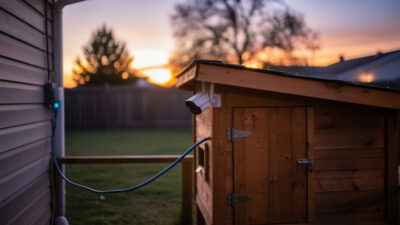
Smart Coop Cameras: Network Setup for Reliable Predator Alerts
A reliable smart coop camera setup needs three things your default home Wi-Fi rarely provides: stable signal at the coop…
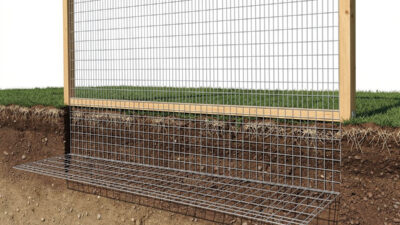
Underground Predator Barriers: Apron & Footer Designs
Foxes and coyotes can dig under an unprotected chicken run wall in well under an hour once they commit to…
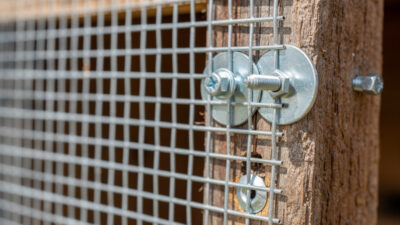
Hardware Cloth vs Chicken Wire: Why It Matters
Chicken wire keeps chickens IN. Hardware cloth keeps predators OUT. 1/2-inch galvanized hardware cloth is the only mesh that reliably…