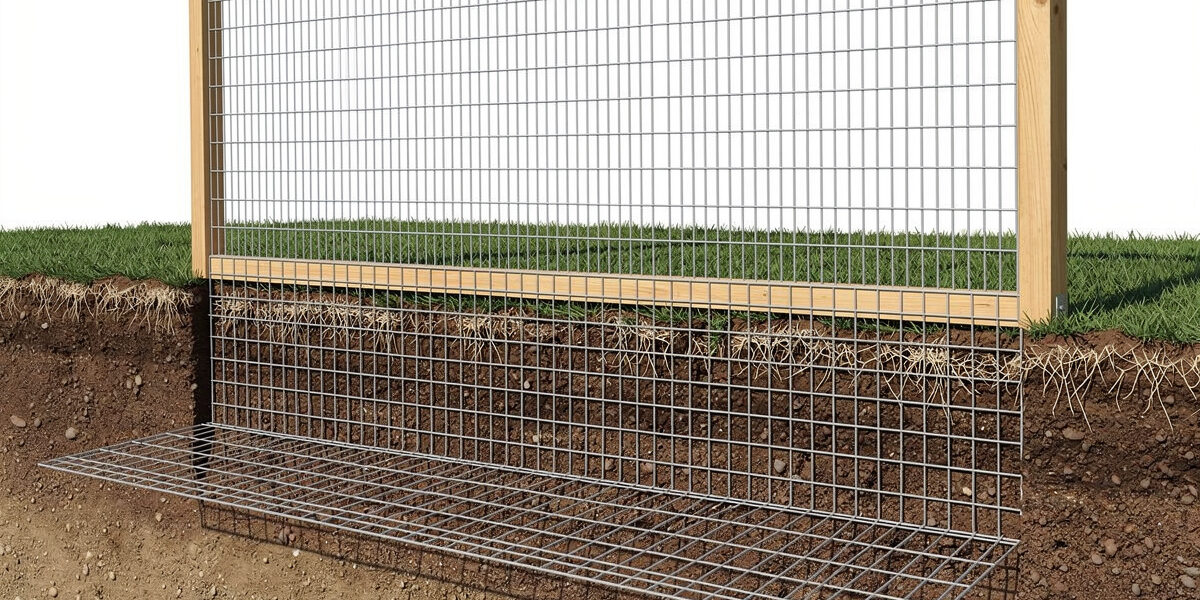
Foxes and coyotes can dig under an unprotected chicken run wall in well under an hour once they commit to a spot. The defense: a buried apron skirt — 12 inches of hardware cloth bent outward and buried 4 inches deep around the entire run perimeter. Predators dig down at the wall, hit the apron, and give up. This guide covers the apron design that actually works, the alternatives (dug-in trenches, concrete footings), and the install pattern that takes 4–6 hours for a typical 8-bird run. I run a buried apron around my own welded run, and it is the single upgrade that ended my predator losses for good.
The buried apron is one piece of the layered predator defense — for the full system, see Predator-Proof Chicken Coop Defense Guide.
As an Amazon Associate I earn from qualifying purchases.
Why Underground Barriers Are Mandatory
Foxes are evolved to dig under fences. So are coyotes, raccoons (occasionally), badgers, skunks, and rats. A coop with hardware cloth on the walls and roof but no underground barrier is breached at the ground line, every time. Mine went in after a fox dug under the run wall in a single night and I lost two birds; with the apron down it has never been breached again.
No formal field study puts an exact stopwatch on this, but the relative pattern is consistent across extension guidance and keeper-reported experience:
- Foxes: fast, motivated diggers — a vertical fence with no underground barrier is typically breached in well under an hour once a fox commits to a spot.
- Coyotes: similarly fast and often work a fence line methodically until they find a soft spot.
- Raccoons: usually do not dig as a first choice but will if other paths fail; slower and less persistent diggers than foxes or coyotes.
- Skunks: can work a partial entry quickly at a soft edge (skunks rarely take birds; they take eggs).
- Rats: tunnel continuously over weeks rather than in one sitting; eventually find a path if the barrier has any gap.
An apron skirt converts "dig under in 20 minutes" to "cannot dig under at all." The mechanism: when the predator digs at the wall and hits the horizontal mesh, the predator instinct is "wrong direction" rather than "dig deeper" — they do not understand to back up and start a new tunnel further out.
The Apron Design That Works
The standard buried apron design:
- Material: 1/2" hardware cloth (or 1" welded wire if cost is critical), 19-gauge minimum, galvanized.
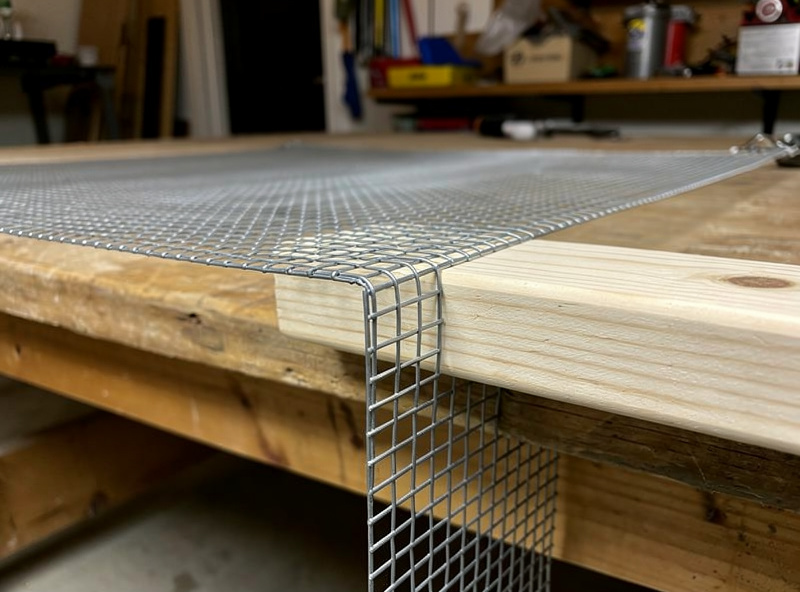
- Width: 12 inches, bent outward (away from the run) at a 90° angle.
- Burial depth: 4 inches. Deeper is unnecessary; shallower allows surface erosion to expose the apron.
- Attachment to run wall: overlap 2" with the run-wall hardware cloth and screw through with washers every 4 inches.
The 12" outward dimension is the key spec. Predators starting their dig at the wall hit the apron after 1–2 inches of digging; they then have to dig 12 inches outward before they could clear the apron — and the deeper they dig, the further they would need to extend the trench. Almost no predator pushes through.
Extending the apron beyond 12" (say, 18" or 24") provides marginal additional defense but is not necessary. 12" is the cost-effective sweet spot.
Step-by-Step Install
For an 8'×8' run perimeter (32 linear feet of apron):
- Buy materials: 32 linear feet × 12" wide = 32 sq ft of hardware cloth ($35–$50). 1 lb of fender washers + 1.5" deck screws ($15). Optional: stakes or landscape pins to hold the apron flat ($10).
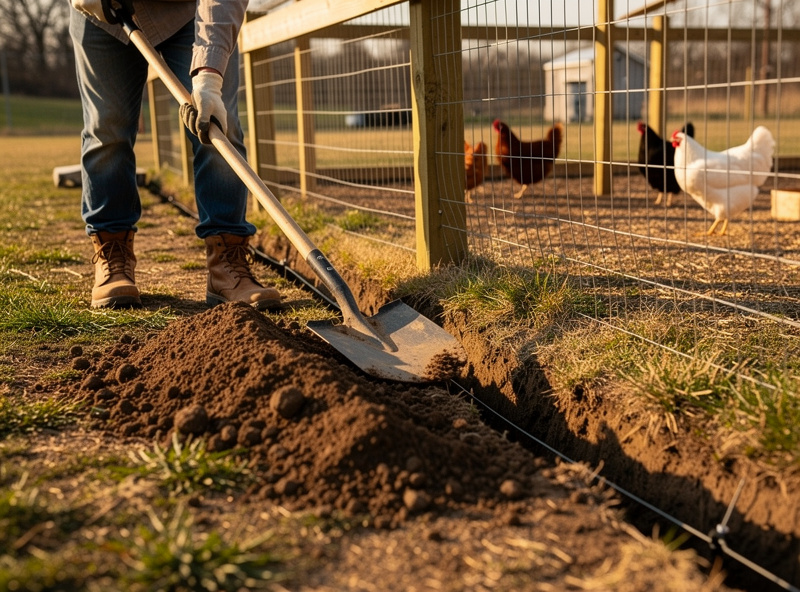
- Trench around the run. Dig a 4"-deep trench 12" out from the run wall, all the way around. Use a flat shovel; a typical 32' trench takes 2–3 hours of work. Save the dirt — you will use it for backfill.
- Cut the apron strip. Use tin snips to cut hardware cloth into 12"-wide × 32'-long strips. Most rolls are 36" wide, so one cut per side gives you three 12" strips per roll.
- Bend the apron. Bend each strip 90° along the long axis. The bend should be sharp, not gradual — a 2×4 across a workbench helps make crisp bends.
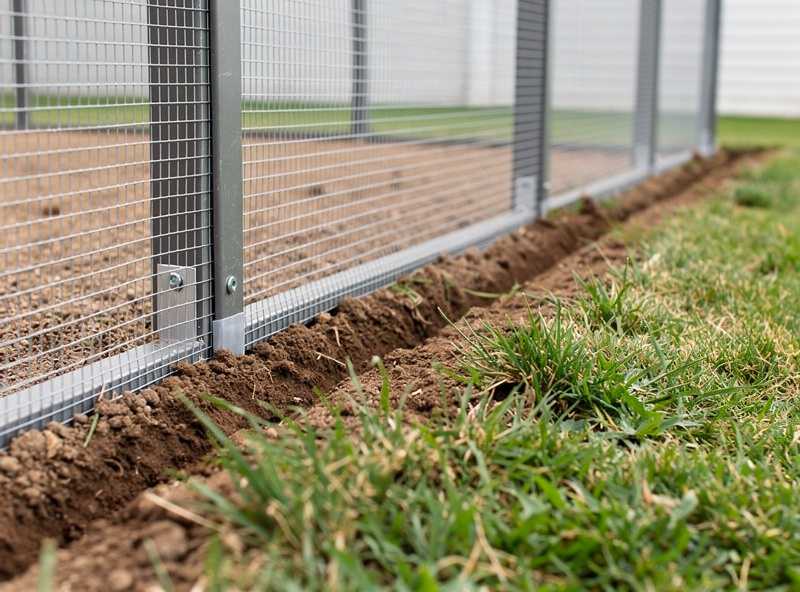
- Position and attach. Lay the apron in the trench with the vertical edge against the run wall. Screw the vertical edge to the run-wall hardware cloth using fender washers, every 4 inches. The horizontal edge sits flat in the trench bottom.
- Stake the apron flat. Use landscape pins or homemade staples (16-gauge wire bent into U-shapes) every 24 inches along the buried edge. This keeps the apron flat against the soil while you backfill.
- Backfill with dirt. Cover the trench with the dirt you removed. Tamp lightly. Add 1" of soil over the top so grass can re-grow.
- Test. Pull on the apron edge with two hands — it should not move. If it pulls up, add more screws or stakes.
Total install time: 4–6 hours for an 8'×8' run. Single biggest time component is digging the trench; rented power trenchers cut this to under 1 hour but cost $50–$80/day.
Alternatives to Buried Aprons
If digging is impractical (clay soil, rock, tree roots), three alternatives provide partial protection:
Surface apron (no burial). Lay the 12" apron flat on the ground extending outward from the run wall, weight it with rocks or concrete pavers. Less effective than a buried apron — wind, snow, or grass growth lifts it over time — but it does provide real deterrence against less determined diggers. Best for rented properties where digging is not allowed.
Concrete footing. Pour a concrete footing 6" deep × 6" wide all around the run perimeter, with the run wall built on top. Eliminates digging entirely but locks the run in place permanently. Cost: $2–$4 per linear foot in materials, plus labor.
Gravel-filled trench. Dig a 6"-deep × 6"-wide trench around the run perimeter and fill with crushed stone (3/4" minus). Predators find the gravel uncomfortable to dig through and often abort. Less reliable than apron skirts but easier to install in rocky soil.
Combination: for the highest threat level, combine buried apron skirt + concrete footing. Foxes and coyotes give up at the apron; even if they dug to the apron edge (12" out), the concrete blocks further progress.
Installing in Frozen or Rocky Ground
Most predator-proofing guides assume you’re digging in workable soil in a mild climate. If you’re in a place with a real winter, timing and ground condition change the job more than any tool does.
Frozen ground: a 4″-deep trench is a non-starter once the frost line has set in — a flat shovel bounces off frozen soil, and forcing it usually means a bent shovel before a finished trench. If you’re building or retrofitting a run going into winter, get the apron in during the fall shoulder season while the ground is still workable, or wait for spring thaw. I’ve made the mistake of trying to force a late-autumn install in half-frozen ground; it went in sloppy, and I ended up redoing a section of it properly the following spring once the soil softened.
Rocky or root-filled soil: a spade won’t get a clean 4″ trench through embedded rock or root mass. A mattock or pick-axe for the initial break, followed by the flat shovel to clean the trench, works better than fighting it with the shovel alone. In genuinely bad ground, the gravel-filled-trench alternative above is often more realistic than forcing a full hardware-cloth apron in.
Frost heave is the ongoing cost of a cold-climate apron, not a one-time install problem. Freeze-thaw cycles push buried objects toward the surface over years, which is exactly why the spring inspection in the maintenance routine below isn’t optional in a real winter climate — an apron that was solidly 4″ deep in October can be visibly proud of the soil by the following April.
Apron Maintenance
Buried aprons fail through ground settling, not through predator force. The maintenance:
Spring inspection. Walk the perimeter looking for spots where the apron mesh has become visible above the soil line. Frost heave pushes aprons up over winter. Stomp the apron back down or add 1–2 inches of soil over the exposed area.
After heavy rain. Erosion can expose the apron edge. Same fix: stomp down and add soil.
Annual probe. Once per year, push a long screwdriver into the soil at the run wall — verify the apron is still 4" deep. If you do not hit metal at 4", the apron has shifted and needs re-burying.
Predator activity check. If you find fresh dig marks at the run wall, walk the perimeter looking for an exposed apron edge or a section where the apron is missing entirely. The dig marks tell you exactly where the predator targeted.
Frequently Asked Questions
How deep should an underground predator barrier be?
4 inches deep is the standard for buried aprons. Deeper is unnecessary; shallower allows surface erosion to expose the apron. The width matters more than depth — 12 inches outward bend is the spec that stops fox and coyote digging.
Will foxes dig under a chicken coop?
Yes — foxes are fast, motivated diggers and will breach an unprotected vertical fence well under an hour once they commit to a spot. The defense is a buried apron skirt: 12 inches of hardware cloth bent outward at 90 degrees and buried 4 inches deep around the run perimeter. Foxes hit the horizontal apron and give up.
What is a chicken coop apron?
An apron is hardware cloth bent outward at the base of a run wall and buried just under the soil surface. It extends 12 inches out from the wall, buried 4 inches deep. Predators digging at the wall hit the apron and cannot tunnel under.
Can I use chicken wire for an underground barrier?
No — chicken wire degrades within 2-3 years underground and is too thin to resist persistent digging. Use 1/2-inch hardware cloth in 19-gauge or thicker, galvanized for outdoor use. Cost is about $1 per square foot.
How much does a buried predator apron cost?
For a typical 8×8 ft run with 32 linear feet of apron, total materials cost $50-75: 32 sq ft hardware cloth ($35-50), washers and deck screws ($15), and optional landscape stakes ($10). Install time is 4-6 hours.
Do I need an apron if my coop floor is concrete?
Probably not for the coop itself, but yes for the attached run unless the run also has a concrete floor. Most predator breaches happen at the run perimeter, not the coop walls. The apron should run around the entire ground-level perimeter where predators could dig.
Related Articles
- Predator-Proof Chicken Coop Defense Guide
- Hardware Cloth vs Chicken Wire
- Raccoon-Proof Coop Latches
- Electric Fence for Chickens
- Chicken Run Guide: Sizing & Materials
Related Guides
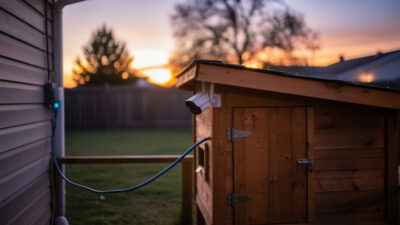
Smart Coop Cameras: Network Setup for Reliable Predator Alerts
A reliable smart coop camera setup needs three things your default home Wi-Fi rarely provides: stable signal at the coop…
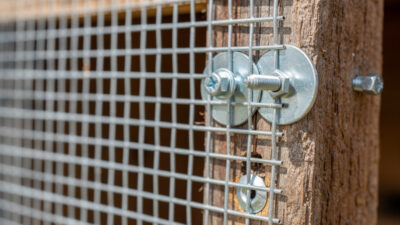
Hardware Cloth vs Chicken Wire: Why It Matters
Chicken wire keeps chickens IN. Hardware cloth keeps predators OUT. 1/2-inch galvanized hardware cloth is the only mesh that reliably…
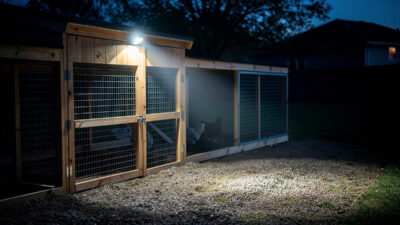
Motion-Sensor Coop Lights for Predator Deterrence
A 200+ lumen motion-activated light mounted at the chicken run perimeter is a genuine short-term deterrent for raccoons, foxes, and…