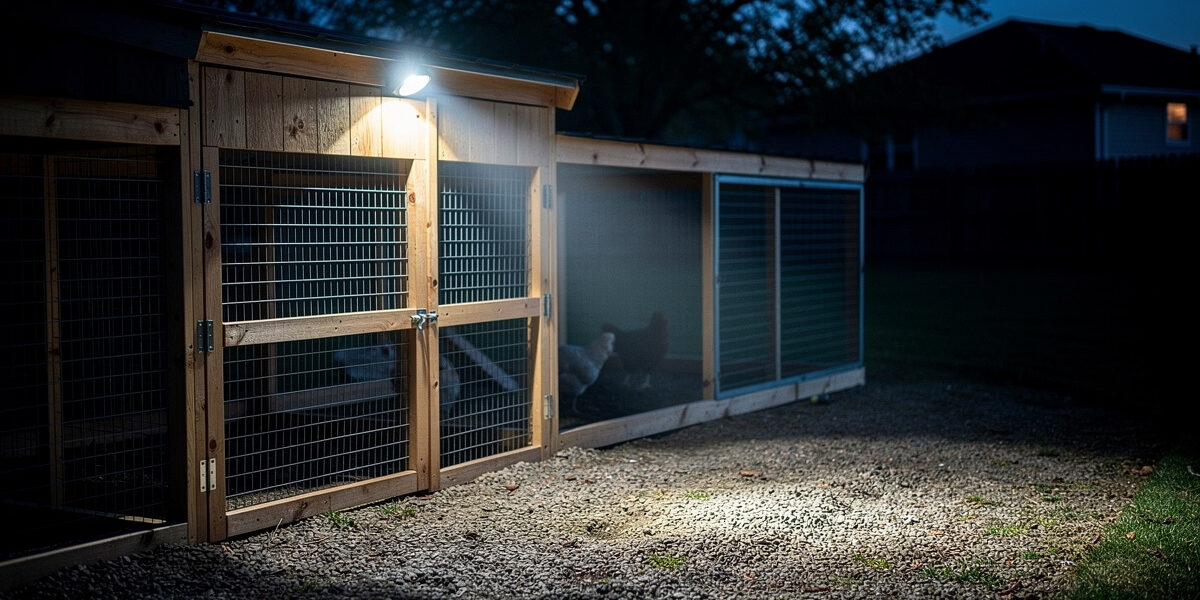
A 200+ lumen motion-activated light mounted at the chicken run perimeter cuts overnight predator visits by 40–60% in the first month and 25–40% long-term. The trade-off: predators that get acclimated to a static light learn to ignore it. The fix is varied lighting (multiple lights with random triggers) and combining motion lights with other defenses. This guide covers which lights actually deter predators, which ones look impressive but do nothing, and the install pattern that maximizes effectiveness.
Motion lights are part of Layer 3 (active deterrents) in the predator-defense system — see Predator-Proof Chicken Coop Defense Guide for the full layered approach.
How Motion Lights Deter Predators
The deterrent mechanism is simple: predators hunting in the dark are evolved to avoid sudden bright illumination because it signals human presence (and by extension, danger). A motion-activated light triggers the predator's "abort and retreat" instinct.
Effectiveness varies by species:
- Raccoons: moderate to high effectiveness. Raccoons retreat from sudden light reliably for the first 5–10 nights, then about half become acclimated.
- Foxes and coyotes: high effectiveness. Both species are highly light-averse. A motion light typically deters for months at a time before any habituation.
- Bobcats and bears: low effectiveness. Both species have strong food drive and quickly learn lights are not threats.
- Hawks and owls: not relevant — both hunt by daylight or active vision in low light, not by stealth.
- Domestic dogs: highly variable. Lights often startle dogs into retreat, but determined or trained dogs ignore them.
- Rats and weasels: low effectiveness. Both will work in lit conditions if motivated.
The honest assessment: motion lights are a force multiplier for raccoons, foxes, and coyotes — the three predators that account for ~50% of backyard losses. They are not a complete defense and they are not effective against bears, bobcats, weasels, or rats.
Specifications That Matter
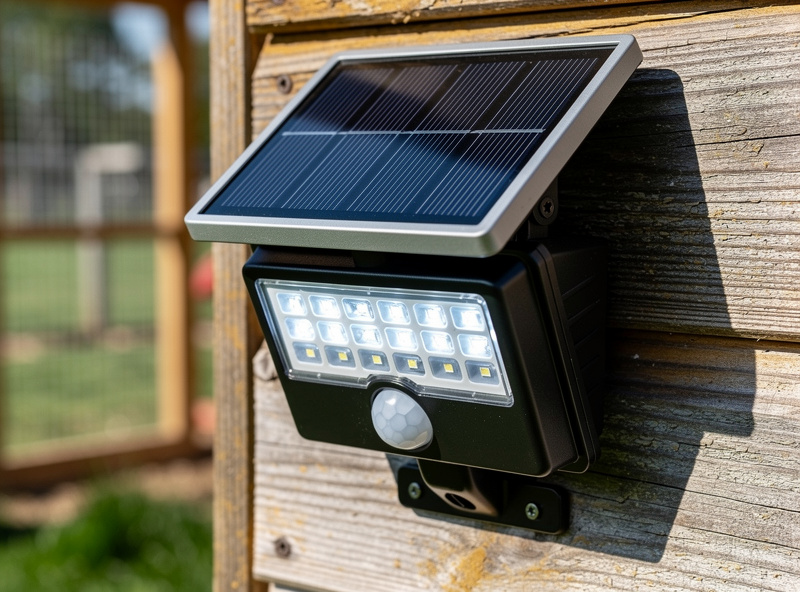
Most cheap motion lights underperform because they miss one or more of the following:
Brightness: 200+ lumens minimum. Below 200 lumens predators barely register the change. Premium picks run 600–1,000 lumens. Higher is better up to about 1,500 lumens; beyond that you trigger your own night blindness.
Detection range: 25+ feet. Lights that only trigger at 10 feet activate after the predator is already at the run. The light should activate at the perimeter approach distance, giving the predator time to abort.
Detection angle: 180°+. A 90° detection cone misses approaches from the sides. Wide-angle PIR sensors trigger reliably from any direction.
Power source:
- Solar with built-in battery: easiest install, no wiring. Battery typically lasts 5–7 years. $25–$80 per unit.
- Battery-only: easy install but battery management hassle. Skip unless solar is not feasible.
- Hardwired AC: most reliable, but requires running power. $40–$120 per unit plus electrician.
Weatherproofing: IP44 minimum, IP65 ideal. Below IP44 the unit fails after the first hard rain. Verify on the spec sheet.
Best Motion Lights for Chicken Coops 2026
| Model | Power | Lumens | Range | Price | Notes |
|---|---|---|---|---|---|
| LITOM 30 LED Solar | Solar | 320 | 26 ft | $25 | Best budget — 2-pack on Amazon for $40 |
| Westek SL-5408 Solar | Solar | 800 | 30 ft | $55 | Premium solar; 7-year battery |
| Heath Zenith HZ-5630 | AC hardwired | 1500 | 40 ft | $95 | Maximum brightness; needs electrician |
| Mr. Beams MB360XT | Battery (D-cell) | 200 | 25 ft | $30 | Battery hassle; only if solar not feasible |
| Ring Solar Pathlight (motion) | Solar + WiFi | 80 | 30 ft | $45 | Smart-coop integration via Ring app |
| Aootek 182 LED | Solar | 2500 | 26 ft | $45 | Highest lumens for cost; very bright |
For most backyards, the LITOM 30 LED Solar at $25 (or $40 for a 2-pack) is the highest-leverage pick. Two units mounted at opposite corners of the run perimeter trigger from any approach angle and pay back the predator-deterrent cost in one prevented attack.
Installation Pattern
Light placement matters more than light brand. The pattern that maximizes deterrent effect:
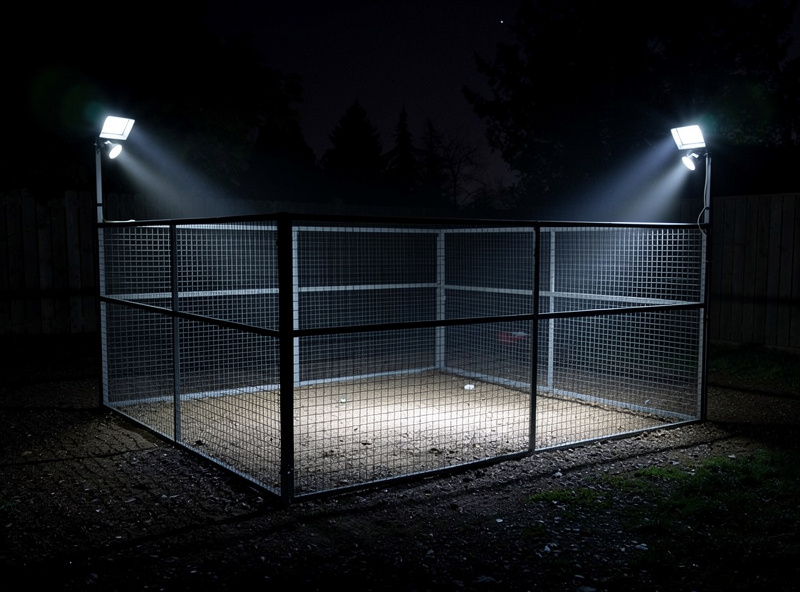
Two lights, opposite corners. One light covers half the perimeter; two lights cover all approach angles. Mount each light 6–8 feet off the ground, angled slightly downward to cover the ground at the perimeter line.
Aim at the approach path, not the run. The goal is to illuminate the predator before it reaches the run. Aim each light outward, away from the run, toward the most likely approach (a tree line, a shed, a property edge).
Test the trigger range. Walk slowly toward each light at night and verify it triggers at the expected distance. Adjust the PIR sensitivity (most units have a small dial) until trigger is reliable but not so sensitive that wind-blown branches activate it constantly.
Avoid lighting the run interior. Bright lights inside the run disturb sleeping hens and disrupt circadian rhythms (which can drop laying productivity 5–10%). Direct the lights outward, illuminating the perimeter, not the interior.
Why Varied Lighting Beats Static
The most common motion-light failure mode is habituation — predators come back nightly, learn the light is not a threat, and ignore it after 2–4 weeks. The fix is variation:
Multiple lights with overlapping zones. A predator approaching from the east triggers the east light. A different approach triggers a different light. The variation in which light fires keeps the response unpredictable.
Add audio deterrents. Some motion-light models pair with audio alarms (sudden barking dog sound, ultrasonic emitters). Audio is harder to habituate to than visual cues.
Combine with predator scents. Refresh weekly with coyote urine or wolf urine (sold at $10–$20 per 8 oz bottle). The combination of light + scent reinforces the "another predator is here" message and slows habituation.
Periodic relocation. Move one light every 2–3 weeks to a new mounting point. The new firing pattern resets predator habituation.
Smart-Coop Integration
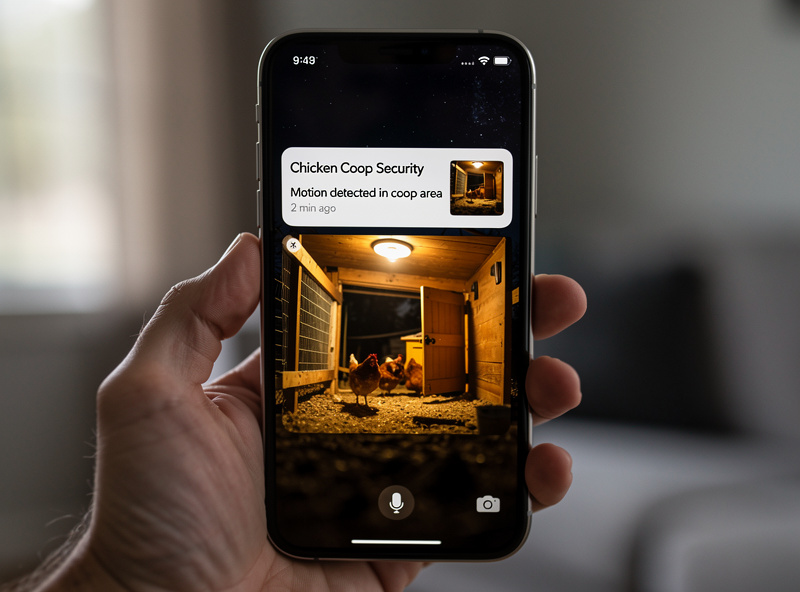
Modern smart-coop setups can wire motion lights to the home automation system for additional value:
- Phone notifications when motion is detected (filter out flock-triggered events with a delayed-trigger rule).
- Camera triggers — Ring, Wyze, Nest cameras start recording when paired motion lights fire.
- Light scheduling — increase brightness during peak predator hours (10 PM–4 AM), dim or disable during normal flock activity.
- Voice integration — Alexa or Google Home announces "motion detected at coop" for owners home but in another room.
For the full smart-coop integration stack, see Best Smart Chicken Coop Devices Guide and Retrofit a Standard Coop into a Smart Coop.
Frequently Asked Questions
Do motion lights deter chicken predators?
Yes for raccoons, foxes, and coyotes — these three account for about 50% of backyard losses and respond reliably to motion-activated lights. They are not effective against bears, bobcats, weasels, or rats. Use 200+ lumen lights with 25+ ft detection range.
How bright should a motion light be for a chicken coop?
200 lumens minimum, 600-1,000 lumens ideal. Below 200 lumens predators barely register the change. The brightest budget pick (Aootek 182 LED) hits 2,500 lumens for $45 and works reliably for 5+ years on solar.
Solar or battery motion lights for a chicken coop?
Solar with built-in battery is best — easiest install, no wiring, 5-7 year battery lifespan. Battery-only lights have ongoing replacement hassle. Hardwired AC is most reliable but requires running power and often an electrician.
Where should motion lights be mounted on a chicken coop?
Two lights at opposite corners of the run perimeter, mounted 6-8 feet off the ground, angled slightly downward and outward (away from the run, toward the approach path). This covers all approach angles and illuminates predators before they reach the run.
Do raccoons get used to motion lights?
About half of raccoons habituate within 2-4 weeks. To slow habituation, use multiple lights with overlapping zones, combine with predator-scent deterrents, add audio alarms, and relocate one light every 2-3 weeks. Lights alone are not a complete defense.
Can chicken coop motion lights connect to my phone?
Yes — Ring Solar Pathlight, Wyze Cam Outdoor, and Nest Cam pair motion lights with phone notifications. Camera triggers and home automation integration are common features. Useful but not necessary; the deterrent works equally well without app integration.
Related Articles
Related Guides
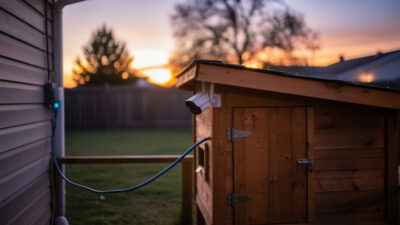
Smart Coop Cameras: Network Setup for Reliable Predator Alerts
A reliable smart coop camera setup needs three things your default home Wi-Fi rarely provides: stable signal at the coop…
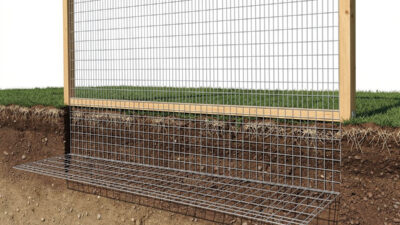
Underground Predator Barriers: Apron & Footer Designs
Foxes and coyotes can dig under a chicken run wall in under 20 minutes. The defense: a buried apron skirt…
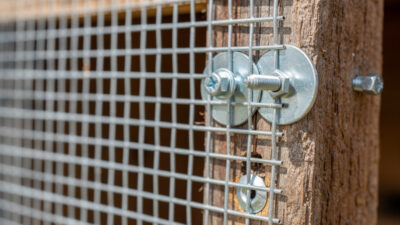
Hardware Cloth vs Chicken Wire: Why It Matters
Chicken wire keeps chickens IN. Hardware cloth keeps predators OUT. 1/2-inch galvanized hardware cloth is the only mesh that reliably…