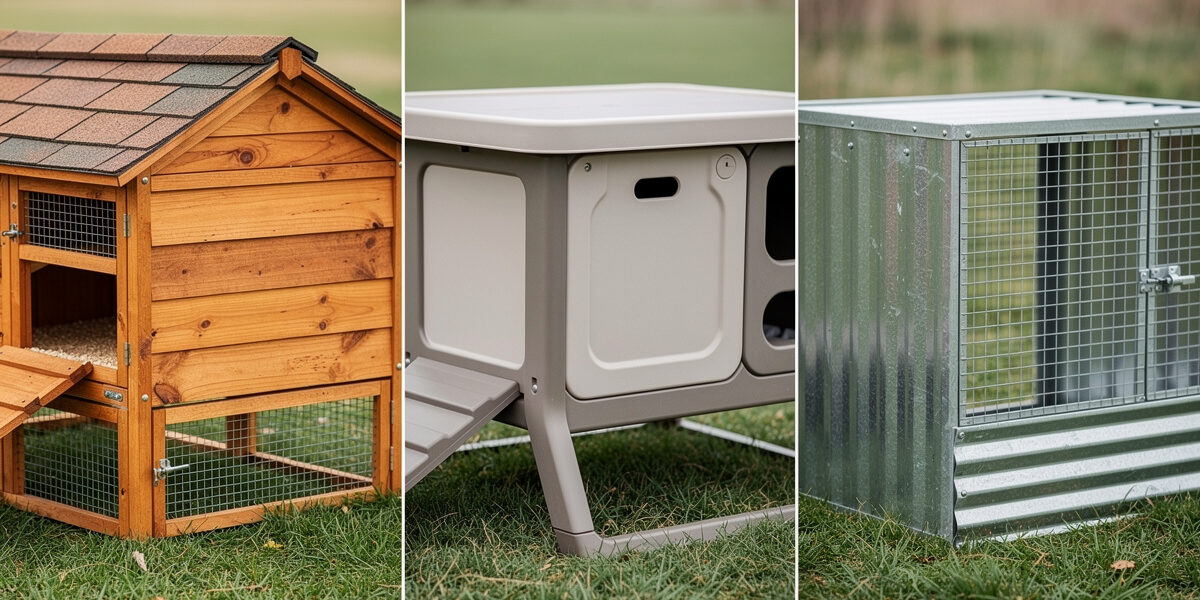
For most backyard flocks, treated wood is still the best chicken coop material — easy to modify, cheapest upfront, and quiet in any weather. Plastic (HDPE) wins for mite resistance and cleaning speed, metal wins for predator resistance and lifespan, but each has trade-offs that depend on your climate, flock size, and how much time you want to spend on maintenance. This guide compares all three across the metrics that actually matter — cost, durability, mite resistance, predator resistance, climate fit — and tells you which material to pick for each common situation. I run my own flock in a self-built, insulated wood walk-in through Swedish winters, so the wood section below comes from years of living with the material; the plastic and metal sections lean on what keepers running those materials consistently report plus the manufacturer and materials-science data that backs it up.
For the broader coop decision, including which prefab models use which materials, see our Best Chicken Coops 2026 Buyers Guide. For DIY builds, our DIY Chicken Coop Plans guide covers wood-based projects exclusively because plastic and metal builds are not practical at the DIY scale.
As an Amazon Associate I earn from qualifying purchases.
Material Quick Comparison
| Metric | Wood (treated plywood + 2×4) | Plastic (HDPE) | Metal (galvanized steel) |
|---|---|---|---|
| Upfront cost (8-bird coop) | $200–$400 | $400–$900 | $300–$700 |
| Lifespan | 8–12 years | 15–20 years | 15–25 years |
| Annual maintenance hours | 4–6 hrs | 1–2 hrs | 2–4 hrs |
| Mite resistance | Low (wood is porous) | High (smooth, non-porous) | Medium (seams harbor mites) |
| Predator resistance | Medium (gnaw-prone) | Medium (cracks at impact) | High (chew/dig-resistant) |
| Heat retention (winter) | Good (insulating) | Poor (single-wall) | Very poor (conducts heat out) |
| Heat reflection (summer) | Medium | Medium-good (light colors) | Poor (absorbs solar heat) |
| Modifiability (DIY) | High — saw, drill, screw | Low — cracks easily | Low — needs metal tools |
| Sound dampening | Good | Medium | Poor (rain noise) |
| Resale value (used) | Medium | High | High |
Three patterns drop out of the table. Wood wins on upfront cost, climate insulation, and ease of modification — three things that matter most to first-time keepers. Plastic wins on mite resistance and maintenance time — two things that matter most to keepers running 12+ hens. Metal wins on lifespan and predator resistance — two things that matter most in predator-rich rural settings.
Wood Chicken Coops: The Default for Good Reasons
Wood is the historical default and still the right answer for most backyard flocks. The two viable wood types for coops are exterior-grade plywood (1/2" or 5/8" sheets for walls and floors) and pressure-treated 2×4 lumber (for framing and supports only — never in direct chicken contact).
What wood is great at: insulation. A wooden coop holds 5–8°F more heat than an equivalent metal coop on a cold winter night, which means less wattage from your coop heater to keep waterers from freezing. Wood is also dramatically easier to modify — adding a window, a vent, or a new pop door takes 30 minutes with a jigsaw versus 2–3 hours with metal.
What wood is bad at: mite control and predator gnawing. Wood is porous and absorbs droppings, urea, and shed mite bodies into the grain. Once a coop gets a mite outbreak, scrubbing rarely eliminates them — the mites hide in tiny grain pockets and re-emerge weeks later. Predator-wise, raccoons and rats can chew through 1/2" plywood given enough time; this is why every wood coop needs hardware cloth at the vulnerable points (see Hardware Cloth vs Chicken Wire).
Lifespan management. A treated wood coop lasts 8–12 years if you re-stain or re-paint every 2–3 years. Skip the maintenance and lifespan drops to 5–6 years. The single highest-leverage upgrade is a 4"-overhang roof that keeps rain off the wall tops — wood coops with proper overhangs consistently outlast coops with flush-cut roofs, because end grain absorbs water far faster than long grain and is where most exterior wood decay starts, and top-edge cuts on wall panels are exposed end grain. For full DIY guidance, see Wood Chicken Coops: Traditional Picks Compared.
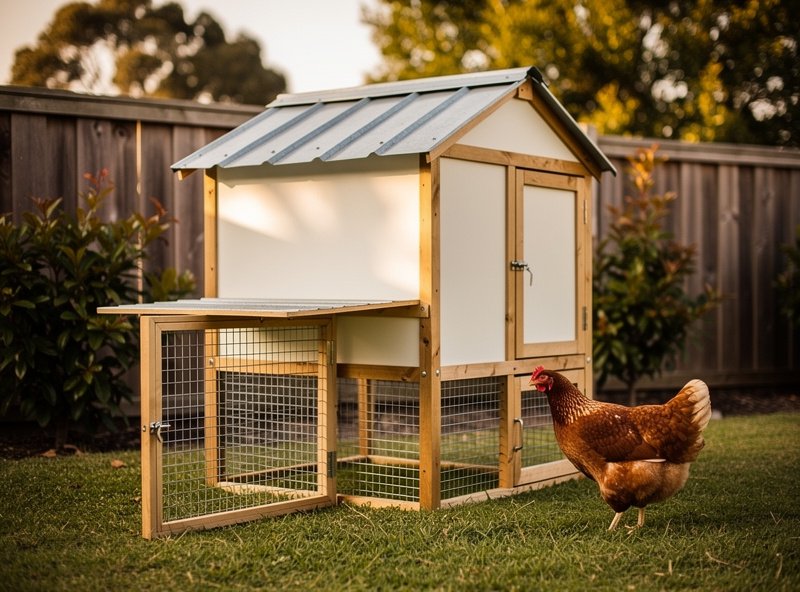
Plastic Chicken Coops: The Mite-Free Premium Option
Plastic chicken coops — almost always made from HDPE (high-density polyethylene) or recycled UV-stabilized resin — are the easiest coops to clean and the most mite-resistant by a wide margin. Omlet, the UK manufacturer, popularized the design with the Eglu in the early 2010s; today there are 6–8 major brands at various price points.
What plastic is great at: cleaning and disease control. A plastic coop wipes clean with a hose and a brush in 10 minutes; the same task takes 45 minutes in a wood coop. Mites cannot embed in HDPE, so disinfecting is one-pass complete. For keepers in humid climates (Southeast US, Pacific Northwest) where mites are chronic, this advantage alone justifies the price premium.
What plastic is bad at: insulation and modification. HDPE has roughly 1/8th the R-value of wood per inch. In sub-freezing climates, an unheated plastic coop drops close to ambient overnight, which means frozen waterers and hens losing meaningfully more body heat to the walls than they would in an insulated wood coop. Plastic coops are also nearly impossible to modify — drilling cracks the panels, screws strip out, and most plastic coops do not accept aftermarket pop doors.
UV degradation. Cheaper plastic coops crack and chalk after 3–5 years in direct sun. Premium HDPE (Omlet, Coopworx, Hatching Time) lasts 15–20 years with no maintenance beyond hose-down cleaning. Mid-tier plastic (Pawhut, some Tractor Supply models) lasts 7–10 years. The price difference is real and worth paying if you live in a high-UV area. For full breakdown, see Plastic Chicken Coops: Pros, Cons & Best Models.
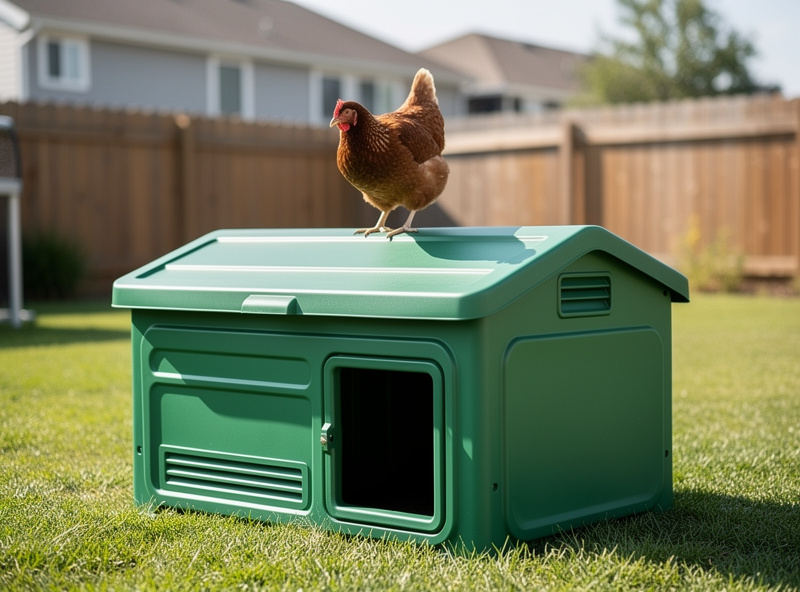
Metal Chicken Coops: The Predator Fortress
Metal chicken coops are typically galvanized steel panels on a steel frame, sometimes with powder-coat finish. They are the dominant choice for rural flocks in predator-rich areas and for production-scale operations.
What metal is great at: predator resistance and lifespan. A galvanized steel coop is essentially impervious to chewing — raccoons, rats, foxes, and weasels cannot breach the walls. Combined with a buried apron skirt and proper latches, metal coops are the only material that can survive overnight black bear pressure (uncommon but real in some regions). Lifespan is also excellent: 15–25 years with no real maintenance beyond inspecting seams and rivets annually.
What metal is bad at: climate. Metal coops conduct heat aggressively. In summer, bare galvanized steel under direct sun reaches 140°F+ surface temperature, and the interior of an uninsulated metal coop can hit 110°F by mid-afternoon — lethal for hens. In winter, the same metal walls dump heat to the outside as fast as the hens generate it, requiring more heating wattage than wood.
Sound and condensation. Rain on a metal roof is loud enough to stress hens during storms. Cold metal walls condense humidity from hen breath into liquid water that drips onto bedding, causing mold and frostbite. Both problems are solvable: rigid foam insulation panels glued to the inside walls add R-5 insulation, dampen rain noise, and stop condensation. This adds $80–$150 to a typical 8-bird metal coop and is a near-mandatory upgrade in cold or wet climates. For specifics, see Metal Chicken Coops: Durability & Heat Concerns.
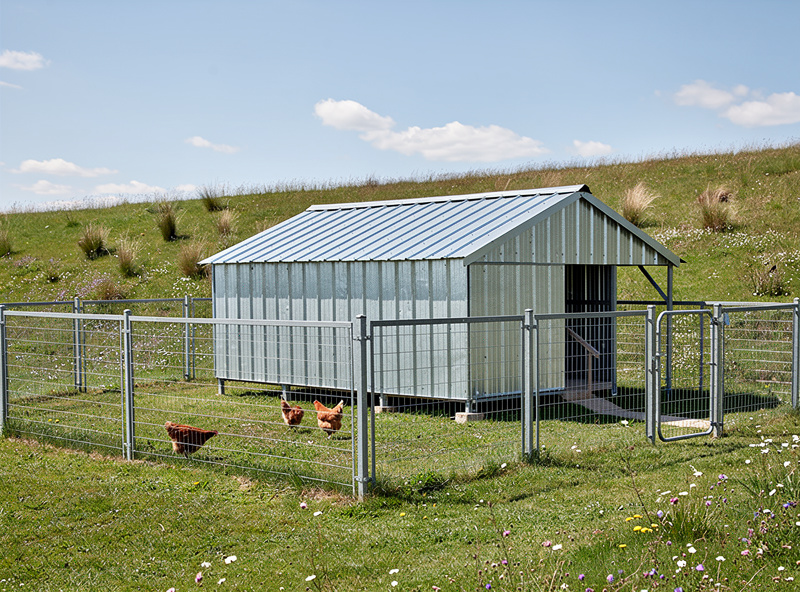
Material Selection by Climate
The honest answer is climate-dependent. Here is the matrix:
| Climate | Best Material | Second Choice | Why |
|---|---|---|---|
| Cold (USDA zones 3–5, sub-zero winters) | Wood (insulated) | Metal + foam insulation | Insulation matters more than mite resistance |
| Hot & dry (Southwest, zones 9–10) | Wood with shaded roof | Light-colored plastic | Both stay coolest in direct sun |
| Hot & humid (Southeast, zones 8–10) | Plastic (HDPE) | Wood with rigorous mite protocol | Mite pressure makes plastic the clear winner |
| Pacific Northwest (mild, very wet) | Plastic (HDPE) | Wood with metal roof | Wet conditions accelerate wood rot |
| Rural with active predator pressure | Metal (insulated) | Wood with hardware cloth everywhere | Predator resistance dominates |
| Suburban backyard, mixed climate | Wood | Plastic if owner travels frequently | Cost and modifiability win |
Climate is not the only factor — flock size and your time budget matter too. The next sections walk through cost-over-time and predator considerations.
10-Year Total Cost of Ownership
Upfront price is misleading. Here is a reasonable estimate of 10-year total cost (purchase + maintenance + replacement) for an 8-bird coop, based on typical lifespans and maintenance schedules for each tier:
| Material | Purchase | Annual Maintenance | Replacement Probability (10 yr) | Total 10-Year TCO |
|---|---|---|---|---|
| Budget wood ($250 prefab) | $250 | $30 (paint + repairs) | ~80% (avg lifespan 6 yrs) | $700 |
| Premium wood ($500 DIY or top-tier prefab) | $500 | $45 | ~30% (avg lifespan 11 yrs) | $1,100 |
| Mid-tier plastic ($450 prefab) | $450 | $10 | ~30% (avg lifespan 8 yrs) | $700 |
| Premium plastic ($800 Omlet Eglu Cube) | $800 | $5 | ~5% (avg lifespan 18 yrs) | $890 |
| Mid-tier metal ($400) | $400 | $25 | ~10% (avg lifespan 15 yrs) | $700 |
| Premium metal ($700 with insulation) | $700 | $30 | ~5% (avg lifespan 20 yrs) | $1,070 |
The ten-year TCO patterns are surprisingly close — most options land in the $700–$1,100 range — but the experience varies. Budget wood costs the most in headaches (replacement at year 6, ongoing repairs); premium plastic costs the most upfront but is the lowest-touch experience.
Predator Resistance by Material
Predator threats vary by material and by predator type:
Raccoons: wood is gnaw-vulnerable at corners and seams. Plastic resists chewing but cracks under sustained pulling. Metal is impervious. For wood and plastic coops, hardware cloth on every opening is mandatory; metal coops still need hardware cloth on vents and pop-door gaps.
Rats and weasels: small enough to squeeze through any gap larger than 1/2". Material matters less than gap closure. All three materials are equally effective if you maintain a 1/2" hardware cloth standard everywhere.
Foxes and coyotes: these dig under walls. The buried apron skirt — 12 inches of hardware cloth bent outward and buried 4 inches deep — works equally well with all three materials. Material does not matter; the apron does.
Hawks and owls: aerial predators only matter to free-range birds. Material is irrelevant; what matters is the run roof and overhead protection. See Hawk Protection for Backyard Chickens.
For the full predator-defense system across materials, the Predator-Proof Chicken Coop Defense Guide covers each threat in detail.
Mite and Pest Considerations
Material has a major impact on mite outbreak frequency and severity, and the mechanism is well documented: red mites need tiny crevices to hide and breed in during the day, and smooth, seamless HDPE plastic gives them almost nowhere to hide, while wood's tongue-and-groove joints, roofing-felt gaps, and porous grain are exactly the crevices mites favor. On my own wood walk-in, mites have never been eliminated by scrubbing alone once they get into a seam — they hide deep in the grain and re-emerge weeks later, which is the real-world version of what the research describes. Metal falls in between: no porous grain to hide in, but panel seams and rivets still give mites somewhere to sit.
I don't have a controlled side-by-side of my own flock across all three materials, so treat the ranking as directional, not a precise multiplier: plastic is the clear mite-resistance winner, metal is a meaningful step up from wood, and wood is the material that demands the most vigilance. A mite outbreak in a wood coop typically costs several hours of treatment spread over a few weeks, plus the cost of permethrin or food-grade DE — real but manageable if you catch it early and don't let it go a full season unaddressed.
Maintenance Requirements by Material
Wood: annual stain or paint touch-up (3–4 hours), seasonal seam inspection (30 min × 2/year), and full repaint every 4–5 years (full day). Bedding cleanout 1–2x per month. Total 4–6 hours per year plus the multi-year repaint.
Plastic: hose-down cleaning monthly (10 minutes), inspection of UV-exposed surfaces twice yearly (15 min × 2). Total 1–2 hours per year. The lowest-maintenance option by a wide margin.
Metal: seam and rivet inspection twice yearly (30 min × 2), touch-up rust spots annually (30 min). Insulation panels need re-attaching every 5–7 years if foam-glued. Total 2–4 hours per year.
How Materials Fail in Each Season
Material failure modes are seasonal. Knowing what to inspect when prevents the small problems from becoming structural ones.
Spring failures (wood): the freeze-thaw cycle of late winter expands moisture trapped in plywood seams. Inspect every seam in early April for new gaps, peeling paint, or soft spots. Re-caulk and re-paint within two weeks; gaps that persist into rainy May accelerate rot dramatically.
Summer failures (plastic): UV stress is highest June through August. Check south- and west-facing panels for fine spider-web cracks at the seams. If you find any, rotate the coop 90 degrees if possible to redistribute UV load on a different face. Premium HDPE coops resist this; budget plastic coops do not.
Summer failures (metal): heat-related ventilation failure. Verify all vents are open and unblocked by debris or insulation that has slumped over the opening. A blocked vent in 95°F+ weather kills hens within hours.
Fall failures (all materials): rodent breach. Mice and rats start seeking warm shelter in October. Inspect the buried apron, every hardware-cloth seam, and around pop-door gaps. New chew marks on wood, scratch marks on plastic, or pry marks on metal all indicate active probing.
Winter failures (metal): condensation. Verify the rigid foam insulation is still adhered. Look for water stains running down interior walls — that is condensed humidity and it will frostbite combs and freeze waterers.
Hybrid Multi-Material Coops
The best-engineered backyard coops mix materials to capture the best of each. Common patterns:
Wood frame + plastic interior panels: wood provides insulation and easy modification, plastic panels (snapped or screwed in) make cleaning fast and resist mites. Common in DIY conversions of garden sheds.
Metal exterior + wood interior: metal provides predator resistance and lifespan, interior plywood adds insulation and softens rain noise. Used in higher-end prefab coops.
Wood walls + metal roof: the most common hybrid. Metal roofs last 25+ years, shed water faster than shingles, and solve the rain-leak problem that ends most wood coops. Cost-effective and recommended.
For the brand-by-brand breakdown of which premium models use hybrid construction, see Best Chicken Coop Brands 2026.
Best Material by Flock Size
2–4 hens: wood is the right answer. Costs are low enough that durability is not the primary concern, and the smaller coop fits in any backyard. Plastic Eglu-style coops are a viable alternative if you travel often.
5–10 hens: wood for cold climates or DIY builds; plastic for hot humid climates or low-maintenance preference. Metal is overkill at this scale unless you have heavy predator pressure.
11–20 hens: the choice flips. Mite pressure scales with flock size, so plastic starts paying back its premium. For 12-hen flocks, see Chicken Coop for 12 Chickens; for 20-hen, Chicken Coop for 20 Chickens.
20+ hens or production scale: metal with insulation panels. The lifespan, predator resistance, and biosecurity advantages compound at scale. Production coops are almost universally metal.
Buying Used Coops by Material
Used chicken coops sell at 40–60% of new prices on Craigslist and Facebook Marketplace. Material affects how confidently you can buy used.
Used wood coops: inspect the floor and lower 12" of walls for soft spots, mold, and chew marks. Lift the coop and look underneath — most wood failures start at the floor. If the previous owner's flock had any disease history, skip — wood absorbs pathogens. A clean used wood coop at 50% of new price is a deal; anything with structural issues is not.
Used plastic coops: the easiest material to buy used. Disinfecting is one-pass complete (hose, scrub with diluted bleach, rinse). Inspect for UV cracking on the seams of south-facing panels — that is the only structural issue. Used Eglu Cubes routinely sell at 60% of new and remain reliable for another 10+ years.
Used metal coops: inspect rivets and seam welds. Any rust bloom means mites are likely embedded; budget for replacement of those panels. Insulation on used metal coops is usually missing or degraded — plan to add new foam panels at $80–$150.
Frequently Asked Questions
What is the best material for a chicken coop?
For most backyard flocks, treated wood is the best material — cheap, easy to modify, and quiet in any weather. Plastic wins for mite resistance and cleaning speed; metal wins for predator resistance and lifespan. Match the material to your climate, flock size, and maintenance preference.
Are plastic chicken coops better than wood?
Plastic coops are meaningfully better at mite resistance and cleaning speed, because smooth HDPE gives red mites almost nowhere to hide compared to wood’s grain and seams, but worse at insulation and modification. They cost more upfront and pay back the difference through reduced maintenance over time, especially in humid climates.
Do metal chicken coops get too hot in summer?
Yes — uninsulated metal coops can hit 110°F interior temperatures under direct sun, which is lethal for hens. Add rigid foam insulation panels to the inside walls (about $80-150 for an 8-bird coop) and shade the coop with a tarp or tree cover during peak heat.
How long does a wood chicken coop last?
8-12 years with proper maintenance (re-stain or re-paint every 2-3 years). Skipping maintenance drops lifespan to 5-6 years. A 4-inch roof overhang and metal roof meaningfully extend lifespan by keeping rain off wall tops, where most wood failure starts.
What is the cheapest chicken coop material?
Wood is cheapest upfront — about $200-400 for an 8-bird coop versus $400-900 for plastic and $300-700 for metal. Over 10 years total cost of ownership, mid-tier wood, mid-tier plastic, and mid-tier metal all land near $700.
Can chickens chew through plastic coops?
Chickens themselves cannot chew through plastic. Predators (especially raccoons and rats) can crack thin plastic panels under sustained pulling, but high-quality HDPE coops resist this. Add hardware cloth on vents and openings to close any gaps.
Material-Specific Deep Dives
This guide gives you the cross-material comparison. For depth on each individual material — including specific 2026 model picks, climate workarounds, and maintenance protocols — go to the dedicated guide:
- Wood: Wood Chicken Coops: Traditional Picks Compared — which wood types to use, the maintenance protocol that doubles lifespan, and DIY vs prefab math.
- Plastic: Plastic Chicken Coops: Pros, Cons & Best Models — why HDPE resists mites so much better than wood, premium vs budget plastic, and cold-climate workarounds.
- Metal: Metal Chicken Coops: Durability & Heat Concerns — galvanized vs powder-coated, the 110°F summer problem and the insulation fix, and predator-stack reinforcement.
Related Articles
- Best Chicken Coops 2026: Complete Buyers Guide
- Best Chicken Coop Brands 2026: 10 Compared
- Predator-Proof Chicken Coop Defense Guide
- DIY Chicken Coop Plans: 12 Free Designs
- Best Chicken Coop Bedding: Complete Material Guide
Related Guides
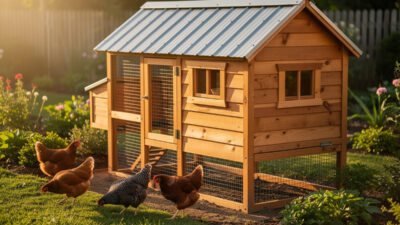
Wood Chicken Coops: Traditional Picks Compared
Wood is the default chicken coop material for backyard flocks because it's cheap upfront ($200–$500 for an 8-bird coop), insulating,…
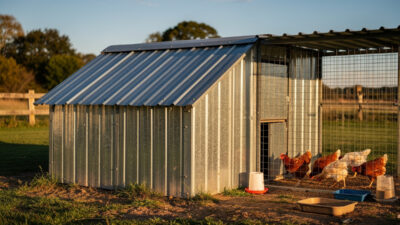
Metal Chicken Coops: Durability & Heat Concerns
A metal chicken coop costs roughly $300–$700 for a 4–8 hen setup, is commonly rated 15–25 years by the manufacturers…
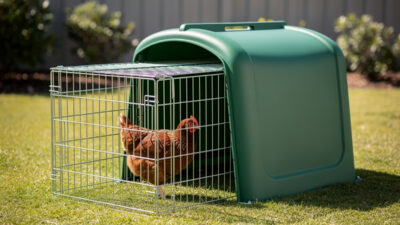
Plastic Chicken Coops: Pros, Cons & Best Models
A high-quality plastic chicken coop runs roughly $400–$900 for a 4–8 hen setup, is commonly rated 15–20 years by the…