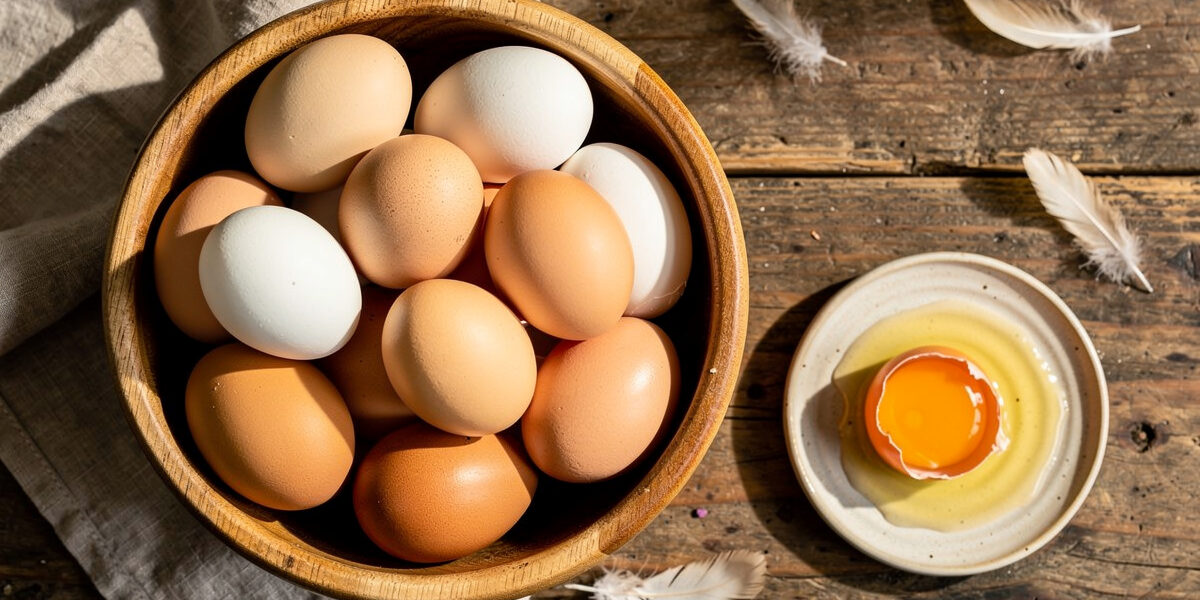
Crack a carton of my own eggs next to a supermarket dozen and the difference is obvious before you even get to taste: the yolk sits up tall and dense, the color runs deep amber instead of pale straw-yellow, and the white holds its shape in the pan instead of spreading thin and watery. None of that is luck or breed magic. It’s feed, forage, freshness, and handling — the four things a keeper actually controls between the nest box and the kitchen counter, and the four things that separate a genuinely good backyard egg from one that just happens to come from a backyard.
This guide covers what actually drives egg quality on the keeper’s side: what the diet does to yolk color and set, how fast quality degrades after laying, the collection and handling habits that protect it, and the management changes that make the biggest difference on my own flock. Nothing here is a health claim about what eggs do for you — it’s what feed, forage, and handling do to the egg itself, and how to read those signals in your own carton.
What “Egg Quality” Actually Means
Ask ten backyard keepers what makes a “good egg” and you’ll get ten different answers, but the measurable ones come down to a short list: shell strength and cleanliness, yolk color and how well it holds its dome when cracked into a pan, albumen thickness (the thick white that stands up around the yolk versus the thin white that spreads flat), and freshness — how much time has passed since the egg left the hen. Commercial egg graders score exactly these traits. A backyard keeper doesn’t need a grading station to read them; you learn to read your own eggs by cracking a few dozen a week.
A December 2020 Poultry Science comparison across production systems — conventional, cage-free, free-range, organic, and pasture-raised brands — found that most brands across every system produced solid quality on shell and yolk integrity, but the real variable wasn’t the label, it was handling: eggs packaged within hours of lay held up better than eggs that sat a day or more before collection and processing, and one pasture-raised brand scored worse on yolk texture despite the deep color consumers wanted (Poultry Science, via eXtension). That’s the theme that runs through this whole guide: production system sets the ceiling, but collection and handling decide whether an egg actually reaches it.
Feed and Forage: The Real Driver of Yolk Color
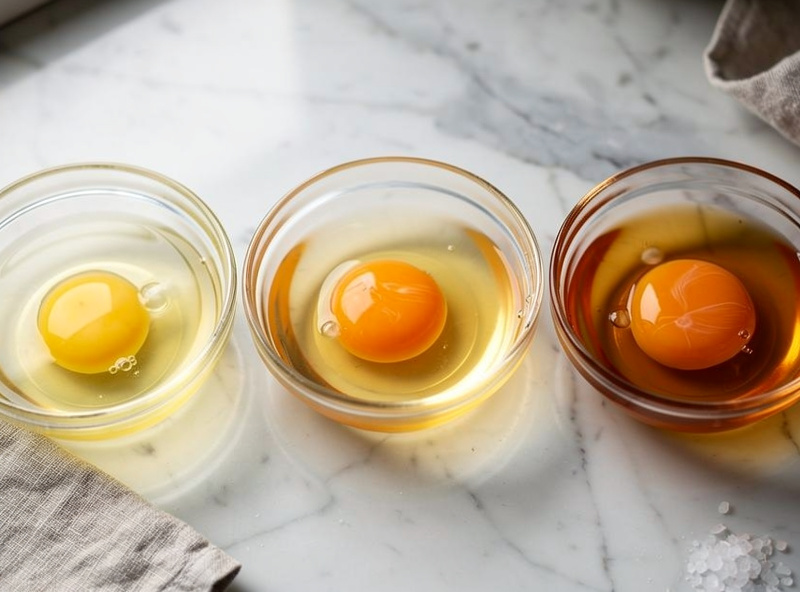
Yolk color comes from carotenoids and xanthophyll pigments the hen absorbs from her diet — green plants, marigold petals, alfalfa, corn, insect bodies — and it has nothing to do with breed. A Rhode Island Red and a White Leghorn on the same grain-only diet lay eggs with essentially the same pale yolk. Put either hen on pasture with insect access and the same commercial feed as a base, and the yolk darkens within about two weeks as the pigment builds up in her system. That’s the whole trick: the hen doesn’t make the color, she concentrates whatever pigment she’s eating.
The industry standard for grading this is the yolk color fan — a 1-to-15 scale used by commercial egg graders. Caged, grain-only hens typically land at 8-10 (often hit with synthetic xanthophyll additives in the feed rather than actual forage). A pastured backyard flock with real forage access routinely lands at 13-15 without any additive, just clover, dandelion, bugs, and sunlight. I check mine against a printed fan a couple times a season — mostly out of curiosity, but it’s a useful gut-check when I’ve changed the forage mix and want to know if it actually moved the needle.
The composition differences that go along with that color are well documented in field research: Mother Earth News’s 14-flock field study, benchmarked against USDA nutrient-database baselines, found pastured eggs running roughly twice the omega-3 content and seven times the beta-carotene of standard caged eggs, alongside more vitamin A and vitamin E. A separate Penn State comparison of caged versus pastured hens on the same farm found a similar pattern — more omega-3s, more vitamin E, and a notably higher vitamin D content in the pastured eggs (Penn State). I’m not going to tell you what that means for your diet — that’s a conversation for you and your own eggs, not a chicken-keeping blog — but as a keeper, it’s useful confirmation that what you’re seeing in the pan (the darker yolk, the richer color) tracks with a real, measurable difference in what the hen actually ate.
Three Diet Decisions That Move the Needle
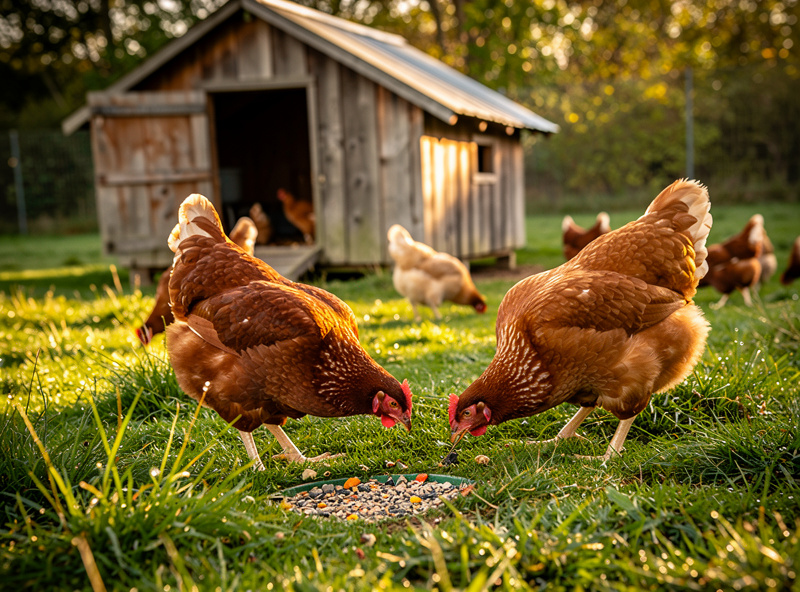
- Pasture access. Hens foraging 4+ hours a day on growing greens and insects show a visibly darker yolk within about two weeks. Even 2-3 hours a day in a rotated run measurably shifts it; full-day access maximizes it.
- Insect protein. An ounce or so of black soldier fly larvae or mealworms per hen per day adds pigment and the fatty-acid profile that shows up as a firmer, more cohesive yolk in the pan. The automatic feeder setup I run can be adapted to dispense mealworms on a schedule if you don’t want to hand-toss them.
- Forage diversity. Clover, alfalfa, dandelion, and chicory in the rotation beat a single green — carotenoid diversity matters more than total green volume for color depth.
For the broader feeding picture — how forage fits alongside a balanced commercial feed rather than replacing it, especially through a Swedish winter when pasture access drops to nothing — see my complete chicken feeding and nutrition guide. Breed still matters for production volume and cold tolerance, just not for the nutrient profile of the egg itself; the best laying breeds guide and the backyard breed comparison cover that side of the decision.
Freshness: What Actually Changes After the Egg Is Laid
Quality doesn’t hold steady the moment an egg leaves the hen — it starts declining immediately, just slowly. The air cell at the wide end grows as moisture and carbon dioxide pass through the shell’s pores over time, which is why the float test works: a fresh egg sinks and lies flat on the bottom of a bowl of water, a couple-weeks-old egg tilts up at an angle as the air cell grows, and a genuinely old egg floats because the air cell has gotten big enough to make it buoyant. It’s not a precision instrument, but it’s the fastest gut-check I’ve got before I crack an unmarked egg from the bottom of the bowl.
The thick albumen — the part of the white that stands up firm around the yolk instead of spreading thin across the pan — thins with time too, through a process called albumen liquefaction. That’s the visible difference between a fresh fried egg that holds a tidy dome and an older one that spreads out flat and runny before it sets. Store eggs have typically already spent one to several weeks in the grading, packing, and distribution chain before they reach a shelf, even with a recent sell-by date — a backyard egg collected same-day starts several weeks ahead on that clock by default, which is most of why a fresh backyard egg fries up tighter than a store one even when both are objectively “fresh” by the label.
Collection and Handling: The Part Most Guides Skip
Production system and diet set what’s possible; collection habits decide whether you actually get it. A few things I do on my own flock that make a measurable difference in what ends up in the carton:
- Collect at least once, ideally twice, a day. An egg left in the nest box in summer heat or picked up frozen on a Swedish winter morning both lose quality faster than one collected within a few hours of laying.
- Keep nest boxes clean and lined. Dirty bedding means dirty eggs, and a dirty shell means either washing (which strips the bloom, the natural protective coating that seals the shell’s pores) or a compromised shell that lets bacteria and moisture through faster. I converted one bank of nest boxes to a roll-away design — an angled floor that lets the egg roll into a small catch tray away from the hen — specifically because a chronic egg-eater in that bank was cracking shells before I could get to them; the rest of the boxes stay standard hinged.
- Don’t wash until you’re about to use the egg. An unwashed egg with the bloom intact holds its internal quality far longer at room temperature than a washed one, which needs refrigeration once that coating is gone. I leave mine unwashed on the counter and wash individual eggs right before they hit the pan.
- Watch for the obvious flags. A cracked shell, a chalky or overly thin shell (often a calcium or age issue in the hen), or a persistently dirty batch from one bird are all worth tracking back to that specific hen rather than writing off as normal variation.
Backyard Quality Factors at a Glance
| Quality factor | What drives it | What a keeper controls |
|---|---|---|
| Yolk color | Carotenoid/xanthophyll intake from forage and feed | Pasture access, forage mix, insect supplementation |
| Yolk color grade (fan scale) | Diet — caged/grain-only typically 8-10, pastured typically 13-15 | Same as above; no additive needed with real forage |
| Albumen thickness | Time since laying (liquefies over days-weeks) | Collection frequency, storage temperature |
| Shell cleanliness | Nest box bedding and hen behavior | Clean liners, roll-away boxes, frequent collection |
| Shell strength | Hen’s calcium intake, age, molt cycle | Feed formulation, oyster shell supplementation |
| Freshness at use | Time from nest to kitchen; wash timing | Same-day collection, wash-just-before-use habit |
What I Actually Manage on My Own Flock
I’m not running a lab — I run pasture rotation, forage mix, and insect supplementation the same way most keepers eventually settle into once they’ve watched the yolk color swing between winter (limited outdoor time, more commercial feed) and peak summer (full pasture access) for a season or two. The color difference is visible every single morning cracking eggs into the pan, and it’s the fastest feedback loop I’ve got on whether the current forage rotation is actually working. If you already keep a flock, three changes deliver most of the visible gain: daylight pasture access even in short daily windows, a consistent insect-protein supplement rather than an occasional treat, and forage diversity over a single green monoculture.
For deeper background on the research behind egg composition and quality grading, the Poultry Science Association journal index publishes the peer-reviewed studies most of these figures trace back to, and the USDA Agricultural Research Service maintains the open dataset on egg composition by production system.
Frequently Asked Questions
What actually makes a backyard egg’s yolk darker than a store egg?
Diet, not breed. Yolk color comes from carotenoid and xanthophyll pigments the hen absorbs from forage — green plants, insects, and diverse vegetation. Hens with daily pasture access concentrate far more of these pigments than grain-only caged hens, which is why the color gap is visible within about two weeks of a diet change.
Does chicken breed affect egg quality?
Almost not at all for color and composition. Studies comparing breeds on identical diets show essentially the same yolk profile. Breed matters far more for production volume, shell color, and cold tolerance than for what ends up inside the shell — diet and management drive that.
How can I tell if an egg is still fresh without cracking it?
The float test: place the egg in a bowl of water. A fresh egg sinks and lies flat. An egg a couple of weeks old tilts upright as the internal air cell grows. An egg that floats has enough trapped air that it’s well past its best quality window and worth cracking into a separate bowl before using.
Should I wash backyard eggs before storing them?
Not until you’re about to use them. Washing strips the bloom, the natural coating that seals the shell’s pores and slows moisture and bacteria movement. An unwashed egg with the bloom intact holds quality longer at room temperature; once washed, it needs refrigeration.
Why does my egg’s white spread thin in the pan instead of holding its shape?
That’s albumen liquefaction — the thick white that stands up around a fresh yolk gradually thins with time after laying. It’s one of the clearest visible freshness markers: a same-day egg holds a tight dome in the pan, while a several-week-old egg spreads flat before it sets.
What’s the single biggest management change for better egg quality?
Consistent pasture and forage access, backed by daily collection. Diet sets the yolk color and composition ceiling; collection frequency and handling (not washing until use, clean nest boxes, prompt pickup) decide whether the egg actually reaches the kitchen at that quality.
What should I feed my flock to improve egg quality?
Three things move the needle most: daily pasture access on diverse forage (clover, alfalfa, chicory, dandelion), insect protein supplementation (black soldier fly larvae or mealworms at roughly an ounce per hen per day), and keeping nest boxes clean so shell quality isn’t undone by dirty bedding.
Related Articles
Related Guides

Egg Handling and Storage: Nest Box to Kitchen
My eggs sit unwashed in a bowl on the kitchen counter, not the fridge, and that’s not neglect — it’s…
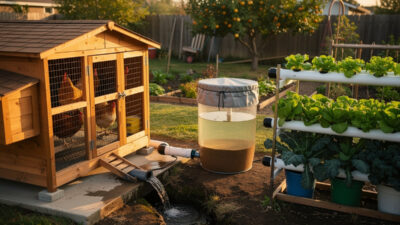
Coop Runoff as Hydroponic Nutrient: Closing the Waste-to-Food Loop
Chicken coop runoff contains dissolved nitrogen, phosphorus, and potassium at concentrations that make it a viable nutrient input for hydroponic…
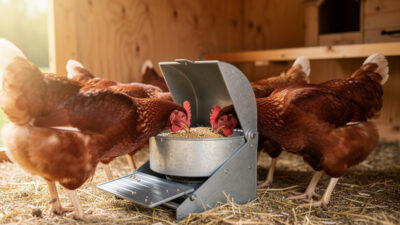
Automatic Chicken Feeder: Types, Setup & Guide
Complete guide to automatic chicken feeders. Compare gravity, treadle, timer, and smart WiFi feeders with capacity planning, training tips, and…