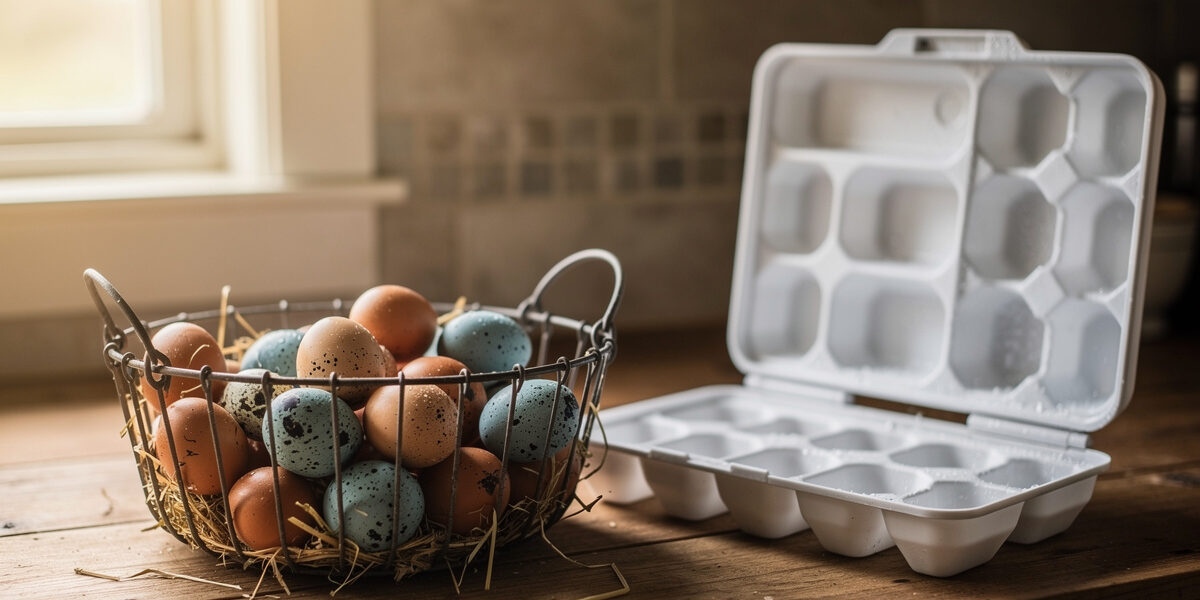
The single rule that decides how to store fresh eggs is whether you washed them. An unwashed egg keeps its natural bloom and sits happily on the counter for two to three weeks; a washed egg has lost that seal and belongs in the fridge, where it keeps for months. Get the wash decision right and the rest is easy.
I collect a basket a day from my flock in Sweden, and over the years I have stored eggs every way there is — counter, fridge, water glass, even frozen for baking. The confusion most people have about egg storage comes from one thing: store-bought eggs in the US are washed and refrigerated by law, while your own backyard eggs are not. Those are two completely different storage games, and treating a fresh unwashed egg like a supermarket one is how good eggs get wasted. Here is exactly how I handle mine, from the nest box to the pan.
The Bloom Changes Everything
A freshly laid egg comes coated in the bloom — also called the cuticle — a thin natural layer the hen applies that seals the shell’s thousands of pores against bacteria and moisture loss. Leave the bloom intact and the egg self-preserves at room temperature for weeks. Wash it off and you have started a countdown that only refrigeration slows.
This is the fact everything else hangs on. The shell is porous — roughly 7,000 to 17,000 tiny pores — and the bloom is what keeps air and microbes from passing through them. Washing, even in plain water, strips that seal and can actually pull surface bacteria into the egg if the water is cooler than the egg. So my default is simple: I do not wash eggs until just before I use them. A clean nest box is what makes that possible, which is the whole reason I obsess over box design and bedding — a hen laying into clean, dry bedding hands you a clean egg that needs no washing at all. I cover that setup in my nesting box sizing and setup guide.
Counter or Fridge?
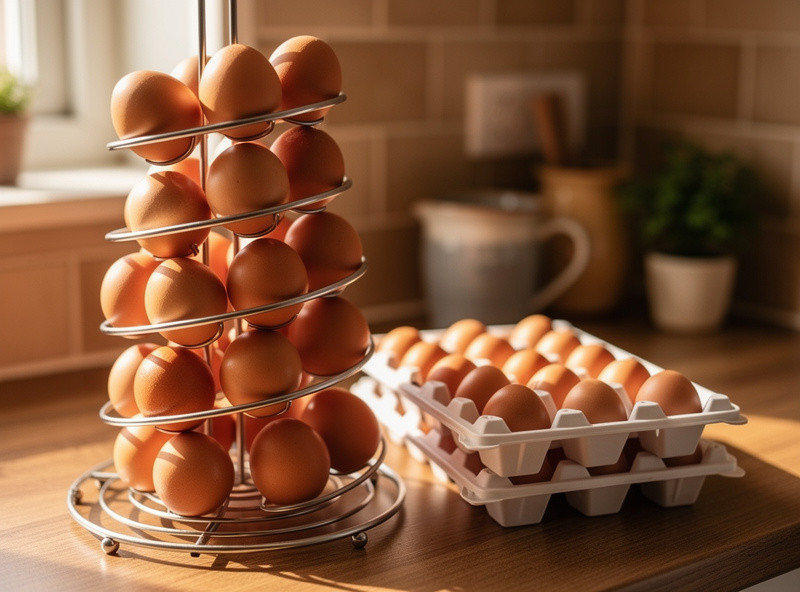
Unwashed eggs keep on the counter for two to three weeks; refrigerated, washed or unwashed, they keep for two to three months. Cold dramatically slows the aging, so the fridge always wins on longevity. The trade-off is one-way: once you refrigerate an egg, condensation means you should keep it cold, not move it back to the counter.
I keep a working bowl of unwashed eggs on the counter — the ones I will cook within a week or two — and refrigerate the surplus when the flock is in full lay and outpacing the kitchen. A countertop egg skelter or wire egg rack makes first-in-first-out automatic: you load new eggs at the top and take the oldest from the bottom, so nothing gets forgotten. One rule I never break: if an egg ever goes in the fridge, it stays in the fridge. Moving a cold egg back to a warm counter sweats condensation onto the shell, which defeats the bloom and invites spoilage.
Should You Wash Backyard Eggs?
Only when they are visibly dirty, and only right before use. Washing strips the protective bloom and shortens shelf life, so the goal is to collect clean eggs in the first place. If an egg is soiled, dry-brush it or wipe it with a dry cloth; reserve actual washing in warm water for eggs you are about to cook.
The cleanest path is prevention. Collect often — eggs left in the box get stepped on and soiled — keep nest-box bedding fresh and dry, and discourage hens from sleeping in the boxes, which is where most of the mess comes from. For the occasional muddy egg, a dry wipe or a quick scrape with a fingernail removes the dirt without wetting the shell. When you do need to wash, use water warmer than the egg (so the contents expand and push outward rather than drawing water in), do it just before cooking, and refrigerate any washed eggs you are not using immediately. Roll-away boxes that carry the egg out of the bedding the instant it is laid are the cleanest-egg upgrade I have made — I cover them in roll-away nesting boxes.
Disclosure: SmartCoopHQ is reader-supported. As an Amazon Associate I earn from qualifying purchases made through links in this article, at no extra cost to you. I only point to gear I actually use or would buy for my own coop.
The Float Test: Checking Freshness
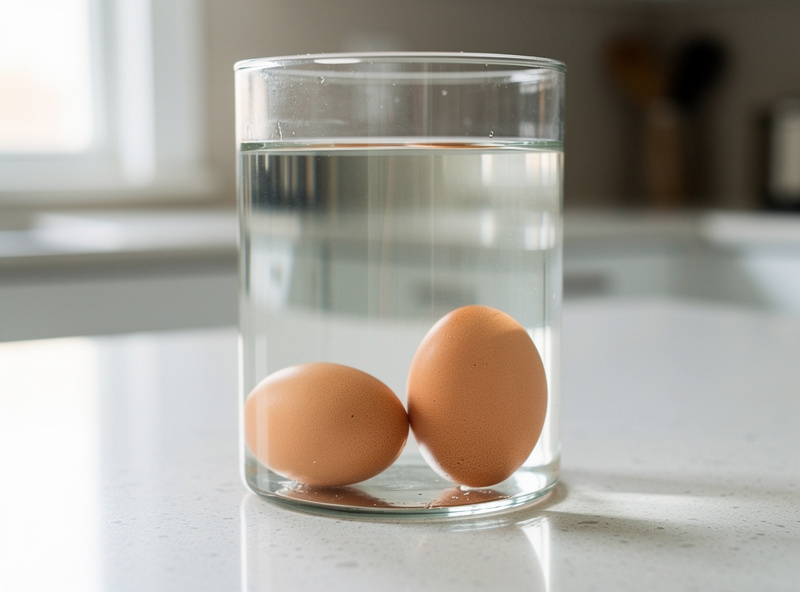
To check an egg’s freshness, lower it into a glass of water. A fresh egg sinks and lies flat on its side; as it ages the air cell grows and the egg tilts, then stands on end. An egg that floats clear of the bottom is old — crack it into a separate bowl and judge by smell before using, or discard it.
The float test works because that air cell at the egg’s blunt end enlarges over time as moisture and gases pass out through the pores. A flat-lying egg is days old; a tilted one is a couple of weeks on but still good for most uses; a stander is on the edge; a true floater has enough air inside that I would not risk it. The test tells you about the air cell, not bacteria, so I still crack any questionable egg into a separate bowl first — one sniff settles it, and you never gamble a whole recipe on a doubtful egg. Date your cartons too; a soft pencil mark of the collection date beats relying on memory.
Egg Storage Methods Compared
Here is how the common storage methods stack up, the way I actually sort my own surplus. Match the method to how soon you will use the eggs.
| Method | Wash First? | Where | Keeps For | Best For |
|---|---|---|---|---|
| Bloom intact, counter | No | Cool room, out of sun | 2–3 weeks | Everyday cooking eggs |
| Unwashed, refrigerated | No | Fridge, pointy-end down | 2–3 months | Surplus from peak lay |
| Washed, refrigerated | Yes | Fridge only | 4–6 weeks | Eggs that arrived dirty |
| Frozen (cracked, beaten) | n/a | Freezer in trays/bags | Up to 12 months | Gluts; baking later |
| Hard-cooked, refrigerated | n/a | Fridge, in shell | About 1 week | Snacks, quick protein |
| Water glassing (lime/salt) | No (unwashed only) | Cool, dark, submerged | Up to 12 months | Long-term preservation |
The two long-haul options — freezing and water glassing — are how I bank the spring and summer glut against the winter lull, when the flock slows down and the counter bowl runs thin. The everyday methods up top cover normal weekly cooking.
Cartons, Orientation, and FIFO
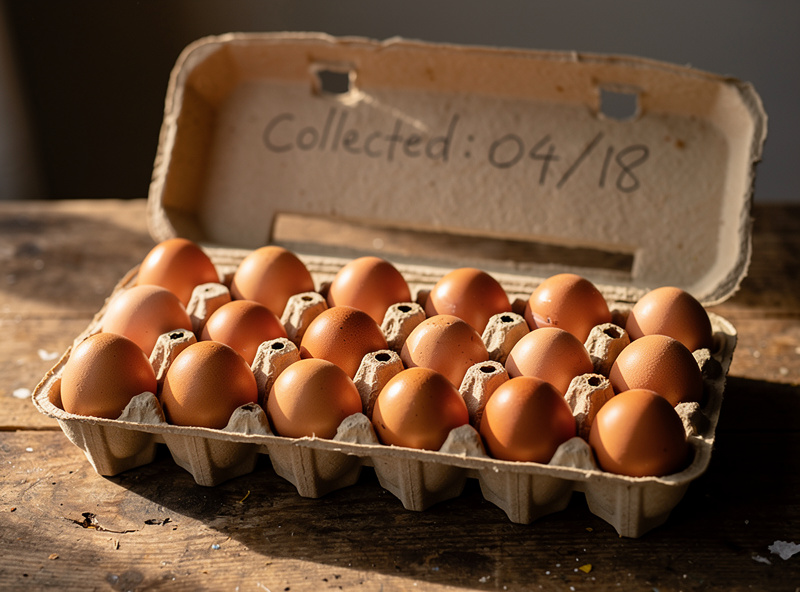
Store eggs pointed-end down so the air cell stays at the top and the yolk stays centered, which keeps them fresher longer. Always work first-in-first-out: oldest eggs used first. A dated carton or a tilted egg rack makes that automatic, so you are never guessing which eggs have been sitting longest.
Orientation matters more than people expect. With the blunt (air-cell) end up, the yolk floats away from the air pocket and the egg ages more gracefully; pointed-end down in a carton or rack does this for you. I label every carton with the collection date in pencil and keep a strict rotation — new eggs to the back, cook from the front. If you sell or share eggs, reusable egg cartons are worth keeping a stack of, and a fridge egg storage container keeps the surplus organized and out of the way. Good storage is the back half of good production — getting the eggs is the front half, which I cover in the complete egg production guide. And the reason it is all worth the trouble: backyard eggs genuinely beat store-bought, which I break down in the health benefits of backyard eggs.
Storing Through the Lean Months
Egg storage matters most in winter, when the flock slows and you are living off what you banked. Two preservation methods carry fresh unwashed eggs for up to a year: freezing the beaten contents in trays, and water glassing — submerging clean, unwashed eggs in a pickling-lime or salt solution. Both let a summer glut feed a winter kitchen.
I lean on freezing for baking eggs: crack them, beat lightly, freeze in an ice-cube tray (roughly one egg per two cubes), then bag the cubes and thaw as needed. Water glassing is the old-timer method that genuinely works, provided the eggs are freshly laid, perfectly clean, and never washed — the intact bloom is what makes it safe to store them submerged for months in a cool, dark spot. Both methods only work with unwashed eggs, which loops back to the first rule of this whole guide. If your hens slow down in the dark months and you would rather keep the fresh eggs coming than rely on the pantry, that is a solvable problem — I cover it in my guide to getting chickens to lay through winter, and a sudden unexpected drop is worth diagnosing with why hens stop laying.
Frequently Asked Questions
How do you store fresh eggs from backyard chickens?
If unwashed, keep them on the counter for two to three weeks or refrigerate for two to three months. Store pointed-end down and do not wash until just before use, so the natural bloom keeps protecting the shell.
Do fresh eggs need to be refrigerated?
Not if they are unwashed and have their bloom intact; they keep two to three weeks at room temperature. Refrigeration extends that to two or three months. Washed eggs must be refrigerated because washing removes the protective seal.
Should I wash my fresh eggs before storing them?
No. Washing strips the bloom and shortens shelf life. Collect clean eggs by keeping nest boxes tidy, dry-wipe any dirty ones, and only wash an egg in warm water just before you cook it. Refrigerate any egg you do wash.
How can I tell if an egg is still good?
Use the float test: a fresh egg sinks and lies flat, an older one tilts or stands up, and a floater is old. The test reflects the air cell, not bacteria, so still crack any doubtful egg into a separate bowl and smell it first.
How long do fresh eggs last on the counter?
An unwashed egg with its bloom intact keeps about two to three weeks at cool room temperature, out of direct sun. After that, refrigerate or preserve it. Use the float test on any egg you are unsure about before cooking it.
Can you freeze eggs for long-term storage?
Yes. Crack eggs, beat them lightly, and freeze in an ice-cube tray, then bag the cubes for up to a year. Do not freeze eggs in the shell. Frozen eggs are best for baking and scrambling rather than poaching or frying.
Related Articles
Related Guides
Egg-Bound Hen: Signs, Risk Factors, and Prevention
An egg-bound hen has an egg stuck in her oviduct that she cannot pass. It is a serious, time-sensitive situation…

Double-Yolk Eggs: Causes, Safety, and Hatching
A double-yolk egg happens when a hen releases two yolks close together and both get wrapped in one shell. It…

How to Candle Eggs: A Keeper Step-by-Step Guide
Candling an egg means shining a bright, focused light through the shell in a dark room to see what is…