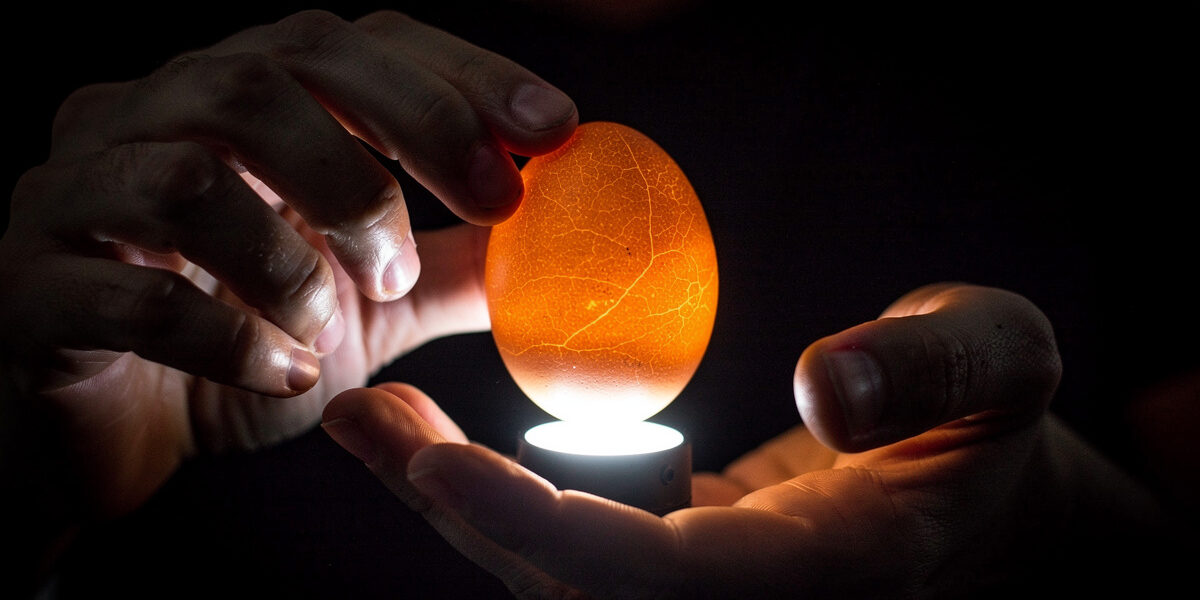
Candling an egg means shining a bright, focused light through the shell in a dark room to see what is inside. It is how keepers check fertility, track embryo development, judge the air cell, and spot cracks or blood spots — all without breaking the shell. A strong LED in a darkened room is all it takes.
I candle eggs for two reasons: to check fresh eating eggs for cracks and the odd blood spot before they reach the kitchen, and to monitor fertile eggs when I have a broody hen or eggs under observation. It is a simple skill that looks like magic the first time the inside of an egg lights up — suddenly you can read the air cell, the veining, the dark mass of a growing embryo. This guide walks through exactly how I do it, what each thing you see means, and where the line is between keeper-level candling and questions that belong with a vet or an experienced hatcher.
What Candling Is and Why It Works
Candling works because an eggshell is translucent: a strong light passes through it and silhouettes whatever is inside. The name comes from the original method — holding an egg up to a candle flame. Today a focused LED does the job far better, revealing the air cell, the yolk shadow, fine cracks, and, in a fertile egg, the developing embryo and its blood vessels.
The principle is the same whether you are checking a breakfast egg or a hatching egg. Light in a dark room turns the shell into a window. With an eating egg you are looking for quality flaws — hairline cracks that glow as bright lines, blood or meat spots, an oversized air cell that signals age. With a fertile egg you are tracking life: the spidery web of blood vessels, the dark shadow of the embryo, and later its movement. Brown and especially dark or speckled shells are harder to read than white or pale blue ones, so you need a brighter light and a fully dark room for them.
How to Candle an Egg, Step by Step
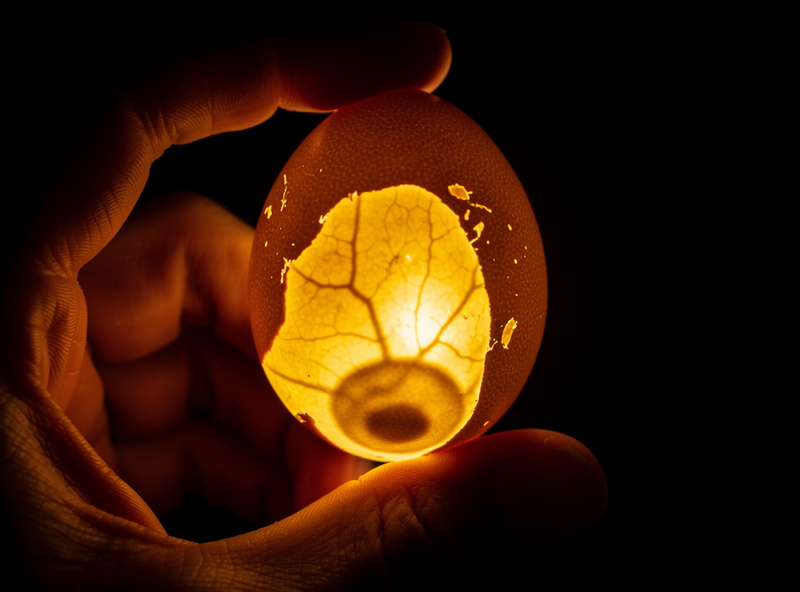
To candle an egg, wait until full dark or use a windowless room, then hold the light against the egg’s large (blunt) end where the air cell sits. Cup your hand around the shell to block stray light, tilt and rotate the egg gently, and look for the air cell, any cracks, and — in fertile eggs — veining or a dark mass.
The mechanics matter more than the gear. Press the light to the wide end and seal the gap with your fingers so all the light goes into the egg, not your eyes. Rotate slowly — a gentle tilt makes the contents shift and reveals movement in a developing embryo. Work quickly and keep fertile eggs warm; a couple of minutes out of the heat is fine, but candling is not a time to let them chill. A purpose-built egg candler with a contoured rubber tip seals against the shell and gives the cleanest view, but a bright single-LED flashlight in a dark room works for occasional checks. The darker the room, the more you see — this is the one variable people skimp on and then wonder why the egg looks blank.
Reading a Fertile Egg: The Development Timeline
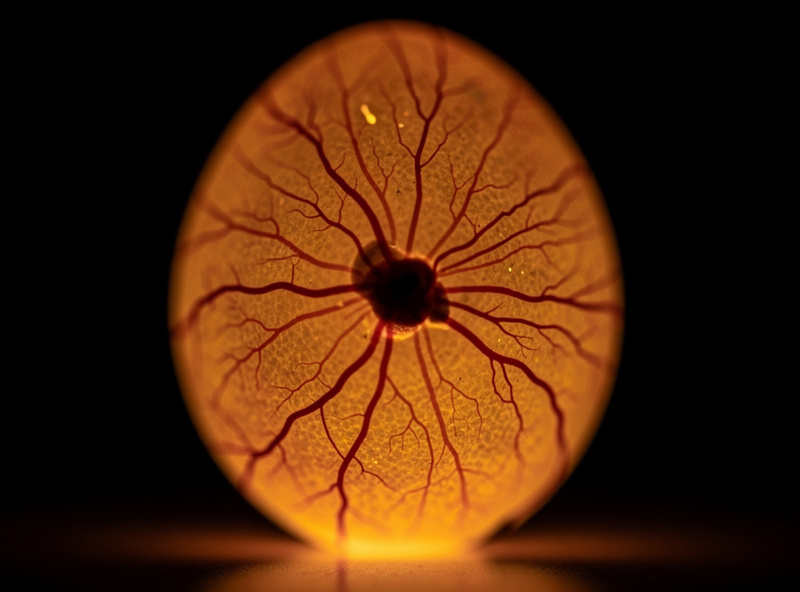
In a fertile egg under a broody hen or in incubation, candling around day 7 shows a small dark spot with a spider-web of blood vessels radiating out. By day 14 the embryo fills much of the egg as a dark mass, often visibly moving. A clear egg with no veins by day 7–10 was likely never fertile.
The standard rhythm keepers follow is to candle around day 7 and again near day 14, removing any clears or quitters to protect the rest. Early on, day 5 to 7, you are hunting for that first network of fine red veins spreading from a central dark point — the unmistakable sign of life. A faint single red ring around the egg, by contrast, is a blood ring: an embryo that started and died, and that egg should come out. By the second week the embryo is a large dark shadow that shifts when you tilt the egg, with the air cell growing steadily at the top. I keep my own candling at this general, observational level — reading clear-versus-developing and pulling the duds. Incubation troubleshooting beyond that (humidity faults, assisted hatching, staggered development) is genuine hatcher territory, and for anything past basic monitoring I defer to experienced hatchers and, for a bird in distress, an avian vet.
Disclosure: SmartCoopHQ is reader-supported. As an Amazon Associate I earn from qualifying purchases made through links in this article, at no extra cost to you. I only point to gear I actually use or would buy for my own coop.
Candling Eating Eggs for Quality
Candling is not just for hatching — it is a quick quality check on eating eggs too. A focused light reveals hairline cracks that glow as bright lines, blood or meat spots floating inside, and the size of the air cell, which grows as an egg ages. It is how commercial graders sort eggs, and you can do the same at the kitchen counter.
For eggs headed to the kitchen or to customers, a candle pass catches problems you would otherwise only find on cracking. Fine cracks light up as glowing seams — those eggs should be used immediately or discarded, since the bloom seal is broken. Blood spots and meat spots show as small dark specks; they are harmless and simply a ruptured vessel at laying, but most people prefer to remove them. A small air cell means a fresh egg; a large one means age, which ties straight into the float test and the whole question of how long an egg has been sitting — I cover that side in my guide to storing fresh eggs. Sorting candled eggs into labeled egg cartons by date keeps your rotation honest.
What Candling Shows and What It Means
Here is the field guide I keep in my head when the light goes on. The top rows are fertility signs; the lower rows are quality checks for eating eggs.
| What You See | What It Means | When | What To Do |
|---|---|---|---|
| Clear glow, no veins | Infertile or very fresh eating egg | Day 7–10 fertile check | Remove from incubation; fine to eat if fresh |
| Spider-web of red veins | Fertile, embryo developing | Around day 5–7 | Leave to develop |
| Large dark mass, movement | Embryo well grown | Around day 14 | Leave undisturbed |
| Single red blood ring | Embryo started then died | Any fertile check | Remove the egg |
| Glowing line across shell | Hairline crack | Quality check | Use at once or discard |
| Small dark floating speck | Blood or meat spot (harmless) | Quality check | Remove if preferred |
| Large air cell at blunt end | Older egg | Quality check | Use soon; confirm with float test |
The skill is mostly pattern recognition, and it comes fast — after a dozen eggs you read them at a glance. Start on white or pale-shelled eggs while your eye develops, then move to the harder brown and speckled ones.
Candling Gear: What Actually Helps
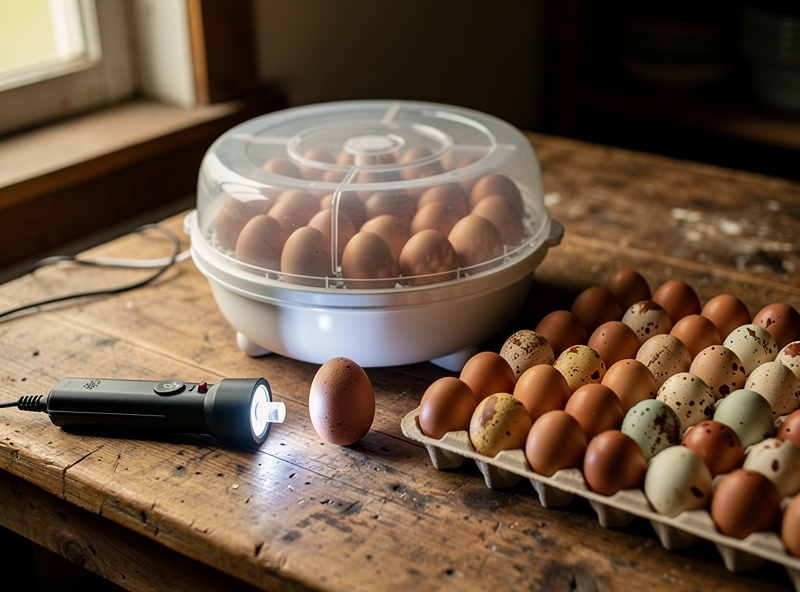
The best candler is a high-intensity LED with a soft tip that seals against the shell — bright enough to punch through brown shells, cool enough not to warm the egg. A purpose-built candler beats a phone torch easily, but any focused single-point LED in a fully dark room will get you started for occasional checks.
Avoid the wide, diffuse lights; you want a tight, intense beam that drives all its light into the egg. Cheaper multi-LED rings scatter and wash out the detail. If you are candling fertile eggs through a hatch, you are probably already running a small egg incubator — candle at the standard day-7 and day-14 marks, keep the eggs warm, and handle them as little as possible. Whatever you are hatching, the breed you choose sets what those chicks become; I compare laying performance in the best egg-laying breeds guide, and the whole production picture — once those pullets reach point of lay — lives in the complete egg production guide. If hens that should be laying suddenly are not, candling will not be the answer; that is a why hens stop laying question instead.
Frequently Asked Questions
How do you candle an egg?
In a dark room, press a bright LED light against the egg’s blunt end, cup your hand around the shell to block stray light, and rotate the egg gently. Look for the air cell, any cracks, and in fertile eggs the veins or dark embryo.
When should you candle eggs during incubation?
Keepers typically candle around day 7 to confirm fertility and veining, then again near day 14 to check the embryo is still developing. Remove any clears or blood rings at each check. Keep handling brief and the eggs warm.
What does a fertile egg look like when candled?
Around day 5 to 7 a fertile egg shows a small dark spot with a spider-web of red blood vessels radiating out. By day 14 the embryo is a large dark mass that often moves when you tilt the egg, with a growing air cell at the top.
Can you candle eggs with a phone flashlight?
For occasional quality checks, yes, in a fully dark room with the light pressed to the shell. But phone lights are diffuse and weak through brown shells. A purpose-built high-intensity LED candler gives a far clearer view for fertility checks.
Can you candle eggs you plan to eat?
Yes. Candling eating eggs reveals hairline cracks that glow as lines, harmless blood or meat spots, and the air-cell size that signals freshness. It is the same method commercial graders use to sort eggs before they reach the carton.
What is a blood ring when candling?
A blood ring is a single red circle around the inside of the shell, meaning an embryo began developing and then died. That egg should be removed from incubation promptly so it does not spoil and risk the surrounding viable eggs.
Related Articles
Related Guides
Egg-Bound Hen: Signs, Risk Factors, and Prevention
An egg-bound hen has an egg stuck in her oviduct that she cannot pass. It is a serious, time-sensitive situation…

Double-Yolk Eggs: Causes, Safety, and Hatching
A double-yolk egg happens when a hen releases two yolks close together and both get wrapped in one shell. It…

How to Store Fresh Eggs from Backyard Chickens
The single rule that decides how to store fresh eggs is whether you washed them. An unwashed egg keeps its…