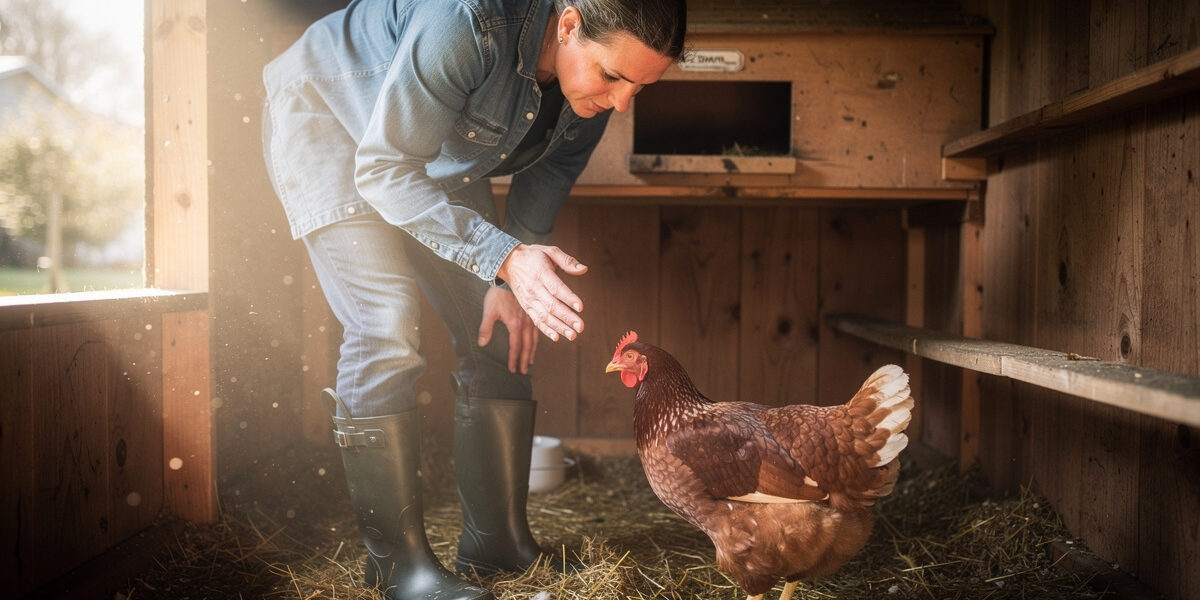
An egg-bound hen has an egg stuck in her oviduct that she cannot pass. It is a serious, time-sensitive situation that can become life-threatening within a day, so the key skills for a keeper are recognising the signs early and getting the bird to an avian vet. Prevention — good calcium, hydration, and sensible light — is where you have the most control.
I want to be clear up front about where my expertise ends. I keep a healthy laying flock and I manage hard for prevention, because that is squarely keeper territory. But egg binding is a medical emergency, not a husbandry tweak, and this article will not give you a treatment protocol or any dosing — that is a job for a veterinarian who can actually examine the bird. What I can do is help you spot it fast, understand why it happens, and set your coop up so it rarely does. Speed matters more than anything else here, so let us start with the signs.
What Egg Binding Is
Egg binding (also called egg retention or dystocia) is when a fully formed egg becomes lodged in the hen’s reproductive tract and cannot move out. The hen strains repeatedly without producing an egg. Because a stuck egg can press on internal organs and the vent, it is genuinely dangerous and worsens quickly — often within 24 to 48 hours.
It helps to understand the normal process to see what has gone wrong. An egg travels down the oviduct and is normally laid within roughly 24 to 26 hours of ovulation. When that final passage stalls — the egg too large, the muscles too weak to push, the bird dehydrated or low on the calcium that powers muscle contraction — the egg sticks near the vent. From the outside you see a hen who clearly wants to lay, keeps trying, and cannot. This is not the same as a hen who has simply stopped laying for ordinary reasons; that is a slower, calmer situation I cover in why hens stop laying. Egg binding is acute, visible distress in a bird who is actively straining.
Warning Signs to Recognise
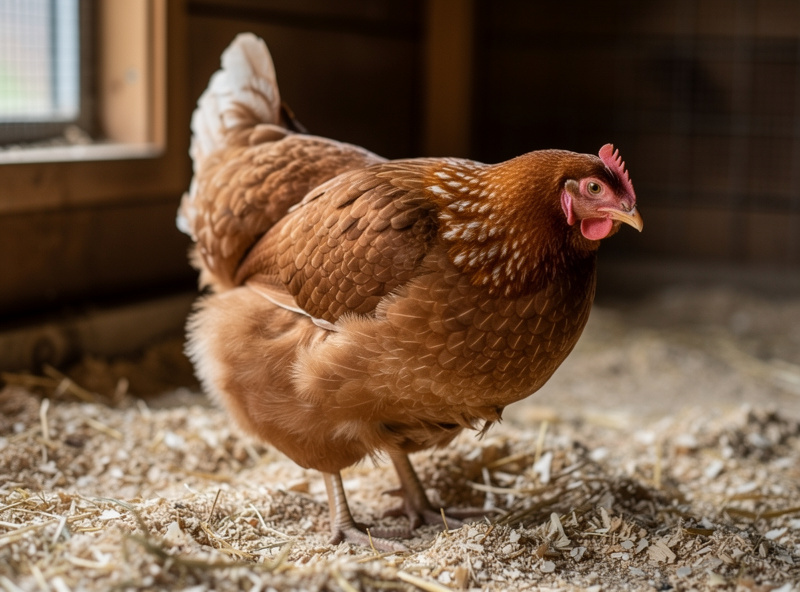
An egg-bound hen typically stands hunched in a penguin-like upright posture, strains or pumps her tail, and may seem lethargic, fluffed up, and reluctant to move or eat. Some make repeated trips to the nest with nothing to show, walk oddly, or show a swollen abdomen. These signs warrant urgent attention, not a wait-and-see.
The picture is one of obvious distress, which is what separates it from the everyday quiet of a hen between eggs. The classic tells I have learned to watch for: a wide, upright “penguin” stance as she tries to relieve the pressure; visible straining or tail-pumping; sitting puffed and dull when she should be active; loss of appetite and interest; and sometimes a noticeably firm or swollen lower abdomen. A hen may also strain so hard that she shows other signs of distress at the vent. None of these on their own is a diagnosis — only a vet can confirm egg binding — but a bird showing several of them is telling you something is seriously wrong and the clock is running. When in doubt, treat it as urgent.
What To Do: This Is a Vet Call
If you suspect your hen is egg-bound, contact an avian or exotics vet immediately — this is the single most important step, and it is an emergency. Keep her warm, quiet, and undisturbed while you arrange care, and do not attempt to extract the egg yourself, which can rupture it and cause a fatal infection. Professional treatment gives the best chance.
I am deliberately not going to hand you a home-treatment recipe, because the well-meaning internet advice to manipulate or extract a stuck egg can kill a hen if the egg breaks inside her, and dosing supplements blind can do real harm. What is genuinely in your hands is triage and transport: move her somewhere warm, dim, and calm where she is not being pestered by flockmates, make sure water is within reach, and get her to a professional as fast as you can. A vet can assess hydration, calcium status, and the egg’s position and decide on the right course — things that simply cannot be judged or done safely from a blog. The honest, responsible answer to “my hen is egg-bound” is: phone the vet now.
Disclosure: SmartCoopHQ is reader-supported. As an Amazon Associate I earn from qualifying purchases made through links in this article, at no extra cost to you. I only point to gear I actually use or would buy for my own coop.
Why It Happens: The Risk Factors
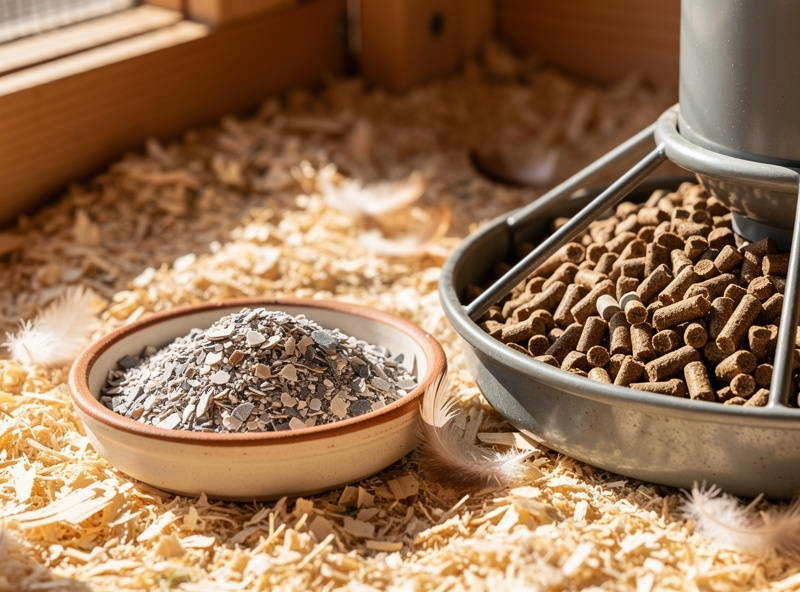
Egg binding is more likely when several risk factors stack up: low calcium (which weakens the muscle contractions that move the egg), dehydration, very young hens pushed into early lay, overweight or unfit birds, and abnormally large or misshapen eggs. Understanding these is what lets you lower the odds through ordinary good husbandry.
Calcium sits at the centre of it. Beyond building the shell, calcium powers the muscular contractions that actually move the egg out, so a hen running short is both making weaker shells and pushing with weaker muscles — which is why I keep free-choice crushed oyster shell available year-round alongside a complete layer feed. Hydration matters for the same mechanical reasons, so reliable water is non-negotiable; in my Swedish winters I run a heated poultry waterer so the supply never freezes out. Pushing pullets into lay too early with heavy artificial light is another avoidable risk — I light to support mature laying, not to force immature birds, using a simple timer rather than maximum hours, which I explain in my guide to winter egg laying. And the very large eggs that strain a hen most are often the double-yolkers from young layers, which I cover in double-yolk eggs.
Risk Factors and How to Lower Them
This is a prevention table, not a treatment one. Every row is ordinary husbandry within a keeper’s control — stack the protections and binding becomes rare in a flock.
| Risk Factor | Why It Raises Risk | Prevention (Husbandry Only) |
|---|---|---|
| Low calcium | Weakens the muscle contractions that move the egg | Free-choice oyster shell + complete layer feed |
| Dehydration | Impairs egg passage and overall condition | Constant clean, unfrozen water |
| Pullets laying too early | Immature body forced into production | Avoid heavy artificial light on young birds |
| Overweight / unfit hens | Poor muscle tone and excess internal fat | Limit scratch and treats; encourage activity |
| Very large or double-yolk eggs | Physically harder to pass | Strong calcium; expect it more in new layers |
| Cold stress | Adds general physiological strain | Dry, ventilated, draft-free coop |
| Breed / genetic predisposition | Some heavy-laying lines are more prone | Know your breed; watch high-output hybrids |
Notice that none of these involve medicating a bird — they are feed, water, light, weight, and shelter, the same levers that drive healthy laying generally. A well-fed, well-watered, sensibly-lit flock in a good coop rarely produces an egg-bound hen.
Building a Coop That Prevents It
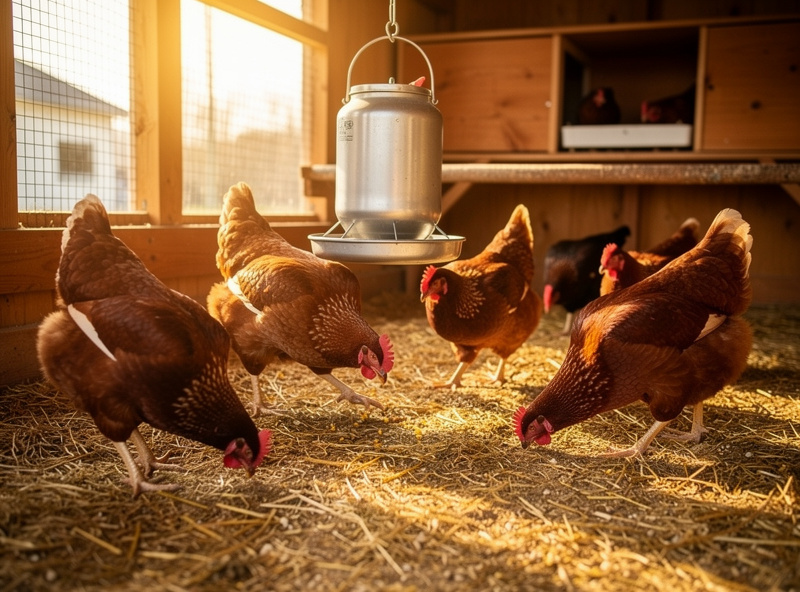
The best defence against egg binding is a flock kept in genuinely good condition: complete layer feed, free-choice calcium, constant water, a healthy weight, and light managed to support — not force — laying. None of this is exotic; it is the same foundation that produces strong shells and steady output, which is exactly why I treat husbandry as the real medicine here.
In practice that means I never run a flock without oyster shell in a dedicated dish, I keep water reliable in every season, and I am disciplined about light — supporting mature hens through short days rather than blasting young pullets into early production. I keep birds at a working weight by limiting scratch grain to a treat, and I choose and manage breeds knowing the hardest-driving hybrids carry a bit more reproductive risk along with their big baskets. The whole system ties back to the four levers of healthy laying I rank in the complete egg production guide, and breed selection — which shapes both output and resilience — lives in the best egg-laying breeds guide. Do the husbandry well and you spend far more time collecting eggs than worrying about emergencies. But if a hen does show the distress signs above, remember the one rule that overrides everything else here: contact an avian vet, promptly. Egg binding sits within a wider range of health conditions a keeper should recognise — the chicken diseases and treatment guide covers the full landscape of signs, prevention, and when to escalate to a vet.
Frequently Asked Questions
What are the signs of an egg-bound hen?
She typically stands hunched in a penguin-like upright posture, strains or pumps her tail without laying, seems lethargic and fluffed up, and may stop eating or show a swollen abdomen. Several of these signs together warrant an urgent vet call.
Is egg binding an emergency?
Yes. A stuck egg can press on internal organs and become life-threatening within about 24 to 48 hours. If you suspect a hen is egg-bound, contact an avian or exotics vet immediately rather than waiting to see if she passes it on her own.
What should I do if my hen is egg-bound?
Contact an avian vet immediately, and keep her warm, quiet, and undisturbed while you arrange care. Do not try to extract the egg yourself, as a broken egg inside the hen can cause fatal infection. Professional treatment gives the best outcome.
What causes a hen to become egg-bound?
Risk factors stack: low calcium that weakens the contractions moving the egg, dehydration, very young hens pushed into early lay, overweight or unfit birds, and abnormally large or misshapen eggs. Good husbandry lowers each of these risks.
How can I prevent egg binding in my flock?
Provide a complete layer feed with free-choice oyster shell, keep clean water always available, maintain a healthy weight by limiting treats, and manage light to support mature laying rather than forcing young pullets. These husbandry steps make binding rare.
Can an egg-bound hen recover?
Many do recover with prompt veterinary care, which is why early recognition and a fast vet visit matter so much. Outcomes worsen the longer the egg stays lodged, so treat suspected egg binding as urgent and seek a professional rather than home remedies.
Related Articles
Related Guides

Double-Yolk Eggs: Causes, Safety, and Hatching
A double-yolk egg happens when a hen releases two yolks close together and both get wrapped in one shell. It…

How to Candle Eggs: A Keeper Step-by-Step Guide
Candling an egg means shining a bright, focused light through the shell in a dark room to see what is…

How to Store Fresh Eggs from Backyard Chickens
The single rule that decides how to store fresh eggs is whether you washed them. An unwashed egg keeps its…