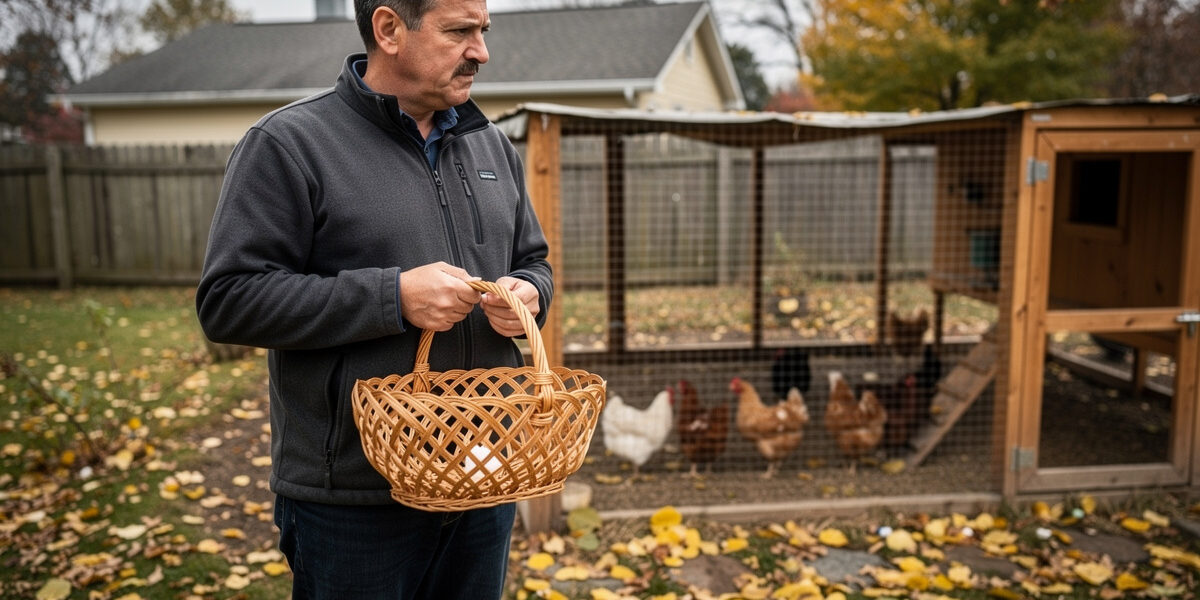
When hens suddenly stop laying, the cause is almost never illness. In my experience roughly 80% of unexplained drops trace to one of five things: shortening days, a molt, a hidden stressor, a water failure, or eggs being laid somewhere you have not found. Work those in order before you ever suspect a sick bird.
I keep a cold-hardy laying flock in Sweden and I have watched the basket go empty for every reason on this list — the November light crash, the autumn molt that buries the run in feathers, the morning the waterer was a block of ice, the fox that spooked the whole flock off lay for a week. This is the diagnostic order I actually run, top to bottom, when the eggs dry up. Diagnose before you change anything, because guessing wastes the one thing a laying problem gives you plenty of: time to get it wrong.
Cause 1: Shortening Days
The most common reason hens stop laying is short days, not anything you did. Laying is triggered by light hitting a photoreceptor behind the eye; below about 12 hours of daylight, production powers down. If the drop lines up with autumn rather than a specific event, fading light is almost certainly your answer.
This is the first box I check because it is the most common and the easiest to confirm: look at the calendar, not the bird. If it is September through February in the Northern Hemisphere and the days are getting shorter, you have found your cause before you have left the kitchen. The fix is to add supplemental light in the morning to bring total daylight to 14–16 hours — a warm-white LED on a timer in the pre-dawn hours, never an abrupt evening cut-off that strands birds off the roost in the dark. A simple timer-controlled coop light handles it hands-off. I cover the seasonal version of this problem in depth in my guide to getting chickens to lay through winter.
Cause 2: The Annual Molt
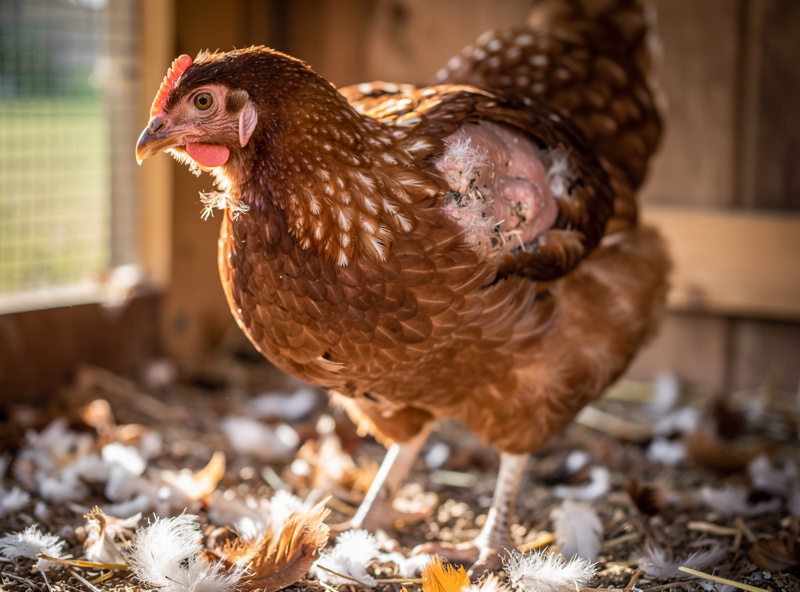
If laying stops and the coop suddenly looks like a pillow exploded, that is molt — not a problem to fix, but maintenance to support. From their second autumn onward, hens drop and regrow feathers, and because feathers are mostly protein, the body pauses egg production to rebuild the coat. It lasts three weeks to a couple of months.
Molt is loud and visible once you know the look: bare patches, pin feathers pushing through, feathers drifting across the run. It almost always coincides with shortening days, so it often stacks on top of the light drop — two causes, one season. Do not try to light or supplement your way through a molt; it is hardwired and it will run its course. What you can do is support the rebuild with a higher-protein feed, around 20%, since the bird is spending protein on feathers instead of eggs. A hard, fast molt that ends in a glossy new coat is the sign of a healthy hen, not a failing one. Older birds often molt harder and pause longer than pullets.
Cause 3: A Hidden Stressor
Hens are exquisitely sensitive to stress, and a frightened flock stops laying fast. A new predator testing the run at night, a dog, a rat infestation, a recent move, a brutal heat wave, or even a disruptive new bird in the pecking order can all crater production within a day or two and keep it down until the stressor is gone.
This one takes detective work because the trigger is often invisible during daylight. My cameras have caught a fox working the dig apron at 3 a.m. on nights the flock seemed fine by day but laid nothing for a week. Walk the run and think like prey: signs of digging at the perimeter, droppings or tracks from a predator, a rat tunnel under the feeder, a new neighbourhood dog along the fence. Heat is the stressor keepers underestimate — sustained temperatures over about 30 °C tank both feed intake and laying. Secure the run, remove the stressor, and lay usually recovers within days to a couple of weeks. Solid predator-proofing prevents most of this in the first place; I lay out the full defensive system in my predator-proof coop guide.
Cause 4: Water and Feed Failures
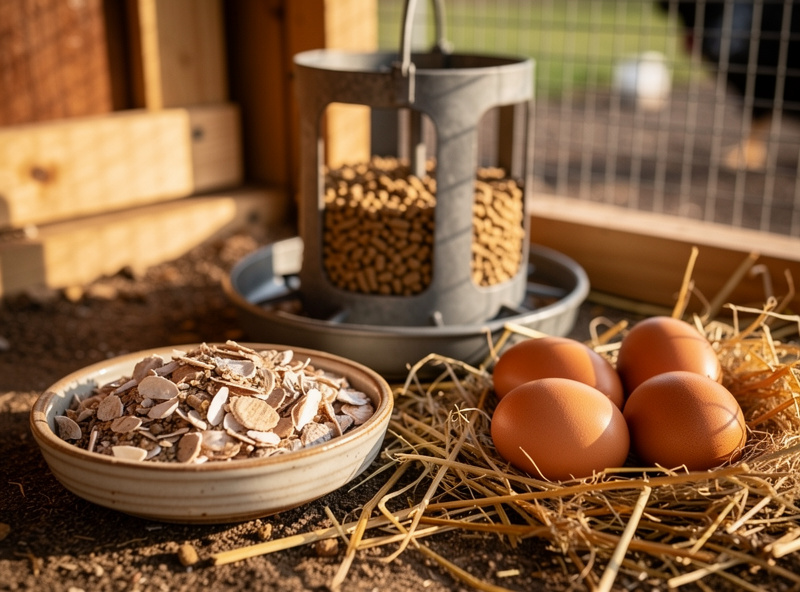
A hen that cannot drink stops laying within a day — an egg is about 75% water. Right behind water is calcium and protein. Thin, dented, or shell-less “rubber” eggs signal a calcium deficit; slow, sluggish laying on a scratch-heavy diet signals too little protein. These are fast to cause and fast to fix.
Check the water first because it is the quickest killer and the quickest recovery. A fount that froze overnight, ran dry, or fouled with droppings can stop a flock cold and have them laying again the day after you fix it. Then look at the feed: a complete 16–18% layer ration should make up at least 90% of the diet, with scratch grain kept to a small treat. Calcium belongs in its own dish, free-choice — a laying hen pulls about 2 grams a day for the shell, and individual birds self-regulate what they need from a bowl of crushed oyster shell. Skip it and you get the classic thin-shell eggs that are the visible early warning. This whole nutrition stack is one of the four levers I rank in the complete egg production guide.
Disclosure: SmartCoopHQ is reader-supported. As an Amazon Associate I earn from qualifying purchases made through links in this article, at no extra cost to you. I only point to gear I actually use or would buy for my own coop.
Cause 5: Hidden or Eaten Eggs
Sometimes the eggs are being laid — just not where you are looking. A hen who dislikes her nest box lays in a floor corner or a hedge, and a flock that has learned to eat eggs cleans up the evidence before you collect. The hens act normal and lay normally; the basket just stays empty. This looks like a production drop but isn’t one.
Before you treat a phantom problem, rule this out. Walk the property for floor nests and hidden clutches — under the coop, behind feed bins, in tall grass along the fence. If you find chewed shells or wet patches of yolk in the nest, you have an egg-eater, a habit that spreads through a flock quickly. The fix is to remove the temptation: collect often, keep nest boxes dim and private so eggs are less visible, fix any soft-shell eggs (the easy first crack that starts the habit) by sorting out the calcium, and consider roll-away boxes that move the egg out of reach the moment it is laid. Dim, curtained boxes genuinely help — I run nest-box curtains for exactly this. I cover the box geometry that keeps hens laying where you want in my nesting box sizing guide and the egg-eating upgrade in roll-away nesting boxes.
Broodiness and Age: The Two That Aren’t Problems
A broody hen stops laying on purpose — she wants to hatch, not lay, and will sit flat and growl in the box. And every hen, whatever her breed, lays less each year: production steps down roughly 10–15% annually after the first peak. A three-year-old giving four eggs a week instead of six is aging normally, not sick.
Broodiness is hormonal and breed-linked — Orpingtons and Silkies go broody readily, production hybrids rarely do. A broody hen flattens in the nest, plucks her breast, and snaps at you; she can hold this for weeks if undisturbed. If you do not want chicks, break the broodiness early by removing her from the warm nest. Age, meanwhile, is the slow background decline you simply ride. Keepers chasing maximum output run a rolling flock, adding a few pullets every year or two so the average age — and the basket — stays high. Breed sets the ceiling on all of this; the heavy layers keep producing longer and harder, which I rank in the best egg-laying breeds roundup.
The Diagnostic Table I Run
When the basket goes light, I work this table top to bottom — cheapest and most common causes first. Most drops are solved before you reach the bottom three rows.
| Cause | Telltale Sign | The Fix | Recovery Time |
|---|---|---|---|
| Short days | Drop in autumn/winter, no other change | Add morning light to 14–16 hrs | 1–3 weeks |
| Molt | Feathers everywhere, bare patches | 20% protein feed; let it run | 3–9 weeks |
| Stress / predator | Abrupt stop, jumpy or hiding birds | Secure run, remove stressor | Days to 2 weeks |
| Water failure | Sudden stop; frozen or empty fount | Restore clean unfrozen water | 1–2 days |
| Calcium / protein deficit | Thin or shell-less eggs; scratch-heavy diet | 16–18% layer feed + free oyster shell | 1–2 weeks |
| Hidden / eaten eggs | Empty boxes, hens act normal | Find floor nests; stop egg-eating | Immediate once found |
| Broody hen | Sits flat, growls, plucks breast | Break broodiness; remove from nest | 1–2 weeks |
| Age | Slow steady decline over years | Rotate in new pullets | Permanent taper |
Notice what is not near the top: illness. A genuinely sick hen usually shows more than just a laying drop — lethargy, a hunched posture, abnormal droppings, or respiratory noise. Production loss alone, with bright-eyed active birds, points to husbandry every time.
When It Is Actually Illness
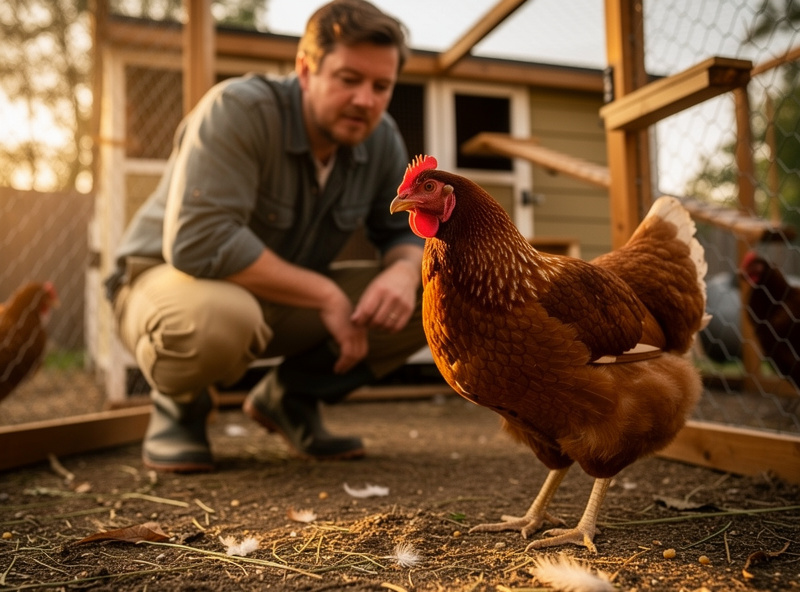
Only after the five common causes come up clean do I start thinking about a sick bird. A laying drop paired with lethargy, weight loss, abnormal droppings, a pale or shrunken comb, or laboured breathing is past the edge of husbandry. That is when an avian vet enters the picture — not a guess, not an internet diagnosis, and never a dose of something off a forum.
I am deliberate about this line. I will troubleshoot light, water, molt, stress, and hidden eggs all day, because that is keeper territory and I have run every one of those failures myself. But a bird that is unwell — not just off-lay, but visibly ill — needs a professional who can actually examine her. Internal laying problems, reproductive infections, and parasite loads are real and they are diagnostic work, not husbandry tweaks. If your active, bright-eyed flock has simply stopped laying, it is almost certainly on the list above. If a bird is sick, see an avian vet. Knowing which birds are robust layers in the first place stacks the odds in your favour — I compare the hardy producers in the best laying breeds guide.
Frequently Asked Questions
Why have my chickens suddenly stopped laying eggs?
The five usual causes are shortening days, a molt, a hidden stressor such as a predator or heat wave, a water failure, or hens laying in a spot you have not found. Work through those in order before suspecting illness.
How long do chickens stop laying during a molt?
A molt pauses laying for about three weeks to two months, usually in autumn from a hen’s second year onward. Support it with feed around 20 percent protein. Laying resumes on its own once the new feathers are grown in.
Can stress make chickens stop laying eggs?
Yes. A predator at the run, a dog, a rat infestation, a recent move, or a heat wave over about 30 degrees Celsius can stop laying within a day or two. Production usually recovers within days to two weeks once the stressor is removed.
My chickens look healthy but are not laying. Why?
Healthy, active birds that have stopped laying almost always have a husbandry cause, not illness. Check day length, water, molt, and stress first, and search the property for hidden floor nests or signs of egg-eating before worrying about disease.
At what age do hens stop laying eggs?
Hens do not stop abruptly; output declines roughly 10 to 15 percent each year after the first peak. Many hens still lay usefully at four or five years old, just fewer eggs. Keepers rotate in new pullets to keep average output high.
When should I call a vet about a hen not laying?
Call an avian vet when the laying drop comes with lethargy, weight loss, abnormal droppings, a pale comb, or laboured breathing. A laying drop alone in a bright, active bird is a husbandry issue, not a medical one, and rarely needs a vet.
Related Articles
Related Guides
Egg-Bound Hen: Signs, Risk Factors, and Prevention
An egg-bound hen has an egg stuck in her oviduct that she cannot pass. It is a serious, time-sensitive situation…

Double-Yolk Eggs: Causes, Safety, and Hatching
A double-yolk egg happens when a hen releases two yolks close together and both get wrapped in one shell. It…

How to Candle Eggs: A Keeper Step-by-Step Guide
Candling an egg means shining a bright, focused light through the shell in a dark room to see what is…