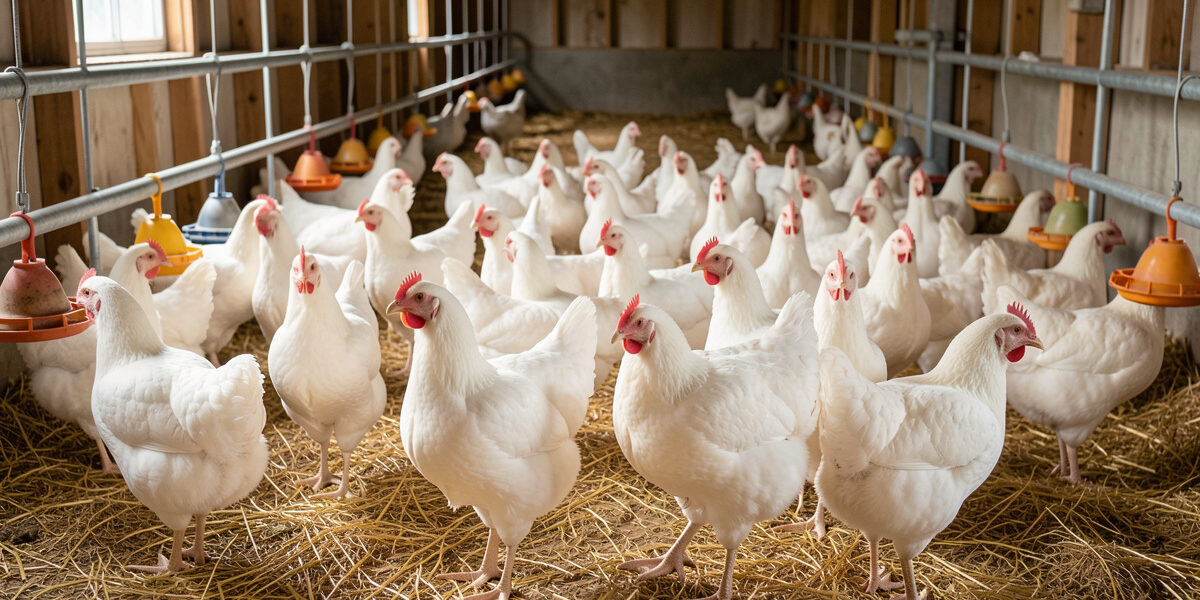
Raising Cornish Cross broilers comes down to one rule the hatchery catalogs bury: do not let them eat around the clock. These birds reach a 4-to-6-pound dressed weight in 7 to 9 weeks on roughly 2 pounds of feed per pound of gain, but free-fed they outgrow their own legs and hearts. A 12-hours-on, 12-hours-off feed schedule from week two is what carries a healthy batch to harvest.
I keep a cold-hardy laying flock, so I came to the Cornish Cross the way most keepers do — expecting it to behave like the birds I already had. It does not. This is the most efficient meat animal in agriculture, and it needs to be managed like the specialized machine it is. Get the feed schedule, the heat management, and the bedding right and it is genuinely easy. Ignore them and you get leg failures, flipped birds, and a frustrating batch. Here is the routine that works.
Why the Cornish Cross Is Different
The Cornish Cross is a hybrid bred for one thing: converting feed into breast meat as fast as biologically possible. It does not forage with any enthusiasm, it tolerates heat and cold poorly, and its appetite has effectively no off-switch — which is exactly why it is the fastest, cheapest meat bird there is, and also why it cannot be raised on autopilot.
Treat it as a 7-to-9-week project with a hard finish line rather than a long-term flock member. It will never be a pet, it will never free-range like a heritage bird, and it should not be held past about 9 weeks because it simply keeps growing into welfare trouble. If you want a bird that lives like a chicken, a dual-purpose breed is the better fit; if you want the freezer filled fast, the Cornish Cross is unmatched, and the wider meat chicken breeds comparison puts it in context.
The Feed Schedule That Prevents Leg and Heart Failure
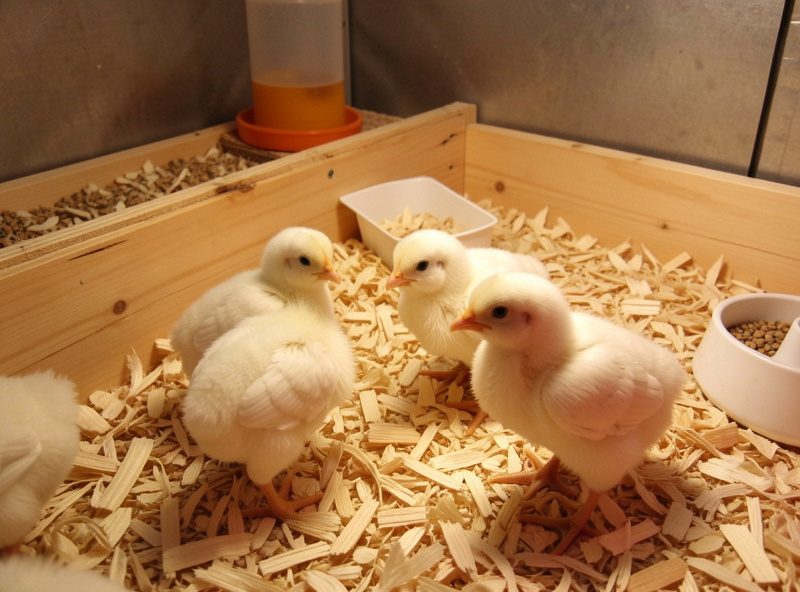
From day one to about day 14, feed Cornish Cross free-choice on a 20–22% protein broiler starter so they get a strong, even start. From day 14 onward, switch to restricting feed to two roughly 12-hour windows a day — feed in the morning, pull the feeder at night — which slows the growth curve enough for the skeleton and heart to keep pace.
This single change is the difference between a clean batch and one with birds that cannot stand by week six. The bird grows so fast that unlimited feed lets muscle outrun bone and cardiovascular capacity; the restriction is not about saving feed, it is welfare. Keep them on a broiler grower or finisher of around 18–19% protein through the back half of the grow-out. For the protein logic across all poultry, the feed protein by age guide and the general feeding and nutrition guide back this up.
Week-by-Week Management
The whole grow-out follows a predictable arc. This is the schedule I would hand a first-timer, adjusted to your weather and how the birds actually look.
| Week | Feed | Brooder / temp | Watch for |
|---|---|---|---|
| 1 | Starter, free-choice | 95°F under heat | Pasty butt, weak chicks |
| 2 | Starter; begin 12/12 restriction | ~90°F | Even growth, leg set |
| 3–4 | Grower, 12/12 | ~80°F, harden off | Crowding, wet bedding |
| 5–6 | Grower/finisher, 12/12 | Ambient, sheltered | Leg strength, panting |
| 7–9 | Finisher, 12/12 | Ambient | Harvest window opens |
Brooding, Heat, and Bedding
Cornish Cross brood at the same 95°F-in-week-one schedule as any chick, but they generate enormous amounts of moisture and manure, so bedding management and ventilation matter more than with layers. Damp, ammonia-heavy litter is the fast route to breast blisters, hock burns, and respiratory trouble in a heavy bird that spends a lot of time sitting.
Keep litter deep, dry, and topped up, and prioritize airflow above the birds without drafting them — the ventilation versus draft distinction is doing real work here, as is the deep litter method if you finish in a static pen. Because this bird tolerates temperature extremes poorly, time the batch so it finishes in mild weather rather than a heatwave or a hard freeze.
Water Is the Thing That Cannot Slip
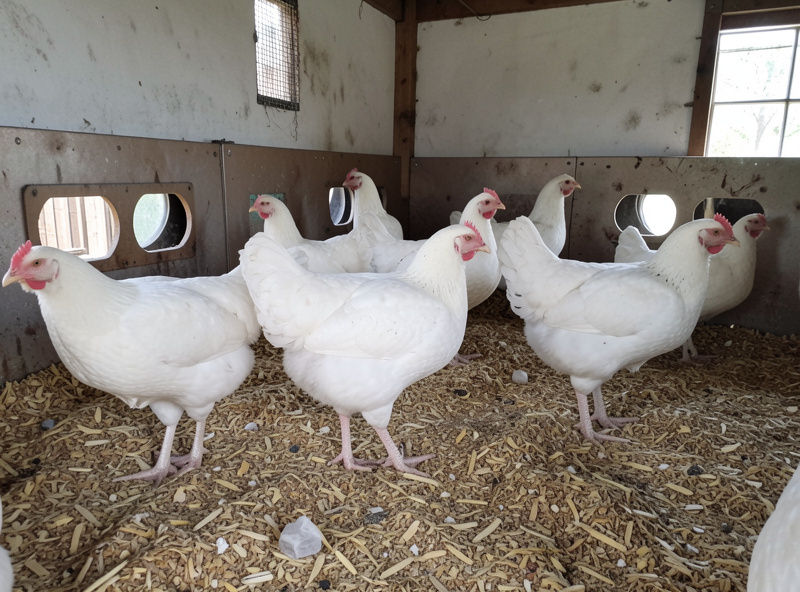
A fast-growing broiler drinks far more than people expect, and an empty waterer on a hot afternoon is a genuine welfare emergency, not an inconvenience. Provide clean water at all times even while you restrict feed — the 12/12 rule applies to feed only, never water.
I run horizontal-nipple waterers on my own flock because they stay clean and do not tip, and the same logic applies to a broiler pen where birds are heavy and clumsy. As an Amazon Associate I earn from qualifying purchases. A simple horizontal-nipple poultry waterer kit keeps water clean and off the bedding, which matters even more with a bird this messy. Check water at least twice a day, more in summer.
Pasture or Confinement
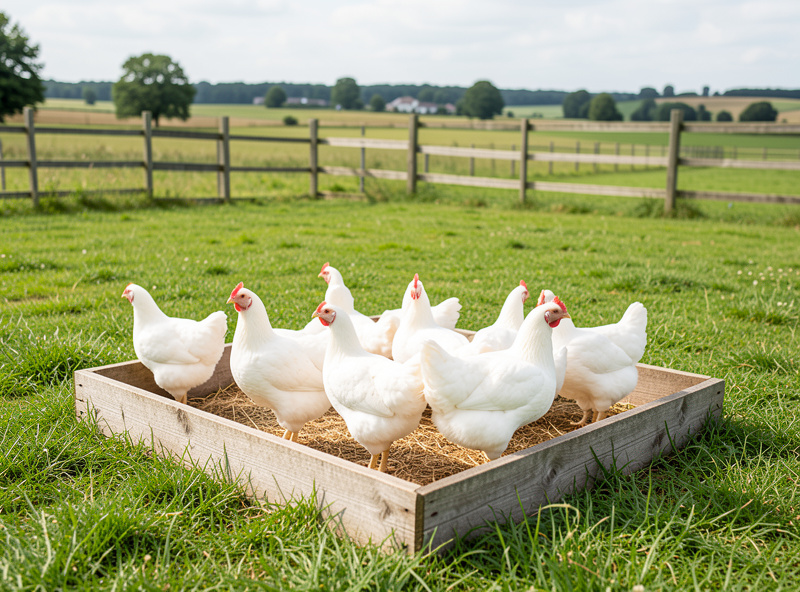
Cornish Cross do best in a low, movable pasture pen that gives fresh ground daily, keeps them off their own waste, and lets them pick at grass even though they will not truly forage. A bottomless tractor moved each morning is the classic broiler setup for good reason: clean footing, spread-out manure, and shade.
Whether on pasture or in a static pen, predators treat slow, heavy broilers as the easiest meal in the yard, so the enclosure has to be secure — hardware cloth, never chicken wire, and the full predator-proofing playbook applies. A fox will happily take a 5-pound broiler that cannot run.
Common Problems and When to Get Help
The two issues specific to this bird are leg/skeletal weakness and sudden death from heart failure (“flip”), both driven by over-fast growth and both reduced sharply by the feed-restriction schedule and clean, dry footing. Breast blisters and hock burns come from sitting on damp litter, so bedding is the fix there.
I write husbandry with confidence, but anything that looks like disease goes to a professional. A bird that is suddenly lethargic, breathing hard, or showing swollen joints is a moment for awareness and, if it persists, an avian vet — not a diagnosis from a blog. The keeper health guide covers the awareness side. When the birds hit the 7-to-9-week window, the home processing basics and the complete meat chicken guide take it from there, and the cost breakdown shows what the whole batch runs.
Frequently Asked Questions
How long does it take to raise Cornish Cross broilers?
Cornish Cross reach a 4-to-6-pound dressed weight in 7 to 9 weeks, the fastest of any meat chicken. They should not be held much past 9 weeks, because continued fast growth leads to leg and heart problems.
Why do you restrict feed for Cornish Cross?
Restricting feed to two 12-hour windows a day from week two slows growth enough for the skeleton and heart to keep pace. Free-fed birds grow faster than their frames can support, causing leg failures and sudden heart-failure deaths.
What do you feed Cornish Cross broilers?
A 20 to 22 percent protein broiler starter for the first two weeks, then an 18 to 19 percent grower or finisher through harvest. Always provide clean water free-choice, even while feed is restricted to two daily windows.
Can Cornish Cross chickens free-range?
They can be put on pasture in a movable pen, but they do not forage with much enthusiasm and stay close to feed. A bottomless tractor moved daily gives them fresh ground and clean footing, which suits this heavy, sedentary bird well.
Why are my Cornish Cross dying suddenly?
Sudden death in Cornish Cross is often heart failure, called flip, caused by over-fast growth, heat stress, or unrestricted feeding. The feed-restriction schedule, shade, clean water, and mild weather at finishing all reduce it. Persistent losses warrant an avian vet.
Related Guides
- Raising Meat Chickens: The Complete Backyard Guide
- Best Meat Chicken Breeds Compared
- Dual-Purpose Chicken Breeds for Meat and Eggs
- The Real Cost of Raising Meat Chickens
- Home Poultry Processing Basics
Related Guides
The Real Cost of Raising Meat Chickens
Raising your own meat chickens typically costs about 8 to 14 dollars per finished bird, or roughly 2 to 3…
Home Poultry Processing Basics: A Humane Overview
Home poultry processing for personal use is legal in most places and, with preparation, is a calm and humane part…
Dual-Purpose Chicken Breeds for Meat and Eggs
Dual-purpose chicken breeds lay a respectable 150 to 250 eggs a year and still dress out into a usable 3-to-4.5-pound…