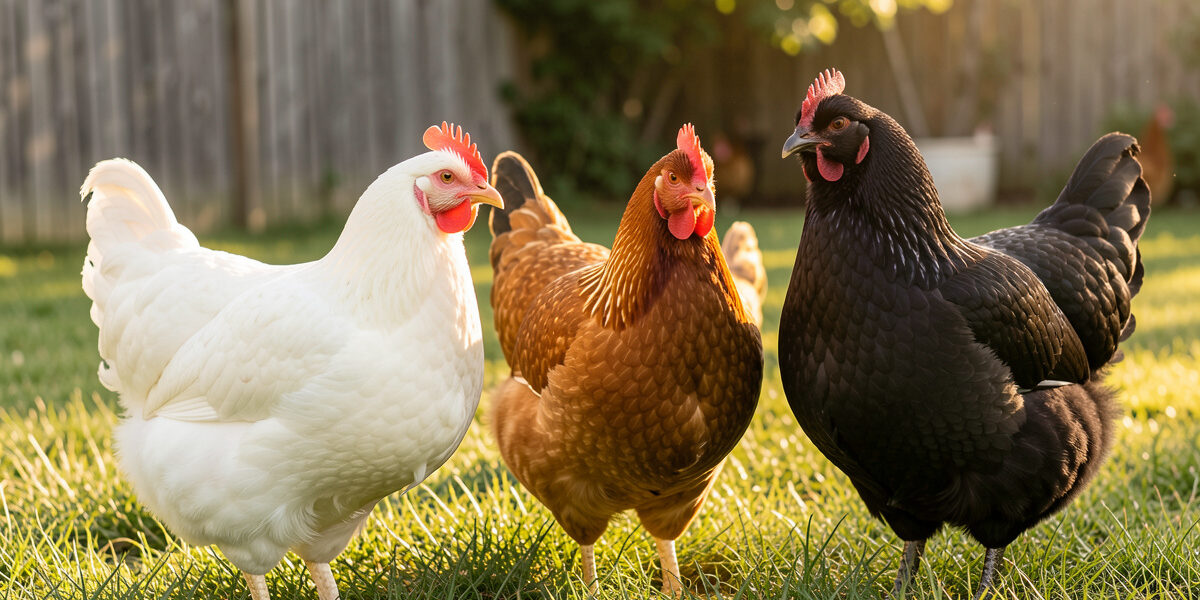
The best meat chicken breeds fall into three camps: the Cornish Cross hybrid for fast, efficient, broad-breasted carcasses in 7 to 9 weeks; slow-growing “ranger” hybrids for a balance of growth and hardiness in 9 to 12 weeks; and dual-purpose heritage breeds like the Bresse, Jersey Giant, and Orpington that take 16 to 20 weeks but forage, lay, and survive a cold winter. The right pick depends on whether you want speed, hardiness, or one flock that does everything.
I keep a cold-hardy laying flock in Sweden, so I come at the meat-bird question from the keeper’s side of the fence rather than the commercial one. The breed you choose decides your feed bill, your timeline, how the birds behave in the run, and how processing day feels — so it is worth getting right before you click “order chicks.” This guide compares the breeds that actually earn a place in a backyard, with the trade-offs the hatchery catalogs gloss over.
The Fast Hybrid: Cornish Cross
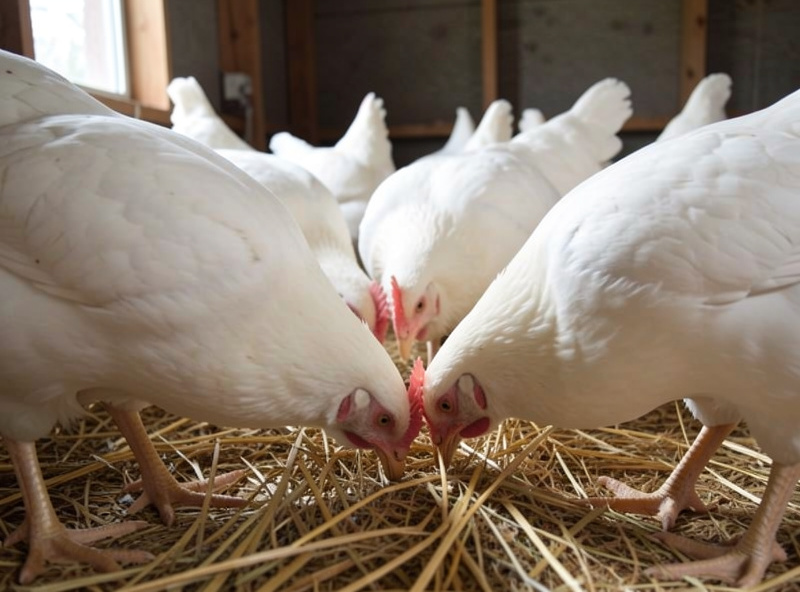
The Cornish Cross is the undisputed efficiency champion: a cross of Cornish and White Plymouth Rock genetics that converts roughly 2 pounds of feed into 1 pound of gain and reaches a 4-to-6-pound dressed weight in 7 to 9 weeks. Nothing else comes close on speed or feed economy, which is why it is behind almost every supermarket chicken on earth.
The catch is that this is a managed bird, not a self-sufficient one. It does not forage meaningfully, it copes poorly with heat and cold, and free-fed around the clock it grows faster than its legs and heart can carry — which is why the Cornish Cross broiler guide centers on a feed-restriction schedule. If your only goal is to fill a freezer quickly with familiar-looking birds, this is the breed. If you want a bird that lives like a chicken, read on.
The Middle Ground: Ranger Hybrids
Slow-growing hybrids — Red Rangers, Freedom Rangers, Kosher Kings and similar colored broilers — finish in 9 to 12 weeks at a slightly smaller 4-to-5-pound dressed weight, and they actually behave like chickens. They forage hard, tolerate pasture and weather, and rarely suffer the leg and heart problems that dog the Cornish Cross.
You pay for that with a higher feed-conversion ratio, around 2.5-to-3 pounds of feed per pound of gain, and a couple of extra weeks of grow-out. For a keeper who wants pastured birds with active foraging and good welfare, without committing to the full 20-week heritage timeline, rangers are the sensible middle path. They are my default recommendation for anyone raising meat birds on grass for the first time.
Dual-Purpose Heritage Breeds
Heritage dual-purpose breeds take 16 to 20 weeks to reach a 3-to-4.5-pound dressed carcass, but they lay eggs, breed true, forage well, and shrug off cold — so the cockerels become table birds while the hens stay in the laying flock. This is the path for keepers who want one resilient flock rather than a separate meat project.
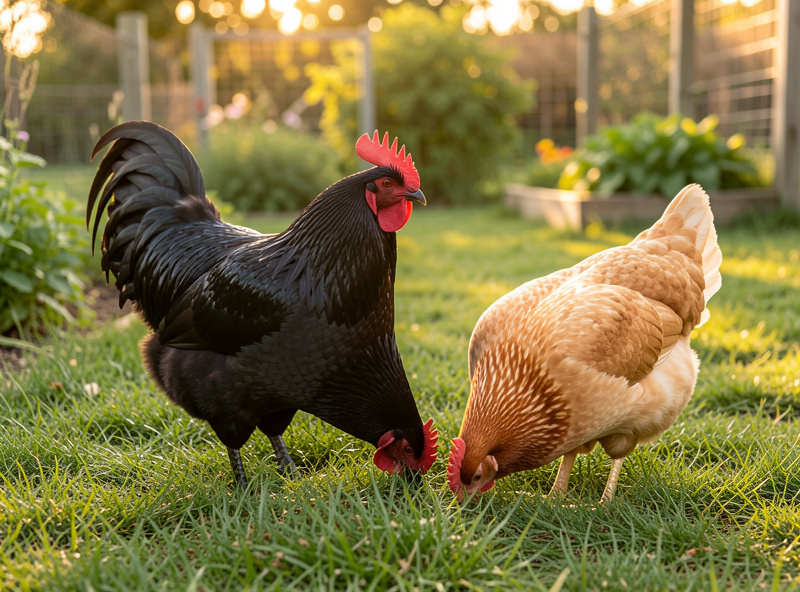
The standouts vary by what you prioritize. The Jersey Giant is the largest pure breed and makes a genuine roaster, though it is slow to mature. The Bresse is famous for the quality and flavor of its meat and finishes faster than most heritage birds. The Orpington and Australorp are cold-hardy, calm, and dual-purpose in the truest sense. Delaware, New Hampshire, and Buckeye were all bred in the era before the Cornish Cross specifically as fast-finishing American table birds and still fill that role well. For the full breakdown of running these as a combined egg-and-meat flock, see the dual-purpose chicken breeds for meat guide, and for cold climates cross-reference the cold-hardy breeds list.
Meat Chicken Breeds Compared
Here is how the main options line up on the figures that decide a backyard batch. Use them as planning numbers, not guarantees — feed, weather, and management move every one of them.
| Breed / Type | Weeks to harvest | Dressed weight | Forages | Cold-hardy | Best for |
|---|---|---|---|---|---|
| Cornish Cross | 7–9 | 4–6 lb | Poor | Low | Speed, freezer fill |
| Ranger hybrids | 9–12 | 4–5 lb | Good | Good | Pastured balance |
| Jersey Giant | 16–24 | 4–5 lb | Good | Excellent | Large roaster |
| Bresse | 16–20 | 3.5–4.5 lb | Good | Good | Flavor, quality |
| Orpington / Australorp | 18–22 | 3–4 lb | Good | Excellent | Eggs + meat, cold |
| Delaware / New Hampshire | 14–18 | 3.5–4.5 lb | Good | Good | Heritage table bird |
The Bird You Already Have: Surplus Cockerels
The cheapest meat bird is the one you did not plan for: the surplus cockerels from a straight-run hatch or a dual-purpose laying flock. Every batch of chicks that is not sexed comes out roughly half male, and in most backyards those extra cockerels cannot stay — so raising them out to 16 to 20 weeks turns a problem into freezer meat at almost no added cost beyond feed.
These birds will never match a Cornish Cross for breast meat, and an older cockerel is firmer than a young broiler, so it suits the slow cooker, stock pot, or a long braise rather than a quick roast. But the economics are hard to argue with: you were going to feed and house them anyway, the carcass is a genuine by-product, and it is the most honest closing of the loop a small flock offers. If you keep a dual-purpose breed and incubate your own eggs, plan for the cockerels from the start rather than treating them as an afterthought — it changes how you size both the brooder and the freezer.
How to Choose for Your Situation
Match the breed to your single biggest constraint. If it is time or freezer space, choose Cornish Cross and commit to the feed schedule. If it is grass and welfare, choose rangers. If it is winter hardiness and you want eggs too, choose a heritage dual-purpose breed and accept the longer timeline and leaner carcass.
The mistake I see most often is a first-timer ordering Cornish Cross because the catalog calls them the “meat bird,” then being unprepared for how differently they behave from the layers they already keep. There is no universally best breed — there is the right breed for your climate, your space, and your tolerance for management. Cost is the other deciding factor, and it differs by breed because of feed conversion and grow-out length; the cost of raising meat chickens guide runs those numbers. Whichever you pick, the husbandry fundamentals in the complete meat chicken guide apply across all of them.
Frequently Asked Questions
What is the best meat chicken breed for beginners?
Slow-growing ranger hybrids like Red Rangers or Freedom Rangers are the most forgiving first meat bird. They forage, tolerate weather, and avoid the leg and heart problems of the faster Cornish Cross, while still finishing in a reasonable 9 to 12 weeks.
Which meat chicken grows the fastest?
The Cornish Cross grows fastest by a wide margin, reaching a 4-to-6-pound dressed weight in just 7 to 9 weeks with a feed conversion near 2 to 1. No heritage breed comes close, which is why it dominates commercial production.
What is the best dual-purpose meat and egg breed?
Orpingtons and Australorps are excellent all-rounders, laying well while still dressing out into a usable carcass and tolerating cold winters. For a larger roaster, the Jersey Giant is the biggest pure breed, though it matures slowly.
Are heritage breeds worth raising for meat?
Yes, if you value flavor, hardiness, and a flock that also lays eggs and breeds true. The trade-off is a leaner, smaller carcass and a longer 16-to-20-week grow-out that costs more in feed per pound than a hybrid broiler.
Can you eat regular laying chickens?
You can. Surplus cockerels and spent hens from a laying flock are perfectly edible, though older birds are best slow-cooked rather than roasted because the meat is firmer. Dual-purpose breeds give the most usable carcass from a laying flock.
Keep Reading
- Raising Meat Chickens: The Complete Backyard Guide
- Raising Cornish Cross Broilers: The Fast-Growth Guide
- Dual-Purpose Chicken Breeds for Meat and Eggs
- The Real Cost of Raising Meat Chickens
- Cold-Hardy Chicken Breeds for Northern Climates
Related Guides
The Real Cost of Raising Meat Chickens
Raising your own meat chickens typically costs about 8 to 14 dollars per finished bird, or roughly 2 to 3…
Home Poultry Processing Basics: A Humane Overview
Home poultry processing for personal use is legal in most places and, with preparation, is a calm and humane part…
Dual-Purpose Chicken Breeds for Meat and Eggs
Dual-purpose chicken breeds lay a respectable 150 to 250 eggs a year and still dress out into a usable 3-to-4.5-pound…