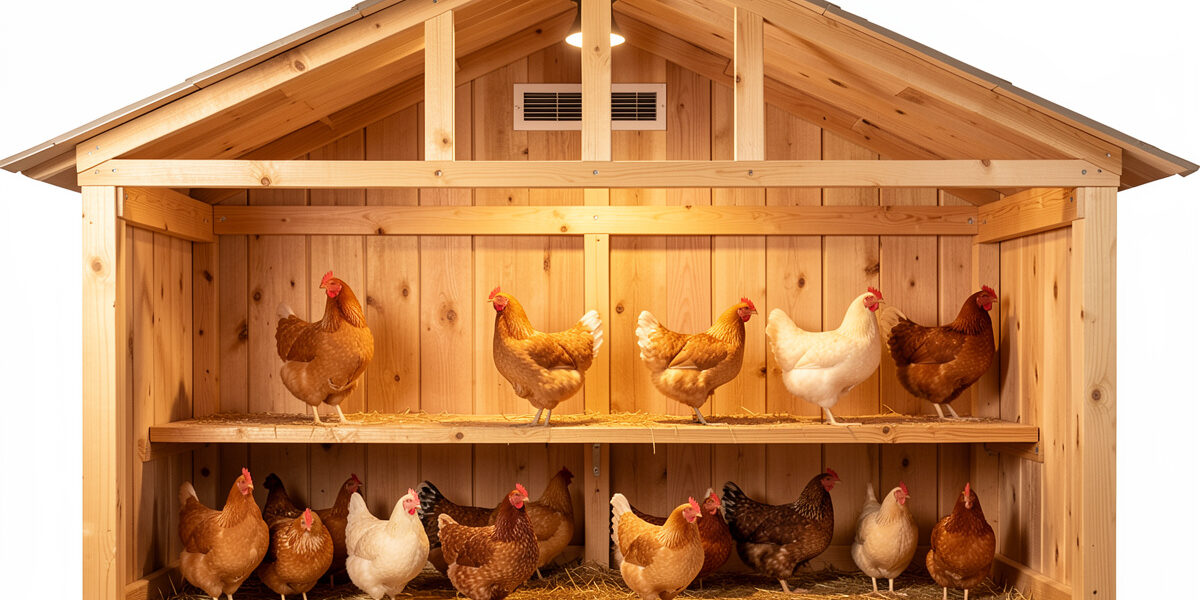
The difference between ventilation and a draft is direction: ventilation is air moving above your birds, a draft is air moving across them. Get that one distinction right and a cold-hardy flock stays healthy at −20 °C; get it wrong and you either trap frostbite-causing moisture or chill the birds off the roost all night.
Almost every “should I close the vents in winter?” argument I see online is really a confusion between these two things. Keepers feel a cold draft on their hand near the roost, conclude ventilation is the enemy, and seal the coop — which traps the moisture that actually harms the birds. The skill is keeping the good airflow while killing the bad. After years of tuning the coop I run through Nordic winters, here is how I tell them apart and how I test for it.
Ventilation versus draft at a glance
Both are moving air, so people lump them together. They are opposites in where the air goes and what it does to a roosting hen. A roosting bird fluffs up to trap a still, warm layer of air against her skin under her feathers; ventilation lets the moisture she gives off escape above her without disturbing that layer, while a draft blows it away and chills her directly. This table is the mental model I keep.
| Aspect | Ventilation (good) | Draft (bad) |
|---|---|---|
| Air direction | Above the birds, near the roofline | Across the birds at roost height |
| Effect on the hen | Removes moisture without chilling | Strips her warm air layer, chills her |
| What it does to moisture | Carries it up and out | Does little for ceiling moisture |
| When you want it | Always, year-round | Never, on a roosting bird |
| Vent location | High: ridge, gable peak, upper soffit | Low: openings level with the perch |
Why a roosting bird cannot tolerate a draft
A chicken’s insulation is the still air she traps in her down, the same way a sleeping bag works. When she settles on the roost she fluffs out and tucks her head, building a warm microclimate against her skin. A draft at roost height peels that warm layer away and replaces it with cold moving air, so her body burns energy to reheat the gap all night — the avian version of trying to sleep under a fan in winter. Over a long cold spell that constant heat drain runs her down and makes frostbite and illness more likely. The maddening part is that the same opening can be both useful and harmful depending only on its height: a foot above her head it ventilates, level with her perch it drafts. That is why I obsess over vent placement, which I detail in the vent placement guide.
How I actually test for a draft at the roost
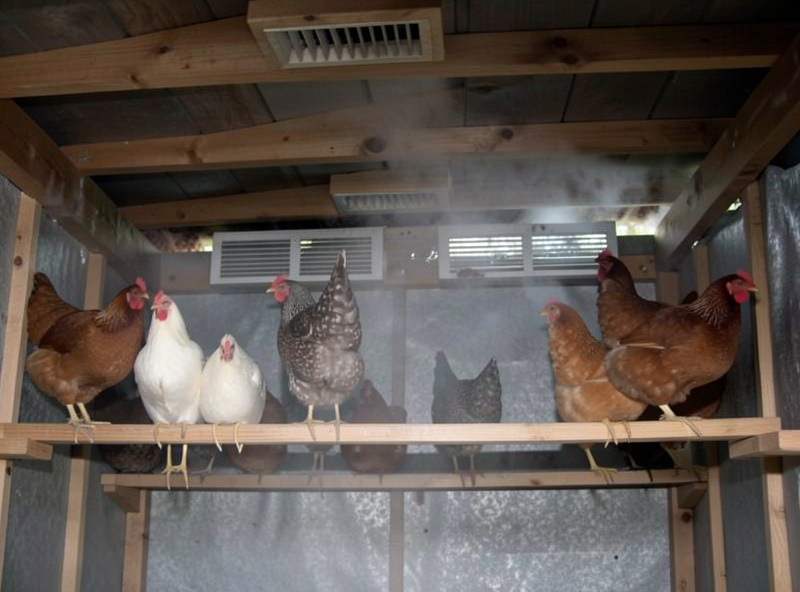
You do not have to guess. The test I use costs almost nothing: on a still, cold morning I light a stick of incense and hold it right at roost height, where the birds’ bodies sit. If the smoke whips sideways across the perch, there is a draft and I need to find and block the low opening feeding it. If it drifts gently upward and out, the air path is right. If it hangs dead still, the coop is under-ventilated and I need more high outlet area. A cheap anemometer gives the same answer in numbers — I want effectively still air at perch height, under roughly 0.5 metres per second, and anything I can clearly feel on a wet finger there is too much — and watching the flock helps too — if the birds consistently crowd to one end of the roost, they are telling you the other end is in a draft. I run this check every autumn before the cold sets in, because a draft can appear from a single popped trim board or a gap a curious hen widened.
Sealing a draft without sealing the ventilation
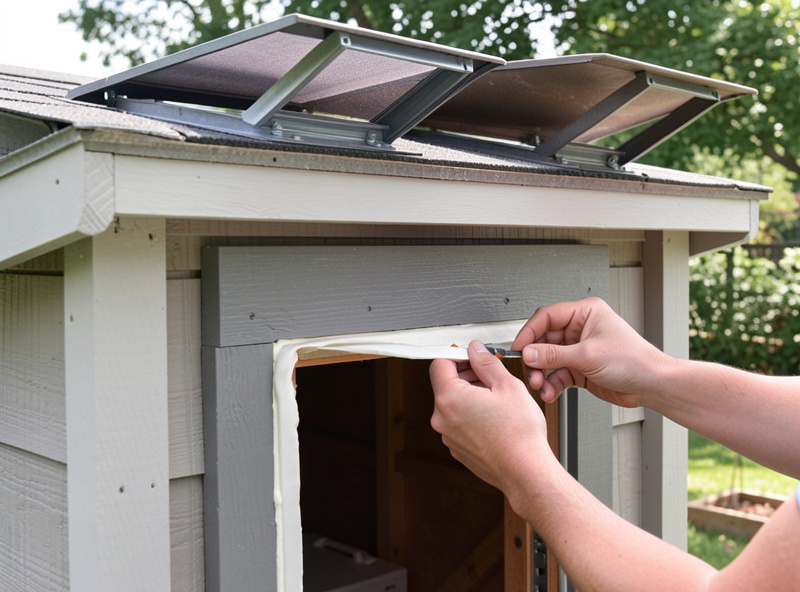
Once you find a draft the fix is targeted, not wholesale. The mistake is to respond to one cold opening by shutting everything, which kills the life-giving high venting along with the harmful low draft. Instead I trace the specific gap blowing across the roost — usually a low wall vent, an ill-fitting door, a gap under the eaves on the windward side, or a pop door that does not seal — and close just that, while leaving the high ridge and upper soffit venting fully open. Weatherstripping the pop door, adding a baffle behind a low vent, or relocating the roost away from the airflow line all solve a draft without touching the moisture exit. The goal is a coop that is still at perch level and breathing freely up top. A roost set roughly a foot below the lowest high vent, with the nearest intake at least a body-length to the side, keeps that separation by design rather than by luck. The full sizing math for the high venting you must keep open lives in the coop ventilation guide.
The winter mistake this confusion causes
The whole reason this distinction matters is that confusing the two leads straight to the most common winter error: sealing the coop to “stop the draft” and frostbiting the flock with trapped moisture. I have talked enough keepers off this ledge to know how reasonable it feels — you put a hand near the roost, feel cold air, and react. But the answer is almost never “less ventilation”; it is “less draft, same ventilation.” If you remember nothing else: keep the high vents open all winter, hunt down and block only the air crossing the roost, and let the birds’ own dry warmth do the rest. For the deeper reasoning on why moisture, not cold, is the enemy, see why a chicken coop needs ventilation, and pair it with cold-hardy breeds that are built for it.
Letting sensors settle the argument for good
The incense test tells you about air movement; a humidity sensor tells you whether the ventilation is actually doing its job, and together they end the guesswork. In the coop I run, a temperature-and-humidity sensor on the wall feeds Home Assistant, and the number I watch is the gap between inside and outside humidity. If the coop tracks within about ten points of the outside air, the high venting is clearing moisture and I leave it wide open no matter how cold it gets. If the indoor reading drifts twenty or thirty points higher, the box is under-ventilated, and sealing it further would be exactly the wrong move. That single reading has settled more “close the vents” debates for me than any amount of hand-waving near the roost.
The sensor also catches the failure the incense test cannot: a slow overnight moisture climb on a still, sub-zero night when there is no draft to feel at all. I set the humidity alert at around 75% relative humidity indoors, well before condensation beads on the inside of the roof, so I am acting on a trend rather than a frost-covered ceiling. Home Assistant pings me when it crosses that line — the same brain that runs the auto-door on a sunrise offset and the freeze-watch on the heated waterer. None of it replaces the basics of high venting, a dry roost, and breeds built for the cold; it just confirms them with numbers. Cooperative Extension poultry housing resources make the same core point in plain language: continuous moisture removal, not a sealed warm box, is what keeps a winter flock healthy.
Frequently Asked Questions
What is the difference between ventilation and a draft in a chicken coop?
Ventilation is air moving above the birds near the roofline, removing moisture without chilling them. A draft is air moving across the birds at roost height, stripping the warm air layer in their feathers and chilling them directly. Same air, different direction and effect.
Is a draft in a chicken coop bad?
A draft on roosting birds is harmful in cold weather because it removes the still warm air trapped in their down, forcing them to burn energy to stay warm all night. High ventilation above the roost is good; air crossing the perch is not.
How do I check if my coop has a draft?
Hold a lit incense stick at roost height on a still, cold morning. Smoke whipping sideways across the perch means a draft; gentle upward drift means good airflow; dead-still smoke means under-ventilation. Birds crowding one end of the roost also signal a draft.
Should I close coop vents in winter to stop a draft?
No. Close only the specific low opening blowing across the roost, and keep the high ridge and soffit vents open. Sealing everything traps moisture, which causes frostbite. The goal is still air at perch level and free airflow up high.
Where should vents go to avoid drafts?
Place vents high, at the ridge or top of the gable, above roost height, with low intakes that do not cross the perch. Keep the roost out of the direct line between intake and outlet so the coop breathes without drafting the birds.
Related Articles
Related Guides
Best Fan for a Chicken Coop in Summer
The best fan for a chicken coop in summer is a thermostat-controlled exhaust fan sized to roughly 5 to 8…
Controlling Coop Ammonia and Humidity
Controlling coop ammonia and humidity is mostly about keeping the litter dry and the air moving: ammonia forms when wet…
Coop Ventilation Guide: Climate Control for a Healthy Flock
Coop ventilation is the single system I design first, because it is the one that quietly kills birds when you…