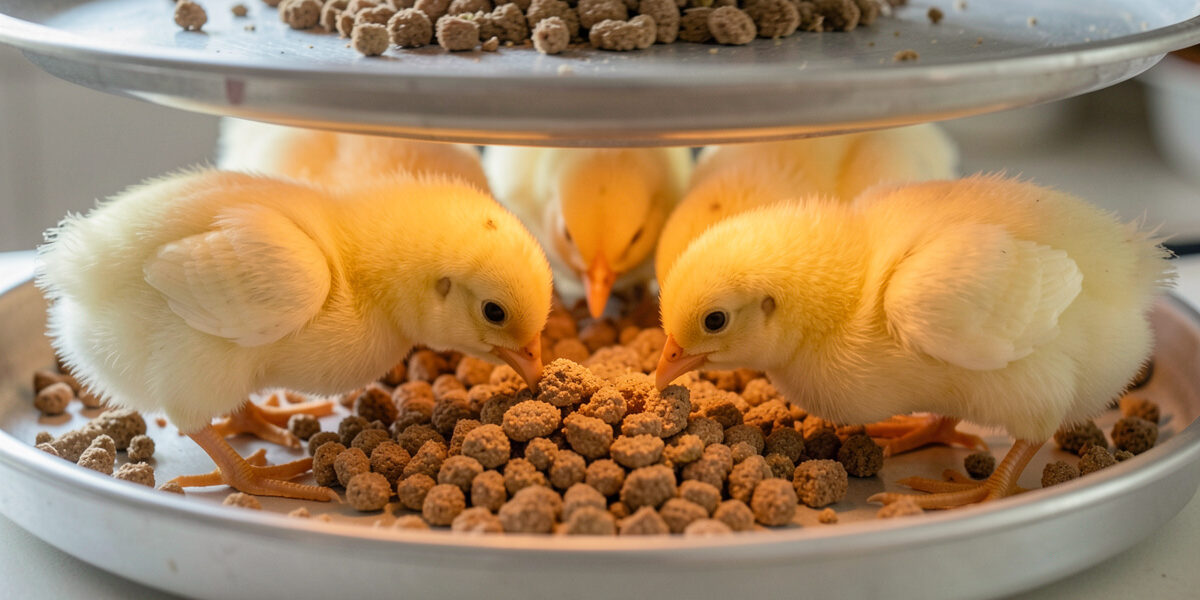
Protein is the nutrient that builds a chicken from the inside out — feathers, muscle, and the egg itself — and the amount a bird needs shifts sharply with its age. Day-old chicks need around 18 to 20 percent protein, growing pullets settle near 16 to 18 percent, laying hens hold at 16 to 18 percent, and a molting hen briefly wants 18 to 20 percent again to rebuild her feather coat. Match the protein to the life stage and you get fast-feathering chicks, well-grown pullets, and hens that lay steadily and molt cleanly.
I keep a mixed-age cold-hardy flock, which means I am almost always feeding birds at two or three different life stages at once. This is the protein-by-age map I actually use — the numbers, why each stage differs, and the one feeding setup that keeps everyone correctly fed without sorting birds into separate pens.
Why Protein Demand Changes With Age
Protein supplies the amino acids a bird uses to build tissue, and the building rate is highest exactly when a chicken is growing fastest. A chick doubles its weight many times over in the first weeks of life, so it needs the richest protein ration it will ever eat. Once growth slows in the pullet stage, the requirement eases. A laying hen’s need is moderate but constant, because she exports roughly six grams of protein in every egg.
The forgotten spike is the molt. Feathers are about 85 percent protein, and a hen replacing her entire coat in autumn is running a major protein project while her lay pauses. Underfeed protein during the molt and the new feathers come in slowly and poorly, which in a cold climate means a bird heading into winter under-insulated. That is why I treat the molt as a deliberate feed change, not a season to ignore.
Chicks: The Highest Protein of Their Lives
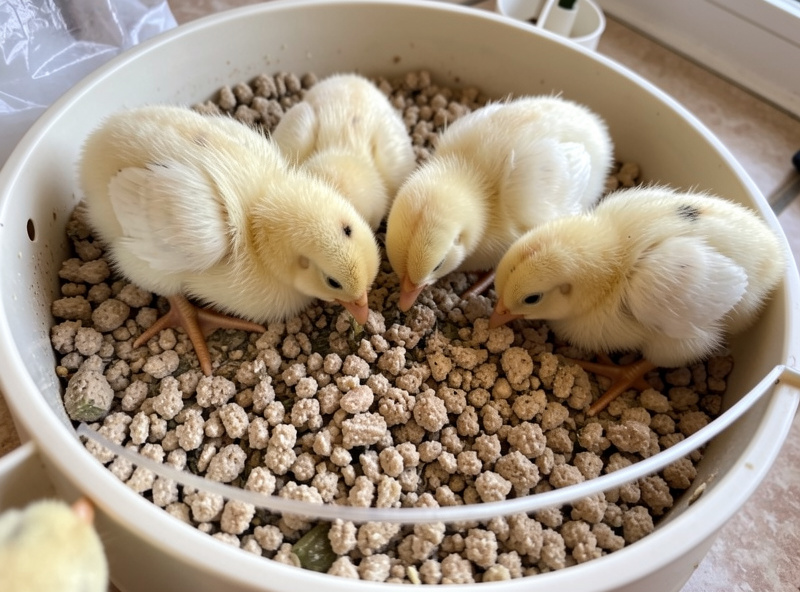
From hatch to about six to eight weeks, chicks eat a starter feed of 18 to 20 percent protein, and this is the richest ration they will get. Medicated or unmedicated is a separate choice, but the protein target is the same — the goal is rapid, healthy growth and quick feathering so chicks can come off supplemental heat sooner. Skimping protein here produces slow, weedy birds that never quite catch up.
The whole starter-to-grower-to-layer sequence is worth understanding as a continuum, which I lay out in detail in my chick feed stages guide. What chicks must never get is layer feed: its calcium load is dangerous to a non-laying bird’s kidneys regardless of how much protein it carries. Keep chicks on starter, and offer chick-sized grit only if they are eating anything other than the complete crumble.
One thing I watch in the chick stage is consistency of intake. A chick that is too cold huddles under the heat source and eats less, and an under-eating chick on even the best 20 percent starter still grows slowly — so brooder temperature and feed quality work together. The protein percentage on the bag only delivers if the bird is warm enough and confident enough to eat freely, which is one of those husbandry details that separates fast-feathering chicks from struggling ones.
Pullets: Easing Down to Grower
From roughly eight weeks to point of lay, pullets move to grower feed at about 16 to 18 percent protein. Growth has slowed from the frantic chick phase, so the protein need drops slightly, and — just as importantly — grower feed stays low in calcium because these birds are still not laying. This is the stage where a lot of keepers get impatient and switch to layer feed too early; the protein would be fine, but the calcium is not.
Hold pullets on grower until the first egg, generally 18 to 24 weeks depending on breed. Breed genuinely shifts both the maturity date and the lifelong laying pattern, which is why I plan a flock around it — see my best laying breeds picks. The clean transition from grower to layer, and the calcium reasoning behind it, is covered in my guide to layer feed versus grower feed.
Where the Protein Actually Comes From
In a complete commercial feed the protein is already blended from grains and protein meals to hit the stated percentage, which is the whole point of buying a balanced bag rather than mixing your own. This is why I am wary of keepers who try to build a ration from scratch grains: corn and wheat are energy, not protein, and a flock fed mostly on scratch ends up protein-short no matter how full the birds look. The bag does the formulation work; your job is choosing the right bag for the age.
Foraging birds and the occasional protein treat add a little on top. A free-ranging flock picks up insects, worms, and grubs that are genuinely high in protein, and a handful of dried mealworms or a bit of scrambled egg is a legitimate protein boost during a hard molt. But these are supplements to the complete feed, not a replacement for it — treats still belong inside the ten-percent ceiling so they do not unbalance the overall ration. The reliable protein floor always comes from the complete feed.
Protein Targets by Life Stage
This is the table I keep in my head when I am filling feeders for a flock that spans several ages at once. Use it to pick the right bag — and remember the calcium column matters as much as the protein one.
| Life Stage | Age | Protein | Calcium | Feed |
|---|---|---|---|---|
| Chick | 0–8 wk | 18–20% | Low | Starter |
| Pullet | 8 wk–first egg | 16–18% | Low | Grower |
| Laying hen | First egg onward | 16–18% | High (3.5–4.5%) | Layer + oyster shell |
| Molting hen | Autumn, ~18 mo+ | 18–20% | Moderate | All-flock + oyster shell |
| Rooster | Adult | ~16% | Low | All-flock / grower |
Laying Hens and the Molt Spike
A laying hen runs well on 16 to 18 percent protein in a complete layer feed, with calcium handled by the feed or a free-choice oyster shell dish. That steady level supports daily egg production without waste — pushing protein much higher in a healthy layer mostly just costs money and can strain the kidneys via excess nitrogen. The exception, again, is the molt.
When my hens molt, I switch the flock to a higher-protein all-flock feed around 18 to 20 percent and let oyster shell cover the calcium for any birds still laying. The extra protein goes straight into feather regrowth, and the birds re-feather faster and more completely — which in Sweden is the difference between a bird that handles the first hard frost and one that struggles. After the molt finishes and lay resumes, I drop back to the standard layer or all-flock ration. Steady protein and calcium are also central to overall output, which I cover in my egg production guide. The timing is worth planning: a hen that molts late and re-feathers slowly heading into a cold winter is the one most likely to drop weight, so I would rather spend a few extra weeks on higher-protein feed in autumn than fight a thin, cold bird in January.
Feeding Different Ages Together
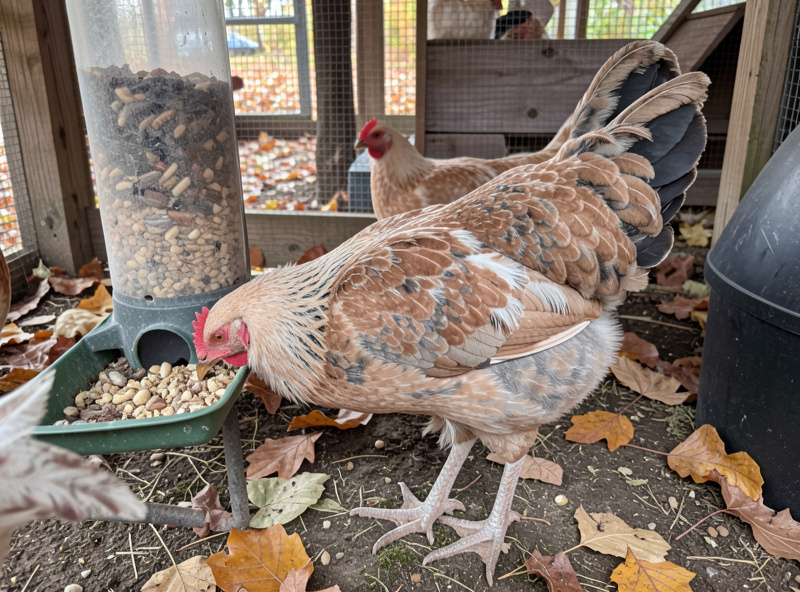
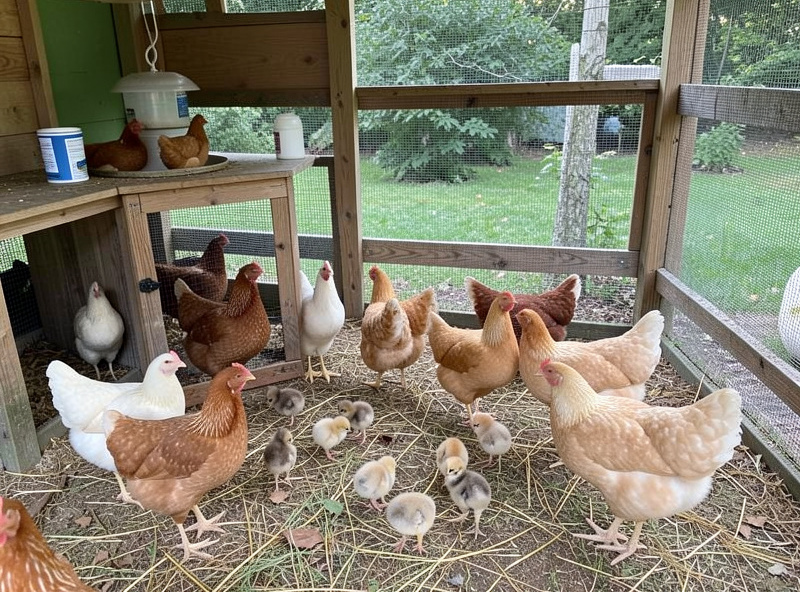
The practical reality is that few backyard flocks are all one age, and you cannot run three different feeds in one coop without chaos. The answer I rely on is an all-flock or flock-raiser feed at a flat ~18 percent protein and low calcium, with oyster shell offered separately. That protein level is high enough for growing birds and molting hens, safe for everyone, and the laying hens self-select the calcium they need from the side dish.
This single setup covers chicks past the brooder, pullets, laying hens, molting birds, and roosters in one feeder — the only birds it does not suit are very young chicks, who still need true starter. It is the lowest-friction way to keep a mixed flock correctly fed, and it sits at the heart of how I run feeding overall, detailed in my complete chicken feeding guide. If a bird is eating well on the right protein and still looks unthrifty or under-feathered out of season, that shifts from a feed question to a health one worth checking against my chicken health guide and, if needed, an avian vet.
Frequently Asked Questions
How much protein do chickens need by age?
Chicks need 18 to 20 percent protein, pullets 16 to 18 percent, laying hens 16 to 18 percent, and molting hens briefly 18 to 20 percent. Match the protein to the life stage for healthy growth, steady laying, and a clean molt.
What protein percentage do laying hens need?
Laying hens do well on 16 to 18 percent protein in a complete layer feed. That level supports daily egg production without waste. Pushing protein much higher in a healthy layer mostly adds cost rather than benefit.
Do molting chickens need more protein?
Yes. Feathers are about 85 percent protein, so a molting hen rebuilding her coat benefits from 18 to 20 percent protein, often from an all-flock feed. Higher protein during the molt produces faster, fuller feather regrowth.
Can high-protein feed harm chickens?
Very high protein offers little benefit to healthy laying hens and can add strain through excess nitrogen the body must excrete. Stay in the recommended range for each life stage rather than over-supplementing protein.
What protein feed works for a mixed-age flock?
An all-flock or flock-raiser feed at about 18 percent protein and low calcium suits chicks past the brooder, pullets, hens, and roosters together. Offer oyster shell separately so laying hens get the calcium they need.
Keep Reading
- What to Feed Chickens: Complete Guide
- Layer Feed vs Grower Feed
- Chick Feed Stages Explained
- How to Increase Egg Production
Related Guides
Scratch Grains for Chickens: Treat, Not a Meal
Scratch grains are the most overfed thing in backyard chicken keeping. Scratch is a treat — a cracked-corn-and-grain mix that…
Fermented Chicken Feed: A Practical Keeper Guide
Fermenting chicken feed is the cheapest upgrade in the coop that actually earns its place. Soaking complete feed in water…
What Treats Can Chickens Eat? Safe and Unsafe Foods
Chickens are enthusiastic about almost anything you hand them, which is exactly why treats are where good intentions wreck a…