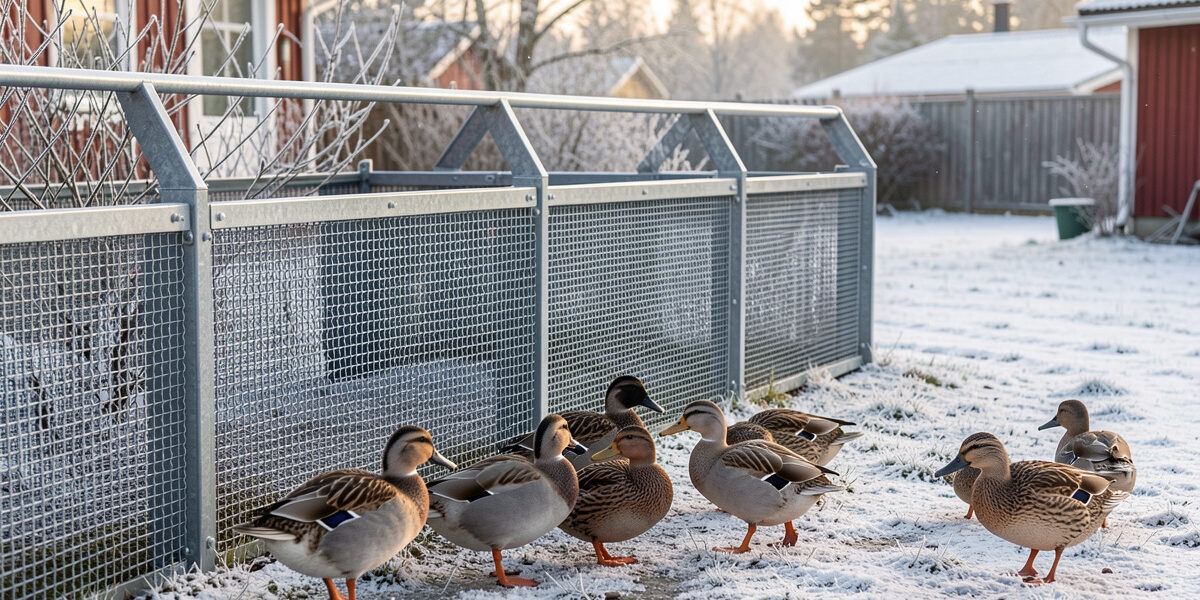
A keeper-engineer guide to raising cold-hardy backyard ducks for eggs.
This raising ducks backyard guide is the one I wish I’d had before my first flock waddled into a Swedish winter: ducks out-lay most chickens through cold, wet months, but they foul water fast, need niacin chick starter doesn’t supply, and sleep on the ground where a fox will find them. Get those three right and the rest is easy.
I run a cold-hardy flock here in Sweden out of the same insulated, predator-proofed walk-in coop I built for my chickens, and ducks have quietly become my favourite winter layers. While my hens slow to a trickle in the dark months, the ducks keep going. If you’ve already read my backyard poultry guide, treat this as the duck-specific deep dive: everything that’s genuinely different from keeping chickens, and nothing that just rehashes glossy starter-kit advice from people who’ve never met a fox or a -20C night.
Why Ducks? The Cold-Wet Laying Advantage
The first time it sleeted sideways for a week and my Khaki Campbells were out in it, heads down, paddling happily in a puddle while the hens sulked indoors, I understood the appeal. Ducks are built for exactly the weather that makes chickens miserable. Their feathers are waterproofed with oil from the preen gland, and under that outer layer sits a dense coat of down that traps body heat even when wet. Cold and damp is their element, not their enemy.
That translates directly into eggs. A good laying duck doesn’t taper off the way many hens do as daylight shortens, and the eggs themselves are larger, richer, and prized for baking. They forage hard too, hoovering up slugs and snails that punish a vegetable garden. The trade-off is water and mess, which I’ll get to, but for anyone keeping poultry in a genuinely cold, wet climate, ducks earn their keep in a way that surprised me.
Best Laying Breeds
If eggs are the goal, breed choice matters more than anything else you’ll do. Skip the ornamental heavyweights and pick a proven layer. These are the breeds I’d actually recommend to someone keeping ducks for the egg basket in a cold climate.
| Breed | Eggs/year | Temperament | Cold-hardiness | Notes |
|---|---|---|---|---|
| Khaki Campbell | 250-320 | Active, flighty | Excellent | The workhorse layer; lean, foraging-mad, rarely broody |
| Welsh Harlequin | 240-330 | Calm, friendly | Excellent | Campbell-derived; auto-sexable as ducklings, will go broody |
| Indian Runner | 150-300 | Nervous, upright | Very good | Vertical, comical movers; superb foragers, poor mothers |
| Cayuga | 100-150 | Quiet, docile | Excellent | Iridescent black; hardy and calm but a modest layer |
| Magpie | 220-290 | Lively, alert | Very good | Striking markings, good dual-purpose layer, less common |
My own preference leans to the Khaki Campbell for sheer output and the Welsh Harlequin when I want a calmer bird that’s easier to handle. Runners are the entertainment value of the yard, all upright and frantic, and they forage brilliantly. The Cayuga earns its place on looks and toughness rather than the egg count. There’s no single “best” duck, only the best one for what you want out of the flock.
Water Management: The Thing People Get Wrong
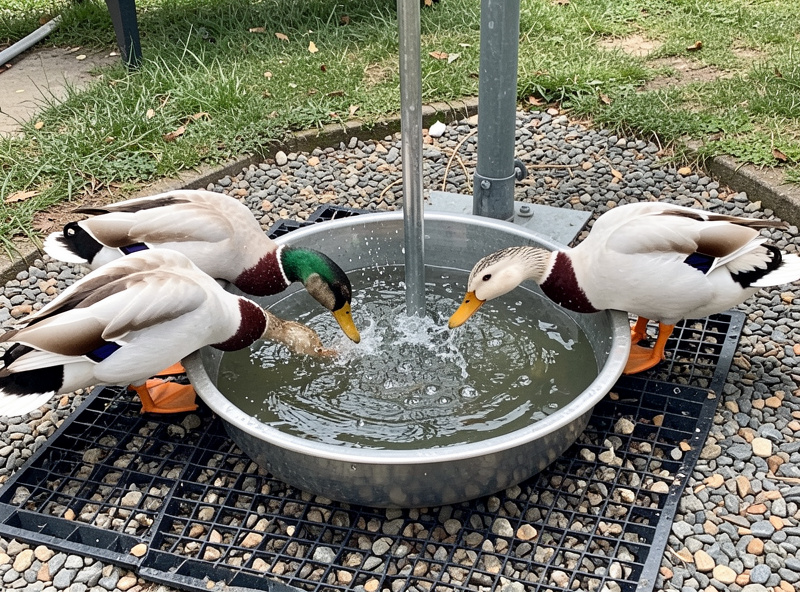
Here’s the duck quirk that catches everyone out. A duck must be able to submerge its whole head to clear its nostrils and rinse its eyes; without that, it develops crusted nares and eye problems. So you can’t just hand them a chicken nipple line and call it done. But the moment you give them open water, they’ll dabble, splash, and turn it into mud soup within hours. Ducks foul water faster than any bird I keep.
The answer that works in my run is a tucked dunk station: a deep, narrow container the bird can plunge its head into, set on a gravel-and-drain pad well away from sleeping bedding. The gravel lets the inevitable overflow drain away instead of soaking into the ground, and keeping it away from the coop means the mess stays outside where it belongs. I don’t give them a swimming pool. They don’t need one to be healthy layers, and a pool is just a bigger thing to dump and scrub daily. Dry bedding plus clean drinking water is the whole game, and the two have to be physically separated. My setup borrows the same automation logic as my automated feeders and waterers rig, just adapted for how filthy ducks are with water.
Housing: No Roost, So Bedding Is Everything
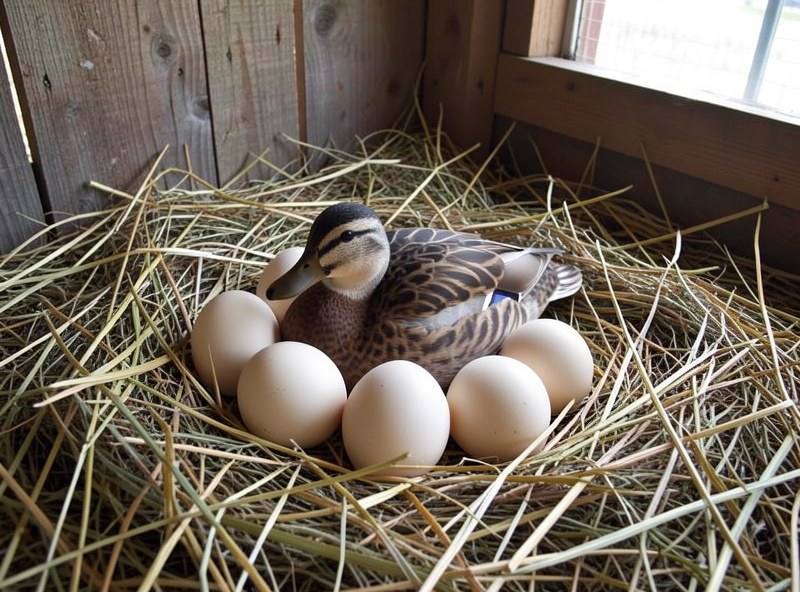
This is where duck housing diverges sharply from a chicken coop. Ducks don’t roost. They sleep on the floor, pressed together in a heap, which means the floor is their bed. There’s no point building roost bars; what matters instead is dry, deep bedding they can nestle into. I run the same deep litter method I use for the hens, but I’m even more aggressive about keeping the duck side dry because they’re sleeping directly in it.
The pop door needs rethinking too. A duck won’t hop up to a raised chicken door; they want a ground-level opening, and it should be wider than a chicken’s because ducks move in a waddling pack and bottleneck at a narrow gap. Ventilation still matters enormously, and the principles in my coop ventilation guide apply directly: you want air moving up and out at the ridge without a draft blowing across the sleeping birds. Ducks throw a lot of moisture into the air, so passive ridge-and-soffit ventilation is, if anything, more important for them than for chickens.
Duckling Care and the Niacin Gotcha
If you raise ducklings, there’s one mistake that will quietly cripple your birds: feeding them plain chick starter. Ducklings need substantially more niacin (vitamin B3) than chicks, and standard chick starter doesn’t supply enough (the Merck Veterinary Manual nutrient requirements spell out the waterfowl gap). Run them short on niacin during that fast early growth and their legs develop poorly, you’ll see bowing, weakness, and birds that can’t keep up. It’s heartbreaking and it’s entirely preventable.
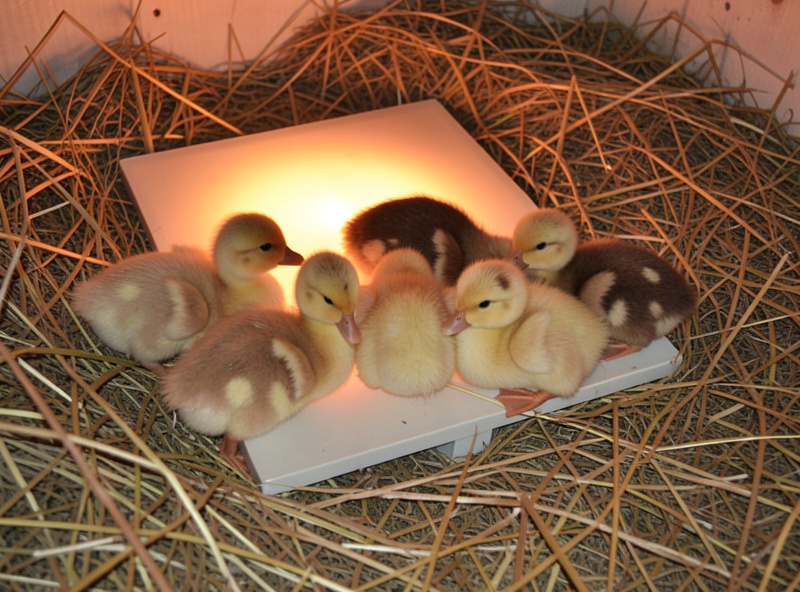
The fix is simple: either feed an unmedicated waterfowl-specific starter, or supplement a chick starter with plain niacin (brewer’s yeast is the easy home route) to bring the levels up. Beyond that, ducklings need the same warm, dry brooder logic as chicks, under a heat plate in deep dry bedding, but they’re messier with water from day one, so the same drain-pad discipline applies in miniature. Keep their drinking water deep enough to dunk a bill but shallow enough that a tired duckling can’t get chilled in it.
Feeding the Adult Flock
Once they’re laying, ducks do well on a standard poultry layer feed at roughly 16-18% protein, with free-choice oyster shell on the side for shell-building calcium. If you keep mixed ages, drakes, and layers together, a flock-raiser ration with separate oyster shell is the cleaner approach, since you don’t want the high calcium of a layer feed going into growing or non-laying birds. The nutrition fundamentals overlap heavily with what I cover in my chicken feeding and nutrition guide; the niacin point above is really the one duck-specific divergence that catches people out.
Ducks also forage with real enthusiasm, and good pasture or garden access offsets a meaningful chunk of their feed bill while turning them into roaming pest control. The manure is a bonus: it goes straight into my compost loop, the same one I describe for chicken manure in the garden. Wetter and stronger than chicken manure, so I always compost it before it touches a growing bed.
Predator-Proofing: Why Ground-Dwellers Need More
This is the part that keeps me up at night, and it’s where most starter advice is dangerously casual. Ducks sleep on the ground. They don’t flap up to a high roost out of a predator’s reach the way a panicked hen might. A duck on the floor at night is the easiest meal in the yard, and that means your housing has to be genuinely secure, not chicken-wire theatre.
Chicken wire keeps chickens in; it does not keep predators out. A determined fox, raccoon, or mink tears through it. I clad my run in 19-gauge half-inch hardware cloth, the same spec I argue for in my hardware cloth coop writeup, with a buried dig apron skirting out from the base so nothing tunnels under. Everything I learned building a predator-proof coop for the hens applies double to ducks, precisely because they can’t escape upward.
The single best thing I did for the ducks was the automatic pop door. Ducks are reluctant to put themselves to bed at a consistent hour, and a door that closes on a sunset offset means the flock is sealed in solid hardware-cloth housing before the foxes come on shift, every night, whether I’m home or not. I run mine on a Home Assistant schedule; the buying logic and the units I’ve tested are in my best automatic coop door guide. For a ground-dwelling bird, that door isn’t a convenience, it’s the difference between a flock and a crime scene.
Cold-Climate and Winter Care
Ducks genuinely love cold weather, and that still surprises people. Mine are out in snow and sleet looking thoroughly pleased with themselves on days the hens won’t leave the coop. Their waterproof, downy insulation means a healthy adult duck shrugs off temperatures that would have me reaching for a chicken’s heat lamp, and the same cold-tolerance logic I lay out for cold-hardy chickens goes further still with waterfowl.
But there’s one winter non-negotiable: heated water. The whole point of a duck’s water station is that it can dunk its head, and a frozen block of ice serves no one. Through a Swedish winter a heated waterer isn’t a luxury, it’s the thing that keeps the flock functional, so plan the power for it before the first freeze. I keep the dunk station running on a heated base and accept the electricity cost as part of the deal.
The second winter task is moisture. Ducks exhale and splash a lot of water, and in a sealed coop on a cold night that moisture condenses, and damp bedding is far more dangerous to a floor-sleeping duck than dry cold ever is. Keep the bedding deep and dry, keep the ridge ventilation flowing so humidity escapes, and you’ll have a flock that sleeps warm on the worst nights. Cold is fine. Damp is the killer.
As an Amazon Associate I earn from qualifying purchases. If you’re sorting winter kit, a heated duck waterer is the first thing I’d put on the list.
A Note on Health
I’ll keep this short and honest: I’m a keeper and a builder, not a vet. The husbandry above (the niacin, the dry bedding, the clean water) prevents most of the common problems before they start. But if a bird shows signs of illness, lameness beyond a niacin issue, respiratory trouble, or anything you can’t explain, see an avian vet. I won’t diagnose conditions or hand out doses, and you shouldn’t take that from anyone online either.
Do backyard ducks need a pond to be healthy?
No. Ducks must be able to submerge their head to clear their nostrils and eyes, but they do not need a swimming pond to stay healthy or lay well. A deep dunk station on a draining pad is enough and far easier to keep clean.
Which duck breed lays the most eggs?
The Khaki Campbell is the standout laying breed, producing roughly 250 to 320 eggs a year. The Welsh Harlequin is a close, calmer alternative. Both keep laying through cold months better than most chicken breeds do.
Why do ducklings need extra niacin?
Ducklings need more niacin (vitamin B3) than standard chick starter provides. Without enough, their legs develop poorly during fast early growth. Feed a waterfowl starter or supplement chick starter with plain niacin or brewer’s yeast to prevent leg problems.
Can ducks live with chickens?
They can share space, but ducks foul water fast and need ground-level housing without roosts, while chickens want raised perches. Separate water stations and dry bedding help. Watch feed too, since ducklings need more niacin than chicks.
Are ducks cold-hardy in winter?
Yes. Waterproof feathers over dense down make ducks excellent in cold, wet weather, often outperforming chickens. The non-negotiables are a heated waterer so it does not freeze and deep, dry bedding to sleep on, plus good ventilation to manage moisture.
What feed do laying ducks need?
A standard poultry layer feed at about 16 to 18 percent protein with free-choice oyster shell works well. For mixed-age flocks with drakes, use a flock-raiser ration plus separate oyster shell so non-layers do not get excess calcium.
Related Guides
- Backyard Poultry: The Complete Beginner’s Guide
- How to Predator-Proof Your Coop
- Best Cold-Hardy Breeds for Winter
- The Deep Litter Method Explained
- Best Automatic Coop Door
Related Guides
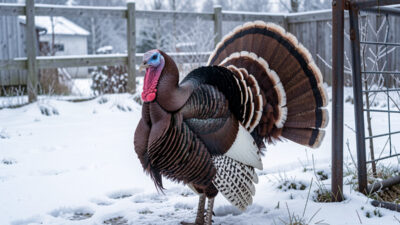
Raising Heritage Turkeys in the Backyard
A keeper guide to raising heritage turkey breeds in a backyard flock.
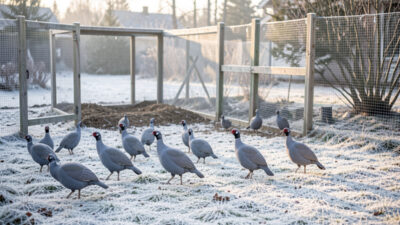
Guinea Fowl for Backyard Pest Control
How guinea fowl control ticks and pests, plus the keeping reality.
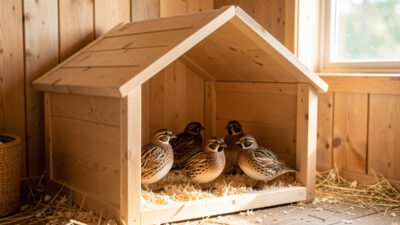
Raising Backyard Quail for Eggs
A keeper guide to raising Coturnix quail for eggs in a small footprint.