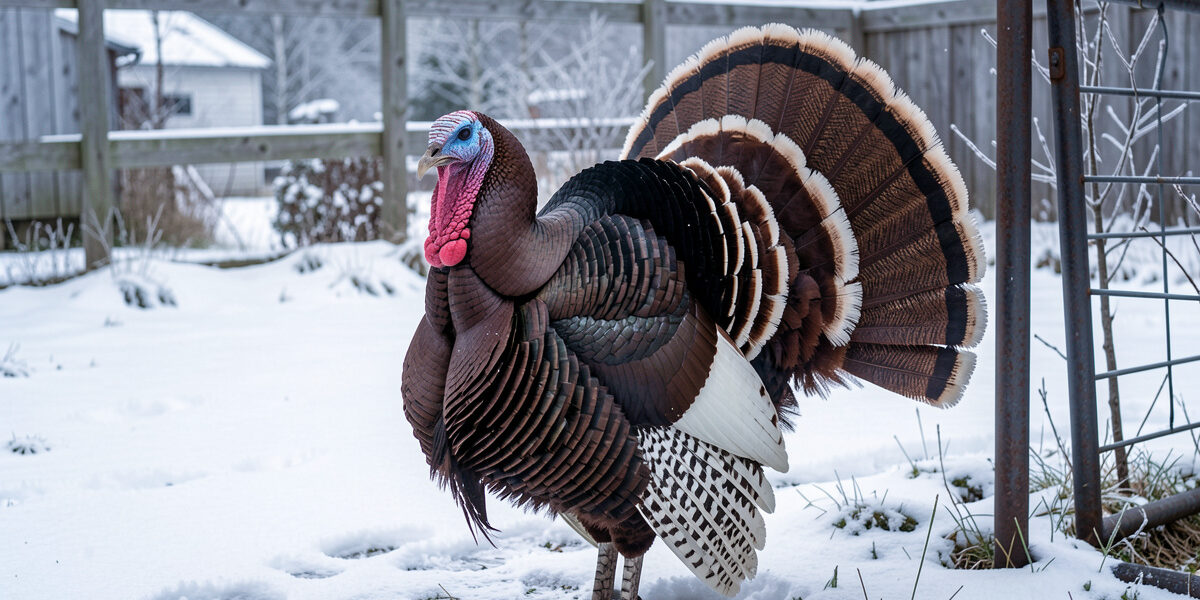
A keeper guide to raising heritage turkey breeds in a backyard flock.
Raising heritage turkeys backyard keeping is its own project, not a bigger version of chickens. These are slow-growing, naturally breeding birds that forage hard, fly to roost, and live for years. If you want a self-sustaining flock with character, heritage turkeys earn their feed.
I keep a cold-hardy flock here in Sweden in a self-built, insulated, predator-proofed walk-in coop, and I’ll say up front: a turkey is not a chicken with longer legs. It eats more, it needs a stronger roost, its bare head is more vulnerable to frostbite, and it carries a disease risk that shapes whether you can even run it alongside your hens. This guide is the keeper-engineer version of the project, written from the run rather than from a glossy starter kit. If you’re new to poultry generally, start with my backyard poultry guide first, then come back here for the turkey-specific parts.
Heritage vs. broad-breasted: why the breed type matters
The single most important decision happens before you buy a single poult: heritage or broad-breasted. The broad-breasted turkeys (Broad Breasted White, Broad Breasted Bronze) are the supermarket bird, selected for a single trait — an enormous breast that grows fast. The cost of that selection is steep. They grow so heavy, so quickly, that they generally cannot breed naturally and have to be artificially inseminated to reproduce. They aren’t built to forage, they aren’t long-lived, and they aren’t a backyard project bird in any real sense. They’re a meat crop on a clock.
Heritage turkeys are the old standardized breeds — birds that existed before the broad-breasted industry rebuilt the species. They mature slowly, they forage aggressively for bugs and greens, they fly up to roost like a wild bird, and crucially they breed naturally. A heritage tom and hen will mate, the hen will lay a seasonal clutch, and a broody hen will hatch and raise her own poults without you incubating a thing. They’re long-lived for poultry, with toms producing for several breeding seasons. That natural reproduction is the whole point of a heritage flock: it’s sustainable in a way a broad-breasted bird never can be.
Best heritage turkey breeds for the backyard
Breed choice comes down to temperament, mature size, and how well the bird forages in your conditions. A few of the standardized heritage breeds have earned their place in backyard flocks. Here’s how I’d line them up.
| Breed | Mature weight | Temperament | Foraging | Notes |
|---|---|---|---|---|
| Bourbon Red | Tom ~23 lb, hen ~14 lb | Calm, friendly, manageable | Excellent active forager | Rich mahogany plumage; a strong all-round starter heritage breed |
| Narragansett | Tom ~23 lb, hen ~14 lb | Docile, good-natured | Outstanding forager | Old New England breed; calm enough for first-time keepers |
| Royal Palm | Tom ~16 lb, hen ~10 lb | Active, alert, can be flighty | Very good forager | Smallest of the group; striking white-and-black; more ornamental and self-reliant |
| Standard Bronze | Tom ~25 lb, hen ~16 lb | Calm but large and assertive | Good forager | The biggest heritage option; the ancestor of the broad-breasted bird |
| Blue Slate | Tom ~23 lb, hen ~14 lb | Generally calm, varies by line | Good forager | Slate-blue plumage; a rarer breed worth supporting for genetic diversity |
If you want one recommendation and not a paragraph of hedging: a Bourbon Red or a Narragansett. Both are calm, both forage well, and both sit at a sensible size for handling. The Royal Palm is the lightweight if space or appetite is a concern, and the Standard Bronze is the bird to choose if you genuinely want the largest heritage turkey and can build the roost to carry it.
Space and roost: build for a 15-25 lb bird
This is where turkey keeping diverges hard from chicken keeping, and where most starter-kit advice falls apart. Turkeys are big birds, and they need real square footage. Plan on roughly 8 to 10 square feet of coop floor per bird, more if they’ll be shut in during long stretches of bad weather, and a run that’s genuinely generous — these are foraging birds that range widely when given the chance. Cramped turkeys get into trouble: bullying, dirty conditions, and the kind of damp that turns into disease.
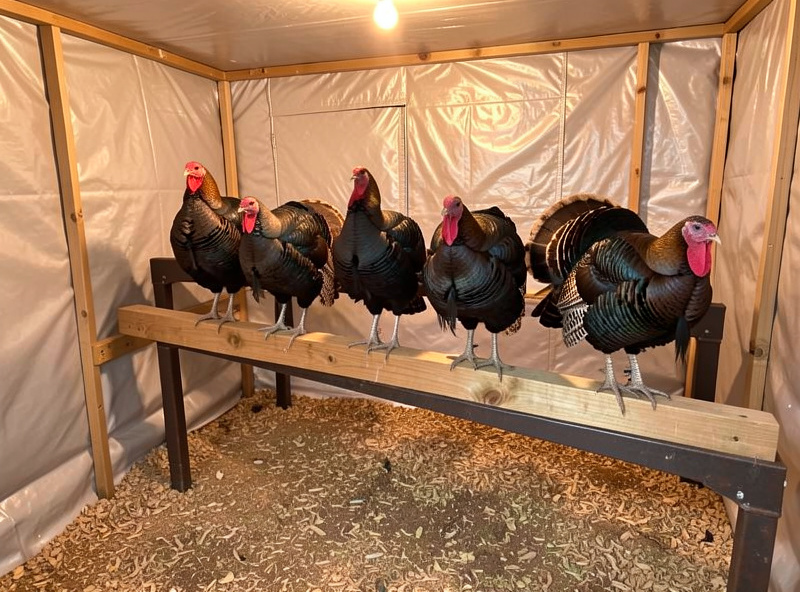
The roost is the part people get wrong. A heritage tom can hit 23-25 lb, and a flimsy chicken roost bar will not carry that. In my run, the roost I welded for the turkeys is a low, sturdy perch — a wide, flat, heavily supported beam, mounted low to the ground. Two reasons. First, strength: a 2×4 laid flat across a properly braced frame, not a thin dowel. Second, height: a heavy bird launching off a tall roost lands hard, and repeated jarring landings damage feet and legs. Keep it low, keep it wide, keep it strong. The welder builds the frame, the 3D printer prints the mounting brackets, and the bird gets a roost that won’t sag under it in three years. If you’re sorting out perches and litter for a mixed setup, my notes on the deep litter method apply to turkeys too — deep litter manages moisture and droppings the same way under a heavier bird.
Cold-climate head risk: the snood and caruncles
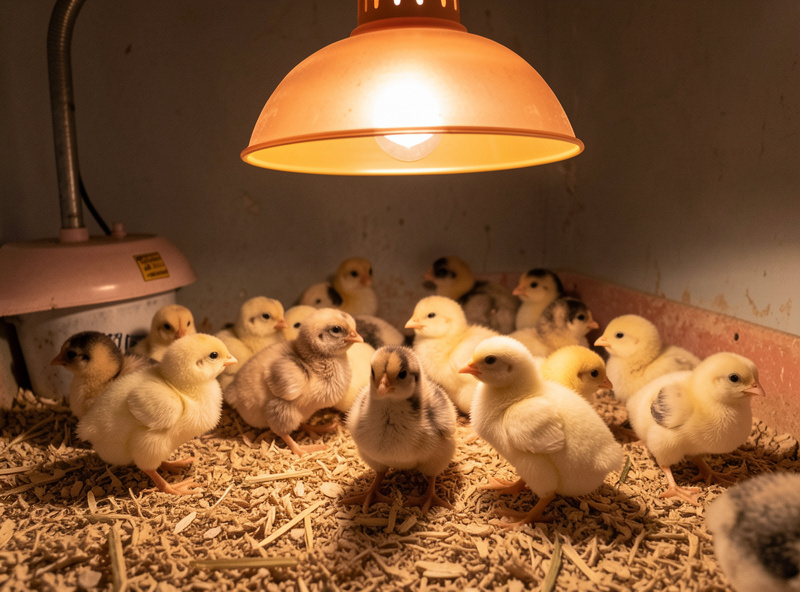
Turkeys carry a lot of bare skin on the head and neck — the snood (the fleshy projection over the beak), the caruncles (the bumpy growths on the head and neck), and the wattle. All of that exposed tissue is vulnerable to frostbite in the same way a chicken’s comb is, except there’s more of it and it’s larger. The logic is identical to what protects a chicken’s comb, just doubled down: frostbite isn’t really about raw cold, it’s about moisture. A dry coop at a cold temperature is far safer than a humid coop a few degrees warmer, because it’s the damp air condensing on exposed tissue that does the freezing damage.
So the fix is ventilation, not heat. You want a steady passive air exchange — ridge and soffit ventilation in my coop — that pulls humid, ammonia-laden air out without blowing a draft across the roosting birds. Ventilation removes moisture; a draft chills the bird directly. The two are not the same thing, and confusing them is the classic beginner error. I run the same logic for my turkeys as for my cold-hardy hens; the principles are laid out in my coop ventilation guide and the breed-side of it in cold-hardy chickens. Get the moisture out, keep the draft off the roost, and a heritage turkey handles a Nordic winter without a heat lamp.
Blackhead disease: the reason many keepers separate turkeys and chickens
This is the conversation no glossy guide wants to have, and it’s the single biggest reason experienced keepers think twice before running turkeys with chickens. Blackhead disease (histomoniasis) is a serious parasitic disease that turkeys are highly susceptible to (the Merck Veterinary Manual entry on histomoniasis covers why). The wrinkle that catches people out: chickens can carry the organism asymptomatically — apparently healthy hens shedding something that can be devastating to turkeys sharing the same ground.
I’m a keeper, not a vet, so I’ll stay firmly on the husbandry side of this. The general awareness every turkey keeper should have is that mixing turkeys and chickens, or running turkeys on ground that chickens have used, raises the risk, and that good husbandry — clean, dry conditions, managed soil, not overcrowding wet ground — is part of how keepers reduce that risk. I won’t go anywhere near diagnosis or treatment, and neither should you off a web page. If you’re planning a mixed flock or you see a sick bird, that’s a conversation for an avian vet who knows your region and your setup. Take this seriously enough to ask the question before you build, not after.
Raising poults: protein, warmth, and a careful start
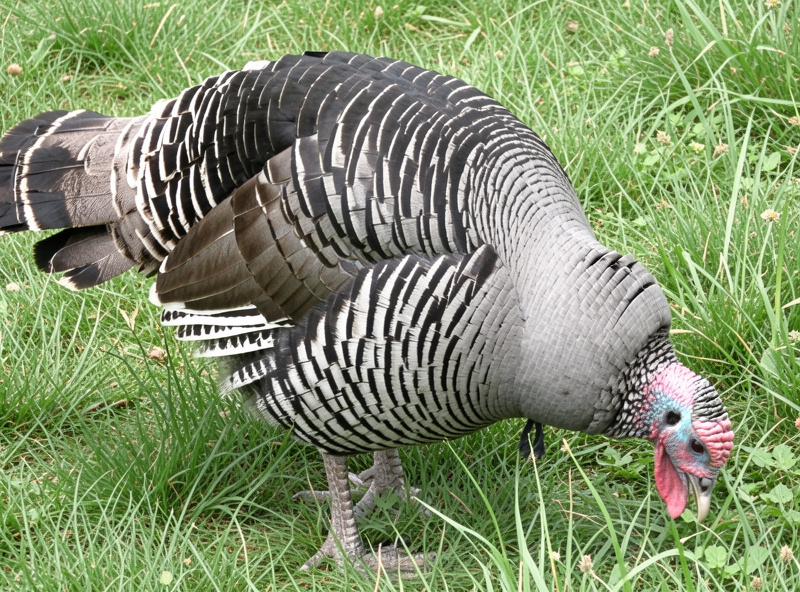
Turkey poults are more delicate than chicks in their first weeks, and they have different needs. The big one is protein: poults need a much higher-protein starter than chicks — a game-bird or turkey starter in the region of 28% protein for the first several weeks, stepping down as they grow. Feed them chick starter and you’ll see slow, weak development. Turkey-specific feed for turkey-specific growth.
The other big one is that poults are genuinely fragile early on. They’re sensitive to chill and to damp, and a cold, wet poult is a poult in trouble fast. Keep the brooder warm, keep it bone dry, and keep it draft-free. Watch them closely the first couple of weeks — they can be slow to figure out feed and water, and a poult that isn’t eating or drinking needs intervention quickly. Once they feather out and get going they toughen up considerably, but the early window deserves your attention. My general poultry feeding and nutrition notes cover the broader principles, but for poults the protein number is non-negotiable.
Predator-proofing: big birds, still vulnerable
A grown heritage turkey is a large, capable bird that can put up a fight and fly to roost away from ground threats. That can lull you into thinking they don’t need the same protection as smaller poultry. They do — and the poults absolutely do. Hawks, foxes, raccoons, mustelids, the lot will take a young turkey, and a determined predator will take an adult off the ground at night.
The fortress logic is the same as for any flock: half-inch hardware cloth rather than chicken wire (chicken wire keeps chickens in, hardware cloth keeps predators out), a buried dig apron, and a securely closed coop every single night. I run the night housing on an automated door, and the whole run is welded steel skinned in hardware cloth with a buried apron around the perimeter. Treat the turkeys exactly as seriously as you’d treat the hens — see my predator-proofing guide and the specifics on hardware cloth. The big bird is not exempt.
Seasonal laying and natural reproduction
Heritage turkey hens are seasonal layers, not year-round egg machines. Expect a seasonal clutch in the range of 50 to 100 eggs across the laying season, concentrated in spring and early summer. The turkey eggs are large, cream-colored and speckled, and perfectly good eating if you don’t need them for hatching.
The reward for keeping the heritage type shows up here: the hens go broody and raise their own. A heritage hen will sit a clutch and hatch and mother her poults with no incubator and no brooder lamp from you — the natural reproduction that defines a heritage flock. It’s the most satisfying part of the project and the part that makes the flock genuinely self-sustaining year over year. Build the housing right, get the protein right, respect the disease risk, and a heritage flock more or less perpetuates itself.
If you’re weighing turkeys against other backyard birds, it’s worth reading around the whole poultry yard — my notes on backyard ducks and quail for eggs cover very different keeping projects that might fit your space and goals better, or alongside.
As an Amazon Associate I earn from qualifying purchases. If you’re kitting out a brooder, a game-bird starter feed and a reliable heated waterer are the two things worth sorting before the poults arrive.
Can you raise heritage turkeys with chickens?
You can, but many keepers don’t, because of blackhead disease. Chickens can carry the organism without symptoms and pass it to turkeys, which are highly susceptible. Good husbandry reduces risk; talk to an avian vet before mixing flocks.
How much space does a heritage turkey need?
Plan on roughly 8 to 10 square feet of coop floor per bird, plus a generous run. Turkeys are large foraging birds that range widely, and crowding leads to bullying, damp conditions, and disease problems.
What is the best heritage turkey breed for beginners?
Bourbon Red and Narragansett are the easiest starts: both are calm, friendly, excellent foragers, and a manageable size. Royal Palm is the lightweight choice if appetite or space is limited; Standard Bronze is the largest option.
Do heritage turkeys need a special roost?
Yes. A heritage tom can reach 23 to 25 pounds, far too heavy for a thin chicken roost bar. Build a low, wide, heavily supported perch so it carries the weight and the bird doesn’t damage its feet landing.
What do you feed turkey poults?
Poults need much higher protein than chicks: a game-bird or turkey starter around 28 percent protein for the first several weeks, stepping down as they grow. Keep them warm and dry, as poults are fragile early on.
Related Guides
Related Guides
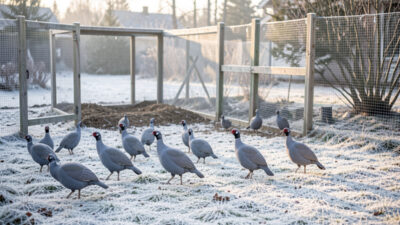
Guinea Fowl for Backyard Pest Control
How guinea fowl control ticks and pests, plus the keeping reality.
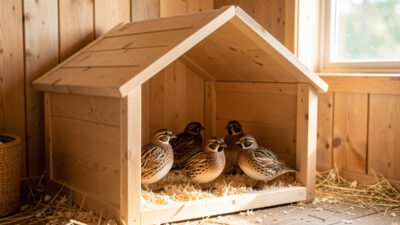
Raising Backyard Quail for Eggs
A keeper guide to raising Coturnix quail for eggs in a small footprint.
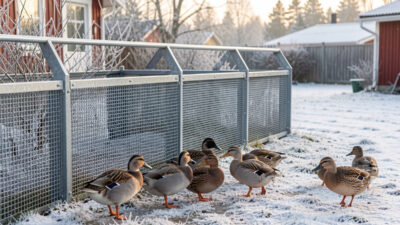
Raising Backyard Ducks: The Complete Keeper Guide
A keeper-engineer guide to raising cold-hardy backyard ducks for eggs.