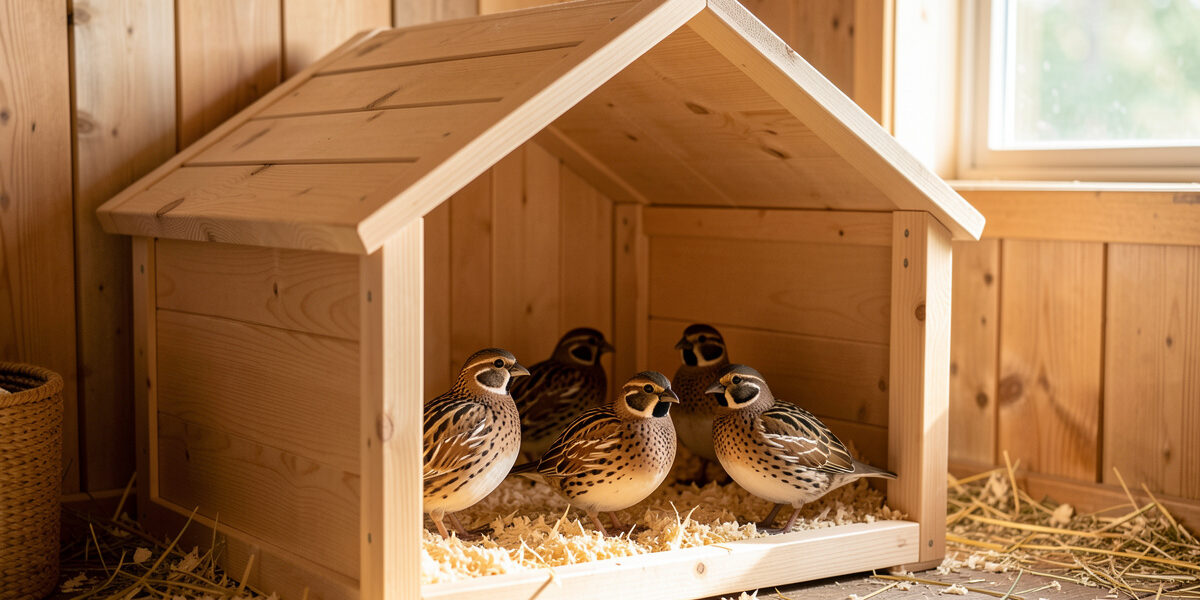
A keeper guide to raising Coturnix quail for eggs in a small footprint.
Here is my backyard quail for eggs guide: Coturnix quail give you the fastest, smallest-footprint egg flock you can keep, laying at six to eight weeks in roughly a square foot of space per bird, so they fit a balcony, shed, or spare corner where no chicken coop ever could.
I keep a cold-hardy flock here in Sweden, mostly chickens in a self-built insulated walk-in coop, but quail are the bird I keep recommending to people who tell me they have no room. They are the gateway poultry: cheap to start, quiet, productive within two months, and forgiving of small spaces in a way no chicken ever is. If you have read my backyard poultry guide and decided a full coop is more than you can manage, quail are where I would point you first. They are not a downgrade. They are a different, denser kind of keeping, and they reward you faster than any other bird on the place.
Why quail earn their keep
The headline number is space. A quail needs about one square foot of floor, against the four-plus square feet I budget per hen in my run. That density is what makes quail viable on a balcony or in a shed. Point of lay (POL) arrives at six to eight weeks, which is absurd compared to the five or six months you wait on a pullet. A good Coturnix hen will give you something in the range of 250 to 300 eggs a year through her productive stretch.
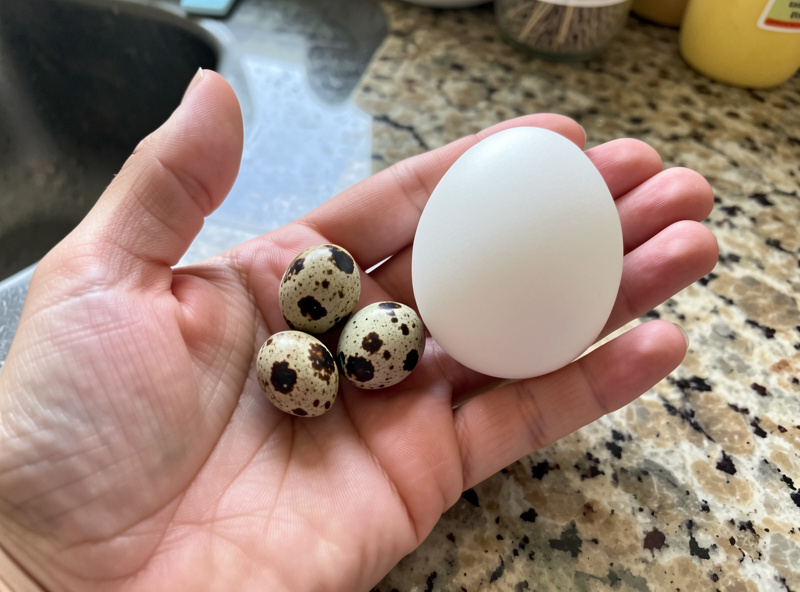
The eggs are small but they are not toy food. Reckon on roughly five quail eggs to one chicken egg by volume, so a breakfast is six or seven of them. They are rich, the yolk ratio is high, and they pickle beautifully. For a household, a dozen hens in a single hutch will keep you in eggs without you ever building a coop, pouring a footing, or arguing with a council about livestock.
They are also quiet. Hens make a soft churring; there is no dawn announcement like a rooster delivers. That alone makes them the realistic choice for anyone in a flat or a tight suburban plot where a crowing bird would end the project in a week.
Species: pick Coturnix, skip Bobwhite for eggs
For eggs you want Coturnix, the Japanese quail. They are the laying machine of the family, calm enough to handle, and they hit POL fast. You will see Bobwhite quail offered too, and they are a different proposition entirely: slower to mature, gamier, more flighty and territorial, and kept more for meat and dog-training releases than for a steady egg supply. There is nothing wrong with Bobwhite, but if your goal is a tray of eggs every morning, Coturnix is the only sensible answer. Get that one decision right and the rest of this is just housing and feed.
Housing geometry: the one thing that kills quail
This is the part that the glossy starter-kit content skips, and it is the part that matters most. Quail do not flap up to a perch like a chicken. When something startles them they flush straight up, vertically, with real force. In a tall enclosure with a hard roof at normal head height, a spooked covey will rocket up and break their own necks on the ceiling. I have seen it happen to people who housed quail in a converted rabbit hutch that was too tall.
There are two ways to house mine that solve this. Either keep the headroom low, under about 18 inches, so a bird cannot build up enough speed before it meets the top, or give them a soft mesh or net ceiling that flexes when they hit it instead of a rigid panel. I prefer the low hutch for a small flock because it is simpler to predator-proof, but the soft ceiling works well in a walk-in aviary setup. Whatever you do, do not house quail in a tall box with a plywood lid. That single mistake is the most common way new keepers lose birds.
Mesh: quarter-inch hardware cloth, no compromise
Mesh gauge is the other thing I will not let people get wrong. Half-inch hardware cloth is fine for adult chickens, but it is a disaster for quail. Quail chicks are tiny, the size of a bumblebee at hatch, and they will walk straight through half-inch openings and be gone. Worse, half-inch openings let a weasel reach in, and a weasel will work its way through a flock of small birds in a single night. Use quarter-inch hardware cloth on every face a bird or a predator can reach. I run 19-gauge on my chicken run and I would not go lighter than that for the structural faces here either. If you want the full reasoning on gauge, apron, and fastening, I laid it out in my hardware cloth coop guide, and the predator logic carries straight over from my predator-proof coop work.
Quail are small, low to the ground, and irresistible to everything from rats to cats to mustelids. A buried dig apron of the same quarter-inch cloth, run out a foot from the base, stops digging predators the same way it does on a chicken run. Do not skip it because the birds are small. Small birds are the easy meal.
Floor, droppings, and the dust-bath corner
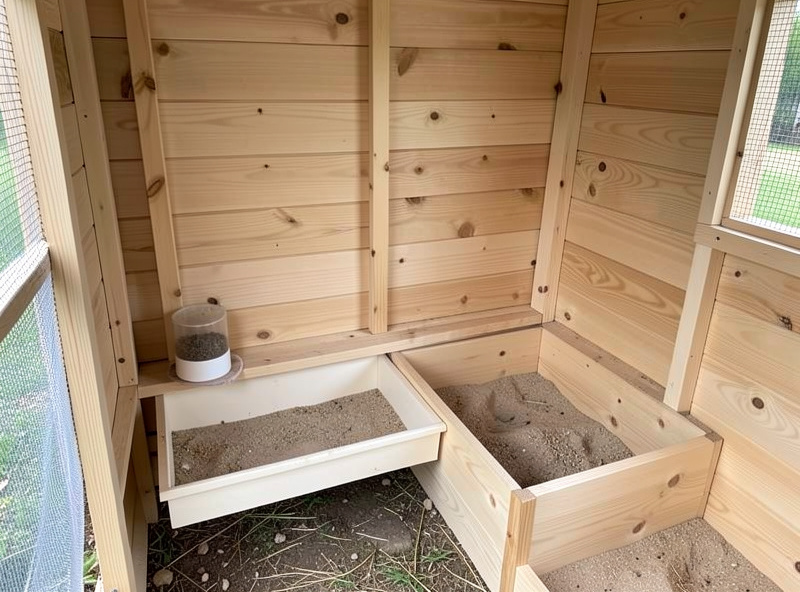
Most keepers run quail on a wire floor with a droppings tray underneath, and for cleanliness that is hard to beat. The waste falls through, you slide out the tray, and the birds stay off their own manure. Quail are productive little machines and they produce a lot of mess for their size, so a tray you can pull and tip is worth its weight.
But a bare wire floor misses something the birds genuinely need: a dust bath. Quail dust-bathe to manage feather condition and external parasites, and on wire alone they cannot. So I add a corner box of dry sand or a sand-and-soil mix in any wire-floor setup. It is not optional welfare fluff; a bird that cannot dust-bathe carries more mites. If you run a solid floor instead, the deep-litter approach I use in the chicken coop scales down well to a small flock, and my deep litter method guide covers the management. Either route works as long as the birds get both a clean surface and a place to bathe.
Feed: game-bird starter, not chicken layer
Feed is where people quietly sabotage their flock. Quail need a high-protein game-bird or turkey starter, in the region of 24 to 28 percent protein, well above chickens on the Merck Veterinary Manual poultry nutrient tables. Chicken layer feed sits around 16 percent and is simply too low for quail, who are growing and laying hard on a tiny frame. Feed them layer and you get poor production, soft shells, and unhealthy birds.
I keep a game-bird crumble in front of mine free-choice, with a separate dish of crushed oyster shell so the laying hens can top up calcium on their own. Grit too, if they are eating anything other than crumble. The protein difference between species feeds is the single most common reason a new keeper’s quail underperform, and it is the easiest thing in the world to fix. My broader thinking on rations and calcium lives in the chicken feeding and nutrition guide; the principles transfer, only the protein target moves up.
As an Amazon Associate I earn from qualifying purchases. If you want to skip the trial and error, a high-protein game-bird feed is the one consumable I would not economise on.
Water: shallow, or chicks drown
Quail chicks are small enough to drown in an open waterer, and they will. For chicks I use a shallow dish filled with clean marbles or pebbles so they can drink from the gaps without falling in, or a proper poultry nipple system from day one. Adults are less fragile but I still keep water shallow and clean. Automated watering is the part of my setup I lean on hardest in winter, and the principles in my automated feeders and waterers guide apply directly once you size the hardware down for quail.
| Trait | Coturnix quail | Chicken |
|---|---|---|
| Egg size | ~5 quail eggs = 1 chicken egg | Standard large egg |
| Eggs per year | 250 to 300 | 200 to 280 |
| Point of lay | 6 to 8 weeks | 20 to 26 weeks |
| Space per bird | ~1 sq ft | ~4 sq ft in run |
| Feed protein | 24 to 28% game-bird | ~16% layer |
Cold-climate care: wind beats cold
People assume my Swedish winters mean heated quail housing. They do not. Quail handle cold better than you would expect for their size, and the thing that actually harms them is wind, not temperature. A draft cutting through a hutch will pull heat off a small body far faster than still cold air ever will. So the priority for a cold climate is a draft-free, wind-protected hutch, ideally tucked into a shed or against a sheltered wall, with ventilation high up and out of the living space.
That balance of sealing out drafts while keeping airflow is exactly the problem I work through for the main coop, and the same logic applies here at small scale; my coop ventilation guide walks through getting fresh air without a draft. The one thing I do run all winter is a heated waterer base, because frozen water is a daily problem in Sweden and a quail will not eat well if it cannot drink. Heat the water, block the wind, and skip the heat lamp.
Laying life and the honest tradeoff
Here is the tradeoff nobody mentions. Quail lay fast and hard, but the peak is short, roughly a year. Production drops off after that first intense laying stretch, sooner than a chicken tapers. That is the bargain: enormous early productivity in exchange for a shorter productive life. For most keepers that means running a small rolling program, bringing on a few new birds before the old ones slow, so the egg supply never gaps. It is a different rhythm from a chicken flock you keep for years, and worth understanding before you start.
Incubation and brooding: where I stop and you ask
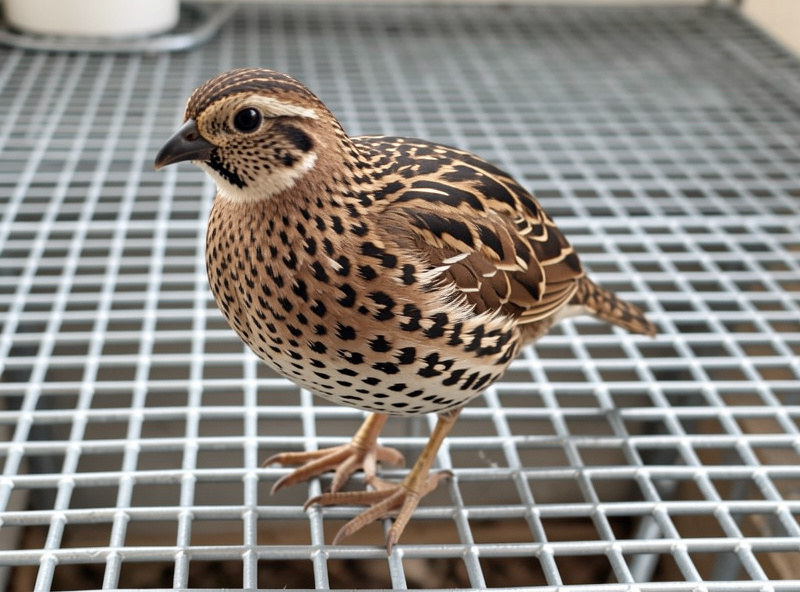
Coturnix do not reliably go broody, so most keepers hatch in an incubator and raise chicks under a brooder. The husbandry basics are the same as any poultry chick: a clean brooder, the right starter feed, shallow safe water, and a warm zone the chicks can move toward or away from. Beyond those basics, incubation temperature and humidity targets, hatch troubleshooting, and anything that strays into bird health are areas where I will not give you numbers from a keyboard. If your birds show signs of illness, or you are wrestling with a failing hatch, treat that as a question for an avian vet or a specialist breeder rather than a backyard guide. I house and feed mine with confidence; I do not diagnose, and neither should you.
The honest verdict
Quail are the bird I recommend to anyone who tells me they cannot keep chickens. Smallest footprint, fastest eggs, quietest flock, and a real harvest within two months of setting up. Get the housing geometry right so they cannot break their necks flushing upward, run quarter-inch hardware cloth on every face, feed game-bird starter instead of layer, give them shallow water and a sand corner, and block the wind in winter. Do those five things and the rest is just the pleasure of collecting a tray of speckled eggs from a bird that asked for almost no room at all. If you decide you want more birds and more space after all, my guide to raising backyard ducks is the next step up I would point you toward.
How many quail do I need for a steady egg supply?
For a small household, six to twelve Coturnix hens in a single hutch will keep you in eggs. Each hen lays 250 to 300 eggs a year, so a dozen birds easily covers daily breakfast use.
Do I need a rooster for quail to lay eggs?
No. Hens lay without a male, exactly like chickens. You only need a male if you want fertile eggs to hatch. For a pure egg supply, keep hens alone and enjoy a quieter, less aggressive flock.
Why is quarter-inch hardware cloth so important for quail?
Half-inch mesh lets tiny quail chicks walk straight out and lets weasels reach in to kill the flock. Quarter-inch hardware cloth contains the chicks and keeps small predators out. Use it on every face a bird or predator can reach.
What should I feed backyard quail?
Feed a high-protein game-bird or turkey starter, around 24 to 28 percent protein, not chicken layer feed at 16 percent. Offer crushed oyster shell separately so laying hens can top up calcium on their own.
Can quail survive cold winters outdoors?
Coturnix quail tolerate cold better than their size suggests. The real danger is wind, not temperature. Provide a draft-free, wind-protected hutch with high ventilation and a heated waterer so they always have liquid water.
Related Guides
- Backyard Poultry Guide
- Raising Backyard Ducks
- Hardware Cloth Coop Guide
- Predator-Proof Chicken Coop
- Coop Ventilation Guide
Related Guides
Raising Heritage Turkeys in the Backyard
A keeper guide to raising heritage turkey breeds in a backyard flock.
Guinea Fowl for Backyard Pest Control
How guinea fowl control ticks and pests, plus the keeping reality.
Raising Backyard Ducks: The Complete Keeper Guide
A keeper-engineer guide to raising cold-hardy backyard ducks for eggs.