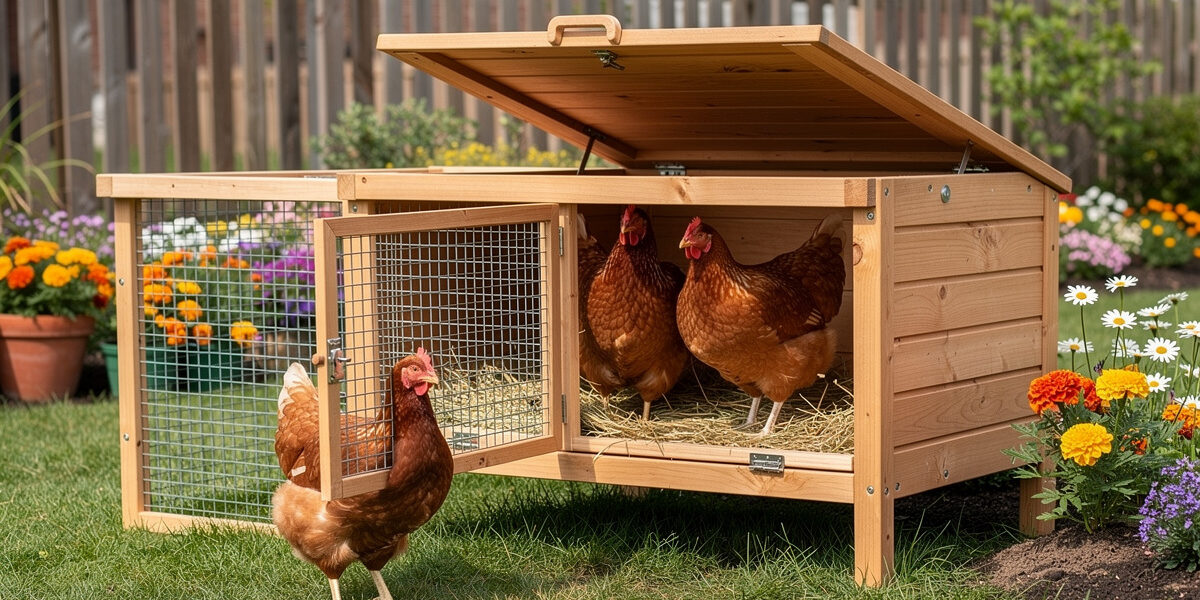
A small chicken coop is anything sized for 2 to 4 birds — typically 8 to 16 square feet of interior floor with a 20 to 40 square foot run, consistent with university extension per-bird sq-ft guidance (Alabama Cooperative Extension). The category exists because urban yards, HOA restrictions, and “I just want a few hens” testers dominate the entry-level chicken-keeping market. The catch: a lot of “small” prefab listings are too tight even for 2 standard hens once you measure the real interior, and the rest are sized for adult bantams, not standard-breed birds.
This guide defines what “small” actually means in coop sizing, the three small-coop styles that work for genuine 2 to 4 bird flocks, the urban-and-HOA constraints that drive small-coop demand, and the four small-coop traps that catch first-time buyers. Full sizing math by exact flock count is in our chicken coop size guide.
What Counts as a Small Chicken Coop?
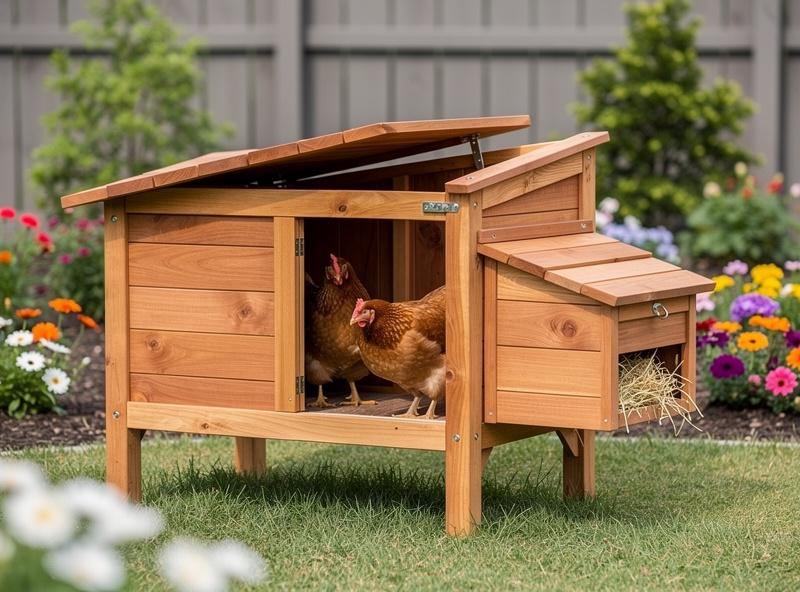
A small chicken coop is sized for 2 to 4 standard-breed hens, with 8 to 16 square feet of interior floor space. Below 8 sq ft, the coop fits 1 to 2 bantams only. Above 16 sq ft, it crosses into mid-size territory designed for 4 to 6 birds. The 8 to 16 sq ft range is what most buyers mean when they search for “small chicken coop.”
The 4-and-10 rule still applies at this scale: 4 sq ft of coop floor and 10 sq ft of run per standard bird. That puts the legitimate small-coop range at:
- 2 standard hens: 8 sq ft coop (3×3 ft) + 20 sq ft run
- 3 standard hens: 12 sq ft coop (3×4 ft) + 30 sq ft run
- 4 standard hens: 16 sq ft coop (4×4 ft) + 40 sq ft run
Anything labeled “small chicken coop” with under 8 sq ft of interior floor is a bantam-only coop or an outright capacity-inflated listing. The “fits 4 chickens” prefab at $180 with 6 sq ft of floor space fits 1 to 2 birds at proper density, no more. Always verify interior dimensions before trusting the capacity claim.
Best Small Chicken Coop Styles
Three small-coop styles deliver genuine 2 to 4 bird capacity. Each fits a specific buyer scenario.
3×4 ft compact lift-top coop: The default small-coop pick for HOA-restricted yards or buyers committed to a 3-hen permanent flock. 12 sq ft of interior, lift-top access for daily egg collection, integrated 1 to 2 nesting box bank, attached 30 to 40 sq ft wire run. Footprint roughly 4×8 ft total in your yard. Trap: many 3×4 listings have only 6 to 8 sq ft of usable interior after subtracting nesting box footprint and wall thickness.
4×4 ft lift-top coop: The largest “small” coop, sized for 4 standard hens at the 4 sq ft per bird minimum. 16 sq ft interior, integrated 2-box nesting unit, 40 to 50 sq ft attached run. Footprint roughly 4×10 ft total. Best buy for HOA-permitted 4-hen flocks. Detailed picks in our chicken coop for 4 chickens guide.
3×6 ft mobile A-frame tractor: The smallest practical tractor format, sized for 2 to 3 standard hens or 4 bantams. 18 sq ft of floor area at ground level (the entire tractor footprint counts as both coop and run since it sits on the ground). Move daily across the lawn for fresh foraging. Trap: tractors fail in winter (no floor insulation) and provide minimal predator protection — best as a 7-month-per-year solution paired with a separate winter coop. See our full portable chicken coops and tractors guide for format comparison and rotation math.
Run Size for Small Chicken Coops
Small flocks still need proper run space — 20 sq ft for 2 birds, 30 sq ft for 3, 40 sq ft for 4. The biggest small-coop mistake is assuming small flock means small run. A 4-bird flock cooped in a 12 sq ft attached run develops feather-pulling and stress problems within 30 days, regardless of coop size.
Run shape matters even more at small scales because there’s less total area to work with. A long 3×10 ft run gives 3 hens more usable perimeter for foraging than a 5×6 square of the same area. Add visual barriers — small bushes, dust bath stations, perch platforms — every 3 to 4 feet to break sight lines. At 3 birds, even 1 instigator can stress the other 2; visual segregation prevents that cycle.
Free-ranging changes the small-coop math more than any other adjustment. A 2 to 4 bird flock that gets 2 to 4 hours of supervised free-range time daily can manage with a 12 to 24 sq ft attached run because the foraging happens elsewhere. Pure cooped small flocks need the full 10 sq ft per bird minimum. Cover at least 50 percent of any small-coop run with hawk netting (Garden Betty) — small flocks lose proportionally more to predators because each bird is a higher percentage of the flock.
Urban and HOA-Friendly Small Coops
Most small-coop buyers are working around urban setback rules, HOA covenants, or apartment-with-yard situations. The constraints typically include: 5 to 10 ft setback from property lines, no roosters, hen count caps of 3 to 6 birds, screening requirements, and sometimes neighbor-notification rules. Small coops have to fit those constraints physically and visually.
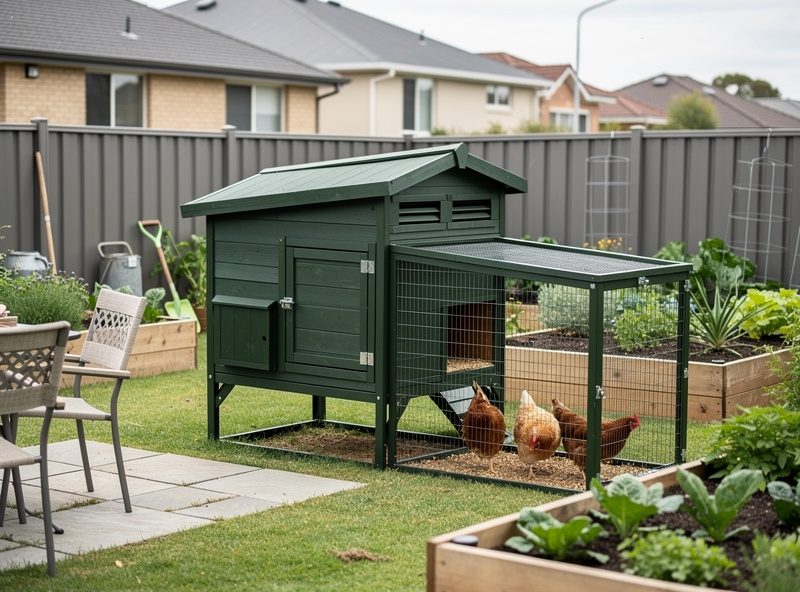
Stealth is undersold as a small-coop feature. A 3×4 lift-top painted to match your shed or fence draws less complaint mail than a brightly-colored prefab. Models with green or natural wood-stain finishes blend into garden landscaping. Avoid bright red or barnyard-style finishes if your neighbors are easily activated.
Noise reduction matters for urban small coops. Hens don’t make rooster-noise, but they do bock-bock during egg-laying and after dawn. Position the coop on the side of the yard furthest from neighbor bedrooms, add solid walls (not chicken wire) on the property-line side of the run, and skip Mediterranean breeds (Leghorns, Anconas) that are louder than English breeds (Orpingtons, Australorps). Our beginners guide covers breed temperament selection in detail.
Smart Setup for a Small Chicken Coop
Smart automation in small coops is a different math problem than in larger setups. Equipment footprint matters more (a 4 sq ft sensor stack is 25 percent of a 16 sq ft coop), the hardware scales down only partially (a $200 auto-door costs the same regardless of flock size), and chore-time savings are smaller (2 to 4 hens take 3 to 5 hours per month manually, not 12 to 15). The ROI math still works, but barely.
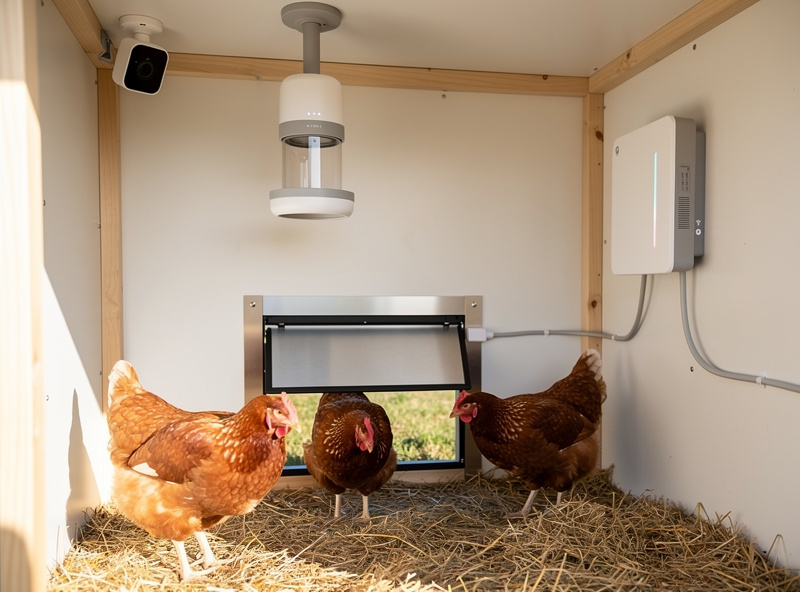
Sensor coverage: A single PIR motion sensor covers 8 to 16 sq ft of small-coop floor entirely from one wall corner. Mount the temperature and humidity sensor at roost height (12 to 18 inches up — lower than larger coops because small-coop ceilings are lower). Skip the ammonia sensor at this scale unless you run deep litter — small flocks rarely build dangerous ammonia levels with bi-weekly bedding turnover.
Compact equipment placement: A small coop has zero floor space to spare. Wall-mount or hang every piece of equipment. Use the smallest automatic feeder you can find (3 to 5 lb capacity), hang the heated waterer at hen-back height, and mount the battery backup on the exterior wall to preserve interior space. The auto-door is the single most valuable smart-coop addition for small coops because it covers the daily dawn-and-dusk task that small-flock keepers most often miss. See our automatic coop door buyer’s guide for compact picks.
Camera placement: One small wide-angle camera in the upper corner covers an 8 to 16 sq ft floor entirely. Position so the nesting box is in frame — for a 2 to 4 bird flock, knowing exactly when each hen lays is genuinely useful production data. The full smart-coop layout is in our smart chicken coop pillar guide.
Common Small Chicken Coop Mistakes
Four mistakes account for nearly every “I returned the small coop” review on backyard chicken forums — and they’re the same mistakes I see in the smaller starter builds keepers show me before they end up expanding, which almost everyone does.
Mistake 1 — buying the $150 “fits 4 chickens” prefab: The cheapest small coops on the market (Amazon, Harbor Freight, big-box farm stores) are sized for 1 to 2 standard hens regardless of capacity claims. Materials are typically thin OSB or untreated pine that fails within 2 winters. Real 4-hen capacity at this footprint requires a $280+ build with proper materials.
Mistake 2 — undersized attached run: Many small coops ship with 12 to 18 sq ft attached runs that are inadequate even for 2 birds. Plan to extend the run with additional fencing or rebuild it entirely. Budget $80 to $200 for proper run extension.
Mistake 3 — tractor as a winter coop: A-frame tractors are excellent 2 to 3 bird summer coops and disastrous winter coops. The ground-level floor offers no insulation and the light frame can’t hold heat. In zones 5 and colder, use a tractor as a 7-month-per-year solution paired with a separate winter coop, or skip tractors entirely.
Mistake 4 — picking standard breeds for a 2-bird flock: Two standard hens (5 to 6 lb adults) need 8 sq ft of coop, 20 sq ft of run, and 16 inches of roost bar. Two bantams (1 to 2 lb adults) need 4 sq ft of coop, 10 sq ft of run, and 12 inches of roost bar. If your space is genuinely tight, picking bantam breeds doubles your effective capacity in the same footprint.
Frequently Asked Questions
What is the smallest chicken coop you can have?
The smallest practical chicken coop is 4 to 6 square feet of interior floor for 2 bantam hens (1 to 2 lb each). For 2 standard-breed hens, the minimum is 8 square feet (3×3 ft) plus a 20 sq ft run. Anything smaller is insufficient and triggers stress, feather pecking, and disease within weeks.
Can 4 chickens fit in a small chicken coop?
Four standard-breed hens need a 4×4 ft coop (16 square feet) at minimum, which is the largest size most buyers consider “small.” Below 16 sq ft, you can fit 4 bantams but not 4 standard hens. Always verify interior dimensions and divide by 4 sq ft per bird before trusting capacity claims.
What is the best small chicken coop for a backyard?
For 2 to 3 hens in HOA-restricted yards, a 3×4 ft compact lift-top coop with attached run is the best pick, costing $250 to $500. For 4 hens, a 4×4 ft lift-top at $300 to $550 is the standard. Both should have integrated nesting boxes, lift-top access, and a properly sized run extending the total footprint to 30 to 50 sq ft.
Are small chicken coops good for hens?
Yes, when properly sized for the flock. A small coop sized for 2 to 4 birds at the 4 sq ft per bird minimum supports healthy hens, normal egg production, and natural behavior. Problems start when small coops are oversold for capacity (4-hen claims on 8 sq ft coops) or paired with undersized runs.
Do I need a permit for a small chicken coop?
Permit requirements vary by city. Most US municipalities allow 3 to 6 backyard hens without a permit but require setbacks (typically 5 to 10 ft from property lines) and prohibit roosters. HOAs often have stricter rules. Verify with your local zoning office and HOA covenants before buying any coop, small or otherwise.
How much does a small chicken coop cost?
A quality small chicken coop costs $250 to $600 for 2 to 4 hen capacity. Avoid prefab coops under $200 – they typically use thin OSB that fails within 2 winters. A DIY 4×4 build runs $150 to $250 in lumber and hardware, plus 8 to 12 hours of labor.
Bottom Line: Small Means 2 to 4 Birds, Not 1 to 6
A small chicken coop is sized for 2 to 4 standard hens — 8 to 16 sq ft of interior floor with a 20 to 40 sq ft attached run. Anything labeled “small” with under 8 sq ft of usable interior is bantam-only or capacity-inflated. Pick the 3×4 lift-top for 3-hen permanent flocks, the 4×4 lift-top for 4-hen flocks, or the 3×6 A-frame tractor for mobile rotation in mild climates.
For sizing math at specific flock counts, see the 4-chicken coop guide, the 6-chicken coop guide, or the full chicken coop size guide with breakdowns by flock size, breed, and climate.
Related Guides
Related Guides
Large Chicken Coops: 25+ Bird Capacity Compared (2026)
A large chicken coop is anything sized for 25 or more birds — typically 100 to 250+ square feet of…
Chicken Coop for 20 Chickens: Walk-In & Shed Picks
A chicken coop for 20 chickens needs 80 square feet of interior floor (an 8×10 ft footprint) plus a 200…
Chicken Coop for 12 Chickens: Best Family-Flock Picks
A chicken coop for 12 chickens needs 48 square feet of interior floor (a 6×8 ft footprint) plus a 120…