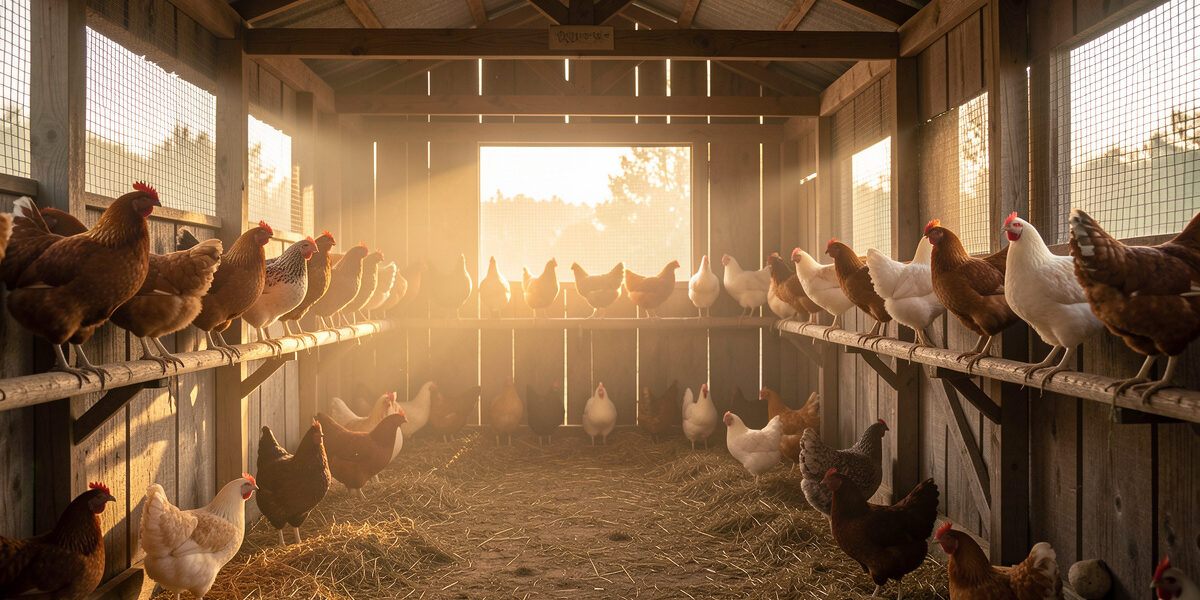
A coop light on a plain timer snaps from full brightness to black in an instant, and that hard switch is what causes the light-off roost scramble — birds caught off the perch when the coop goes dark, unable to see to roost. A gentle dawn dimmer fixes it by ramping the light up slowly at the start of the morning, and down slowly if you ever close the day with light, fading over five to fifteen minutes so the change mimics a real dawn or dusk. It is a small refinement that turns a startling on/off into a calm transition.
In my coop the light ramps from zero to full over about ten minutes, driven by the same Home Assistant brain that runs the door and sensors. The birds wake gradually instead of being hit with a sudden bulb, and nothing gets stranded. Here is why the ramp matters, the cheap and the integrated ways to build one, and the settings I actually use.
Why a Hard On/Off Is a Problem
Chickens navigate by sight and roost in response to fading light. In nature, dusk dims over a long stretch and birds walk up to the perch calmly while they can still see. A timer that kills a light instantly removes that cue entirely — one second daylight, the next pitch black — and any bird still on the floor is stuck there for the night. That is the welfare problem behind the rule to extend the morning rather than the evening, which I cover in morning vs evening coop light.
A dawn ramp matters even on a morning-only schedule, where the light comes on in darkness. A bulb that blinks instantly to full brightness over sleeping birds is a jolt; a ten-minute fade-up wakes them the way the sky does. It is gentler, it looks more natural, and on the rare setups that do light the evening, a fade-down is the only safe way to do it at all. The ramp is the difference between a light that startles the flock and one they barely notice.
Three Ways to Build a Dawn Ramp
There are three practical routes, from no-tech to fully integrated. The sunrise-simulator bulb or alarm-style dimmer is the simplest: a self-contained unit that fades up on its own schedule, dropped straight into the coop fixture. The smart dimmer plus a hub is the flexible middle: a dimmable LED on a smart dimmer module, told to transition from 0 to full over a set time by a schedule. The fully integrated Home Assistant ramp is what I run: the light is a dimmable entity, and a single automation brings it up over ten minutes on a sunrise offset, alongside everything else in the coop.
| Method | Ramp control | Effort | Best for |
|---|---|---|---|
| Sunrise-simulator bulb | Built-in fade | Plug and go | Simple coops, no hub |
| Smart dimmer + hub | Set transition time | Moderate setup | Wi-Fi coops wanting control |
| Home Assistant automation | Full, scriptable | Needs a hub | Integrated automated coops |
The Settings I Use
My ramp runs over about ten minutes from off to full brightness, triggered at a sunrise offset so the light always tops the natural day up to a roughly 15-hour total — the hours logic is in how many hours of light laying hens need. Ten minutes is a good middle: long enough to feel like dawn, short enough that the birds get their full lit hours. Five minutes is the minimum I would use; much faster and it is barely a ramp. If you light the evening on the rare setup that needs it, mirror the fade-down at fifteen to twenty minutes so birds have ample time to roost before dark.
The brightness target at the top of the ramp is the same modest level any coop light should hit — around 10 lux at bird height, a warm-white bulb, nothing blazing. Michigan State University Extension’s guidance on managing light for backyard flocks settles on the same modest, consistent level. Get the bulb right per the color temperature guide and make sure it is rated dimmable, or a non-dimmable LED will buzz, flicker, or simply refuse to fade. That single spec catches a lot of people out.
Doing It in Home Assistant
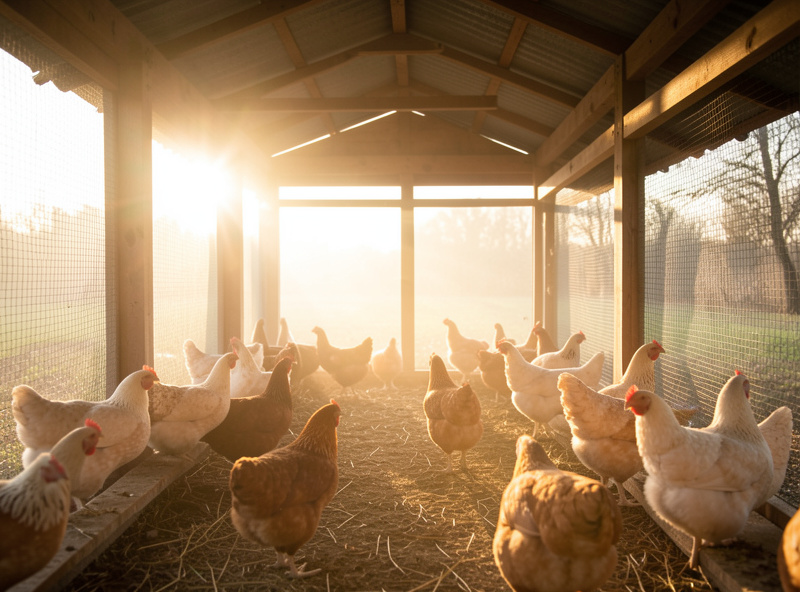
The integrated version is the cleanest if you already run a hub. A dimmable smart bulb or dimmer module becomes a light entity, and a single automation turns it on with a transition value — the platform handles the smooth fade from 0 to your target brightness over the time you set. Trigger it on a sunrise offset, the same way my pop door fires, and it self-adjusts through the season with no manual resets. The offset logic is exactly what I describe in the sunrise/sunset offset I run, and it slots into the wider setup in the complete Home Assistant coop guide.
If you would rather keep the light off the cloud — sensible for something the flock depends on — run the automation locally so a dropped internet connection cannot leave the coop dark, the approach in local-only coop automation. A dimmable laying light on a local sunrise ramp is about as robust and as gentle as a coop light gets.
If You Are Not Running a Hub
You do not need a smart-home setup to get a ramp. A sunrise-simulator dimmer or dawn-fade bulb gives most of the benefit in a plug-and-go unit, fading up on its own schedule with no hub at all. As an Amazon Associate I earn from qualifying purchases. Pair it with a reliable timer for the on-time — the options are compared in the best coop light timer guide — and you have a gentle dawn without writing a line of automation. It is the lowest-effort way to retire the hard on/off for good, and the flock will be calmer for it. The whole lighting system it fits into is laid out in the coop lighting hub.
Frequently Asked Questions
Why does a coop light need a dimmer ramp?
A plain timer cuts the light instantly, taking the coop from bright to black and stranding any bird still off the roost. A dimmer ramp fades the light over several minutes so the change mimics natural dawn or dusk and the flock stays calm.
How long should the dawn ramp be?
About ten minutes from off to full is a good middle ground, long enough to feel like dawn and short enough to keep the full lit hours. Five minutes is the practical minimum. A fade-down for any evening light should run fifteen to twenty minutes.
Can I add a dawn ramp without a smart hub?
Yes. A sunrise-simulator bulb or dawn-fade dimmer fades up on its own schedule as a plug-and-go unit with no hub needed. Pair it with a reliable timer for the on-time and you get a gentle ramp without any automation setup.
Does the bulb need to be dimmable?
Yes, this is essential. A non-dimmable LED will buzz, flicker, or refuse to fade on a dimmer. Always check the bulb is rated dimmable and that the dimmer is suited to LEDs, or the ramp simply will not work cleanly.
How do I build a dawn ramp in Home Assistant?
Use a dimmable light entity and an automation that turns it on with a transition value, so the platform fades from zero to your target brightness over the set time. Trigger it on a sunrise offset and it self-adjusts through the season.
Related Guides
Related Guides
Water-Level and Flow Sensors: Knowing the Waterer Is Empty Before They Do
A coop water-level sensor tells you the drinker is going dry — or freezing solid — before the flock does,…
Ammonia Sensors for the Coop: Catching Air Problems Before You Smell Them
An ammonia sensor belongs at the birds’ breathing height, close to the litter where the gas is generated, because that…

Node-RED vs Home Assistant Automations for the Coop: When to Use Which
Use native Home Assistant automations for the coop’s simple, safety-critical rules — the sunrise door, the freeze-watch waterer — and…