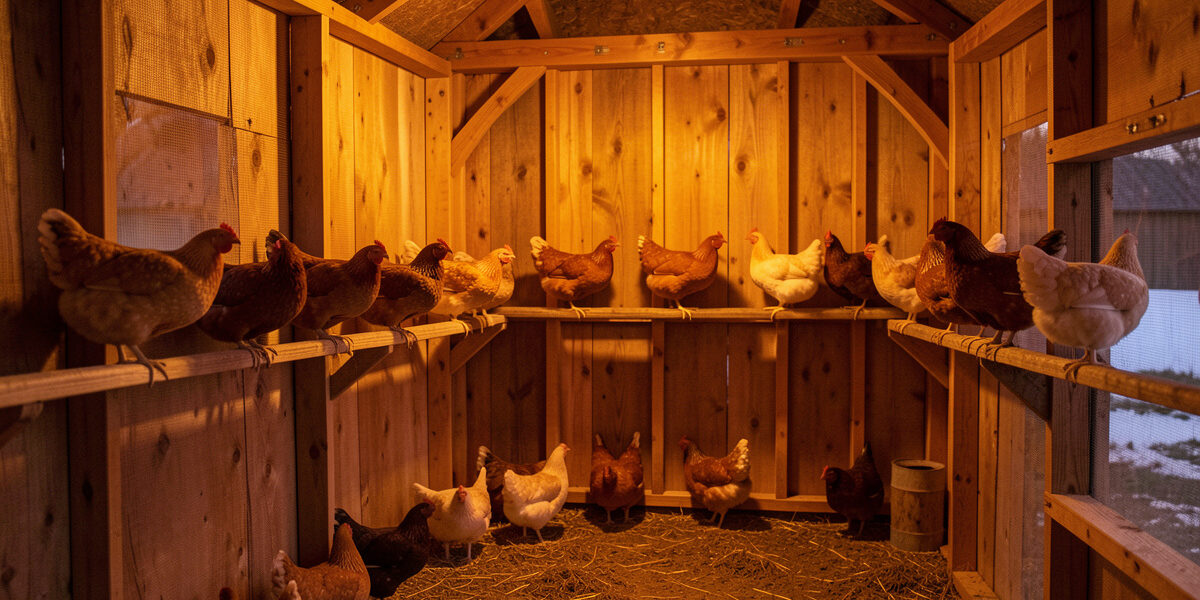
For a coop laying light, use warm white in the 2700K to 3000K range. It triggers laying perfectly well, keeps birds calm, and does not throw the harsh glare that cool-white bulbs spill out of the windows. Color temperature, measured in Kelvin, describes how warm or cool a light looks: low numbers are amber and cozy, high numbers are blue and clinical. For chickens the practical difference is less about the hormone trigger and more about behaviour and glare — and warm white wins on both.
People obsess over wattage and ignore color, but in a small coop the color of the light shapes how the flock behaves under it. I run warm white in my Swedish coop for a calmer roost and quieter neighbours, and I will explain exactly why, where the laying response actually comes from, and the one case where keepers reach for red light instead.
What Color Temperature Actually Means
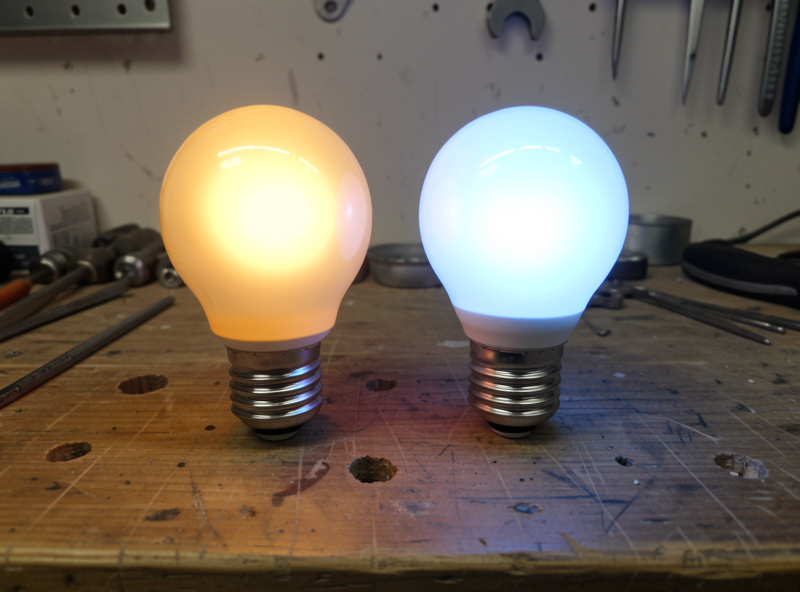
Kelvin is a scale of appearance, not brightness. A 2700K bulb looks like a soft incandescent glow; 4000K is a neutral white; 5000K to 6500K is the cool, bluish “daylight” look of an office or a workshop. A 9-watt LED can be sold in any of these colors at the same brightness, so color temperature and lux are two separate dials. You set brightness for the laying response — roughly 10 lux at bird height is the benchmark — and you set color for how the light feels in the coop. For the lighting-management fundamentals behind both dials, Michigan State University Extension’s guidance on managing light for backyard flocks is a solid reference.
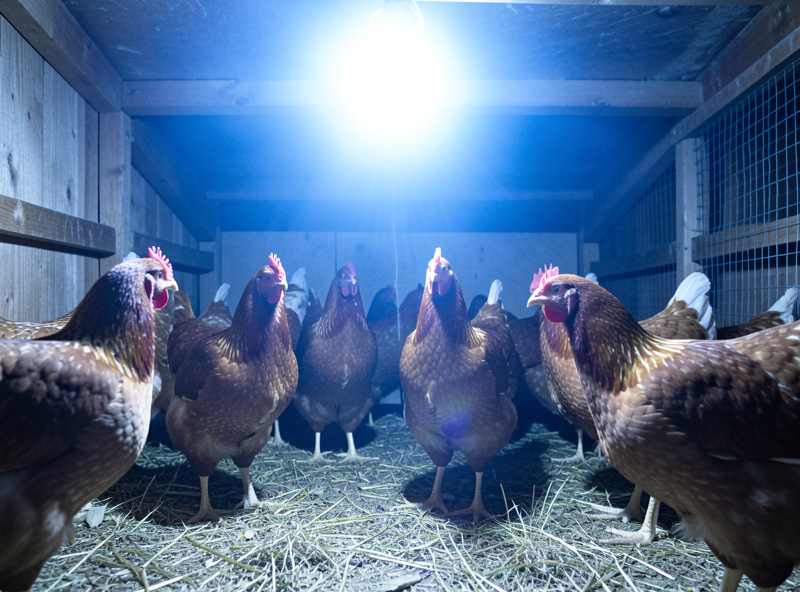
The mistake is buying a “daylight” 6500K bulb because the word sounds right for a laying light. It is not. That cool glare is the most agitating choice in a confined space, it bleeds brightly out of every gap and window, and it is exactly the kind of light that draws complaints about a coop lit before dawn. Warm white delivers the same hours of stimulation in a form that is easier on the birds and the neighbourhood.
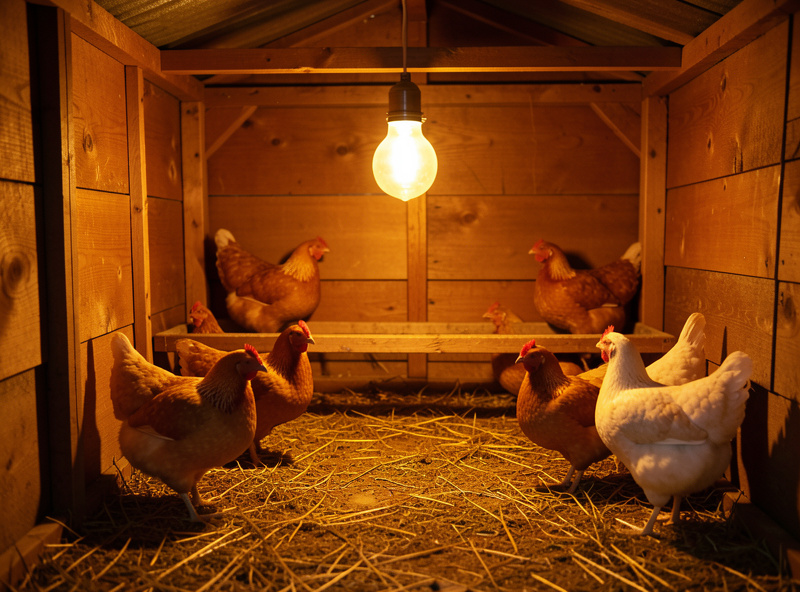
Warm and Cool LED Compared
| Color temperature | Appearance | Effect on flock | Verdict for a coop |
|---|---|---|---|
| 2700K-3000K (warm) | Soft amber glow | Calm, still triggers laying | Recommended |
| 3500K-4000K (neutral) | Plain white | Acceptable, slightly cooler feel | Workable second choice |
| 5000K-6500K (cool/daylight) | Bright bluish glare | Can agitate, heavy light spill | Avoid for the coop |
| Red light | Deep red | Calming, used to curb pecking | Niche use, see below |
Where the Laying Response Comes From
It helps to know why warm light still works. Photostimulation of a hen’s reproductive system is driven largely by longer-wavelength light reaching deep photoreceptors in the brain, partly through the thin skull — not only by what the eye sees. Longer wavelengths sit at the red and warm end of the spectrum, which is one reason warm white is plenty effective for laying and why some commercial setups even use red-shifted light. Cool, blue-heavy light is not more stimulating despite looking brighter and more “daylight-like” to us.
So warm white is not a compromise that trades eggs for comfort. It supplies the wavelengths that matter for the laying signal while avoiding the downsides of cool glare. Get the brightness right — the lux benchmark and hours are in how many hours of light laying hens need — and a warm bulb does the full job. The broader bulb-and-system choices sit in the coop lighting hub.
Color and Calm Behaviour
The behavioural side is where color earns its keep. In a small, enclosed coop, harsh cool-white light is visually busy and tends to keep birds wound up; a soft warm glow reads as low-stress and the flock settles under it. This matters most in the pre-dawn window, when a morning light is on while it is still dark outside and the birds are waking — you want them eating and pottering, not agitated. A calm light supports the morning-extension approach I argue for in morning vs evening coop light.
Red light is the specialist tool here. Deep red is calming and is sometimes used to reduce pecking and aggression in a tense flock because it mutes the visual cues that trigger it. It is not necessary for ordinary laying — warm white is simpler — but if you have a pecking problem, red is a known lever. For routine winter laying I stay with warm white and solve behaviour issues at their source rather than reaching for red as a default.
Glare, Light Spill, and the Neighbours
A coop lit at 04:30 is a beacon in a dark winter morning, and a cool-white bulb makes it a harsh one. Warm light spills less obtrusively, which keeps the peace if your coop sits near a property line or a bedroom window. It is also the neighbourly thing to do — and on a wider note, unnecessary bright outdoor light at night is the kind of spill that washes out the night sky, a connection I have made before with backyard coop monitoring and stargazing. Point the light into the coop, keep it warm, keep it dim, and contain it.
A simple warm-white 2700K low-wattage LED bulb is all most coops need, and it costs no more than a cool-white one. As an Amazon Associate I earn from qualifying purchases. Match it to a reliable timer and you have the two halves of a good laying light sorted.
Watch for Cheap LED Flicker
One factor that gets ignored entirely: not all LEDs run a clean light. Cheap bulbs with poor drivers can flicker rapidly, and while the flicker may be invisible to you, birds have faster visual processing than we do and can perceive that strobing. A flickering bulb in the one place a flock spends its dark hours is an avoidable stressor. When I pick a coop bulb I favour a quality LED with a decent driver over the cheapest option on the shelf, warm color or not. If a bulb visibly shimmers on a phone camera in slow motion, it is not the one I want over the roost.
This pairs with the dimmer question, too. If you run the light on a dimmer for a dawn ramp, make sure the bulb is rated dimmable and the dimmer suits LEDs, or you get buzzing and flicker at low output. I cover that pairing in the gentle dawn dimmer guide. A clean, warm, dimmable LED is the quiet workhorse of a good winter coop.
Frequently Asked Questions
What color light is best for a chicken coop?
Warm white, in the 2700K to 3000K range. It triggers laying effectively, keeps birds calm, and spills far less harsh glare than cool-white bulbs. Avoid 5000K to 6500K daylight bulbs in a small coop despite the marketing.
Does warm white light still make hens lay?
Yes. Photostimulation is driven largely by longer-wavelength light reaching deep photoreceptors in the brain, and those wavelengths sit at the warm end of the spectrum. Warm white supplies the laying signal without the downsides of cool glare.
Is cool white or daylight light bad for chickens?
It is not harmful, but it is the wrong choice for a coop. Cool, bluish light tends to agitate birds in a confined space and spills brightly out of every gap, drawing neighbour complaints, while offering no laying advantage over warm white.
What about red light in the coop?
Red light is calming and is sometimes used to reduce pecking and aggression in a tense flock. It is a specialist tool, not needed for routine laying. For ordinary winter lighting, warm white is simpler and does the job.
Does color temperature affect brightness?
No. Kelvin describes how warm or cool a light looks, not how bright it is. Brightness is measured in lux. You set brightness for the laying response, about 10 lux at bird height, and choose color temperature separately for comfort and glare.
Related Guides
- Chicken Coop Lighting for Egg Laying: The Winter Guide
- How Many Hours of Light Do Laying Hens Need?
- Best Coop Light Timer: Mechanical, Digital, and Smart
- Morning vs Evening Coop Light: Add Before Dawn
- Gentle Dawn Dimmer for the Coop
Related Guides
Water-Level and Flow Sensors: Knowing the Waterer Is Empty Before They Do
A coop water-level sensor tells you the drinker is going dry — or freezing solid — before the flock does,…
Ammonia Sensors for the Coop: Catching Air Problems Before You Smell Them
An ammonia sensor belongs at the birds’ breathing height, close to the litter where the gas is generated, because that…

Node-RED vs Home Assistant Automations for the Coop: When to Use Which
Use native Home Assistant automations for the coop’s simple, safety-critical rules — the sunrise door, the freeze-watch waterer — and…