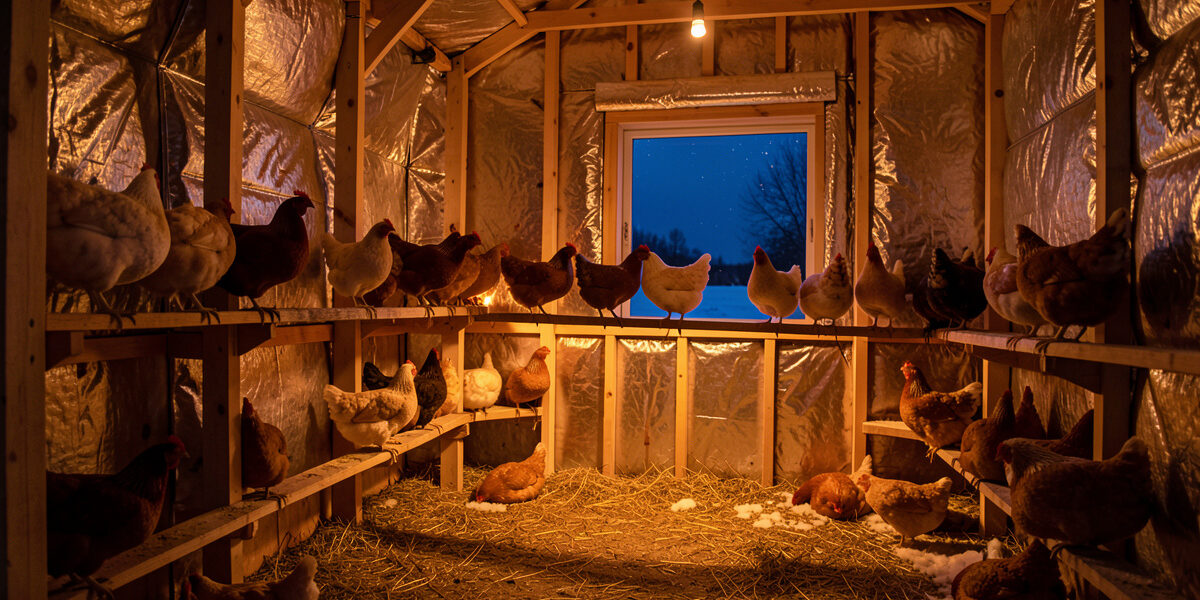
Laying hens need a total of 14 to 16 hours of light a day to keep the reproductive cycle running at full tilt, and that total counts natural daylight plus any supplemental light you add. Below roughly 12 hours, laying tapers; below about 10, most hens stop. The number that matters is the total photoperiod, not how long the bulb is on — so the further north you keep birds, the more of those hours the light has to supply.
At my latitude in Sweden, midwinter daylight drops to around six hours. To hold a 15-hour day I am asking a single LED to add nine of them. That is the whole job of supplemental light: top the natural day up to a target the hens’ bodies read as “still laying season.” Here is exactly how I work out the number, season by season, and where the limits sit.
The 14 to 16 Hour Window, and Why 12 Is the Cliff
A hen’s body decides whether to lay based on day length. Lengthening or long days release the hormones that mature a yolk; short days shut the cycle down to conserve the bird for winter. The practical thresholds keepers work to are consistent: around 14 hours keeps a flock laying steadily, 16 pushes hard, and somewhere near 12 is the cliff where production falls off, a range echoed in Michigan State University Extension’s guidance on managing light for backyard flocks. I aim for 14 to 15. It holds eggs through the winter without flogging the birds toward the 16-hour ceiling.
The reason 16 is a ceiling and not a goal is that more light past the point of a full response buys you almost nothing in extra eggs while spending the hen’s finite egg supply faster. Fifteen hours captures nearly all the benefit. I treat the window as 14 at the bottom for “keep them going” and 16 at the very top for “I understand the trade-off,” and I live in the middle of it.
It Is Total Light, Not Bulb Time
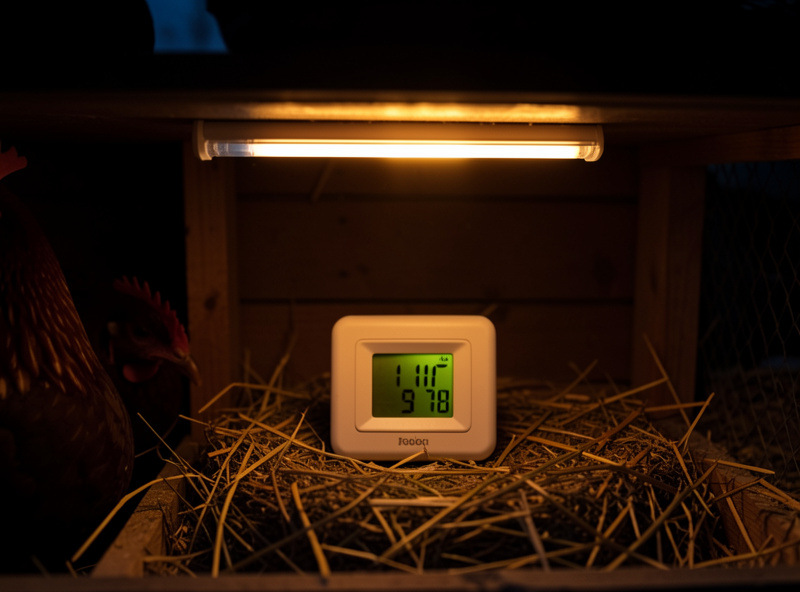
This is the part people get wrong. You do not run the light for 15 hours. You run it for however many hours it takes to bring the natural day up to your target. If the sun gives you seven hours in November and you want 15, the bulb supplies eight. In March, when daylight is back to twelve, the same target needs only three hours of bulb time. The supplement shrinks as the natural day grows, and at some point in spring you switch the light off entirely because the sky is doing the whole job.
I keep a rough seasonal table taped inside the coop so I am not recalculating in the dark. It is built around a 15-hour target at roughly 60 degrees north; shift it earlier or later for your own latitude and sunrise.
| Month | Natural daylight | Bulb hours for 15h day | When the bulb runs |
|---|---|---|---|
| October | ~10 h | ~5 h | Early morning |
| November | ~7 h | ~8 h | Pre-dawn, ~04:30 |
| December-January | ~6 h | ~9 h | Pre-dawn, ~04:00 |
| February | ~9 h | ~6 h | Early morning |
| March | ~12 h | ~3 h | Short pre-dawn top-up |
Extend the Morning to Hit the Number
You only ever extend one end of the day, and it should be the morning. Set a target “lights-up” time that gives you the hours you need before sunrise, and let natural dusk close the day. A light that pads the evening instead switches off into sudden darkness and strands birds off the roost — a real welfare and pecking problem I cover in full in morning vs evening coop light. Morning extension is gentler on the flock and just as effective for the hormone clock.
Because sunrise drifts by minutes every day through the season, a fixed clock time slowly falls out of step. That is why I run the on-time as a sunrise offset through Home Assistant rather than a static timer, and why the timer you choose matters — see the best coop light timer comparison for the mechanical, digital, and smart options.
Ramp Up, Do Not Jump
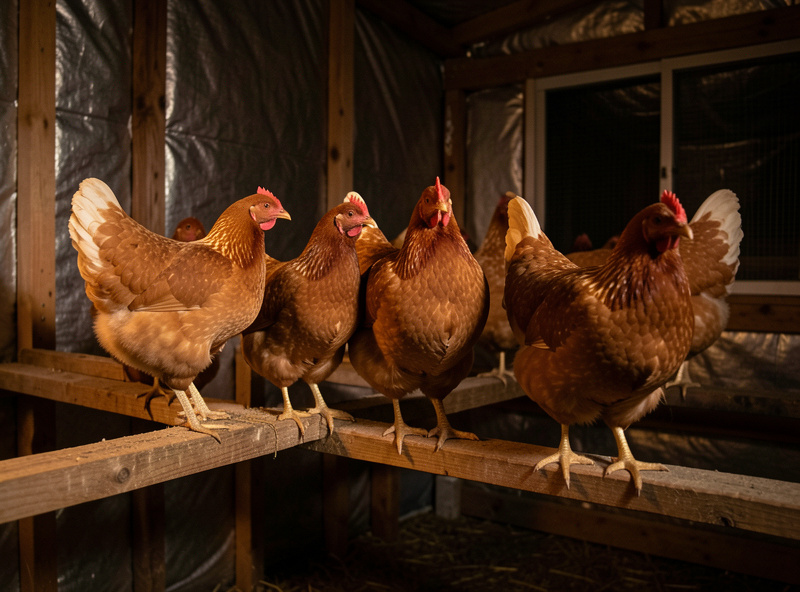
If your flock has already wound down to a natural short day, do not slam them from seven hours to fifteen overnight. I add light in steps — an extra hour or two every few days — until the total reaches target over a week or two. A sudden jump is a shock to the system and can trigger odd behaviour. The smoother approach also lets you stop early if you decide the flock needs the rest. Starting in late autumn, as the natural day falls through about 12 hours, keeps a laying flock laying rather than forcing you to restart a stopped one, which takes longer.
Expect a lag, too: it is two to four weeks from the longer photoperiod to a visible rise in eggs, because the hormonal cascade takes time to spin up. Patience here saves you from over-correcting. For the wider seasonal playbook, my guide to getting chickens to lay in winter and the broader egg production guide put the light piece in context.
When Hens Need Fewer Hours, or None
Not every bird needs supplementing. Pullets reaching point of lay in autumn often lay straight through their first winter on day length alone, because they are biologically primed to start regardless. Some cold-hardy, winter-laying breeds also hold up better than others through short days — I keep notes on which in the best laying breeds guide and the cold-hardy breeds guide. And many keepers deliberately give older hens a lightless winter to molt and rest, accepting the egg gap as a fair trade for a longer laying life.
That rest question is real and worth taking seriously rather than defaulting to maximum hours every year. A hen carries a finite number of ova; the more days you keep her cycling, the faster she spends them. I weigh it flock by flock in supplemental light risks for chickens. None of this is a health diagnosis — if a hen looks unwell rather than simply out of lay, that is a question for an avian vet.
Frequently Asked Questions
How many hours of light do laying hens need per day?
A total of 14 to 16 hours, counting natural daylight plus supplemental light. Most keepers target 14 to 15 hours as a sustainable figure. Below about 12 hours of total light, laying tapers off and then stops.
Does the bulb need to be on for 15 hours?
No. You only add enough bulb time to bring the natural day up to your target. If the sun gives 7 hours and you want 15, the light runs for 8. The supplement shrinks as the natural day lengthens in spring.
What happens below 12 hours of light?
Around 12 hours is the threshold where laying falls off. Below roughly 10 hours, most hens stop laying entirely as their bodies read the short day as the off-season and shut the reproductive cycle down.
How long until eggs return after I add light?
Plan on two to four weeks from starting the longer photoperiod before egg numbers visibly climb. The hormonal cascade takes time to spin up, which is why starting in late autumn beats waiting until the flock has stopped.
Do young pullets need supplemental light in winter?
Often not. Pullets reaching point of lay in autumn are biologically primed to start and frequently lay straight through their first winter on day length alone, so many keepers skip supplementing them entirely.
Related Guides
- Chicken Coop Lighting for Egg Laying: The Winter Guide
- Morning vs Evening Coop Light: Add Light Before Dawn
- Best Coop Light Timer: Mechanical, Digital, and Smart
- Supplemental Light Risks: Burnout, Molt, and Rest
- How to Get Chickens to Lay Eggs in Winter
Related Guides

Cooking With Fresh Farm Eggs: A Keeper Guide
Genuinely fresh farm eggs cook differently from store eggs in one frustrating way and several wonderful ones: they are miserable…

Grading Backyard Eggs: Quality and Size
Grading backyard eggs means two separate jobs: judging quality (candling for cracks, blood spots, and air-cell size) and sorting by…
Supplemental Light Risks: Burnout, Molt Timing, and the Rest Hens Need
Supplemental light keeps hens laying through winter, but it is not free of cost. The main risk is straightforward: a…