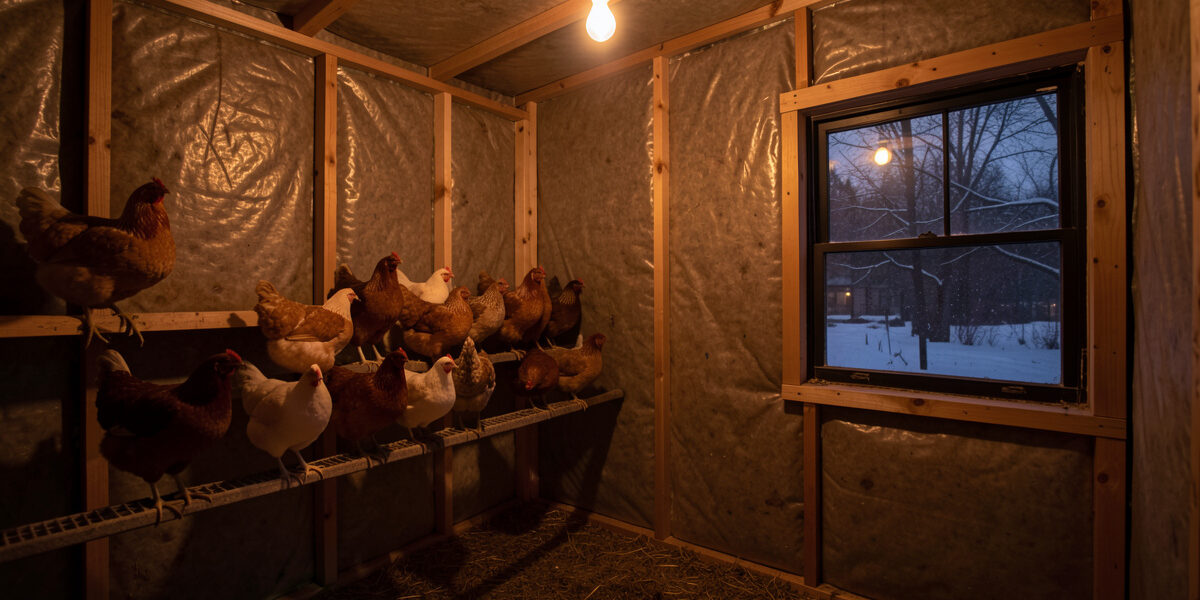
When you add supplemental light to a coop, add it in the morning, before dawn — never as an extension after dusk. The reason is simple and physical: an evening light switches off into instant darkness while hens are still on the floor, and a chicken cannot see in the dark to find the roost. Morning light comes on while it is already dark, the flock wakes and feeds, and natural sunset still falls gradually so the birds put themselves to bed on their own clock.
I made the evening mistake in my first Swedish winter. The timer killed the light at 21:00 and I would find birds the next morning sleeping in a heap in the corner, having been caught off the roost when the coop went black. The hormone clock does not care which end of the day you extend — but your flock’s behaviour cares enormously. This is the whole case for morning light, plus the one narrow exception.
The Light-Off Roost Scramble
Chickens roost by sight. As natural dusk falls, the light dims over many minutes and birds calmly walk up to the perch while they can still see it. A supplemental evening light defeats that entirely. It holds the coop at full brightness past natural dusk, then a timer cuts it dead — and the flock goes from daylight to pitch black in a single instant. Birds still on the floor are stranded. They cannot navigate to the roost, so they settle wherever they are: on the litter, in a corner, in a nest box.
That is not a minor inconvenience. Floor-sleeping birds pile for warmth and get pecked, they foul the bedding they sleep in, and in a cold coop they lose the heat advantage of being tucked up together on the perch. I have seen a single bad week of evening lighting set off feather-pulling that took a month to settle.
Why Morning Light Sidesteps the Whole Problem
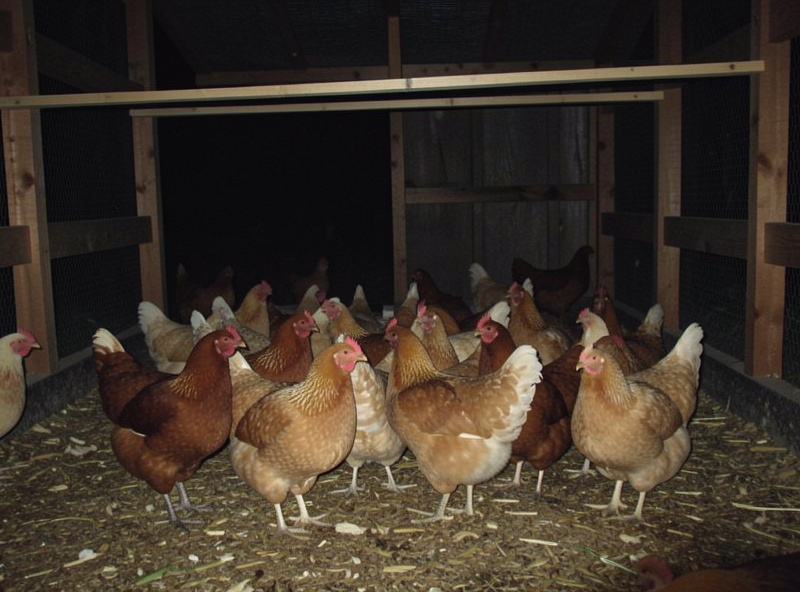
Morning extension inverts the timing so the dangerous transition never happens. The light comes on in darkness, hours before sunrise, while the birds are already settled on the roost. They wake gradually under the bulb, come down to eat and drink, and carry on their day. Then natural daylight takes over seamlessly, and at the far end of the day the real sunset dims down slowly — exactly the gentle fade birds are built to roost by. There is no abrupt light-off because you are not controlling the end of the day at all; the sky is.
It also fits the bird’s biology better. Hens are hungriest and most active in the early part of the day; giving them light and feed before dawn lets them fuel up in the cold, which matters when they are burning calories to stay warm. The total photoperiod is identical whether you add the hours at the front or the back — so you may as well add them where the flock benefits and nothing gets stranded. Michigan State University Extension’s guidance on managing light for backyard flocks covers the photoperiod fundamentals behind that call. The hours target itself is covered in how many hours of light laying hens need.
Sunrise Drifts, So a Fixed Clock Slowly Misses
One practical wrinkle: a morning light needs to come on early enough to deliver the hours you want before sunrise, and sunrise moves by a minute or two every single day. A timer set to 04:30 in December is fine for a while, but as spring approaches and the sun comes up earlier, that fixed start drifts out of step with what you actually need. You end up either over-lighting or recalculating the timer every couple of weeks.
This is exactly why I drive my coop light on a sunrise offset rather than a static clock. Home Assistant calculates “X hours before sunrise” every day automatically, the same way it runs my pop door — the logic I lay out in the sunrise/sunset offset I actually run. If you are not running a smart hub, a digital timer you reset every few weeks does the job; the trade-offs between mechanical, digital, and astro timers are in the best coop light timer comparison.
The One Exception: Evening Light With a Dimmer
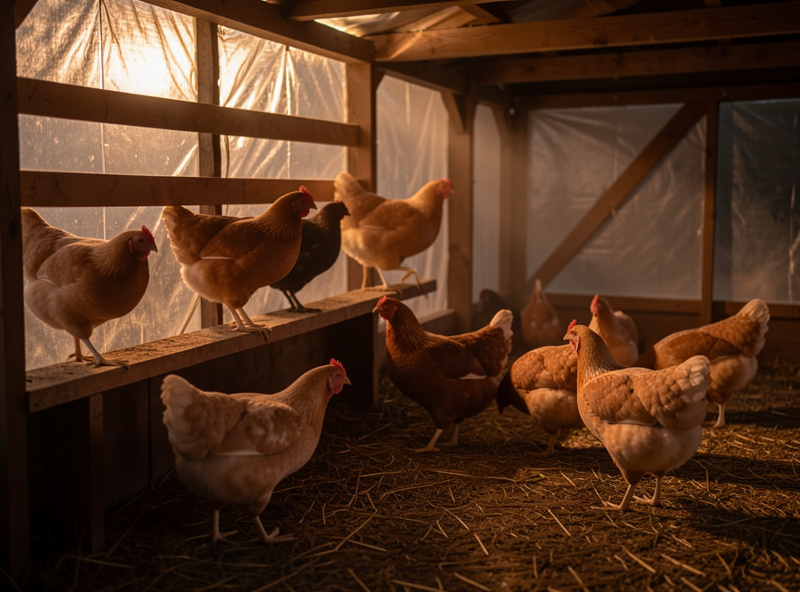
There is a single situation where touching the evening is acceptable, and it comes with a condition. If your layout makes morning extension impractical — say the only power is on a circuit you cannot run before dawn — you can extend the evening only if the light dims down gradually rather than cutting out. A dimmer that fades the bulb to black over five to ten minutes gives birds the visual cue and the time to roost, mimicking real dusk. The danger was never the evening hours themselves; it was the instant cut to darkness.
Even then I prefer morning, because a dimmer adds a part that can fail, and a failed-on evening light that never dims is back to the original problem. If you do go this route, build the ramp properly — I walk through the cheap and the integrated way to do it in the gentle dawn dimmer guide. For most keepers, morning light with no dimmer at all is simpler and safer than evening light that depends on one.
Setting It Up in Practice
My setup is deliberately boring: a warm-white LED high in the coop, turned on at a sunrise offset that lands the total day near 15 hours, extending the morning only. No evening control, no dimmer needed on the sunset side because nature handles it. If you are on a plain timer, pick a fixed pre-dawn start that gives your target hours in the depth of winter, and walk it back every couple of weeks as sunrise creeps earlier. Verify the birds are actually on the roost when the morning light fires — if any are on the floor, your start time is wrong or the flock has a roosting issue worth solving first.
Get the timing right and the rest of the winter laying system — bulb choice, hours, power — falls into place around it. The morning-versus-evening decision is the one that, more than any gadget, separates a calm winter coop from a stressed one.
Frequently Asked Questions
Should coop light be on in the morning or evening?
Morning, before dawn. Evening light switches off into sudden darkness and strands hens off the roost. Morning light comes on while it is dark and lets natural sunset close the day gradually, so birds roost normally.
Why is evening coop light a problem?
A timer cutting an evening light kills it instantly, taking the coop from bright to pitch black. Hens cannot see to reach the roost and end up sleeping on the floor, which causes piling, pecking, and fouled bedding.
Does it matter which end of the day I add light to?
For the hormone clock, no, the total hours are what count. For behaviour, it matters a lot. Adding hours in the morning avoids the dangerous instant light-off, so the flock stays calm and roosts on its own schedule.
Can I ever use an evening coop light?
Only if it dims down gradually over five to ten minutes instead of cutting out, giving birds time and a visual cue to roost. Even then, morning light is simpler and safer because it does not depend on a dimmer working.
What time should the morning light come on?
Early enough to give your target hours before sunrise. In midwinter that is often around 04:00 to 04:30. Because sunrise drifts daily, a sunrise-offset schedule or a regularly reset timer keeps the timing correct.
Further Reading
Once the morning-versus-evening question is settled, the rest of the lighting system is detailed across this cluster:
- Chicken Coop Lighting for Egg Laying: The Winter Guide
- How Many Hours of Light Do Laying Hens Need?
- Gentle Dawn Dimmer for the Coop
- The Home Assistant Sunrise/Sunset Offset I Run
- Best Coop Light Timer: Mechanical, Digital, and Smart
Related Guides

Cooking With Fresh Farm Eggs: A Keeper Guide
Genuinely fresh farm eggs cook differently from store eggs in one frustrating way and several wonderful ones: they are miserable…

Grading Backyard Eggs: Quality and Size
Grading backyard eggs means two separate jobs: judging quality (candling for cracks, blood spots, and air-cell size) and sorting by…
Supplemental Light Risks: Burnout, Molt Timing, and the Rest Hens Need
Supplemental light keeps hens laying through winter, but it is not free of cost. The main risk is straightforward: a…