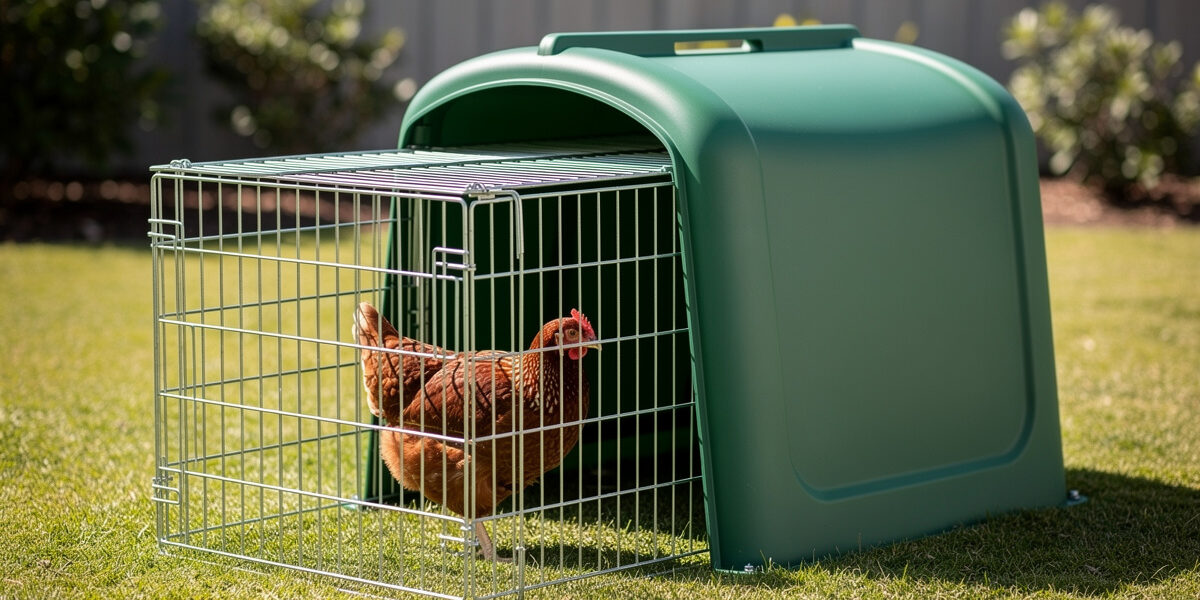
A high-quality plastic chicken coop runs roughly $400–$900 for a 4–8 hen setup, is commonly rated 15–20 years by the manufacturers who sell them, and holds up meaningfully better against mites than wood. The trade-offs: poor winter insulation, hard to modify, and budget plastic models crack under UV after 3–5 years. My own flock stays in a self-built wood walk-in — I haven’t run a plastic coop as my primary setup — but I’ve helped a couple of local keepers spec and winterize theirs, and this guide covers when plastic is the right pick, the best 2026 models across price tiers, and the workarounds that make plastic coops viable in cold climates.
For the broader material decision (wood vs plastic vs metal), see our Chicken Coop Materials Guide. For brand-specific reviews, the Best Chicken Coop Brands 2026 guide breaks down which manufacturers use which materials.
As an Amazon Associate I earn from qualifying purchases.
Why Plastic Coops Are a Different Category
Plastic chicken coops are almost always molded HDPE (high-density polyethylene) — the same material used for outdoor playgrounds, kayaks, and water tanks. The Eglu, launched by Omlet in 2004, started the category; today there’s a handful of established brands spanning generic budget molded units under $300 up to $1,200+ premium builds like the Omlet Eglu Cube with run extensions.
The reason plastic is a different category from wood and metal: HDPE is non-porous, UV-resistant when properly stabilized, and dimensionally stable across temperature and humidity. Wood absorbs moisture and pests; metal expands and contracts with heat; plastic does neither, which means a 15-year-old plastic coop in good condition behaves identically to a brand-new one.
Real Benefits of Plastic Coops
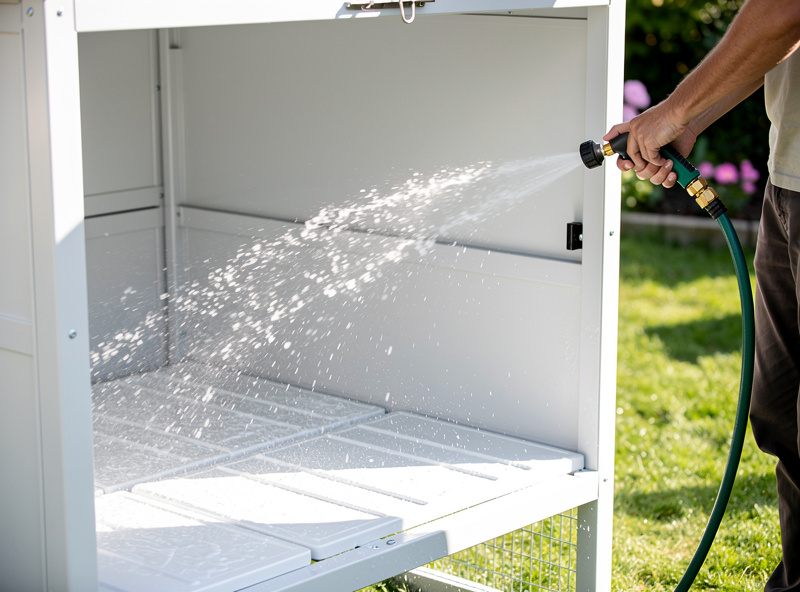
Mite resistance. The single highest-leverage benefit. Red mites spend daylight hours in gaps as thin as a fraction of a millimeter — the crevices, seams, and grain of a wood coop are exactly the habitat they want. Molded HDPE has none of that: no grain to hide in, and the radiused corners on a rotomolded coop leave far fewer seams than a framed wood box, so a single hose-down with diluted bleach clears most of what’s there in one pass. I haven’t run a controlled side-by-side on my own coop, but the mechanism is well documented by plastic-coop manufacturers who specialize in exactly this problem. For humid climates (Southeast US, Pacific Northwest) where I’ve seen wood coops in this region need way more mite management, this benefit alone can justify the price premium.
Cleaning speed. A plastic coop wipes clean with a hose and a brush in a fraction of the time a wood coop takes — no scrubbing crevices, no replacing soaked bedding that’s wicked into the wood, no re-sanitizing an absorbent surface that never fully dries. It adds up fast if you’re cleaning weekly through a Nordic-length winter, though the exact hours saved depends on your own routine and coop size — I won’t pretend to a precise number I haven’t clocked myself.
Lifespan. Premium HDPE coops (Omlet, Hatching Time’s Formex-built line, Nestera) are commonly rated 15–20 years by the manufacturers, with Nestera backing its recycled-plastic line with a 25-year warranty. Even in high-UV environments (Arizona, southern Texas), proper UV stabilizers keep the panels structural for over a decade. Mid-tier and budget plastic without the same stabilizer package lasts noticeably less.
Disease control. This one I’ll hedge harder than the others — I’m not going to make eradication claims about avian influenza, Marek’s, or coccidiosis, and neither should any coop guide. What’s true and extension-documented is narrower: non-porous hard surfaces disinfect more reliably than porous ones in general biosecurity protocol, which is why plastic and sealed-finish surfaces show up in poultry cleaning guidance as easier to get to a low bacterial load. For a sick bird or a suspected outbreak, see an avian vet — a coop material choice is not a substitute for that.
Real Drawbacks of Plastic Coops
Poor cold-weather insulation. Plastic just isn’t an insulator the way wood is — HDPE’s thermal performance is well behind even ordinary wood framing per inch of thickness. A single-wall plastic coop drops close to ambient overnight, which in a genuine Nordic winter means a water source that isn’t heated will freeze solid by morning — I’ve watched this happen on a coop I helped a neighbor set up, first winter, no heated waterer yet. In climates colder than USDA zone 5, plastic coops need either rigid foam insulation panels (added inside, on models without factory double-wall construction) or a manufacturer-specific insulated wrap and a heated waterer — non-negotiable, not optional, the same rule I hold my own wood coop to.
Hard to modify. Drilling cracks the panels around the hole. Screws strip out under any load. Most plastic coops do not accept aftermarket pop doors, additional vents, or external-access nesting boxes. If you want a coop you can customize over time, plastic is a bad fit.
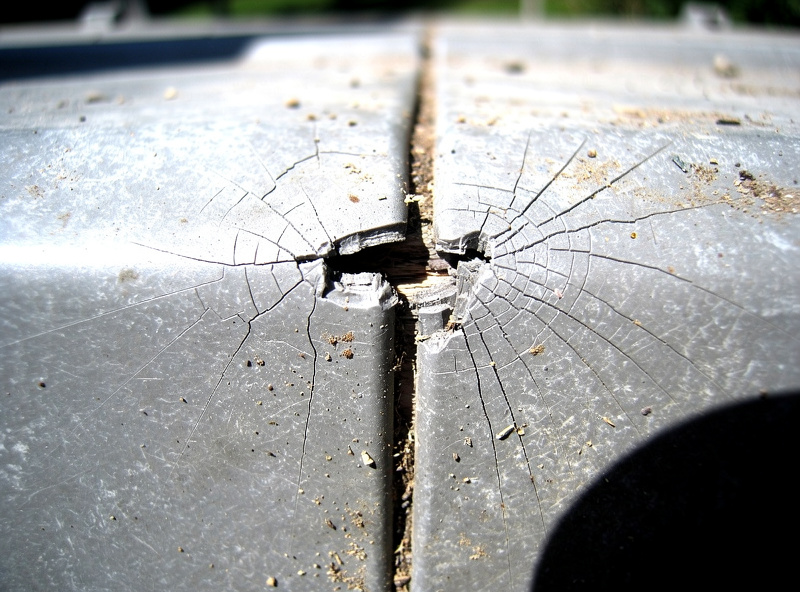
UV degradation on budget models. Cheap plastic coops use unstabilized polyethylene. After 2–3 years in direct sun, panels develop fine spider-web cracks at the seams (UV stress fracturing). After 5 years, the panels chalk and lose structural rigidity. Premium HDPE is dramatically better but costs 2–3x as much.
Lighter weight = predator concerns. An empty plastic coop is dramatically lighter than an equivalent wood build — molded HDPE panels versus dimensional lumber and sheathing just don’t compare on weight. Without anchoring, a determined raccoon or fox can rock or shift a light coop enough to get at the run. Stake every plastic coop to the ground with 18" rebar or ground anchors — the same non-negotiable I hold for my own welded run frame’s dig apron.
Best Plastic Chicken Coops 2026
| Model | Capacity | Price | Material Quality | Best For |
|---|---|---|---|---|
| Omlet Eglu Cube + 6' Run | Up to 6 large hens (8 medium, 10 bantams) | ~$1,100–$1,400 | Premium HDPE, twin-wall | Premium pick; see long-term review |
| Omlet Eglu Go UP | Up to 3 large hens (4 bantams) | Several hundred less than the Cube — check current listing | Premium HDPE | Tiny backyards, urban setups |
| Hatching Time Snaplock (Formex) Large, 8-Bird | 8 hens | $809.99 | Mid-premium HDPE | Mid-budget, US-shipped, no tools to assemble |
| Hatching Time Snaplock (Formex) Standard, 4-Bird | 4 hens | $509.99 | Mid-premium HDPE | Small flocks, budget-mid |
| Nestera Penthouse Large | Up to 15 bantams / 5 large fowl | ~$899 | Recycled HDPE, 25-yr warranty | Growing flocks, wheel/run options |
| Nestera Lodge Small | Up to 5 bantams / 2 large fowl | ~$589 | Recycled HDPE, 25-yr warranty | Budget-conscious, small flocks |
The Omlet Eglu Cube is the category-defining model for a reason: a factory twin-wall build, modular run extensions, an integrated nesting box that's about as mite-proof as coops get, and ventilation engineered to solve the plastic-coop condensation problem that trips up cheaper models. It costs meaningfully more than the budget tier, but amortized over a 15-20 year rated lifespan, the cost-per-year lands in the same range as a mid-tier wood prefab that gets replaced once or twice over the same span. Nestera’s recycled-plastic line is the one I’d point budget-conscious readers to first — a 25-year warranty is a real commitment from the manufacturer, not just a marketing number.
Workarounds for Cold Climates
I run my own flock through Swedish winters in a self-built, double-wall wood coop — plastic isn’t what’s under my own birds, but I’ve helped set up and winterize a plastic unit for a keeper nearby, and the same automation-engineer instinct applies: don’t trust the marketing, engineer around the material’s actual weak point. If you live in zone 5 or colder and still want a plastic coop, these modifications make it work:
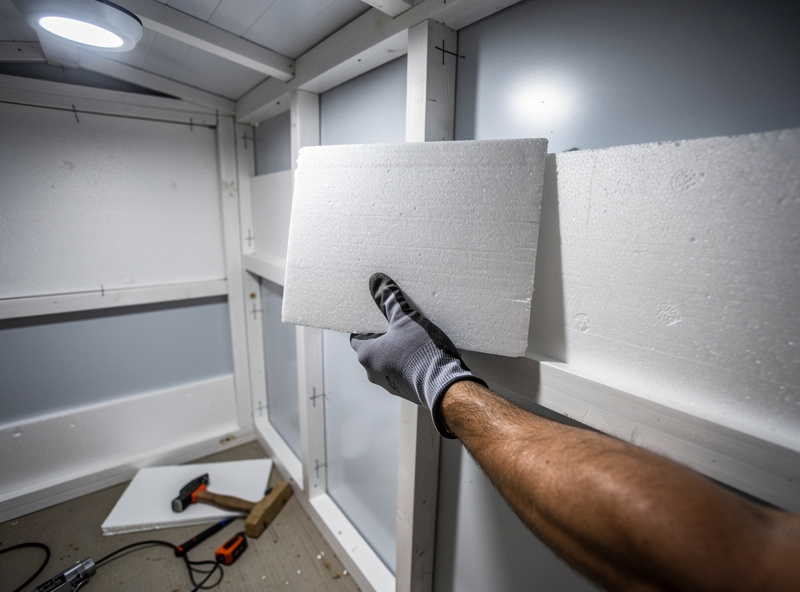
Rigid foam insulation panels. On models without factory double-wall construction, cut 1"-thick polyiso foam to fit the inside walls and roof, glue with construction adhesive. Some premium models sell their own insulated add-ons instead of raw foam board — the Eglu Cube’s factory accessory, for example, is an insulated wrap-around jacket rather than interior foam panels, so check what your specific model actually offers before buying generic foam board.
Heated waterer. A heated waterer keeps water liquid through sub-zero nights. Plastic coops in cold climates fail at the waterer first; this fix is mandatory, not optional — the exact rule I hold my own coop to.
Don’t undersize the flock for the coop. Hens generate meaningful body heat, and a coop stocked below its rated capacity loses some of that shared warmth on cold nights. Stick to or exceed the model's rated capacity in cold climates — chicken math works in your favor here for once.
With all three addressed, a plastic coop in zone 4 gets closer to an insulated wood coop in the same conditions — still not what I’d put my own flock in through a Swedish January, but workable.
Cleaning Protocol Specific to Plastic
The full cleaning advantage of plastic shows up only with the right protocol:
- Weekly: remove bedding, sweep loose debris with a stiff brush, wipe high-contact surfaces (perches, nest boxes) with a dry microfiber cloth.
- Monthly: hose down all interior surfaces, scrub seams with a small brush, spray with diluted vinegar (1:4) for 5-minute contact time, rinse, refill bedding.
- Quarterly: deep clean with diluted bleach (1:30), 10-minute contact time, full rinse, sun-dry for 2+ hours before re-bedding.
- Annually: inspect all panels for UV cracking, check ground-anchor integrity, replace foam insulation if used and degraded.
This protocol is realistic for plastic — the same protocol on wood is impractical because the surfaces never dry fully. Match the cleaning routine to the material's strengths.
Frequently Asked Questions
Are plastic chicken coops worth the higher cost?
For humid climates and flocks of 8+ hens, often yes — meaningfully fewer mite problems and less time spent cleaning over the years can pay back the premium. For 2-4 hen backyard flocks in dry climates, wood is usually the better economic choice.
How long do plastic chicken coops last?
Premium HDPE coops (Omlet, Hatching Time’s Formex line, Nestera) are commonly rated 15-20 years by their manufacturers, with Nestera backing its recycled-plastic line with a 25-year warranty. Budget plastic with unstabilized polyethylene typically cracks within 3-5 years in direct sun.
Do plastic coops get too cold in winter?
Yes — HDPE conducts heat far more readily than wood framing does. In zone 5 or colder, add 1-inch rigid foam insulation panels to the inside walls on models without factory double-wall construction, and use a heated waterer. Some premium models sell their own insulated wrap-around jacket instead of foam panels, so check what your specific model offers.
Can I drill into a plastic chicken coop?
Generally no — drilling cracks HDPE panels around the hole and screws strip out under load. Most plastic coops do not accept aftermarket modifications. If customization is important, choose wood instead.
How do you clean a plastic chicken coop?
Hose down monthly, scrub seams with a small brush, spray with diluted vinegar (1:4) for 5 minutes, rinse, refill bedding. Quarterly deep clean with diluted bleach (1:30) and a full sun-dry.
Does a plastic coop need to be anchored?
Yes — an empty plastic coop is far lighter than an equivalent wood build, so a determined raccoon or fox can rock or shift it to get at the run. Stake every plastic coop to the ground with 18-inch rebar or ground anchors at all four corners.
Related Articles
- Chicken Coop Materials: Plastic vs Metal vs Wood
- Metal Chicken Coops: Durability & Heat Concerns
- Wood Chicken Coops: Traditional Picks Compared
- Omlet Eglu Chicken Coop: Long-Term Review
- Best Chicken Coop Brands 2026
Related Guides
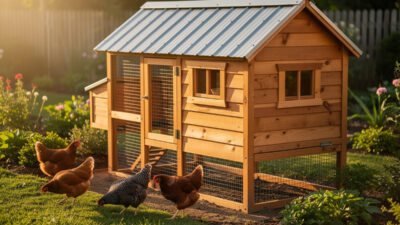
Wood Chicken Coops: Traditional Picks Compared
Wood is the default chicken coop material for backyard flocks because it's cheap upfront ($200–$500 for an 8-bird coop), insulating,…
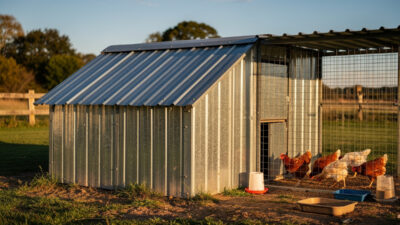
Metal Chicken Coops: Durability & Heat Concerns
A metal chicken coop costs roughly $300–$700 for a 4–8 hen setup, is commonly rated 15–25 years by the manufacturers…
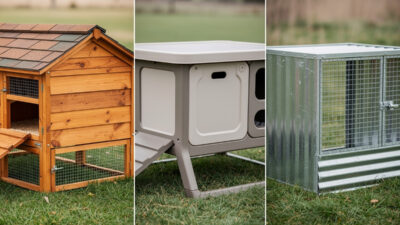
Plastic vs Metal vs Wood Chicken Coops: Material Guide
For most backyard flocks, treated wood is still the best chicken coop material — easy to modify, cheapest upfront, and…