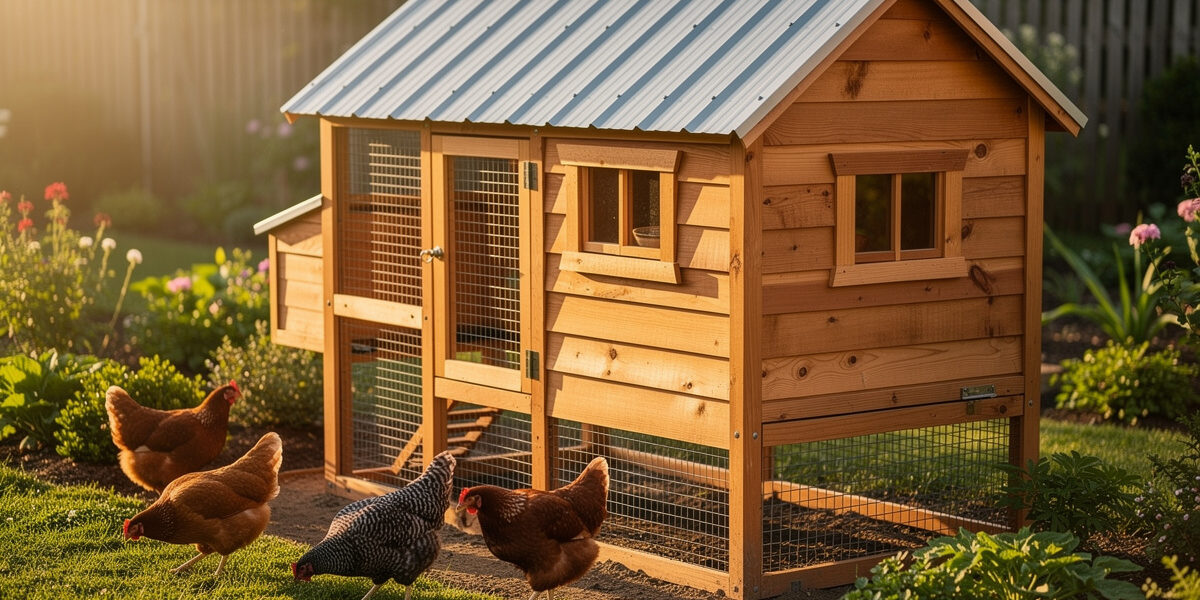
Wood is the default chicken coop material for backyard flocks because it's cheap upfront ($200–$500 for an 8-bird coop), insulating, easy to modify with hand tools, and quiet in any weather. The trade-offs: 8–12 year lifespan with regular maintenance, mites embed in the grain, and predators can chew through 1/2" plywood given time. My own main coop is a self-built insulated plywood walk-in, so I have lived the wood trade-offs first-hand — the insulation that keeps my waterer from freezing solid, and the repaint-and-reseal bill that comes with it. This guide covers which wood types to choose, the best 2026 prefab models, and the maintenance protocol that doubles a wood coop's usable life.
For the broader material decision, see our Chicken Coop Materials Guide. For DIY plans using wood exclusively, see DIY Chicken Coop Plans.
As an Amazon Associate I earn from qualifying purchases.
Why Wood Is Still the Default
Despite plastic's mite advantages and metal's lifespan, wood remains the default backyard coop material for four reasons:
Lowest upfront cost. A 4-hen wood coop runs $200–$300; equivalent plastic is $400–$700, equivalent metal is $300–$500. For first-time keepers unsure whether they will continue past one year, the lower wood entry point reduces sunk cost.
Insulation. Wood holds meaningfully more heat overnight than an equivalent uninsulated metal coop — it’s a genuine insulator rather than a heat-conducting skin. In winter, that difference can be the gap between a waterer that freezes and one that stays liquid a few hours longer. In summer, wood’s thermal mass moderates temperature swings rather than tracking outdoor highs directly.
Modification. Adding a window, a vent, a new pop door, or running electrical conduit takes 30 minutes with a jigsaw and a drill. The same modifications in plastic crack panels; in metal they require specialty tools.
Sound dampening. Wood coops are quiet in rain. Metal coops sound like a snare drum during a thunderstorm, which stresses hens. Plastic is intermediate.
Which Wood Types to Use
| Wood Type | Use For | Lifespan | Notes |
|---|---|---|---|
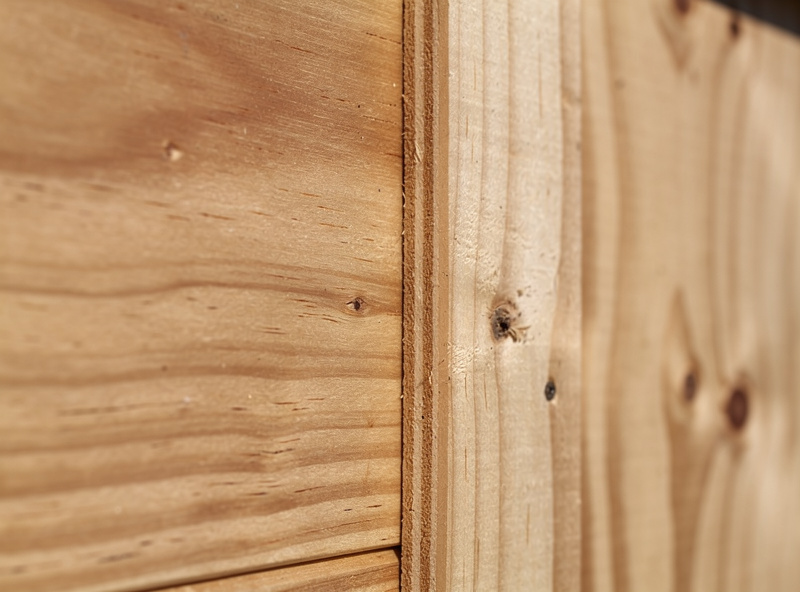
| Exterior-grade plywood (1/2" or 5/8") | Walls, floor, roof sheathing | 8–12 yrs | The default; ACX or BCX rated |
| Pressure-treated 2×4 / 4×4 | Frame, supports, ground contact | 15–25 yrs | Never in direct chicken contact |
| Cedar shingles or planks | Exterior siding only | 20–30 yrs | Aromatic terpenes — never inside |
| Pine / spruce / fir framing lumber | Interior frame only | 5–8 yrs | Only if covered by exterior plywood |
| OSB (oriented strand board) | AVOID | 2–3 yrs | Swells and crumbles when wet |
| Particle board / MDF | AVOID | 1 yr | Disintegrates immediately |
The two non-negotiable rules: no pressure-treated wood in direct chicken contact — modern ACQ/copper-azole treatments can leach trace chemicals into soil and animal products where birds have sustained contact — and no cedar inside — the aromatic terpenes and plicatic acid in cedar irritate a chicken’s sensitive respiratory tract at sustained exposure. Cedar is fine on the exterior siding because chickens do not contact it; pressure-treated lumber is fine for ground-contact framing because it is not part of the interior.
Best Wood Chicken Coops 2026
| Model | Capacity | Material | Price | Notes |
|---|---|---|---|---|
| Producer's Pride Prairie Coop (Cedar) | 6–8 hens | Cedar siding + plywood | ~$500–$600 (verify current listing) | See Producer's Pride review |
| OverEZ Medium | 10 hens | Wood siding/floor + galvanized roof | $1,599–$1,999 | Premium pick; long-term review |
| Pawhut Wooden Coop w/ Run | 3–4 hens | Fir wood + asphalt roof | $359.99 | Budget; 5-model review |
| Amish-Built Coop | 6–12 hens | Pine + cedar exterior | ~$1,600–$3,000+ | Best build quality; Amish coops review |
| Producer's Pride Hill Country | 6 hens | Steel frame + reinforced PVC/wood panels | ~$650 (watch for seasonal sales) | In-store availability |
| Custom-built local | Any size | Builder's choice | $800–$3,000 | See when to pay for custom |
The honest pick: budget keepers should buy a Pawhut or a Tractor Supply Producer's Pride unit and plan on a shorter lifespan without the maintenance protocol below. Mid-budget keepers should build their own using the plans in DIY Chicken Coop Plans for a fraction of prefab cost and a weekend of labor. Premium keepers buy Amish or OverEZ — just budget accordingly, since both run well past $1,000.
Maintenance Protocol That Doubles Lifespan
A wood coop's lifespan is more determined by maintenance than by initial build quality. The protocol that consistently doubles lifespan from 6 years to 12 years:
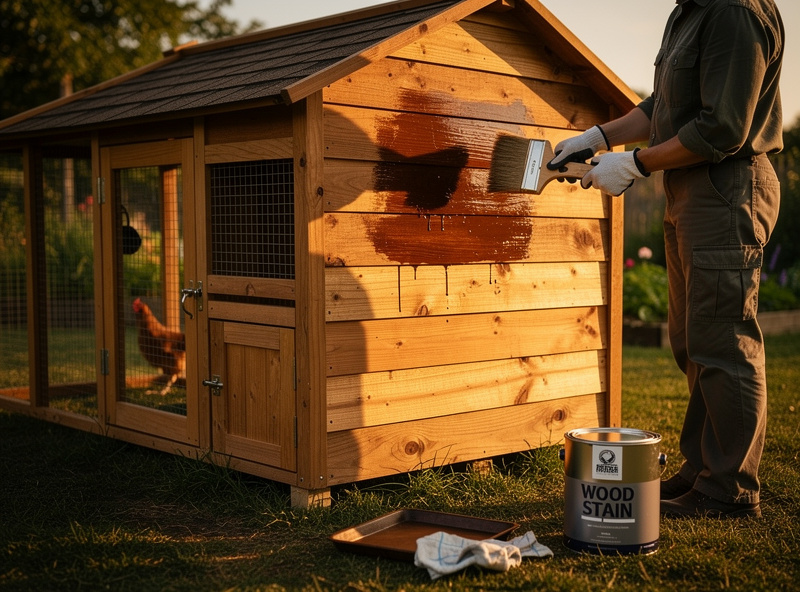
Year 0 (build/buy): apply two coats of exterior-grade stain or paint to all wall surfaces. Pay attention to the bottom 6" of every wall and the floor edges — these are where rot starts, and the spot I wish I had sealed twice on my own build.
Every 2 years: inspect all seams in early spring. Re-caulk any gaps with paintable silicone caulk. Touch up any worn paint or stain. This single 1-hour task catches most of the moisture damage before it starts — a failed seam or a bare patch of wood is a small fix in spring and a rot problem by fall.
Every 4–5 years: full repaint or re-stain. The protective coating wears thin over this interval and stops shedding water. A full repaint takes about half a day for an 8-bird coop and uses 1 gallon of paint.
Annual (any time): verify the roof overhang still sheds water away from the wall tops. Most wood coops fail at the roof-to-wall joint first. If you see water marks, extend the overhang to 4" or add drip-edge flashing.
Annual mite protocol: after annual deep clean, dust every wood seam with food-grade diatomaceous earth or spray with diluted permethrin. Repeat 2 weeks later to kill hatching cycles. This is the only effective wood-coop mite defense; without it, outbreaks compound.
Wood Coop Vulnerabilities
Predator gnawing. Raccoons and rats can chew through 1/2" plywood given several nights of access. Reinforce with hardware cloth on every accessible exterior face, especially around pop doors and at corners. See Hardware Cloth vs Chicken Wire.
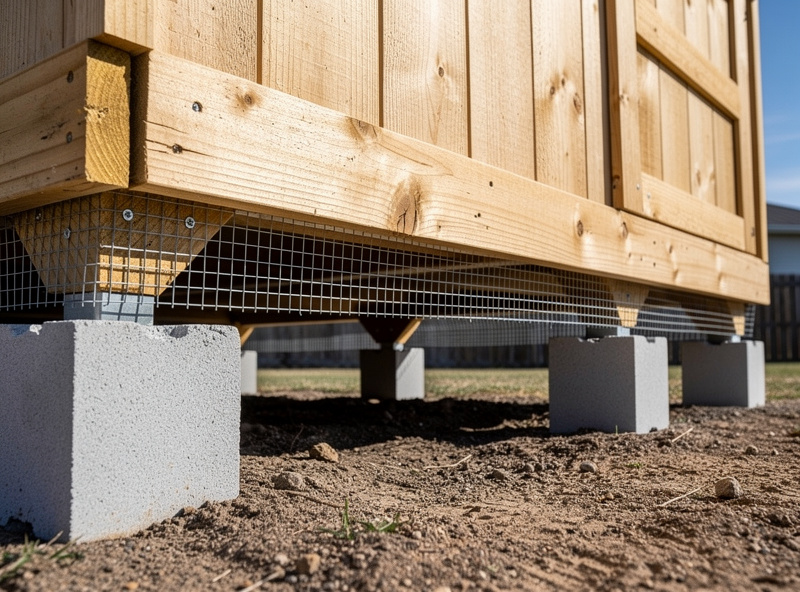
Water damage at floor edges. Wood coops sitting directly on grass or dirt absorb ground moisture into the floor and lower walls. Elevate the coop on concrete blocks or pressure-treated 4×4 runners — 4" clearance is enough to stop capillary water draw. On my own coop this is the detail I’d redo first if I were starting over: the original build sat closer to grade than I’d like, and the floor edge shows it years later even with a good stain job. Combine the elevation with a deep-litter floor management approach and the moisture problem mostly disappears — deep litter manages humidity from the inside while the elevation handles what comes up from the ground.
Mite reservoirs in grain. Wood is porous; mites embed in the grain and re-emerge after cleaning. The DE/permethrin annual protocol above is the only effective response. Plastic and metal coops do not have this problem.
Roof failure. Most wood coop roofs use shingle-on-plywood construction, which fails at 7–10 years. The single highest-leverage upgrade is a metal roof — bolted galvanized panels are commonly rated well past 25 years and shed water faster than shingles. Adds roughly $80–$120 to a typical 8-bird coop and meaningfully extends the life of the wood underneath by removing the weak point that fails first.
DIY Wood vs Prefab Wood
Building your own wood coop costs meaningfully less per square foot than buying prefab — cutting out retailer and assembly markup — and, done carefully, produces a structurally superior result since you control every seam and joint yourself. The trade-off is time: a weekend of work plus tool ownership.
If you have a circular saw, a drill, and basic carpentry skills, build. The plans in DIY Chicken Coop Plans walk through five designs from beginner to advanced. If you do not have tools or weekend time, buy prefab — most keepers in this category should target the $400–$600 prefab range and skip both budget ($200–$300, lasts 5 years) and premium ($1,000+, lasts 15 years but you pay full price for that durability).
Frequently Asked Questions
What kind of wood is best for a chicken coop?
Exterior-grade plywood (1/2 inch or 5/8 inch ACX or BCX rated) for walls and floors, pressure-treated 2x4s for the frame and supports (never in direct chicken contact). Cedar is fine for exterior siding only. Avoid OSB and particle board — both swell and rot when wet.
How long does a wood chicken coop last?
8-12 years with proper maintenance (re-stain every 2-3 years, full repaint every 4-5 years, annual seam inspection). Skipping maintenance drops lifespan meaningfully. A metal roof and adequate overhangs remove the roof-to-wall joint failure point and can extend usable life well beyond the unmaintained baseline.
Can I use pressure-treated wood for a chicken coop?
For framing and supports, yes — but never for surfaces that contact chickens or bedding. The chemicals in pressure-treated lumber leach into eggs over time. Use exterior-grade plywood for walls and floor, and pressure-treated lumber only for ground-contact framing covered by other surfaces.
Is cedar safe for chicken coops?
Cedar exterior siding is safe — chickens do not contact it. Cedar interior surfaces or shavings are NOT safe — the aromatic terpenes are toxic to chickens at sustained exposure and cause respiratory irritation. Use pine shavings or hemp bedding instead.
How do you protect a wood chicken coop from predators?
Reinforce with 1/2-inch hardware cloth on every exterior face that predators can reach (especially around pop doors and at corners), bury an apron skirt 4 inches deep around the perimeter, and use carabiner-locked T-handle latches. Wood walls alone are gnaw-vulnerable; the hardware cloth is what stops raccoons.
Does a wood chicken coop need to be elevated?
Yes — set the coop on concrete blocks or pressure-treated 4×4 runners with at least 4 inches of clearance. Wood sitting directly on grass or dirt absorbs ground moisture, which rots the floor and lower walls within 2-3 years.
Related Articles
- Chicken Coop Materials: Plastic vs Metal vs Wood
- Plastic Chicken Coops: Pros, Cons & Best Models
- Metal Chicken Coops: Durability & Heat Concerns
- DIY Chicken Coop Plans
- Amish Chicken Coops: Premium Build Quality
Related Guides
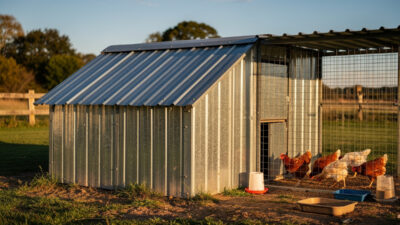
Metal Chicken Coops: Durability & Heat Concerns
A metal chicken coop costs roughly $300–$700 for a 4–8 hen setup, is commonly rated 15–25 years by the manufacturers…
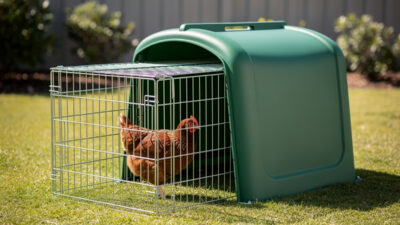
Plastic Chicken Coops: Pros, Cons & Best Models
A high-quality plastic chicken coop runs roughly $400–$900 for a 4–8 hen setup, is commonly rated 15–20 years by the…
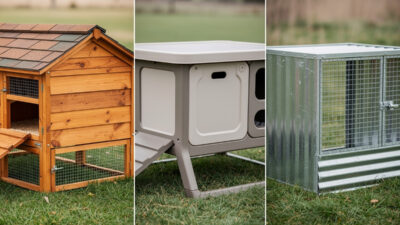
Plastic vs Metal vs Wood Chicken Coops: Material Guide
For most backyard flocks, treated wood is still the best chicken coop material — easy to modify, cheapest upfront, and…