Supplemental light keeps hens laying through winter, but it is not free of cost. The main risk is straightforward: a hen is born with a finite number of ova, and the more days you keep her cycling, the faster she spends that lifetime supply. Push a long photoperiod year after year and you can bring laying problems forward and shorten her productive life. Used with judgement, winter light is a fine tool. Used as a default that never lets up, it trades a bird’s long-term health for short-term eggs.
I run a light in my coop in Sweden, but I make the rest question a real decision every year rather than flicking the timer on out of habit. This is the part the “get eggs all winter” guides skip — the molt, the burnout, and the rest a flock genuinely needs. None of it is a health diagnosis; if a hen looks unwell rather than simply out of lay, that is a question for an avian vet, not a blog post.
The Finite Egg Supply
A hen does not make new ova through her life; she is born with all she will ever have, and laying draws them down. Natural short winter days are, in effect, a built-in rest period that slows that drawdown and lets the body recover. Supplemental light removes that pause. There is nothing wrong with borrowing some winter laying — I do it — but it helps to see it for what it is: spending the bird’s reserve a little faster in exchange for eggs now. That framing keeps me honest about not running maximum hours on the same hens forever.
The effect is most worth weighing on birds you intend to keep for years. A productive heritage hen you want laying into her third or fourth season is a different calculation from a high-output hybrid you expect a couple of strong years from. I match the lighting decision to the bird and the plan, drawing on the breed notes in the best laying breeds guide and the heritage breeds comparison.
Molt Timing and Why You Cannot Force It
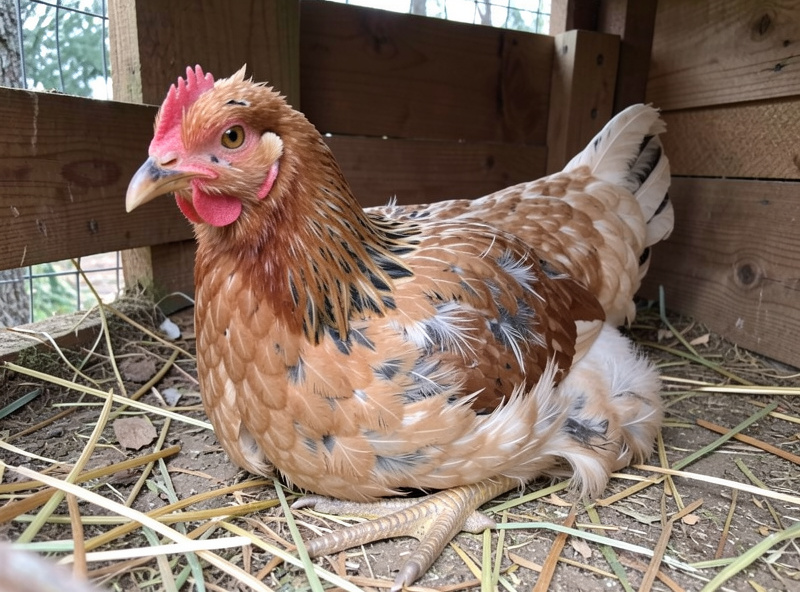
The annual molt is the other thing light interacts with. As days shorten, most hens drop and regrow feathers, and a bird in hard molt diverts her resources into new feathers and stops laying almost entirely. This is normal and necessary — fresh feathers are what carry her through winter. The mistake is thinking supplemental light will push a molting hen back into lay. It will not. Forcing light on a bird mid-molt does not restart eggs; it just denies her the natural rest the molt is meant to provide while her body is busy elsewhere.
Timing matters here. If you add light too aggressively in autumn you can disrupt the molt rather than work with it. My approach is to let the molt run its course and bring light in as the flock comes out the other side, when feathers are back and the birds are ready to lay again. A hen that has just finished a clean molt under natural conditions tends to come back into strong, healthy lay — and pushing her through the molt with light gains nothing.
Burnout and the Case for a Break
Burnout is the cumulative version of the finite-supply problem. Hens kept on a long photoperiod season after season, with no winter pause, can wind down earlier in life and are, in the view of many experienced keepers, more prone to laying troubles over time. The counter-move is simple and costs only some winter eggs: give the flock a lighting break. Many keepers deliberately run no supplemental light at all every winter, or skip it every other year, to let the birds molt, rest, and rebuild before the natural lengthening days of spring restart laying on their own.
I treat it as a per-flock, per-year choice. First-winter pullets usually lay straight through on day length alone and need no help, so I rarely light them. Older, proven hens often get the winter off to rest. The years I do supplement, I lean toward the lower end of the hours window — 14 rather than 16 — to take the eggs without flogging the birds, the reasoning I lay out in how many hours of light laying hens need. A break is not a failure of the system; it is part of running the flock for the long term.
Doing It Responsibly When You Do Light
If you decide the eggs are worth it, you can light responsibly and limit the downsides. Keep the hours moderate rather than maxed — Michigan State University Extension’s guidance on managing light for backyard flocks makes the same case for restraint over maximum hours — extend the morning so the flock is not stranded off the roost at an abrupt dusk light-off — the welfare point I make in morning vs evening coop light — and watch the birds rather than just the egg count. A flock that is eating well, active, and fully feathered is handling the light; one that looks run down is telling you something, and the answer may be to back off the hours or stop for the season.
Above all, separate “not laying” from “not well.” A hen can stop laying for entirely benign reasons — molt, age, a natural winter pause — and light is only relevant to some of them. If a bird is lethargic, losing condition, or showing symptoms beyond simply being off lay, that is veterinary territory, and I cover the general husbandry awareness side, not treatment, in why hens stop laying. When in doubt about a bird’s health, see an avian vet.
Reading the Flock: Signs the Light Is Costing Too Much
The egg basket is the worst gauge of whether lighting is treating your birds well, because it only tells you they are laying, not what it is costing them. I watch the birds instead. A flock handling supplemental light looks unbothered: full-feathered, active in the morning under the bulb, eating and drinking normally, combs in good colour, weight steady. That is a flock taking the extra hours in its stride.
The signals to ease off are subtler than illness. Birds that look perpetually ragged and never seem to finish a molt, hens dropping condition through the winter despite good feed, a sudden rise in feather-pulling or pecking under the light, or a layer that crashes from steady production to nothing rather than tapering — these are the flock telling you the balance is wrong. None of them is a diagnosis, and several have other causes, but together they are my cue to cut the hours or pull the light for the rest of the season. Eggs you take at the expense of a bird’s condition are borrowed, not earned, and the bird pays the interest.
How I Time a Winter Lighting Break
When I give the flock a break, I do not just yank the light one day. The cleanest rest is the natural one: let the shortening autumn days carry the birds down into their winter pause on their own schedule, and simply never add light that year. The molt runs, the hens rest through the dark months, and the lengthening days of late winter restart laying naturally — usually a few weeks before I would have bothered with a bulb anyway. That is the lowest-effort, lowest-stress option, and the one I default to for older hens.
If I have been lighting and decide mid-winter that a particular flock needs to stop, I taper rather than cut, dropping the hours back over a week or two so the wind-down is gradual rather than a shock. Either way, the birds come back. A flock that has rested over winter tends to return to lay in spring with vigour, and over several seasons that rhythm of work and rest is, to my eye, what keeps hens laying well into their later years instead of burning bright and brief. The decision sits alongside breed and age — a calculation I keep returning to with the help of the cold-hardy breeds guide — and it is as much a part of the lighting system as the bulb itself.
One last point that belongs with the risks: light without the nutrition to back it is its own kind of mistake. Asking a hen to lay through winter on supplemental light while she is also burning calories to stay warm means she needs a proper layer ration and free-choice calcium, or the eggs come at the expense of her own reserves. If you are going to take the winter eggs, feed for them, too, as I cover in layer feed versus grower feed. Light is the trigger; feed and rest are what make it sustainable.
The supplemental light itself — the bulb, the hours, the timer, the power — is covered across the rest of this cluster: start with the coop lighting hub, then the winter laying guide and the winter chicken keeping guide for the wider seasonal picture. Run light as a considered tool, give the flock its rest, and you get winter eggs without burning out good birds.
Related Guides
- Chicken Coop Lighting for Egg Laying: The Winter Guide
- How Many Hours of Light Do Laying Hens Need?
- Morning vs Evening Coop Light: Add Before Dawn
- Warm vs Cool LED Coop Light Color Temperature
- Best Coop Light Timer: Mechanical, Digital, and Smart
Related Guides

Cooking With Fresh Farm Eggs: A Keeper Guide
Genuinely fresh farm eggs cook differently from store eggs in one frustrating way and several wonderful ones: they are miserable…

Grading Backyard Eggs: Quality and Size
Grading backyard eggs means two separate jobs: judging quality (candling for cracks, blood spots, and air-cell size) and sorting by…
Cleaning and Washing Fresh Eggs: The Right Way
The right way to clean a fresh egg is, most of the time, to not wash it at all. A…