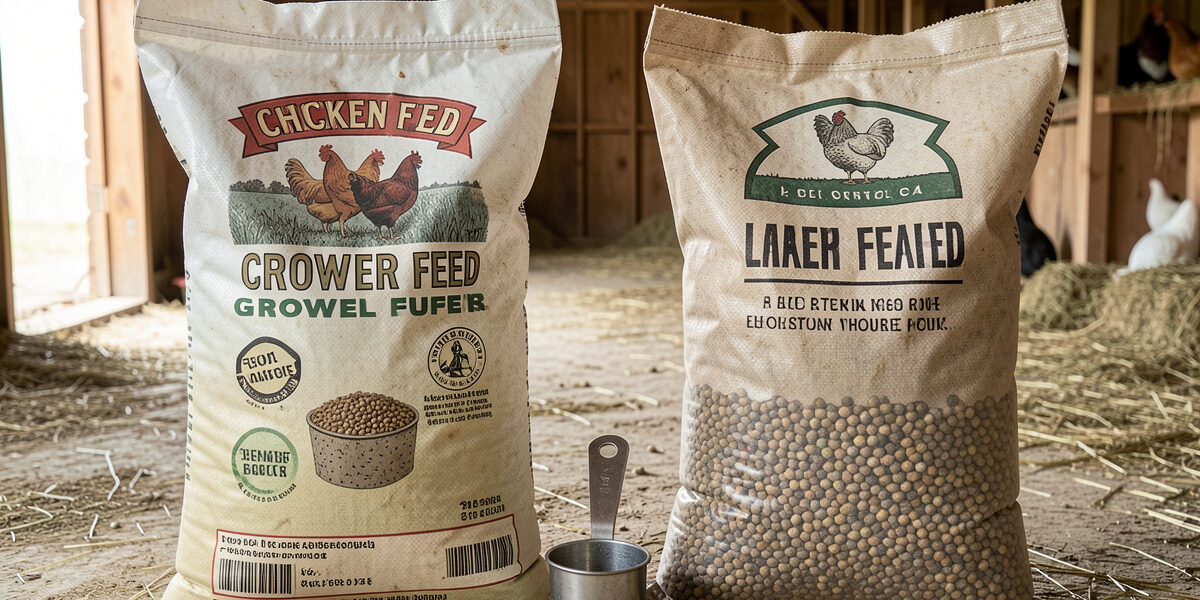
The difference between layer feed and grower feed comes down to one mineral: calcium. Layer feed carries roughly 3.5 to 4.5 percent calcium for building eggshells, while grower feed holds about 1 percent — and feeding the high-calcium layer ration to a bird that is not yet laying can quietly damage her kidneys. Get the timing of the switch right and the rest of feeding falls into place; get it wrong and you can harm a whole batch of pullets before you ever see a symptom.
I have raised enough batches of pullets alongside my laying flock to treat this switch as a hard line on the calendar, not a guess. Below is exactly how I run the layer-versus-grower transition, why the calcium number matters so much, and how I keep a mixed-age flock fed without poisoning the young birds.
The Core Difference: Calcium and Protein
Grower and layer feeds are formulated for two completely different jobs. Grower feed supports steady growth without excess calcium, sitting around 1 percent calcium and 15 to 18 percent protein. Layer feed is built for shell production, pushing calcium up to roughly 4 percent so a hen can deposit two grams of it into every shell she lays. That single difference is the whole reason you cannot just run one bag for every bird.
A laying hen actively pulls calcium out of her diet and, if short, out of her own bones. A growing pullet does neither — she has no shells to build — so the extra calcium in layer feed has nowhere useful to go and instead burdens her kidneys over time. Protein matters too but is the smaller story: most grower and layer feeds land in a similar 16 to 18 percent band, so the headline distinction you must respect is calcium, calcium, calcium.
When to Switch From Grower to Layer
The rule I follow is simple and safe: switch to layer feed at the first egg, or around 18 to 20 weeks, whichever comes first. The first egg is the clearest signal a pullet’s body has started building shells and now genuinely needs the calcium. Until then, every bird in the growing pen stays on grower or an all-flock starter-grower ration.
Breed shifts the date. Production layers like a Leghorn or a sex-link may lay by 18 weeks, while heavier or slower-maturing birds can take 24 weeks or more, which is one reason I pay attention to breed when planning a flock — the same logic I lay out in my best laying breeds guide. If you have a mixed batch, watch for the first egg from the earliest layer and let that anchor the switch, then manage the late bloomers with separate oyster shell rather than rushing them all onto layer feed.
Daylight is the other hidden variable. Pullets coming into lay as the days shorten in autumn may stall their first egg until spring, which can leave you holding a pen of 22-week birds still genuinely on grower. That is fine — age alone is not the trigger, the egg is. I would rather keep a late group on grower an extra few weeks with oyster shell available than push calcium into birds that are not using it. In a cold climate especially, where my flock’s lay naturally dips through the dark months, I let the birds’ own bodies tell me when they need layer feed instead of forcing it by the calendar.
Feeding a Mixed-Age Flock
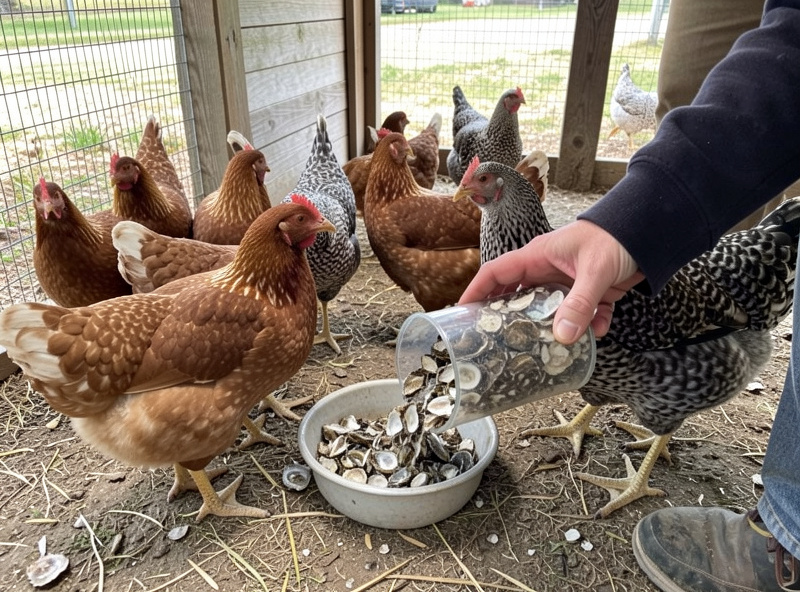
This is where most keepers get stuck, because real backyard flocks are rarely all the same age. The clean solution is an all-flock or flock-raiser feed at a flat protein level with low added calcium, plus oyster shell offered free-choice on the side. The laying hens take the calcium they need from the separate dish; the pullets, roosters, and molting birds leave it alone. Nobody is forced to eat the wrong mineral load.
I have run my flock this way for years and it is the single tidiest answer to the mixed-age problem. It also covers roosters, who never need layer-level calcium and can suffer from it long term. The only discipline it requires is keeping the oyster shell topped up and separate — never mixed into the feed — so each bird self-regulates. For the youngest birds, the starter-to-grower sequence is covered in my chick feed stages guide.
Protein, Pellets, and Crumble
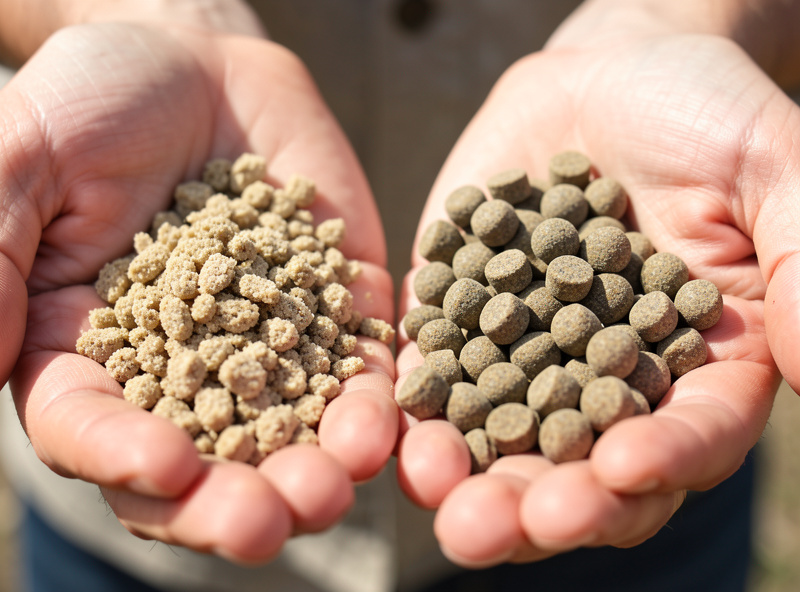
While calcium is the headline, protein and form deserve a word. Grower feed often runs a touch higher in protein than layer because growing tissue is hungry for it, but the gap is small — both typically sit in the 16 to 18 percent range, and a flock-raiser ration around 18 percent is a sensible flat number for a mixed group. The birds that genuinely spike their protein need are molting hens rebuilding feathers and very young chicks, neither of which is served by the calcium in layer feed.
Form matters more for waste than nutrition. Pullets on grower do well on crumble, which is easier for smaller bills to handle, while mature hens manage pellets fine and bill less of it onto the floor. I move my birds from crumble to pellets as they grow, mostly to cut the waste a coop full of pellets-on-the-ground represents. Whatever the form, the feed should be fresh and dry — stale or damp feed loses nutritional value and invites mold, which is a real health risk rather than a cosmetic one.
Layer vs Grower vs All-Flock at a Glance
Here is the quick reference I would tape to the feed bin — the three feeds you will actually use, with the calcium and protein numbers that decide which bird gets which.
| Feed Type | Protein | Calcium | For Which Birds | Calcium on Side? |
|---|---|---|---|---|
| Grower | 15–18% | ~1% | Pullets 8 wk to first egg | No |
| Layer | 16–18% | 3.5–4.5% | Actively laying hens only | Optional top-up |
| All-flock / flock raiser | ~18% | ~1% | Mixed ages, roosters, molting birds | Yes — oyster shell free-choice |
Making the Switch Without Upsetting the Flock
Chickens are creatures of habit, and an abrupt feed change can put a sensitive flock off eating for a day or two. When I move a group from grower to layer, I blend the two for about a week — starting heavier on grower, ending heavier on layer — so the birds adjust to the new pellet and the new mineral load gradually. It is not strictly necessary for most flocks, but it costs nothing and avoids the occasional digestive grumble.
There is no need to throw out a half-empty bag of grower the day the first egg appears, either. If you have laying hens already taking oyster shell from a side dish, finishing the grower bag while the shell covers their calcium is perfectly fine — that is exactly the all-flock-plus-oyster-shell logic working in your favor. The hard rule is only the reverse: do not put growing birds onto layer feed early. Everything else has comfortable margin, which is why the separate-calcium approach is so forgiving for a real backyard flock that never quite matches the tidy age brackets on the bag.
The Mistakes That Cause Real Harm
The damaging error is feeding layer to growing birds, and it is common because keepers assume “more calcium is healthier.” It is not — for a non-laying bird it is a slow kidney burden with no upside. The opposite mistake, leaving laying hens on grower with no calcium source, shows up faster as thin or soft shells and, over time, as a hen pulling calcium from her own skeleton.
The third trap is treats. Even with the right base feed, filling birds up on scratch and scraps dilutes the calcium and protein balance, which I cover in the broader chicken feeding guide. And if shells stay poor despite correct feed and free-choice oyster shell, that crosses from a feeding question into a possible health one — worth reviewing my chicken health guide and, for a genuinely unwell bird, an avian vet. Steady shell quality is also tied to overall lay, which I break down in my egg production guide.
Frequently Asked Questions
When should I switch chickens from grower to layer feed?
Switch at the first egg, or around 18 to 20 weeks, whichever comes first. The first egg means a pullet is building shells and now needs the calcium in layer feed. Before that, the extra calcium can harm her kidneys.
What happens if a pullet eats layer feed too early?
The high calcium in layer feed, around 4 percent, has no shells to go into and instead burdens a growing bird’s kidneys over time. Feed grower or all-flock until the first egg, then move to layer feed.
Can I feed all my chickens the same feed?
Yes, with an all-flock or flock-raiser feed at low calcium plus oyster shell offered separately. Laying hens take the calcium they need from the side dish while pullets and roosters leave it alone, keeping everyone safe.
Is grower feed the same as starter feed?
No. Starter feed is higher in protein for very young chicks, while grower feed is slightly lower protein for older pullets. Both are low calcium. Many brands combine them into one starter-grower bag fed until point of lay.
Do roosters need layer feed?
No. Roosters never lay eggs and do not need the high calcium in layer feed, which can harm them long term. Feed roosters an all-flock or grower ration and let the hens take calcium from a separate oyster shell dish.
Related Reading
Related Guides
Scratch Grains for Chickens: Treat, Not a Meal
Scratch grains are the most overfed thing in backyard chicken keeping. Scratch is a treat — a cracked-corn-and-grain mix that…
Fermented Chicken Feed: A Practical Keeper Guide
Fermenting chicken feed is the cheapest upgrade in the coop that actually earns its place. Soaking complete feed in water…
What Treats Can Chickens Eat? Safe and Unsafe Foods
Chickens are enthusiastic about almost anything you hand them, which is exactly why treats are where good intentions wreck a…