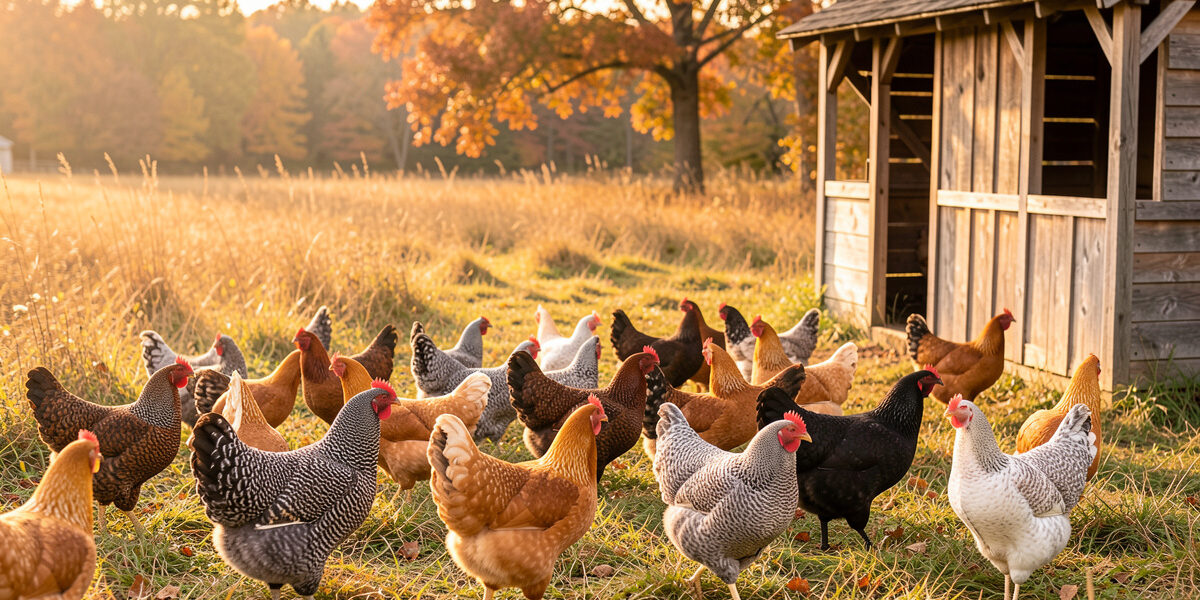
A heritage chicken breeds comparison comes down to three things most lists never separate: a true heritage breed mates naturally, lives a long productive outdoor life, and grows slowly — reaching market weight in no fewer than 16 weeks, per the Livestock Conservancy definition. That rules out every fast modern hybrid and leaves you with the standard breeds that built backyard poultry: Plymouth Rock, Wyandotte, Orpington, Sussex, Dominique, Chantecler and the rest.
I keep a heritage-type flock in Sweden for reasons that have nothing to do with nostalgia and everything to do with engineering. A bird bred to forage, breed, and survive outdoors for five or six seasons is simply a more durable machine than one bred for a 14-month battery cycle. This comparison is how the major heritage breeds actually stack up on the figures that decide whether a breed thrives in your climate — with a cold-country bias I make no apology for.
What Makes a Breed “Heritage”
The term is not marketing. The Livestock Conservancy sets four tests: the breed must be recognized by the American Poultry Association standard, must reproduce by natural mating, must have a long productive outdoor lifespan (hens five-plus years, roosters three-plus), and must grow at a moderate, natural rate. A Cornish Cross broiler fails on growth rate; a production layer hybrid fails on natural reproduction and lifespan. Heritage breeds pass all four.
That definition matters to a backyard keeper because it predicts behavior. A heritage bird will go broody and hatch its own replacements, will forage a real share of its diet, and will keep laying — fewer eggs, but for years. You trade peak first-year output for resilience, genetic diversity, and a flock that renews itself. For anyone who wants chickens as a long-term system rather than a disposable laying batch, that trade is the whole argument.
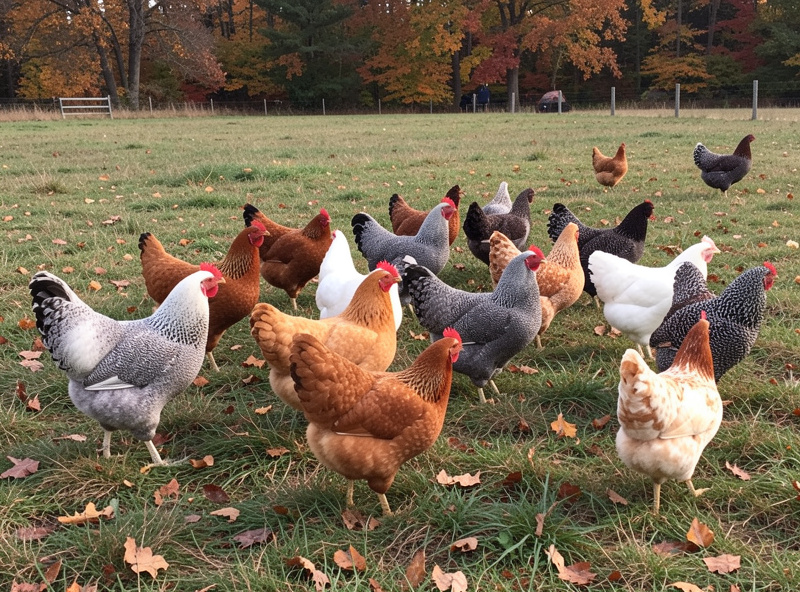
The Major Heritage Breeds, Compared
Here is the comparison I wish I had when I started — the heritage breeds worth keeping, with the traits that actually drive a climate-aware decision. Read the comb column as closely as the egg column if you keep birds anywhere it freezes, because comb type predicts frostbite risk more than any “cold-hardy” label.
| Breed | Origin | Hen weight | Eggs/yr | Egg color | Comb | Cold-hardy | Conservation status |
|---|---|---|---|---|---|---|---|
| Plymouth Rock | USA, 1800s | 3.4 kg | 200–250 | Brown | Single | Very good | Recovering |
| Wyandotte | USA, 1870s | 3.3 kg | 180–240 | Brown | Rose | Excellent | Recovering |
| Rhode Island Red | USA, 1890s | 2.9 kg | 200–280 | Brown | Single | Very good | Recovering |
| Orpington | England, 1880s | 3.6 kg | 180–200 | Light brown | Single | Excellent | Recovering |
| Sussex | England, ancient | 3.2 kg | 200–250 | Cream | Single | Very good | Recovering |
| Australorp | Australia, 1920s | 3.2 kg | 250–280 | Brown | Single (small) | Very good | Recovering |
| Dominique | USA, colonial | 2.7 kg | 230–270 | Brown | Rose | Excellent | Watch |
| Chantecler | Canada, 1900s | 3.2 kg | 180–220 | Brown | Cushion | Outstanding | Watch |
| Buckeye | USA, 1900s | 2.9 kg | 180–220 | Brown | Pea | Excellent | Watch |
| Brahma | USA/Asia, 1850s | 4.5 kg | 150–200 | Brown | Pea | Excellent | Recovering |
The Comb Column Is the Cold-Climate Story
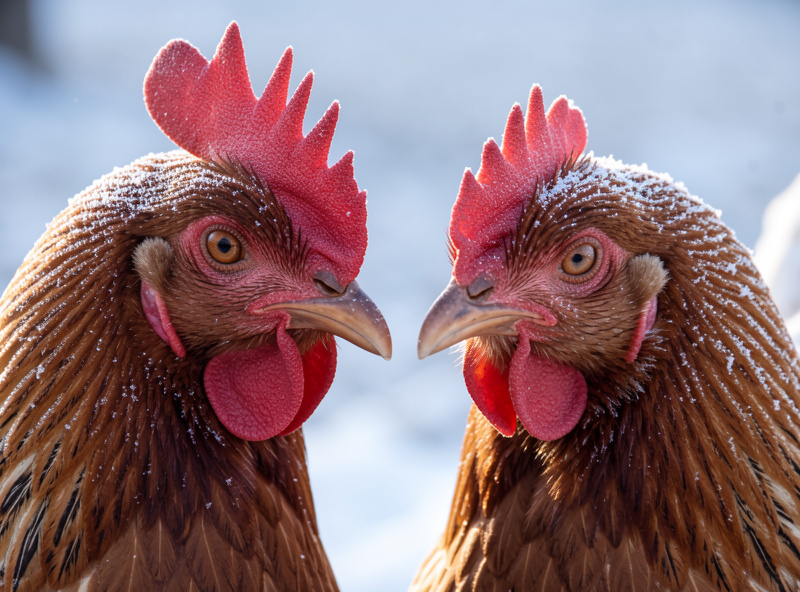
If you keep birds where winters bite, the comb type in that table is the single most useful column. A tall single comb is the first thing to frostbite, losing tips and points on the cold nights; a tight rose, pea, or cushion comb has almost nothing exposed to freeze. That is why the Wyandotte (rose), Buckeye (pea), Brahma (pea), and especially the Chantecler (cushion) outrun the single-combed breeds in real cold despite similar feathering.
The Chantecler is the clearest example of breeding for climate: it was developed in Quebec specifically to survive Canadian winters, with a cushion comb and small wattles that give frost almost no purchase. It is the heritage breed I point cold-country keepers toward first. And remember the mechanism behind frostbite — it is coop moisture, not raw cold, that freezes a comb, which is why ventilation matters more than heat, as I lay out in the ventilation versus draft guide. A small comb plus a dry, well-ventilated coop is the combination that keeps a flock intact through a Nordic winter.
Breed Spotlights: The Standouts Worth Knowing
A table flattens personality. These are the heritage breeds I find myself recommending most, and the specific reason each earns a place in a backyard flock.
Plymouth Rock
The Barred Plymouth Rock is the heritage all-rounder — the bird I hand a nervous first-time keeper. It lays 200–250 brown eggs a year, carries enough body to be a real table bird, forages well, and has a steady, friendly temperament that calms a mixed flock. Developed in mid-1800s America, it is the breed against which other dual-purpose heritage birds get measured.
Dominique
America’s oldest breed, the Dominique predates the Plymouth Rock and is often confused with it — the giveaway is the rose comb (Rocks have a single comb). That rose comb makes it markedly more cold-hardy, and at a compact 2.7 kg it lays a surprising 230–270 eggs. It sits on the Conservancy’s watch list, so keeping a few is genuine conservation work, not just a hardy layer choice.
Chantecler
If I could keep only one heritage breed in Sweden, it would be the Chantecler. A Quebec monk developed it in the early 1900s expressly for brutal Canadian winters, fitting it with a tiny cushion comb and minimal wattles — the least frostbite-prone head in the heritage world. It lays a solid 180–220 winter-friendly brown eggs and carries a good dual-purpose body. It is rare enough to be on the watch list and deserves far more keepers in cold country than it has.
Buckeye and Brahma
The Buckeye is the only American breed developed entirely by a woman, Nettie Metcalf, and its pea comb and tight feathering make it a quiet cold-weather workhorse with an unusually active, mouse-hunting personality. The Brahma is the gentle giant — a 4.5 kg, feather-legged, pea-combed breed that handles cold beautifully and is calm to a fault, though those feathered feet need dry footing the same way a Pekin bantam’s do.
Heritage Egg Colors: Beyond Brown
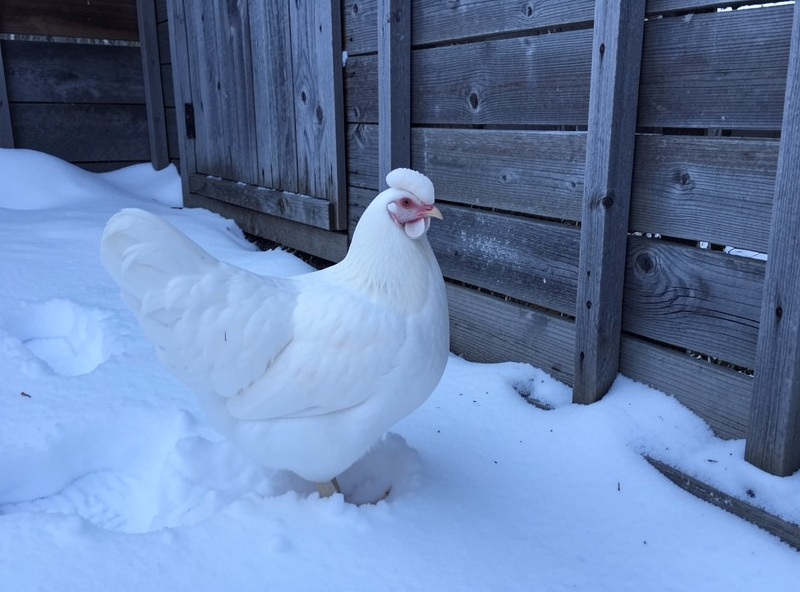
If a varied egg basket is part of the appeal, heritage breeds deliver more than the standard brown. The French Marans lays famously dark chocolate-brown eggs; the Dutch Welsummer gives a rich terracotta egg often speckled; and the Barnevelder lays a deep glossy brown. For blue and green, the Ameraucana (a recognized standard breed, distinct from the hybrid “Easter Egger”) lays true blue eggs. None of these out-produce a Rhode Island Red on volume, but a mixed heritage flock can fill a carton with five different shades — one of the quiet pleasures the production hybrids cannot match.
A point of accuracy worth keeping straight: egg shell color is purely genetic and has nothing to do with nutrition or yolk color. A Marans does not lay a “healthier” egg than a Leghorn because it is darker; the shell pigment is breed-determined, full stop. Anyone selling you otherwise is selling, not informing.
Sourcing Heritage Stock: Hatchery vs Breeder
Where you buy decides what you actually get. Large commercial hatcheries sell birds labelled with heritage breed names, but decades of selecting for volume shipping have, in some lines, drifted away from true type — smaller bodies, weaker breed characteristics, sometimes single combs creeping into rose-combed breeds. For a laying flock that does not matter much. For genuine heritage conservation or breeding to standard, it matters a great deal.
If breed integrity is your goal — especially for the threatened breeds — buy from a dedicated breeder working from quality stock, ideally one listed through a breed club or the Livestock Conservancy. You will pay more and wait longer, and you will get a bird that actually is what the table above describes. For a backyard layer flock, a reputable hatchery is fine; for keeping a rare line alive, go to the people who keep it alive.
Eggs, Meat, or Both
Most heritage breeds are dual-purpose by design — that is what “heritage” largely meant before specialization. For pure egg numbers in the heritage class, the Australorp (250–280) and Rhode Island Red (up to 280) lead, while the Dominique punches above its size at 230–270. For table birds, the Brahma’s sheer 4.5 kg mass and the broad bodies of the Plymouth Rock and Sussex carry the most meat, though all grow slowly — that 16-week-minimum growth rate is part of the definition.
If you want a single flock that does a competent job of both jobs rather than maxing out either, that is exactly the heritage sweet spot, and it overlaps heavily with the picks in my dual-purpose breeds guide. For the egg-focused end of the spectrum, the best egg-laying breeds guide ranks the heaviest producers, and for the cold-first decision, the cold-hardy breeds guide sorts them by winter survivability.
Why Conservation Status Belongs in the Decision
That last table column is not trivia. The Livestock Conservancy tracks heritage breeds by how endangered their breeding population is, and several genuinely useful birds — the Dominique, Chantecler, Buckeye and others — sit on watch or threatened lists. Choosing one of these for your backyard flock is a small, real contribution to keeping a genetic line alive. You get a hardy, capable bird and the breed gets another set of breeders. For a keeper deciding between two equally suitable breeds, I let conservation status break the tie — it is the rare case where the more interesting choice is also the more responsible one.
Heritage Breeds and the Long Game
The honest counterpoint is productivity. A heritage hen will not match a production hybrid’s first-year egg count, and her cockerels grow slower than a meat-bird’s. If your only metric is eggs-per-dollar in year one, heritage loses. But over five or six seasons — the productive outdoor lifespan that is part of the very definition — a flock that renews itself, forages hard, and shrugs off the weather is the better system and, in my experience, the far smaller heartbreak. That is the bird I build my coop and my automation around: durable tenants for a durable machine.
Broodiness and a Self-Renewing Flock
One trait the comparison table cannot show is broodiness — the instinct to sit a clutch and raise chicks — and it is where heritage breeds separate hard from hybrids. Production layers have largely had broodiness bred out of them so they keep laying. Many heritage breeds kept it, which is exactly what lets a heritage flock renew itself without an incubator. Orpingtons, Sussex, Brahmas, and Cochins are reliably broody; Buckeyes and Dominiques will set when they choose to.
That cuts both ways, and an honest comparison says so. A broody hen stops laying for the six-plus weeks she sits and raises, which dents your egg count, and a determined broody can be a minor battle to break if you do not want chicks. But if you want a flock that quietly replaces its own losses — the original point of a heritage breed — broodiness is a feature, not a bug. I let a couple of hens raise a clutch most seasons; it costs me eggs and saves me brooder setup, and the mother hen does a better job of integrating the chicks than I ever do.
Free-Range Ability and Self-Reliance
Heritage breeds were shaped before confinement farming, so most retain strong foraging drive and predator awareness that modern hybrids have partly lost. The active breeds — Buckeye, Dominique, Welsummer, the Mediterranean-type layers — cover ground, hunt insects, and watch the sky, which trims the feed bill and helps in an open setup. The heavier, calmer breeds forage more sedately but still take a real share of their diet from pasture in the warm months. None of this removes the keeper’s duty to predator-proof the run; a foraging heritage bird is still no match for a fox or a hawk, which is why the hardware-cloth-and-cover standards apply to every flock regardless of how savvy the breed.
A Note on Health
Heritage breeds are robust by selection, but robust is not immune. Large-bodied and feather-footed breeds carry their own quirks, and any bird can fall ill. I treat coop hygiene, a good dust bath, and routine condition checks as ordinary husbandry; anything beyond that — lethargy, an off-feed bird, respiratory signs — is a question for an avian vet rather than a breed comparison. I keep and breed the flock; I do not diagnose it.
Further Reading
If you are still narrowing the field, start with the complete chicken breeds comparison guide for the full picture, then the best backyard breeds guide for the everyday all-rounders. For raising the slower-growing heritage cockerels for the table, the meat chickens guide covers the timeline a heritage bird actually follows.
Related Guides
How to Choose Chicken Breeds: A Keeper Decision Guide
Learning how to choose chicken breeds is really a requirements exercise, not a beauty contest. Before you look at a…
Bantam Chickens for Small Spaces: Best Small Breeds
Bantam chickens for small spaces are the answer when you want a real flock but have a courtyard instead of…
Dual-Purpose Chicken Breeds: Eggs and Meat From One Flock
Dual-purpose chicken breeds are the ones that earn their keep twice: a hen that lays 200 or more eggs a…